Kirjojen hintavertailu – 12 859 828 kirjaa ja 27 kauppaa

Kirjailija

Srinivasan Chandrasekaran

Kirjat ja teokset yhdessä paikassa: 30 kirjaa, julkaisuja vuosilta 2009–2026, suosituimpiin kuuluu Wave Energy Devices. Vertaile teosten hintoja ja tarkista saatavuus suomalaisista kirjakaupoista.

30 kirjaa

Kirjojen julkaisuvuodet: 2009–2026.

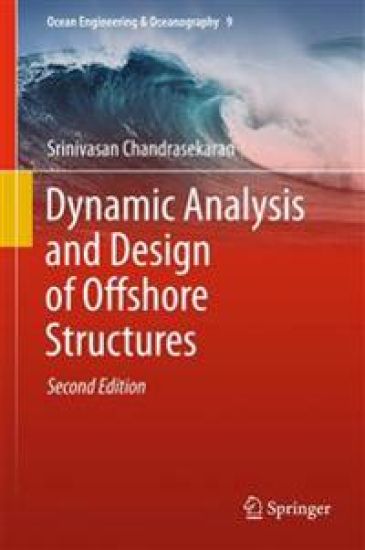
Dynamic Analysis and Design of Offshore Structures

Dynamic Analysis and Design of Offshore Structures

Srinivasan Chandrasekaran

Springer Verlag, Singapore
2019
nidottu
This book introduces readers to various types of offshore platform geometries. It addresses the various environmental loads encountered by these structures, and provides detailed descriptions of the fundamentals of structural dynamics in a classroom style, helping readers estimate damping in offshore structures and grasp these aspects’ applications in preliminary analysis and design. Basic concepts of structural dynamics are emphasized through simple illustrative examples and exercises. Design methodologies and guidelines, which are FORM based concepts, are explained through a selection of applied sample structures. Each chapter also features tutorials and exercises for self-learning. A dedicated chapter on stochastic dynamics helps students to extend the basic concepts of structural dynamics to this advanced domain of research. Hydrodynamic response of offshore structures with perforated members is one of the most recent research applications, and has proven to be one of the most effective means of retrofitting offshore structures. In addition, the book integrates the concepts of structural dynamics with the FORM-evolved design of offshore structures, offering a unique approach. This new edition is divided into seven chapters, each of which has been updated. Each chapter also includes a section on frequently asked Questions and Answers (Q&A), which enhances understanding of this complex subject through easy and self-explanatory text. Furthermore, the book presents valuable content with respect to new and recent research carried out by the author in structural dynamics. All numeric examples have been re-checked with more additional explanations. New exercises have been added to improve understanding of the subject matter. Computer coding is also included (wherever possible) to aid computer-based learning of the contents of the book. The book can serve as a textbook for senior undergraduate and graduate courses in civil, structural, applied mechanics, mechanical, aerospace, naval architecture and ocean engineering programs. The book can also serve as a text for professional learning and development programs or as a guide for practicing and consulting offshore structural engineers. The contents of this book will be useful to graduate students, researchers, and professionals alike.
Advanced Structural Analysis with MATLAB®

Advanced Structural Analysis with MATLAB®

Srinivasan Chandrasekaran

CRC Press
2018
sidottu
Building structures are unique in the field of engineering, as they pose challenges in the development and conceptualization of their design. As more innovative structural forms are envisioned, detailed analyses using computer tools are inevitable. This book enables readers to gain an overall understanding of computer-aided analysis of various types of structural forms using advanced tools such as MATLAB®. Detailed descriptions of the fundamentals are explained in a "classroom" style, which will make the content more user-friendly and easier to understand. Basic concepts are emphasized through simple illustrative examples and exercises, and analysis methodologies and guidelines are explained through numerous example problems.
Design Aids of Offshore Structures Under Special Environmental Loads including Fire Resistance

Design Aids of Offshore Structures Under Special Environmental Loads including Fire Resistance

Srinivasan Chandrasekaran; Gaurav Srivastava

Springer Verlag, Singapore
2018
sidottu
This book provides detailed analysis methods and design guidelines for fire resistance, a vital consideration for offshore processing and production platforms. Recent advancements in the selection of various geometric structural forms for deep-water oil exploration and production require a detailed understanding of the design of offshore structures under special loads. Focusing on a relatively new aspect of offshore engineering, the book offers essential teaching material, illustrating and explaining the concepts discussed through many tutorials. It creates a basis for designing new courses for students of ocean engineering and naval architecture, civil engineering, and applied mechanics at both undergraduate and graduate levels. As such, its content can be used for self-study or as a text in structured courses and professional development programs.
Dynamic Analysis and Design of Offshore Structures

Dynamic Analysis and Design of Offshore Structures

Srinivasan Chandrasekaran

Springer Verlag, Singapore
2017
sidottu
This book introduces readers to various types of offshore platform geometries. It addresses the various environmental loads encountered by these structures, and provides detailed descriptions of the fundamentals of structural dynamics in a classroom style, helping readers estimate damping in offshore structures and grasp these aspects’ applications in preliminary analysis and design. Basic concepts of structural dynamics are emphasized through simple illustrative examples and exercises. Design methodologies and guidelines, which are FORM based concepts, are explained through a selection of applied sample structures. Each chapter also features tutorials and exercises for self-learning. A dedicated chapter on stochastic dynamics helps students to extend the basic concepts of structural dynamics to this advanced domain of research. Hydrodynamic response of offshore structures with perforated members is one of the most recent research applications, and has proven to be one of the most effective means of retrofitting offshore structures. In addition, the book integrates the concepts of structural dynamics with the FORM-evolved design of offshore structures, offering a unique approach. This new edition is divided into seven chapters, each of which has been updated. Each chapter also includes a section on frequently asked Questions and Answers (Q&A), which enhances understanding of this complex subject through easy and self-explanatory text. Furthermore, the book presents valuable content with respect to new and recent research carried out by the author in structural dynamics. All numeric examples have been re-checked with more additional explanations. New exercises have been added to improve understanding of the subject matter. Computer coding is also included (wherever possible) to aid computer-based learning of the contents of the book. The book can serve as a textbook for senior undergraduate and graduate courses in civil, structural, applied mechanics, mechanical, aerospace, naval architecture and ocean engineering programs. The book can also serve as a text for professional learning and development programs or as a guide for practicing and consulting offshore structural engineers. The contents of this book will be useful to graduate students, researchers, and professionals alike.
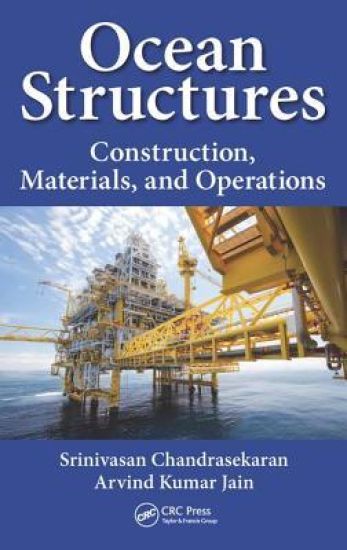
Ocean Structures

Ocean Structures

Srinivasan Chandrasekaran; Arvind Jain

Productivity Press
2016
sidottu
This book addresses the concepts of material selection and analysis, choice of structural form, construction methods, environmental loads, health monitoring, non-destructive testing, and repair methodologies and rehabilitation of ocean structures. It examines various types of ocean and offshore structures, including drilling platforms, processing platforms and vessels, towers, sea walls and surge barriers, and more. It also explores the use of MEMS in offshore structures, with regard to military and oil exploration applications. Full-color figures as well as numerous solved problems and examples are included to help readers understand the applied concepts.
Dynamic Analysis and Design of Offshore Structures

Dynamic Analysis and Design of Offshore Structures

Srinivasan Chandrasekaran

Springer, India, Private Ltd
2016
nidottu
This book attempts to provide readers with an overall idea of various types of offshore platform geometries. It covers the various environmental loads encountered by these structures, a detailed description of the fundamentals of structural dynamics in a class-room style, estimate of damping in offshore structures and their applications in the preliminary analysis and design. Basic concepts of structural dynamics are emphasized through simple illustrative examples and exercises. Design methodologies and guidelines, which are FORM based concepts are explained through a few applied example structures. Each chapter also has tutorials and exercises for self-learning. A dedicated chapter on stochastic dynamics will help the students to extend the basic concepts of structural dynamics to this advanced domain of research. Hydrodynamic response of offshore structures with perforated members is one of the recent research applications, which is found to be one of the effective manner of retrofitting offshore structures. Results of recent research, validated by the experimental and numerical studies are presented to update of the readers. Integration of the concepts of structural dynamics with the FORM-evolved design of offshore structures is a unique approach used in this book. The book will prove useful to the practicing and consulting offshore structural engineers, as also to students and researchers working in the field.
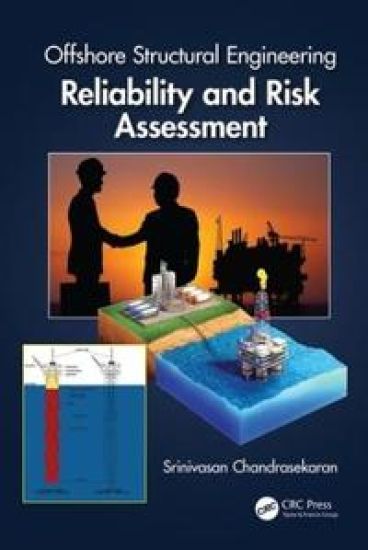
Offshore Structural Engineering

Offshore Structural Engineering

Srinivasan Chandrasekaran

Productivity Press
2016
sidottu
Successfully estimate risk and reliability, and produce innovative, yet reliable designs using the approaches outlined in Offshore Structural Engineering: Reliability and Risk Assessment. A hands-on guide for practicing professionals, this book covers the reliability of offshore structures with an emphasis on the safety and reliability of offshore facilities during analysis, design, inspection, and planning. Since risk assessment and reliability estimates are often based on probability, the author utilizes concepts of probability and statistical analysis to address the risks and uncertainties involved in design. He explains the concepts with clear illustrations and tutorials, provides a chapter on probability theory, and covers various stages of the process that include data collection, analysis, design and construction, and commissioning. In addition, the author discusses advances in geometric structural forms for deep-water oil exploration, the rational treatment of uncertainties in structural engineering, and the safety and serviceability of civil engineering and other offshore structures. An invaluable guide to innovative and reliable structural design, this book: Defines the structural reliability theoryExplains the reliability analysis of structuresExamines the reliability of offshore structuresDescribes the probabilistic distribution for important loading variablesIncludes methods of reliability analysisAddresses risk assessment and more Offshore Structural Engineering: Reliability and Risk Assessment provides an in-depth analysis of risk analysis and assessment and highlights important aspects of offshore structural reliability. The book serves as a practical reference to engineers and students involved in naval architecture, ocean engineering, civil/structural, and petroleum engineering.
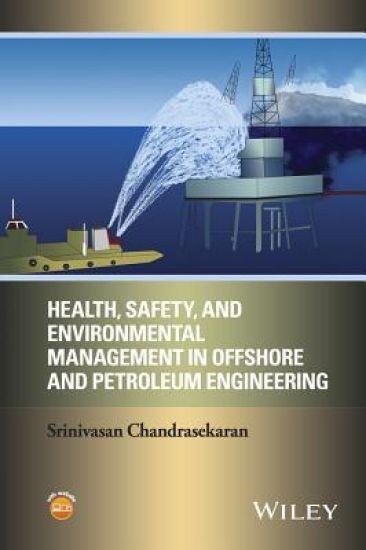
Health, Safety, and Environmental Management in Offshore and Petroleum Engineering
This book shares the technical knowhow in the field of health, safety and environmental management, as applied to oil and gas industries and explains concepts through a simple and straightforward approach Provides an overview of health, safety and environmental (HSE) management as applied to offshore and petroleum engineeringCovers the fundamentals of HSE and demonstrates its practical applicationIncludes industry case studies and examples based on the author's experiences in both academia and oil and gas industriesPresents recent research resultsIncludes tutorials and exercises
Advanced Marine Structures

Advanced Marine Structures

Srinivasan Chandrasekaran

Productivity Press
2015
sidottu
Due in part to a growing demand for offshore oil and gas exploration, the development of marine structures that initially started onshore is now moving into deeper offshore areas. Designers are discovering a need to revisit basic concepts as they anticipate the response behavior of marine structures to increased water depths. Providing a simplified approach to the subject, Advanced Marine Structures explains the fundamentals and advanced concepts of marine architecture introduces various types of offshore platforms, and outlines the different stages of marine structure analysis and design. Written from a structural engineering perspective, this book focuses on structures constructed for offshore oil and gas exploration, various environmental loads, ultimate load design, fluid-structure interaction, fatigue, and fracture. It also offers detailed descriptions of different types of structural forms, functions and limitations of offshore platforms and explains how different loads act on each. In addition, the text incorporates examples and application problems to illustrate the use of experimental, numerical, and analytical studies in the design and development of marine structures, and reviews relevant literature on wave interaction and porous cylinders. This book: Focuses on structural reliabilityDeliberates on fracture and fatigue and examines their application in marine structuresIntroduces ideas on the retrofit and renovation of marine structuresExamines the strength analysis of offshore structures and structural members Advanced Marine Structures examines the design of offshore structures from a structural engineering perspective and explains the design methodologies and guidelines needed for the progressive conceptualization and design of advanced marine structures.
Seismic Design Aids for Nonlinear Analysis of Reinforced Concrete Structures

Seismic Design Aids for Nonlinear Analysis of Reinforced Concrete Structures

Srinivasan Chandrasekaran; Luciano Nunziante; Giorgio Serino; Federico Carannante

CRC Press Inc
2009
sidottu
Nonlinear analysis methods such as static pushover or limit analysis until collapse are globally considered reliable tools for seismic and structural assessment. But the accuracy of seismic capacity estimates—which can prevent catastrophic loss of life and astronomical damage repair costs—depends on the use of the correct basic input parameters. Tools to Safeguard New Buildings and Assess Existing OnesSeismic Design Aids for Nonlinear Analysis of Reinforced Concrete Structures simplifies the estimation of base structural parameters and enables accurate evaluation of proper bounds for the safety factor. Many design engineers make the relatively common mistake of using default properties of materials as input to nonlinear analyses without realizing that any minor variation in the nonlinear characteristics of constitutive materials, such as concrete and steel, could result in a solution error that leads to a disastrously incorrect assessment or interpretation. To achieve a more accurate pushover analysis and improve general performance-based design, this book: Reviews relevant literature to help engineers conduct structural seismic assessment Includes design curves, alleviating the need for complex mathematicsOffers supplementary online tools to aid in computing any parameterProvides complete computer coding used to obtain building collapse multipliers Reassessing key inputs, this book analyzes boundaries using a detailed mathematical model based on international codes. It proposes design curves and tables derived from the authors’ studies, detailing modeling numerical procedures step by step. The authors include analytical bounds of the structural safety factor for some typical frames, making this work a sound and valuable tool for assessment or desi