Kirjailija
Stanley Hauerwas
Kirjat ja teokset yhdessä paikassa: 124 kirjaa, julkaisuja vuosilta 1977–2025, suosituimpiin kuuluu Plough Quarterly No. 9. Vertaile teosten hintoja ja tarkista saatavuus suomalaisista kirjakaupoista.
124 kirjaa
Kirjojen julkaisuvuodet: 1977–2025.
"Karl Barth höll 1946, mitt bland ruinerna av Bonnuniversitetet, de föreläsningar som vi nu känner till som Dogmatik i grunddrag. Han föreläste utan manus. … Men resultatet var och är en vacker bok som vittnar om den Gud som ensam ger oss hopp om att vi kan leva i en värld där krig inte förutsätts vara något givet. …Dogmatik i grunddrag är Barths korta, men intensiva kurs i hur man talar om Gud i en värld som har förlorat vanorna att på ett trofast och pålitligt sätt tala kristet. … Det märks att det han säger kommer från en människa som ett helt liv brottats med Bibeln. …Hjärtat i Barths teologi är antagandet att om vi får fel på det här med Gud så får vi fel på allt annat – vår politik, vår vetenskap, vår konst, hela våra liv. Dessutom trodde han att de krig som hade sargat 1900-talet var resultatet av att vi gjorde oss själva, snarare än Gud, till existensens begynnelse och mål. Dogmatik i grunddrag … återspeglar Barths försök att hjälpa oss att återfå det språk som lämpar sig för oss som människor skapade för att lovprisa vår Skapare och som därmed kan leva i fred med varandra." (Ur "Varför läsa Dogmatik i grunddrag?".)Stanley Hauerwas, Gilbert T Rowe Professor Emeritus of Divinity and Law vid Duke University, USASchweizaren Karl Barth (1886–1968) brukar beskrivas som 1900-talets viktigaste teolog. Förutom sitt samhällsengagemang (bland annat motstånd mot nazismen) är han känd för sin starka betoning på Gud som treenig och Jesus Kristus som teologins centrum. Han blev även en viktig gestalt inom den ekumeniska teologin. Bland hans övriga böcker på svenska återfinns Den evangeliska teologin (Spricka förlag, 2020).
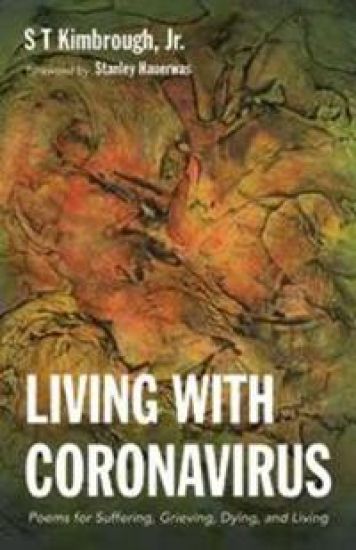
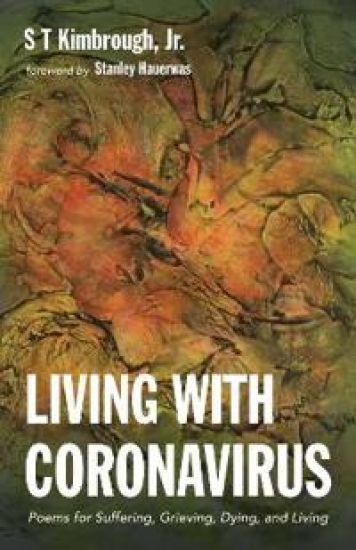
This volume of poems addresses the human effects of the coronavirus pandemic including: prolonged illnesses, death, disruption of society, families, the work force, and economy. There are the accompanying emotional effects of grief, distressed orphaned children, over-stressed hospital staffs, anxieties over the shortage of health workers, medication, and other medical needs. There are also increased incidents of suicide and numerous other emotional entanglements and physical conditions for which a country, city, village, and family are often not prepared. At times such as these, language becomes extremely important in how we communicate with one another. How we face the realism and facts of the moment is vital for the health of a person and a nation. One notes especially the importance of the language of political leaders at a time of national and global suffering. The poems also address issues the pandemic has brought into the open, such as racism, the vulnerability of the poor, and the importance of governmental leadership in a national and worldwide crisis. People of faith emphasize the importance of a faith response to our common humanity amid suffering. Among many other questions, they ask: How shall we live with the enduring problem of pandemics that require changing of attitudes and an ongoing concern for others?
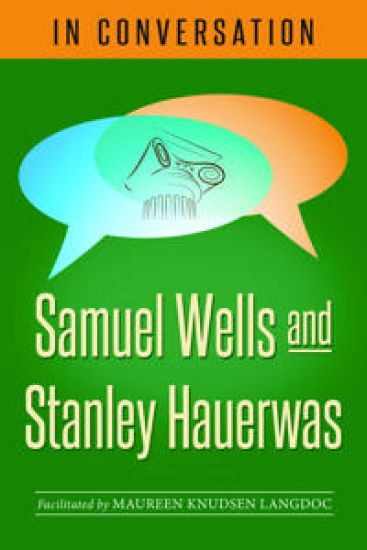
Two contemporary theologians, Samuel Wells and Stanley Hauerwas, add their voices to the ongoing conversation about Christian life in the twenty-first century. This third book in the In Conversation series dives deeply into the theological and personal ideas and motivations for the work of two prominent Christian thinkers. Readers will discover their thoughts on the Trinity, parish ministry, and non-violence, along with anecdotes and intimate notions on marriage, family, and even baseball. Followers of Wells’s and Hauerwas’s theological and homiletical work will find out what has influenced them most, and where they’d like to go from here. A fascinating read for Episcopalians and Anglicans, and those who enjoyed the first two In Conversation books.
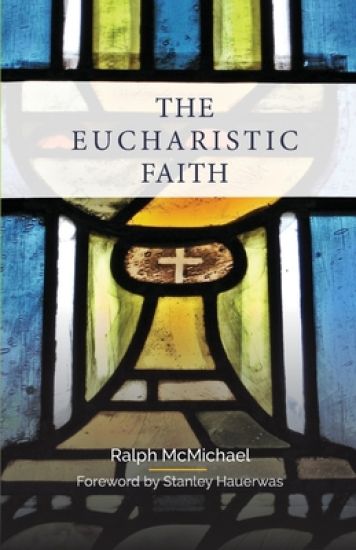
Theology began with the appearances of the risen Jesus. That is, theology began when persons were confronted with a presence that could only be realized by the act of God. In The Eucharistic Faith, the first of a significant new systematic theology of the Eucharist, Ralph N. McMichael weaves liturgy and theology together to understand the ways in which theology and Christian faith are, at heart, about the receiving of the gift of Jesus’ life in Communion.
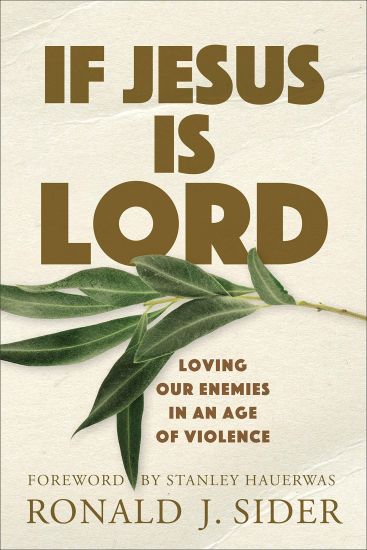
If Jesus Is Lord
Ronald J. Sider; Stanley Hauerwas
Baker Academic, Div of Baker Publishing Group
2019
nidottu
What does Jesus have to say about violence, just war, and killing? Does Jesus ever want his disciples to kill in order to resist evil and promote peace and justice? This book by noted theologian and bestselling author Ronald J. Sider provides a career capstone statement on biblical peacemaking. Sider makes a strong case for the view that Jesus calls his disciples to love, and never kill, their enemies. He explains that there are never only two options: to kill or to do nothing in the face of tyranny and brutality. There is always a third possibility: vigorous, nonviolent resistance. If we believe that Jesus is Lord, then we disobey him when we set aside what he taught about killing and ignore his command to love our enemies. This thorough, comprehensive treatment of a topic of perennial concern vigorously engages with the just war tradition and issues a challenge to all Christians, especially evangelicals, to engage in biblical peacemaking. The book includes a foreword by Stanley Hauerwas.
Wilderness Wanderings slashes through the tangled undergrowth that Christianity in America has become to clear a space for those for whom theology still matters. Writing to a generation of Christians that finds itself at once comfortably ?at home? yet oddly fettered and irrelevant in America, Stanley Hauerwas challenges contemporary Christians to reimagine what it might mean to ?break back into Christianity? in a world that is at best semi-Christian. While the myth that America is a Christian nation has long been debunked, a more urgent constructive task remains; namely, discerning what it may mean for Christians approaching the threshold of the twenty-first century to be courageous in their convictions. Ironically, reclaiming the church's identity and mission may require relinquishing its purported ?gains??which often amount to little more than a sense of comfort, the seduction of feeling ?at ease in Zion?? to take up again the risk and adventure of life ?on the way.? Accordingly, this book gives no comfort to the religious right or left, which continues to think Christianity can be made compatible with the sentimentalities of democratic liberalism. Such a re-visioned church will not establish itself through conquest or in a reconstituted Christendom, but rather must develop within its own life the patient, attentive skills of a wayfaring people. At least a church seasoned by a peripatetic life stands a better chance of noticing the changing directions of God's leading. The wilderness, therefore, ought not to appear to contemporary Christians in America as a foreboding and frightening possibility but as an opportunity to rediscover the excitement and spirit, but also the rigorous discipline, of faithful itinerancy. At such a crucial time as this, Hauerwas challenges Christians to eschew the insidious dangers that attend too permanent a habitation in a place called America and to assume instead the holy risks and hazards characteristic of people called out, set apart
Why worship? In this superb new collection of essays, lay people, clergy, poets, theologians, musicians, novelists, and scholars offer personal, profound, and provocative reflections on their experience of worship in The Episcopal Church. Through their flesh-and-blood stories of longing, loss, and love, we encounter the God who meets us in common prayer. Contributors to the book include: J. Neil Alexander Fred Bahnson Michael Battle Luisa Bonillas Rodney Clapp Kim Edwards Melissa Deckman Fallon Stephen Fowl Paul Fromberg Katherine Greene-McCreight Cameron Dezen Hammon BJ Heyboer Rhonda Mawhood Lee Ian S. Markham Duane Miller Joseph Pagano Amy Peterson Spencer Reece Amy Richter C. K. Robertson Sophfronia Scott Rachel Marie Stone Lauren Winner
Why worship? In this superb new collection of essays, lay people, clergy, poets, theologians, musicians, novelists, and scholars offer personal, profound, and provocative reflections on their experience of worship in The Episcopal Church. Through their flesh-and-blood stories of longing, loss, and love, we encounter the God who meets us in common prayer. Contributors to the book include: J. Neil Alexander Fred Bahnson Michael Battle Luisa Bonillas Rodney Clapp Kim Edwards Melissa Deckman Fallon Stephen Fowl Paul Fromberg Katherine Greene-McCreight Cameron Dezen Hammon BJ Heyboer Rhonda Mawhood Lee Ian S. Markham Duane Miller Joseph Pagano Amy Peterson Spencer Reece Amy Richter C. K. Robertson Sophfronia Scott Rachel Marie Stone Lauren Winner ""This gracefully edited collection is a window into the transformative experience of shared liturgy in all its particularity, difficulty, and beauty. May these honest reflections open the eyes of our faith."" --Sara Miles, author of Take This Bread: A Radical Conversion and City of God: Faith in the Streets ""If Anglicanism claims to be catholic and reformed, then this winsome volume has the best of both: catholic in liturgy, protestant in testimony. Open this volume and meanwhile open your heart to be strangely warmed by the quirky, the moving, the profound, and the playful."" --Sam Wells, Vicar of St. Martin-in-the-Fields, London Joseph S. Pagano and Amy E. Richter are Episcopal priests, appointed missionaries for The Episcopal Church, and serve as lecturers in theology at the College of Transfiguration in Makhanda/Grahamstown, South Africa. They are married to each other.
For over forty years Stanley Hauerwas has been writing theology that matters. In this new collection of essays, lectures, and sermons, Hauerwas continues his life's work of exploring the theological web, discovering and recovering the connections necessary for the church to bear faithful witness to Christ in our complex and changing times. Hauerwas enters into conversation with a diverse array of interlocutors as he brings new insights to bear on matters theological, delves into university matters, demonstrates how lives matter, and continues in his passionate commitment to the matter of preaching. Essays by Robert Dean illumine the connections that have made Hauerwas's theological web-slinging so significant and demonstrate why Hauerwas's sermons have a crucial role to play in the recovery of a gospel-shaped homiletical imagination. ""The role played by oral performance in Stanley Hauerwas' influence as a theologian and Christian has only recently been noticed. This collection is a game changer in highlighting how, at root, Hauerwas main aim has been insistently and creatively to say 'Jesus is Lord' out loud and clearly. Robert J. Dean's appreciative yet critical engagement of his preaching offers much to chew on for those interested in thinking about it in robustly theological terms."" --Brian Brock, University of Aberdeen ""Minding the Web is an extraordinary collection that reveals the complexity, beauty and timeliness of Hauerwas. It invites us to once again drink deeply from the well that is Hauerwas. As you read, prepare yourself to be unsettled only to have your imagination gripped by the world as it is under Jesus as Lord."" --David Fitch, Author of Faithful Presence ""Working in partnership with Robert Dean, Stanley Hauerwas has given us yet another wonderful example of how theology and preaching cannot be divided if both are to serve the church's worship and service of God. Following the lead of both Karl Barth and Dietrich Bonhoeffer, Hauerwas and Dean not only tell but show how the work of theology and preaching need each other in order to be intelligible as Christian speech. Minding the Web is a timely book that reconnects preachers with theologians and theologians with preachers for the sake of the gospel that is the very source of their life and work."" --Michael Pasquarello III, Fuller Theological Seminary Stanley Hauerwas is Gilbert T. Rowe Professor Emeritus of Divinity and Law at Duke University. His books include Hannah's Child: A Theologian's Memoir and With the Grain of the Universe. Robert J. Dean is Associate Professor of Theology and Ethics at Providence Theological Seminary in Otterburne, Manitoba.
Living Gently in a Violent World – The Prophetic Witness of Weakness
Stanley Hauerwas; Jean Vanier
IVP Books
2018
nidottu
How are Christians to live in a violent and wounded world? Rather than contending for privilege by wielding power and authority, we can witness prophetically from a position of weakness. The church has much to learn from an often-overlooked community—those with disabilities. In this fascinating book, theologian Stanley Hauerwas collaborates with Jean Vanier, founder of the worldwide L'Arche communities. For many years, Hauerwas has reflected on the lives of people with disability, the political significance of community, and how the experience of disability addresses the weaknesses and failures of liberal society. And L'Arche provides a unique model of inclusive community that is underpinned by a deep spirituality and theology. Together, Vanier and Hauerwas carefully explore the contours of a countercultural community that embodies a different way of being and witnesses to a new order—one marked by radical forms of gentleness, peacemaking, and faithfulness. The authors' explorations shed light on what it means to be human and how we are to live. The robust voice of Hauerwas and the gentle words of Vanier offer a synergy of ideas that, if listened to carefully, will lead the church to a fresh practicing of peace, love and friendship. This invigorating conversation is for everyday Christians who desire to live faithfully in a world that is violent and broken. This expanded edition now includes a study guide for individual reflection or group discussion.
Stanley Hauerwas is arguably the most well-known figure in theological ethics of the last generation. Having published voluminously over the last 30 years, late in his career he has also published two volumes of essays discussing his corpus retrospectively, as well as a widely acclaimed memoir. The sheer volume of his work can be daunting to readers, and it is easy to get the impression that his retrospective volumes are restating positions developed earlier. Brian Brock delves into Hauerwas' formation as a theologian at Yale, his first book, Character and the Christian Life, and examines some of his early, and outspoken, criticisms of the guild of Christian ethics. This chapter is followed by a discussion of his memoir, Hannah’s Child, and raises tricky questions about the role of autobiography in Christian ethics, as well as the troubling problem of race in the modern academy. Brock explores Hauerwas’ work on disability, his criticisms of the discipline of medical ethics, and the role played by vulnerability in his work. The next chapter examines his views on just war and pacifism, here probing the sensitive issue of the role of gender in his work, and leading into a discussion on the nature of the church’s peaceable politics, in which his supposed hyper-ecclesiocentricism is examined. Brock examines the role of virtue in Hauerwas' thought, and teases out why he hates to be called a virtue ethicist. A final chapter asks him to respond to the recently levelled criticism that scripture does no work in his theology, focusing especially on his under-appreciated commentary on the gospel of Matthew. The editor of this volume has managed to maneuver Hauerwas into positions where he has directly faced tricky questions that he normally does not discuss, such as the accusation that he is racist, too soft on Yoder, or misogynist.
Letters to a Godson
Church, Society, and the Christian Common Good
Stanley Hauerwas; Philip Turner
Cascade Books
2017
sidottu
Church, Society, and the Christian Common Good
Stanley Hauerwas; Philip Turner
Cascade Books
2017
pokkari
Letters from Abu Ghraib, Second Edition
Joshua Casteel; Stanley Hauerwas; Michael J Baxter
Cascade Books
2017
pokkari
Some fourteen years after its initial publication, this important and influential book, with a new, substantial, and candid introduction by the author, is available in a reasonably priced paperback edition. In this volume Hauerwas assesses recent interest in the "ethics of character" and suggests areas in his own work that now call for some corrective and/or further work.