Kirjojen hintavertailu – 12 859 818 kirjaa ja 27 kauppaa

Kirjailija

Stanley Hauerwas

Kirjat ja teokset yhdessä paikassa: 124 kirjaa, julkaisuja vuosilta 1977–2025, suosituimpiin kuuluu Plough Quarterly No. 9. Vertaile teosten hintoja ja tarkista saatavuus suomalaisista kirjakaupoista.

124 kirjaa

Kirjojen julkaisuvuodet: 1977–2025.

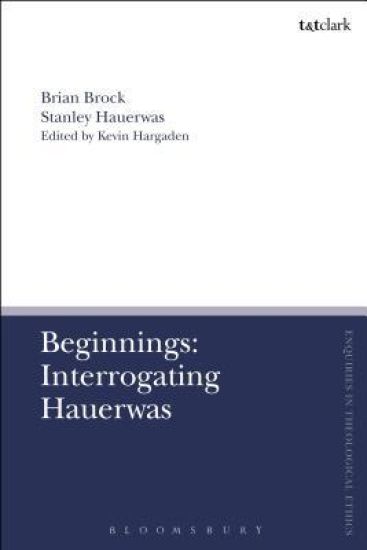
Beginnings: Interrogating Hauerwas

Beginnings: Interrogating Hauerwas

Brian Brock; Stanley Hauerwas

T. T.Clark Ltd
2017
sidottu
Stanley Hauerwas is arguably the most well-known figure in theological ethics of the last generation. Having published voluminously over the last 30 years, late in his career he has also published two volumes of essays discussing his corpus retrospectively, as well as a widely acclaimed memoir. The sheer volume of his work can be daunting to readers, and it is easy to get the impression that his retrospective volumes are restating positions developed earlier. Brian Brock delves into Hauerwas' formation as a theologian at Yale, his first book, Character and the Christian Life, and examines some of his early, and outspoken, criticisms of the guild of Christian ethics. This chapter is followed by a discussion of his memoir, Hannah’s Child, and raises tricky questions about the role of autobiography in Christian ethics, as well as the troubling problem of race in the modern academy. Brock explores Hauerwas’ work on disability, his criticisms of the discipline of medical ethics, and the role played by vulnerability in his work. The next chapter examines his views on just war and pacifism, here probing the sensitive issue of the role of gender in his work, and leading into a discussion on the nature of the church’s peaceable politics, in which his supposed hyper-ecclesiocentricism is examined. Brock examines the role of virtue in Hauerwas' thought, and teases out why he hates to be called a virtue ethicist. A final chapter asks him to respond to the recently levelled criticism that scripture does no work in his theology, focusing especially on his under-appreciated commentary on the gospel of Matthew. The editor of this volume has managed to maneuver Hauerwas into positions where he has directly faced tricky questions that he normally does not discuss, such as the accusation that he is racist, too soft on Yoder, or misogynist.
Sanctify them in the Truth

Sanctify them in the Truth

Stanley Hauerwas

T. T.Clark Ltd
2016
nidottu
In Sanctify them in the Truth Stanley Hauerwas provides an overview of the development of theology and ethics. He considers how the two disciplines interrelate, discusses the nature of sin, how any account of sin requires a more determinative account of moral law, the nature of sanctification, the body as a subject for Christian holiness, and the relationship between sanctification and truthfulness. The volume ends with sermons — Hauerwas emphasizes the freedom the sermons create, as they remind us that the words we use are not our words. The inclusion of sermons also underlines Hauerwas’ point that the truth of the gospel cannot be discovered apart from its embodiment in specific communities of faith. The Christian life, he argues, is not about being in possession of "the truth," defined as a set of timeless and universal principles of belief and action. Rather, it is about learning and living the life of truthfulness toward God and one another. For this Cornerstones edition Hauerwas has provided a new preface that places the work in the present debate and brings this remarkable work to a new audience.
The Holy Spirit

The Holy Spirit

Stanley Hauerwas

Abingdon Press
2015
nidottu
Much more than a personal experience, the Holy Spirit is who God is and what God does as the Trinity, whether we feel it or not. It is the birthday of the church as created through the Spirit, giving the church the task of pointing the world to Jesus. This book will help people recognize what an extraordinary thing has happened to them through baptism and their inclusion in the Body of Christ through the Spirit But to do this the authors will challenge some of the presumptions surrounding discussions about the Spirit in terms of how the work of the Spirit is understood as "inspirational." In other words, this book will help people recover a sense of why the Spirit is the third person of the Trinity and how that reality makes possible our inclusion in the Body of Christ in a manner that challenges some of the individualistic and subjectivist accounts of the Spirit's work.
Work of Theology

Work of Theology

Stanley Hauerwas

William B Eerdmans Publishing Co
2015
nidottu
A "how-to" book on theology from a world-renowned theologianIn this book Stanley Hauerwas returns to the basics of "doing" theology. Revisiting some of his earliest philosophical and theological views to better understand and clarify what he has said before, Hauerwas explores how theological reflection can be understood as an exercise in practical reason. Hauerwas includes chapters on a wide array of topics, including "How I Think I Learned to Think Theologically," "How the Holy Spirit Works," "How to Write a Theological Sentence," and "How to Be Theologically Funny." In a postscript he responds to Nicholas Healy's recent book Hauerwas: A (Very) Critical Introduction." What we believe as Christians," says Hauerwas, "is quite basic and even simple. But because it is so basic, we can lose any sense of the extraordinary nature of Christian beliefs and practices." In discussing the work of theology, Hauerwas seeks to recover that "sense of the oddness of what we believe as Christians."
The Uncertain Center

The Uncertain Center

Arthur C McGill; David William Cain; Stanley Hauerwas

Cascade Books
2015
sidottu
Arthur McGill did not write very much, but what he did write is as theologically suggestive and startling today as it was when it was written in the 1960s and 1970s. He was not well known during his lifetime, but those who cared about the work of theology knew Arthur McGill. Writing during the ascendency of the ""Death of God"" theologies, McGill's words have a freshness that the more widely known theological writing of that time has lost. McGill wrote only two short books during his life, and just a handful of scattered essays, often published in obscure places. We are fortunate that Kent Dunnington has collected and introduced those essays here. The essays reveal a theologian with an uncanny and intrepid resolve to make theological claims illumine and unsettle our lives. As Stanley Hauerwas writes in his afterword to the collection, ""To read McGill is to discover a way to do theology without fear. God knows from where he came, but McGill, as the chapters in this welcome and important book demonstrate, had the ability to make theology do work so that we might better negotiate the imponderable reality we call 'our life.'"" ""Latent beneath the topical occasions of these engaging texts lies a disposition that is not so revolutionary as it is a welcome return to patristic wisdom, a recovery of the life-giving conversation of which we are but a part, if an essential part. If ever we are to know who we are, and who we are called to become, it would be because we also know those whose lives of prayer preceded ours."" --Scott Cairns, author of The End of Suffering and Slow Pilgrim ""From Descartes forward, the West has equated truth with the acquisition of certainty. Scientists and fundamentalists alike assert it. Laypeople look to experts to convert their uncertainties into certainty, whether in the boardroom or the hospital bedroom. McGill brilliantly breaks the thrall of certainty and fixes attention on the Christ who shoulders uncertainty on our behalf. A gifted writer, McGill lets readers venture out beyond their decentering securities and attend to the center that holds."" --Bill May, Retired Cary M. Maguire Professor of Ethics, Southern Methodist University Kent Dunnington is Associate Professor of Philosophy at Greenville College in Illinois. He is the author of Addiction and Virtue (2011).
The Uncertain Center

The Uncertain Center

Arthur C McGill; David William Cain; Stanley Hauerwas

Cascade Books
2015
pokkari
Arthur McGill did not write very much, but what he did write is as theologically suggestive and startling today as it was when it was written in the 1960s and 1970s. He was not well known during his lifetime, but those who cared about the work of theology knew Arthur McGill. Writing during the ascendency of the ""Death of God"" theologies, McGill's words have a freshness that the more widely known theological writing of that time has lost. McGill wrote only two short books during his life, and just a handful of scattered essays, often published in obscure places. We are fortunate that Kent Dunnington has collected and introduced those essays here. The essays reveal a theologian with an uncanny and intrepid resolve to make theological claims illumine and unsettle our lives. As Stanley Hauerwas writes in his afterword to the collection, ""To read McGill is to discover a way to do theology without fear. God knows from where he came, but McGill, as the chapters in this welcome and important book demonstrate, had the ability to make theology do work so that we might better negotiate the imponderable reality we call 'our life.'"" ""Latent beneath the topical occasions of these engaging texts lies a disposition that is not so revolutionary as it is a welcome return to patristic wisdom, a recovery of the life-giving conversation of which we are but a part, if an essential part. If ever we are to know who we are, and who we are called to become, it would be because we also know those whose lives of prayer preceded ours."" --Scott Cairns, author of The End of Suffering and Slow Pilgrim ""From Descartes forward, the West has equated truth with the acquisition of certainty. Scientists and fundamentalists alike assert it. Laypeople look to experts to convert their uncertainties into certainty, whether in the boardroom or the hospital bedroom. McGill brilliantly breaks the thrall of certainty and fixes attention on the Christ who shoulders uncertainty on our behalf. A gifted writer, McGill lets readers venture out beyond their decentering securities and attend to the center that holds."" --Bill May, Retired Cary M. Maguire Professor of Ethics, Southern Methodist University Kent Dunnington is Associate Professor of Philosophy at Greenville College in Illinois. He is the author of Addiction and Virtue (2011).
Matthew

Matthew

Stanley Hauerwas

Brazos Press
2015
nidottu
Explore how the roots of the ancient Christian tradition inform and shape faithfulness todayThe Brazos Theological Commentary on the Bible enlists leading theologians to read and interpret scripture creedally for the twenty-first century, just as the church fathers, the Reformers, and other orthodox Christians did for their times and places. A rich resource for preachers, teachers, students, and study groups, the BTC provides guidance for reading the Bible under the rule of faith. Each volume in the series includes● a Christological focus and framework grounded in the Nicene Creed● connections between biblical interpretation and today's social issues● applications for contemporary faith and life● devotional depth for meditation and reflection● insights from literature, philosophy, culture, and moreThis addition to the series brings the stimulating insights of world-renowned theologian Stanley Hauerwas to the first Gospel. Ultimately the Brazos Theological Commentary on the Bible demonstrates the continuing intellectual and practical viability of theological interpretation of the Bible.
The Practice of the Body of Christ

The Practice of the Body of Christ

Colin D Miller; Stanley Hauerwas

Pickwick Publications
2014
sidottu
The Practice of the Body of Christ begins a conversation between "apocalyptic" interpretations of the Apostle Paul and the contemporary revival in "virtue ethics." It argues that the human actor's place in Pauline theology has long been captive to theological concerns foreign to Paul and that we can discern in Paul a classical account of human action that Alasdair MacIntyre's work helps to recover. Such an account of agency helps ground an apocalyptic reading of Paul by recovering the centrality of the church and its day-to-day Christic practices, specifically, but not exclusively, the Eucharist. To demonstrate this Miller first offers a critique of some contemporary accounts of agency in Paul in light of MacIntyre's work. Three exegetical chapters then establish a "MacIntyrian" rereading of central parts of the letter to the Romans. A concluding chapter offers theological syntheses and prospects for future research.
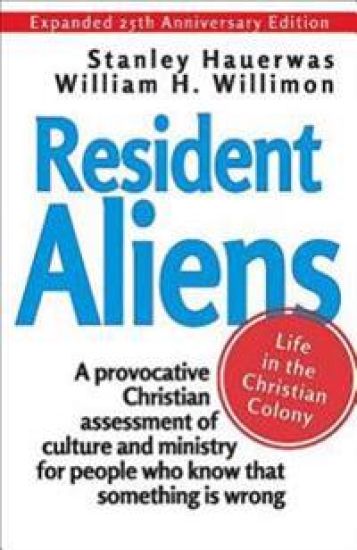
Resident Aliens

Resident Aliens

Stanley Hauerwas; William H. Willimon

Abingdon Press
2014
nidottu

Halvin toimitettuna 28,10 €

Only when the Church enacts its scandalous Jesus-centered tradition will it truly be the body of Christ and transform the world. Twenty-five years after its first appearance, Resident Aliens remains a prophetic vision of how the Church can regain its vitality, battle its malaise, reclaim its capacity to nourish souls, and stand firmly against the illusions, pretensions, and eroding values of today's world. Resident Aliens discusses the nature of the church and its relationship to surrounding culture. It argues that churches should focus on developing Christian life and community rather than attempting to reform secular culture. Stanley Hauerwas and William H. Willimon reject the idea that America is a Christian nation; instead, Christians should see themselves as "resident aliens" in a foreign land. According to Hauerwas and Willimon, the role of Christians is not to transform government but to live lives that model the love of Christ. Rather than try to convince others to change their ethics, Christians should model a new set of ethics that are grounded in the life, death, and resurrection of Christ.
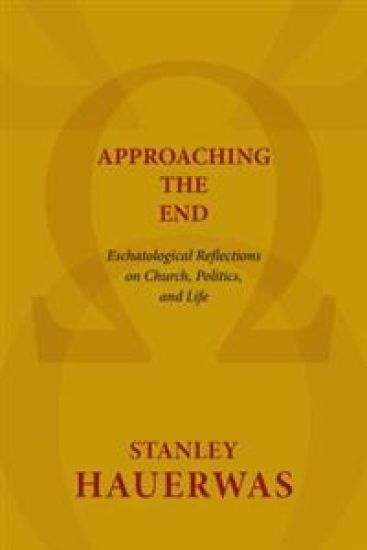
Approaching the End

Approaching the End

Stanley Hauerwas

William B Eerdmans Publishing Co
2013
nidottu
In this book Stanley Hauerwas explores the significance of eschatological reflection for helping the church negotiate the contemporary world. In Part One, "Theological Matters," Hauerwas directly addresses his understanding of the eschatological character of the Christian faith. In Part Two, "Church and Politics," he deals with the political reality of the church in light of the end, addressing such issues as the divided character of the church, the imperative of Christian unity, and the necessary practice of sacrifice. End, for Hauerwas, has a double meaning -- both chronological end and end in the sense of "aim" or "goal." In Part Three, "Life and Death," Hauerwas moves from theology and the church as a whole to focusing on how individual Christians should live in light of eschatology. What does an eschatological approach to life tell us about how to understand suffering, how to form habits of virtue, and how to die?