Kirjojen hintavertailu – 12 859 819 kirjaa ja 27 kauppaa
Kirjailija
Stephen Crane
Kirjat ja teokset yhdessä paikassa: 571 kirjaa, julkaisuja vuosilta 1895–2026, suosituimpiin kuuluu Maggie. Vertaile teosten hintoja ja tarkista saatavuus suomalaisista kirjakaupoista.
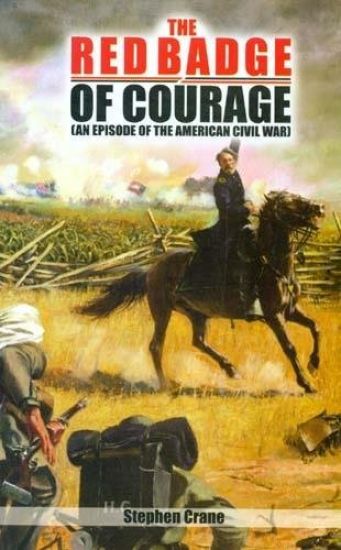
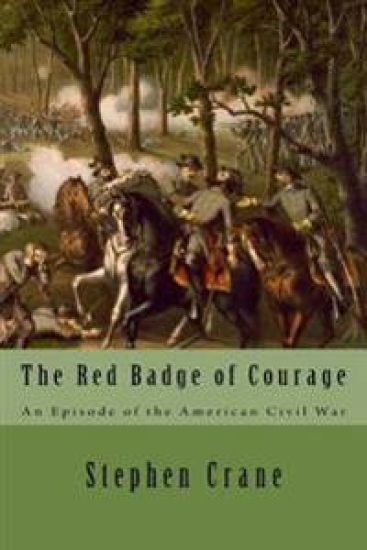
The Red Badge of Courage is a war novel that was written by Stephen Crane. The book is set during the American Civil War and tells the story of Henry Fleming, a private in the Union Army who flees from a battle. Overcome by his shame, Henry hopes to get wounded to counter his prior cowardice. The Red Badge of Courage is especially notable for its use of realism and for the fact that Crane had no military experience at the time he wrote this book. Stephen Crane was a prominent American author during the late 19th century. Crane was very prolific and he was considered to be one of the most innovative writers in American history. Crane's war novel The Red Badge of Courage is considered a classic and it earned him international fame.
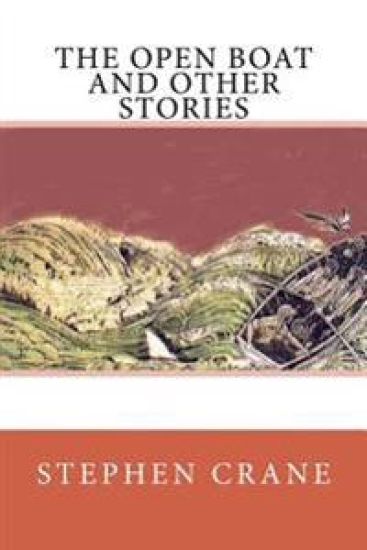
"The Open Boat" is a short story by American author Stephen Crane (1871-1900). First published in 1897, it was based on Crane's experience of surviving a shipwreck off the coast of Florida earlier that year while traveling to Cuba to work as a newspaper correspondent. Crane was stranded at sea for thirty hours when his ship, the SS Commodore, sank after hitting a sandbar. He and three other men were forced to navigate their way to shore in a small boat; one of the men, an oiler named Billie Higgins, drowned after the boat overturned. Crane's personal account of the shipwreck and the men's survival, titled "Stephen Crane's Own Story", was first published a few days after his rescue. Crane subsequently adapted his report into narrative form, and the resulting short story "The Open Boat" was published in Scribner's Magazine. The story is told from the point of view of an anonymous correspondent, with Crane as the implied author, the action closely resembles the author's experiences after the shipwreck. A volume titled The Open Boat and Other Tales of Adventure was published in the United States in 1898; an edition entitled The Open Boat and Other Stories was published simultaneously in England. Praised for its innovation by contemporary critics, the story is considered an exemplary work of literary Naturalism, and is one of the most frequently discussed works in Crane's canon. It is notable for its use of imagery, irony, symbolism, and the exploration of such themes as survival, solidarity, and the conflict between man and nature. H. G. Wells considered "The Open Boat" to be "beyond all question, the crown of all Crane's] work" PLOT: "The Open Boat" is divided into seven sections, each told mainly from the point of view of the correspondent, based upon Crane himself. The first part introduces the four characters-the correspondent, a condescending observer detached from the rest of the group; 15] the captain, who is injured and morose at having lost his ship, yet capable of leadership; the cook, fat and comical, but optimistic that they will be rescued; and the oiler, Billie, who is physically the strongest, and the only one in the story referred to by name. The four are survivors of a shipwreck, which occurred before the beginning of the story, and are drifting at sea in a small dinghy. In the following four sections, the moods of the men fluctuate from anger at their desperate situation, to a growing empathy for one another and the sudden realization that nature is indifferent to their fates. The men become fatigued and bicker with one another; nevertheless, the oiler and the correspondent take turns rowing toward shore, while the cook bails water to keep the boat afloat. When they see a lighthouse on the horizon, their hope is tempered with the realization of the danger of trying to reach it. Their hopes dwindle further when, after seeing a man waving from shore, and what may or may not be another boat, they fail to make contact. The correspondent and the oiler continue to take turns rowing, while the others sleep fitfully during the night. The correspondent then notices a shark swimming near the boat, but he does not seem to be bothered by it as one would expect. In the penultimate chapter, the correspondent wearily recalls a verse from the poem "Bingen on the Rhine" by Caroline Norton, in which a "soldier of the Legion" dies far from home.... Stephen Crane (November 1, 1871 - June 5, 1900) was an American poet, novelist, and short story writer. Prolific throughout his short life, he wrote notable works in the Realist tradition as well as early examples of American Naturalism and Impressionism. He is recognized by modern critics as one of the most innovative writers of his generation.
The Monster is an 1898 novella by American author Stephen Crane (1871-1900). The story takes place in the small, fictional town of Whilomville, New York. An African-American coachman named Henry Johnson, who is employed by the town's physician, Dr. Trescott, becomes horribly disfigured after he saves Trescott's son from a fire. When Henry is branded a "monster" by the town's residents, Trescott vows to shelter and care for him, resulting in his family's exclusion from the community. The novella reflects upon the 19th-century social divide and ethnic tensions in America. The fictional town of Whilomville, which is used in 14 other Crane stories, was based on Port Jervis, New York, where Crane lived with his family for a few years during his youth. It is thought that he took inspiration from several local men who were similarly disfigured, although modern critics have made numerous connections between the story and the 1892 lynching in Port Jervis of an African-American man named Robert Lewis. A study of prejudice, fear, and isolation in a rather small town, the novella was first published in Harper's Magazine in August 1898. A year later, it was included in The Monster and Other Stories-the last collection of Crane's work to be published during his lifetime. Written in a more exact and less dramatic style than two of his previous major works (Maggie: A Girl of the Streets and The Red Badge of Courage), The Monster differs from the other Whilomville stories in its scope and length. Its themes include the paradoxical study of monstrosity and deformity, as well as race and tolerance. While the novella and collection received mixed reviews from contemporary critics, The Monster is now considered one of Crane's best works. PLOT: After being admonished by his father, Dr. Ned Trescott, for damaging a peony while playing in his family's yard, young Jimmie Trescott visits his family's coachman, Henry Johnson. Henry, who is described as "a very handsome negro", "known to be a light, a weight, and an eminence in the suburb of the town", 20] is friendly toward Jimmie. Later that evening Henry dresses smartly and saunters through town-inciting catcalls from friends and ridicule from the local white men-on his way to call on the young Bella Farragut, who is extremely taken with him. That same evening, a large crowd gathers in the park to hear a band play. Suddenly, the nearby factory whistle blows to alert the townspeople of a fire in the second district of the town; men gather hose-carts and head toward the blaze that is quickly spreading throughout Dr. Trescott's house. Mrs. Trescott is saved by a neighbor, but cannot locate Jimmie, who is trapped inside. Henry appears from the crowd and rushes into the house in search of the boy, finding him unharmed in his bedroom. Unable to retreat the way he came, Henry carries Jimmie, wrapped in a blanket, to the doctor's laboratory and the hidden stairway that leads outside. He discovers the fire has blocked this way out as well and collapses beside Dr. Trescott's desk. A row of nearby jars shatters from the heat, spilling molten chemicals upon Henry's upturned face..... Stephen Crane (November 1, 1871 - June 5, 1900) was an American poet, novelist, and short story writer. Prolific throughout his short life, he wrote notable works in the Realist tradition as well as early examples of American Naturalism and Impressionism. He is recognized by modern critics as one of the most innovative writers of his generation....
Stephen Crane (November 1, 1871 - June 5, 1900) was an American poet, novelist, and short story writer. Prolific throughout his short life, he wrote notable works in the Realist tradition as well as early examples of American Naturalism and Impressionism. He is recognized by modern critics as one of the most innovative writers of his generation. The ninth surviving child of Protestant Methodist parents, Crane began writing at the age of four and had published several articles by the age of 16. Having little interest in university studies, he left college in 1891 to work as a reporter and writer. Crane's first novel was the 1893 Bowery tale Maggie: A Girl of the Streets, generally considered by critics to be the first work of American literary Naturalism. He won international acclaim in 1895 for his Civil War novel The Red Badge of Courage, which he wrote without having any battle experience. In 1896, Crane endured a highly publicized scandal after appearing as a witness in the trial of a suspected prostitute, an acquaintance named Dora Clark. Late that year he accepted an offer to travel to Cuba as a war correspondent. As he waited in Jacksonville, Florida, for passage, he met Cora Taylor, with whom he began a lasting relationship. En route to Cuba, Crane's vessel the SS Commodore, sank off the coast of Florida, leaving him and others adrift for 30 hours in a dinghy. 1] Crane described the ordeal in "The Open Boat". During the final years of his life, he covered conflicts in Greece (accompanied by Cora, recognized as the first woman war correspondent) and later lived in England with her. He was befriended by writers such as Joseph Conrad and H. G. Wells. Plagued by financial difficulties and ill health, Crane died of tuberculosis in a Black Forest sanatorium in Germany at the age of 28. At the time of his death, Crane was considered an important figure in American literature. After he was nearly forgotten for two decades, critics revived interest in his life and work. Crane's writing is characterized by vivid intensity, distinctive dialects, and irony. Common themes involve fear, spiritual crises and social isolation. Although recognized primarily for The Red Badge of Courage, which has become an American classic, Crane is also known for his poetry, journalism, and short stories such as "The Open Boat", "The Blue Hotel", "The Bride Comes to Yellow Sky", and The Monster. His writing made a deep impression on 20th-century writers, most prominent among them Ernest Hemingway, and is thought to have inspired the Modernists and the Imagists.
During an unnamed battle, 18-year-old private Henry Fleming survives what he considers to be a lost cause by escaping into a nearby wood, deserting his battalion. He finds a group of injured men in which one of the group, the "Tattered Soldier", asks Henry, who's often referred to as "The Youth", where he's wounded. Henry, embarrassed that he's whole, wanders thru the forest. He ultimately decides that running was the best thing, & that he's a small part of the army responsible for saving himself. When he learns that his battalion had won the battle, Henry feels guilty. As a result, he returns to his battalion & is injured when a cannon operator hits him in the head because he wouldn't let go of his arm. When he returns to camp, the other soldiers believe he was harmed by a bullet grazing him in battle. The next morning he goes into battle for a 3rd time. While looking for a stream from which to attain water, he discovers from the commanding officer that his regiment has a lackluster reputation. The officer speaks casually about sacrificing Henry's regiment because they're nothing more than "mule drivers" & "mud diggers". With no regiments to spare, the general orders his men forward. In the final battle, Henry becomes one of the best fighters in his battalion as well as the flag bearer, finally proving his courage as a man.
The Monster - And Other Stories is an unchanged, high-quality reprint of the original edition of 1899. Hansebooks is editor of the literature on different topic areas such as research and science, travel and expeditions, cooking and nutrition, medicine, and other genres. As a publisher we focus on the preservation of historical literature. Many works of historical writers and scientists are available today as antiques only. Hansebooks newly publishes these books and contributes to the preservation of literature which has become rare and historical knowledge for the future.
The Little Regiment - And Other Stories of the American Civil War is an unchanged, high-quality reprint of the original edition of 1896. Hansebooks is editor of the literature on different topic areas such as research and science, travel and expeditions, cooking and nutrition, medicine, and other genres. As a publisher we focus on the preservation of historical literature. Many works of historical writers and scientists are available today as antiques only. Hansebooks newly publishes these books and contributes to the preservation of literature which has become rare and historical knowledge for the future.
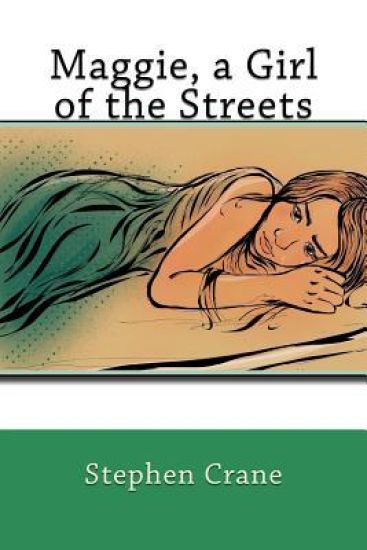
The story opens with Jimmie, at this point a young boy, trying by himself to fight a gang of boys from an opposing neighborhood. He is saved by his friend, Pete, and comes home to his sister Maggie, his toddling brother Tommie, his brutal and drunken father and mother, Mary Johnson. The parents terrify the children until they are shuddering in the corner... Nellie, a "woman of brilliance and audacity" convinces Pete to leave Maggie, whom she calls "a little pale thing with no spirit." Thus abandoned, Maggie tries to return home but is rejected by her mother and scorned by the entire tenement...
"The Open Boat" is a short story by American author Stephen Crane (1871-1900). First published in 1897, it was based on Crane's experience of surviving a shipwreck off the coast of Florida earlier that year while traveling to Cuba to work as a newspaper correspondent. Crane was stranded at sea for thirty hours when his ship, the SS Commodore, sank after hitting a sandbar. He and three other men were forced to navigate their way to shore in a small boat; one of the men, an oiler named Billie Higgins, drowned after the boat overturned. A volume titled The Open Boat and Other Tales of Adventure was published in the United States in 1898; an edition entitled The Open Boat and Other Stories was published simultaneously in England. About the Author: American author Stephen Crane began writing early in life, and was already a published author by the age of sixteen.