Kirjojen hintavertailu – 12 859 819 kirjaa ja 27 kauppaa
Kirjailija
Stephen Crane
Kirjat ja teokset yhdessä paikassa: 571 kirjaa, julkaisuja vuosilta 1895–2026, suosituimpiin kuuluu Maggie. Vertaile teosten hintoja ja tarkista saatavuus suomalaisista kirjakaupoista.
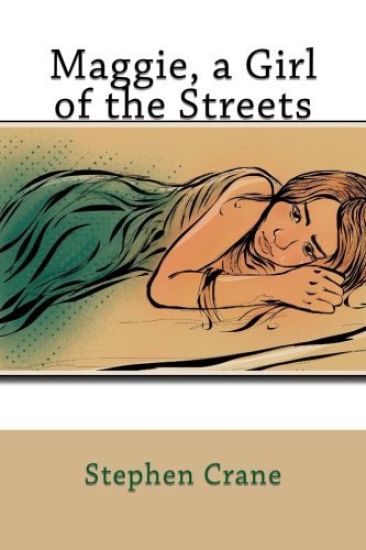
Before he succumbed to a fatal case of tuberculosis at the age of 28, author Stephen Crane penned five remarkably accomplished novels, not to mention dozens of short stories, essays, and sketches. Stephen Crane (November 1, 1871 - June 5, 1900) was an American poet, novelist, and short story writer. Prolific throughout his short life, he wrote notable works in the Realist tradition as well as early examples of American Naturalism and Impressionism. He is recognized by modern critics as one of the most innovative writers of his generation. The ninth surviving child of Protestant Methodist parents, Crane began writing at the age of four and had published several articles by the age of 16. Having little interest in university studies, he left college in 1891 to work as a reporter and writer. Crane's first novel was the 1893 Bowery tale Maggie: A Girl of the Streets, generally considered by critics to be the first work of American literary Naturalism. He won international acclaim in 1895 for his Civil War novel The Red Badge of Courage, which he wrote without having any battle experience. In 1896, Crane endured a highly publicized scandal after appearing as a witness in the trial of a suspected prostitute, an acquaintance named Dora Clark. Late that year he accepted an offer to travel to Cuba as a war correspondent. As he waited in Jacksonville, Florida, for passage, he met Cora Taylor, with whom he began a lasting relationship. En route to Cuba, Crane's vessel the SS Commodore, sank off the coast of Florida, leaving him and others adrift for 30 hours in a dinghy. 1] Crane described the ordeal in "The Open Boat". During the final years of his life, he covered conflicts in Greece (accompanied by Cora, recognized as the first woman war correspondent) and later lived in England with her. He was befriended by writers such as Joseph Conrad and H. G. Wells. Plagued by financial difficulties and ill health, Crane died of tuberculosis in a Black Forest sanatorium in Germany at the age of 28. At the time of his death, Crane was considered an important figure in American literature. After he was nearly forgotten for two decades, critics revived interest in his life and work. Crane's writing is characterized by vivid intensity, distinctive dialects, and irony. Common themes involve fear, spiritual crises and social isolation. Although recognized primarily for The Red Badge of Courage, which has become an American classic, Crane is also known for his poetry, journalism, and short stories such as "The Open Boat", "The Blue Hotel", "The Bride Comes to Yellow Sky", and The Monster. His writing made a deep impression on 20th-century writers, most prominent among them Ernest Hemingway, and is thought to have inspired the Modernists and the Imagists....
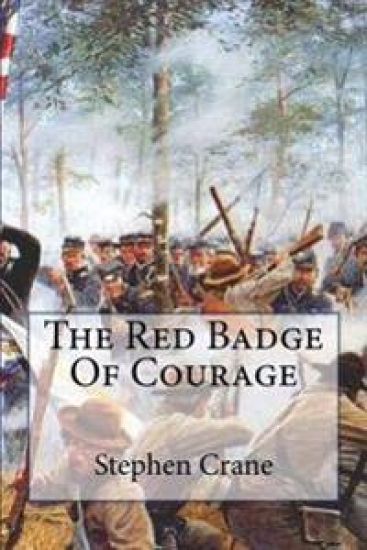
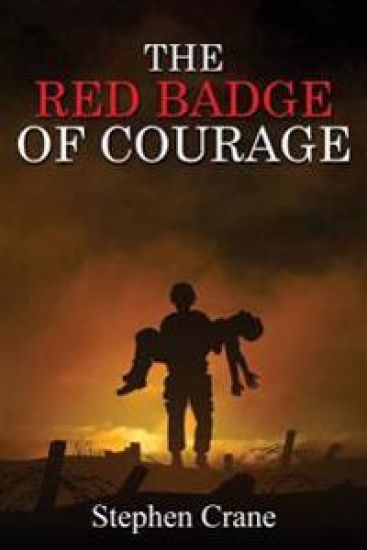
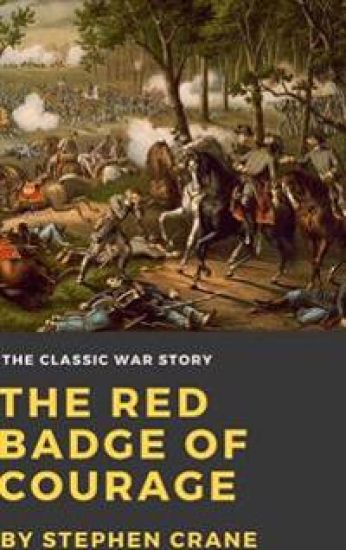
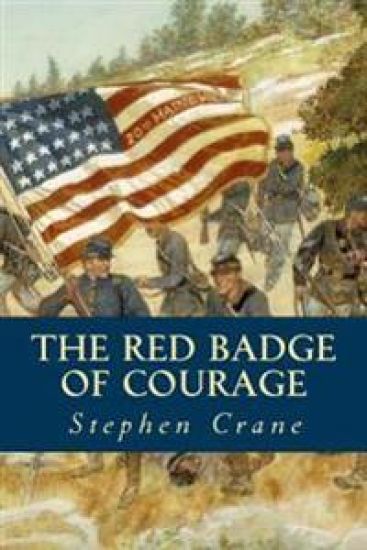
The Red Badge of Courage is a war novel by American author Stephen Crane (1871-1900). Taking place during the American Civil War, the story is about a youngprivate of the Union Army, Henry Fleming, who flees from the field of battle. Overcome with shame, he longs for a wound, a "red badge of courage," to counteract his cowardice. When his regiment once again faces the enemy, Henry acts as standard-bearer. The novel is known for its distinctive style, which includes realistic battle sequences as well as the repeated use of color imagery, and ironic tone. Separating itself from a traditional war narrative, Crane's story reflects the inner experience of its protagonist (a soldier fleeing from combat) rather than the external world around him. Also notable for its use of what Crane called a "psychological portrayal of fear", the novel's allegorical and symbolic qualities are often debated by critics. Several of the themes that the story explores are maturation, heroism, cowardice, and the indifference of nature. Adapted several times for the screen, the novel became a bestseller. It has never been out of print and is now thought to be Crane's most important work and a major American text.
"It was not well to drive men into final corners; at those moments they could all develop teeth and claws." --- Stephen Crane, The Red Badge of Courage The Red Badge of Courage is a war novel by American author Stephen Crane (1871-1900). Taking place during the American Civil War, the story is about a young private of the Union Army, Henry Fleming, who flees from the field of battle. Overcome with shame, he longs for a wound, a "red badge of courage," to counteract his cowardice. When his regiment once again faces the enemy, Henry acts as standard-bearer. Although Crane was born after the war, and had not at the time experienced battle first-hand, the novel is known for its realism. He began writing what would become his second novel in 1893, using various contemporary and written accounts (such as those published previously by Century Magazine) as inspiration. It is believed that he based the fictional battle on that of Chancellorsville; he may also have interviewed veterans of the 124th New York Volunteer Infantry Regiment, commonly known as the Orange Blossoms. Initially shortened and serialized in newspapers in December 1894, the novel was published in full in October 1895. A longer version of the work, based on Crane's original manuscript, was published in 1982. The novel is known for its distinctive style, which includes realistic battle sequences as well as the repeated use of color imagery, and ironic tone. Separating itself from a traditional war narrative, Crane's story reflects the inner experience of its protagonist (a soldier fleeing from combat) rather than the external world around him. Also notable for its use of what Crane called a "psychological portrayal of fear", the novel's allegorical and symbolic qualities are often debated by critics. Several of the themes that the story explores are maturation, heroism, cowardice, and the indifference of nature. The Red Badge of Courage garnered widespread acclaim, what H. G. Wells called "an orgy of praise", shortly after its publication, making Crane an instant celebrity at the age of twenty-four. The novel and its author did have their initial detractors, however, including author and veteran Ambrose Bierce. Adapted several times for the screen, the novel became a bestseller. It has never been out of print and is now thought to be Crane's most important work and a major American text.
First published serially in 1894 and lengthened for the book publication in 1895, "The Red Badge of Courage" is a classic modern depiction of the psychological turmoil of war from the perspective of an ordinary soldier. The story revolves around Henry Fleming, a member of the 304th regiment of the Union Army, serving during the American Civil War. At the start of the novel Henry is eager to show his patriotism in battle but when faced with the savagery of death he flees the frontline. Ashamed of his behavior, Henry spends the rest of the novel trying to redeem his earlier cowardice. Instantly popular from its original publication, "The Red Badge of Courage" garnered what H. G. Well's would refer to as an "orgy of praise", bringing Crane instant notoriety in the United States and abroad. Noted for its unique style, the work has been described as at once naturalistic, realistic, and impressionistic. Although never having seen battle Stephen Crane vividly depicted the grueling intensity of war in his landmark work. This edition is printed on premium acid-free paper and includes an introduction by William Targ.
More the story of the battle that rages inside the hero, Henry Fleming, than of that between Confederate and Union soldiers, the novel is, as its author has said, a psychological study of fear.
Active Service is a classic relationship novel by Stephen Crane. MARJORY walked pensively along the hall. In the cool shadows made by the palms on the window ledge, her face wore the expression of thoughtful melancholy expected on the faces of the devotees who pace in cloistered gloom. She halted before a door at the end of the hall and laid her hand on the knob. She stood hesitating, her head bowed. It was evident that this mission was to require great fortitude.
Stranded at Sea With Three Others - Survivor "The Open Boat" is a short story by American author Stephen Crane (1871-1900). First published in 1897, it was based on Crane's experience of surviving a shipwreck off the coast of Florida earlier that year while traveling to Cuba to work as a newspaper correspondent. Crane was stranded at sea for thirty hours when his ship, the SS Commodore, sank after hitting a sandbar. He and three other men were forced to navigate their way to shore in a small boat; one of the men, an oiler named Billie Higgins, drowned after the boat overturned. A volume titled The Open Boat and Other Tales of Adventure was published in the United States in 1898; an edition entitled The Open Boat and Other Stories was published simultaneously in England. About the Author: American author Stephen Crane began writing early in life, and was already a published author by the age of sixteen. Get Your Copy Now.
What Would You Do To Survive After a Shipwreck? Following a shipwreck, four survivors are adrift in a leaking dinghy-The Open Boat. The captain is hurt but still able to lead, the cook keeps the boat afloat by bailing, and the correspondent and the oiler-a man whose job it is to oil machinery-take turns rowing. At first, angry at their situation and inclined to bicker, the men ultimately form bonds of empathy and, united, struggle to survive. Based on author Stephen Crane's own experience of shipwreck off the coast of Florida in 1897, "The Open Boat" is considered by many to be his greatest work and the model of literary Naturalism. First published in 1897, it was based on Crane's experience of surviving a shipwreck off the coast of Florida earlier that year while traveling to Cuba to work as a newspaper correspondent. About the Author: Stephen Crane (November 1, 1871 - June 5, 1900) was an American poet, novelist, and short story writer. Get Your Copy Now.