Kirjojen hintavertailu – 12 859 818 kirjaa ja 27 kauppaa
Kirjailija
Stephen Crane
Kirjat ja teokset yhdessä paikassa: 571 kirjaa, julkaisuja vuosilta 1895–2026, suosituimpiin kuuluu Maggie. Vertaile teosten hintoja ja tarkista saatavuus suomalaisista kirjakaupoista.
The harrowing title tale from this collection recounts the experiences of an African-American coachman who becomes horribly disfigured after rescuing his employer's son from a fire. A study of race and tolerance as well as the challenges posed by deformity, this major work is accompanied by "The Blue Hotel" and "His New Mittens."
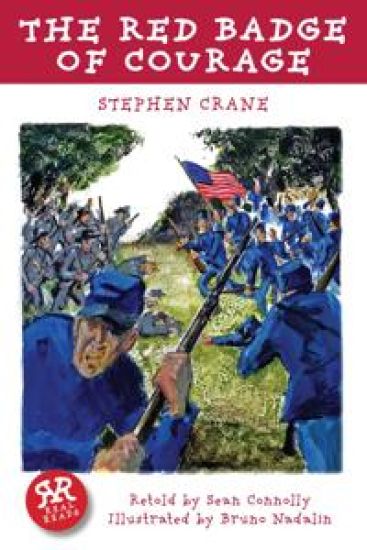
His regiment has yet to be tested in the fire of battle. Together the soldiers wait while distant guns rumble and the lights of enemy campfires flicker on the hills beyond a darkened river. The young man recalls his childhood dreams of valiant combat. Will he pass the test and return home to tell others of his triumphs on the battlefield? Or will he flee at the first sign of real danger? And what of his fellow soldiers, whose lives are caught up with his once the fighting begins? Will they examine the young man for any sign of real courage – or will he slink away in shame?
The Red Badge of Courage is a Civil War novel by American author Stephen Crane (1871-1900). Taking place during the American Civil War, the story is about a young private of the Union Army, Henry Fleming, who flees from the field of battle. Overcome with shame, he longs for a wound, a "red badge of courage," to counteract his cowardice. When his regiment once again faces the enemy, Henry acts as standard-bearer, who carries a flag. Although Crane was born after the war, and had not at the time experienced battle first-hand, the novel is known for its realism. He began writing what would become his second novel in 1894, using various contemporary and written accounts (such as those published previously by Century Magazine) as inspiration. It is believed that he based the fictional battle on that of Chancellorsville; he may also have interviewed veterans of the 124th New York Volunteer Infantry Regiment, commonly known as the Orange Blossoms. Initially shortened and serialized in newspapers in December 1894, the novel was published in full in October 1895. A longer version of the work, based on Crane's original manuscript, was published in 1983. The novel is known for its distinctive style, which includes realistic battle sequences as well as the repeated use of color imagery, and ironic tone. Separating itself from a traditional war narrative, Crane's story reflects the inner experience of its protagonist (a soldier fleeing from combat) rather than the external world around him. Also notable for its use of what Crane called a "psychological portrayal of fear", the novel's allegorical and symbolic qualities are often debated by critics. Several of the themes that the story explores are maturation, heroism, cowardice, and the indifference of nature. The Red Badge of Courage garnered widespread acclaim, what H. G. Wells called "an orgy of praise", shortly after its publication, making Crane an instant celebrity at the age of twenty-four. The novel and its author did have their initial detractors, however, including author and veteran Ambrose Bierce. Adapted several times for the screen, the novel became a bestseller. It has never been out of print and is now thought to be Crane's most important work and a major American text. Stephen Crane published his first novel, Maggie: A Girl of the Streets, in March 1893 at the age of 22. Maggie was not a success, either financially or critically. Most critics thought the unsentimental Bowery tale crude or vulgar, and Crane chose to publish the work privately after it was repeatedly rejected for publication. Crane found inspiration for his next novel while spending hours lounging in a friend's studio in the early summer of 1893. There, he became fascinated with issues of Century Magazine that were largely devoted to famous battles and military leaders from the Civil War. Frustrated with the dryly written stories, Crane stated, "I wonder that some of those fellows don't tell how they felt in those scraps. They spout enough of what they did, but they're as emotionless as rocks." Returning to these magazines during subsequent visits to the studio, he decided to write a war novel. He later stated that he "had been unconsciously working the detail of the story out through most of his boyhood" and had imagined "war stories ever since he was out of knickerbockers." At the time, Crane was intermittently employed as a free-lance writer, contributing articles to various New York City newspapers. He began writing what would become The Red Badge of Courage in June 1893, while living with his older brother Edmund in Lake View, New Jersey. Crane conceived the story from the point of view of a young private who is at first filled with boyish dreams of the glory of war, only to become disillusioned by war's reality. He took the private's surname, "Fleming," from his sister-in-law's maiden name.
Crane, best known for his novels and short stories, was also an accomplished and innovative poet. This edition includes all his poems at an attractive price. Check out our other books at www.dogstailbooks.co.uk
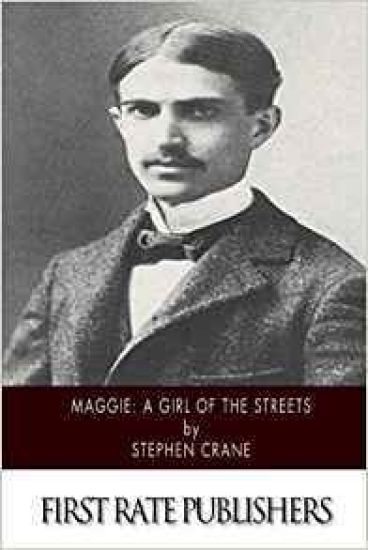
Stephen Crane (November 1, 1871 - June 5, 1900) was an American novelist, short story writer, poet and journalist who wrote prolifically in his short life, becoming one of the best writers in the genres of Realism and Naturalism. Like Ambrose Bierce, Crane wrote often about war, inspired in part by his time spent as a war correspondent. One of his admirers was none other than Ernest Hemingway, who was influenced heavily by Crane's style. Maggie: A Girl of the Streets was Crane's first novel, and a prime example of what scholars call the Naturalist movement. Its gritty and realistic depiction of a family with all kinds of troubles at home was considered controversial in its time, but it's now acknowledged as a classic.