Kirjojen hintavertailu – 12 859 824 kirjaa ja 27 kauppaa

Kirjailija

Steve Bowkett

Kirjat ja teokset yhdessä paikassa: 30 kirjaa, julkaisuja vuosilta 2006–2025, suosituimpiin kuuluu A Moon on Water. Vertaile teosten hintoja ja tarkista saatavuus suomalaisista kirjakaupoista.

30 kirjaa

Kirjojen julkaisuvuodet: 2006–2025.

Question Quest for Ages 8-14

Question Quest for Ages 8-14

Steve Bowkett; Tony Hitchman

TAYLOR FRANCIS LTD
2025
nidottu
The ability to ask incisive questions is a powerful skill set that children can acquire and develop if the classroom and whole-school environments support it. This essential book offers a range of engaging and inclusive activities that promotes children’s questioning and feeds their natural sense of curiosity and wonder. Question Quest explores the various types of questions that can be asked in a number of educational contexts, from the point of view of both teachers and pupils. Packed with 100 practical activities, the book seeks to boost children’s self-confidence in asking questions and provides the tools to establish a ‘questioning classroom’ where asking questions is encouraged and celebrated in order to enhance children’s learning. With clear and practical explanations, the authors argue how questioning is an intelligent behaviour that is essential in nurturing children’s innate desire to learn constantly. Topics covered include:Establishing a questioning classroomQuestioning and creativityQuestions and creative writingConducting a discussionPhilosophical enquiryQuestioning and life coachingThis book is a key resource for any school, teacher or parent looking to foster and develop critical thinking skills in children and young people.
Question Quest for Ages 8-14

Question Quest for Ages 8-14

Steve Bowkett; Tony Hitchman

TAYLOR FRANCIS LTD
2025
sidottu
The ability to ask incisive questions is a powerful skill set that children can acquire and develop if the classroom and whole-school environments support it. This essential book offers a range of engaging and inclusive activities that promotes children’s questioning and feeds their natural sense of curiosity and wonder. Question Quest explores the various types of questions that can be asked in a number of educational contexts, from the point of view of both teachers and pupils. Packed with 100 practical activities, the book seeks to boost children’s self-confidence in asking questions and provides the tools to establish a ‘questioning classroom’ where asking questions is encouraged and celebrated in order to enhance children’s learning. With clear and practical explanations, the authors argue how questioning is an intelligent behaviour that is essential in nurturing children’s innate desire to learn constantly. Topics covered include:Establishing a questioning classroomQuestioning and creativityQuestions and creative writingConducting a discussionPhilosophical enquiryQuestioning and life coachingThis book is a key resource for any school, teacher or parent looking to foster and develop critical thinking skills in children and young people.
Understanding the World Through Narrative

Understanding the World Through Narrative

Steve Bowkett; Tony Hitchman

TAYLOR FRANCIS LTD
2023
nidottu
While many educational books focus on creative and critical thinking skills, this ground-breaking work is the first to deal specifically with the ability to understand, question and evaluate information presented, broadly speaking, in story form. Story or narrative is central to our understanding of and interaction with the world around us. We only have to think of the ‘mini stories’ encapsulated in many advertisements; the way that topics in science – the story of human evolution for example, in history and other subjects present themselves; the power of myths and legends to act as guides to moral behaviour; and the pervasive way that gossip, rumour and superstition can spread – to recognise the benefits of heightening such awareness in young learners. Understanding the World Through Narrative explores the narrative structure of fiction, but uses this as a template to show how the story form appears in mythology and modern urban folklore, science, history, the media – including advertising; in our internal dialogues (stories we tell ourselves about ourselves and others), and how narrative structure can be used in curriculum planning to enhance children’s learning. The book contains over 160 thinking/discussing/researching activities for use in the classroom and as project work. Chapters can be used independently, although they are arranged with increasing degrees of sophistication and challenge. This fascinating work is an essential resource for any teacher of upper primary and lower secondary students, covering not only children’s evolving intellectual ability and promoting curiosity and critical engagement but also enhancing their mental and emotional wellbeing.
Understanding the World Through Narrative

Understanding the World Through Narrative

Steve Bowkett; Tony Hitchman

TAYLOR FRANCIS LTD
2023
sidottu
While many educational books focus on creative and critical thinking skills, this ground-breaking work is the first to deal specifically with the ability to understand, question and evaluate information presented, broadly speaking, in story form. Story or narrative is central to our understanding of and interaction with the world around us. We only have to think of the ‘mini stories’ encapsulated in many advertisements; the way that topics in science – the story of human evolution for example, in history and other subjects present themselves; the power of myths and legends to act as guides to moral behaviour; and the pervasive way that gossip, rumour and superstition can spread – to recognise the benefits of heightening such awareness in young learners. Understanding the World Through Narrative explores the narrative structure of fiction, but uses this as a template to show how the story form appears in mythology and modern urban folklore, science, history, the media – including advertising; in our internal dialogues (stories we tell ourselves about ourselves and others), and how narrative structure can be used in curriculum planning to enhance children’s learning. The book contains over 160 thinking/discussing/researching activities for use in the classroom and as project work. Chapters can be used independently, although they are arranged with increasing degrees of sophistication and challenge. This fascinating work is an essential resource for any teacher of upper primary and lower secondary students, covering not only children’s evolving intellectual ability and promoting curiosity and critical engagement but also enhancing their mental and emotional wellbeing.
Visualising Literacy and How to Teach It

Visualising Literacy and How to Teach It

Steve Bowkett; Tony Hitchman

Taylor Francis Ltd
2021
sidottu
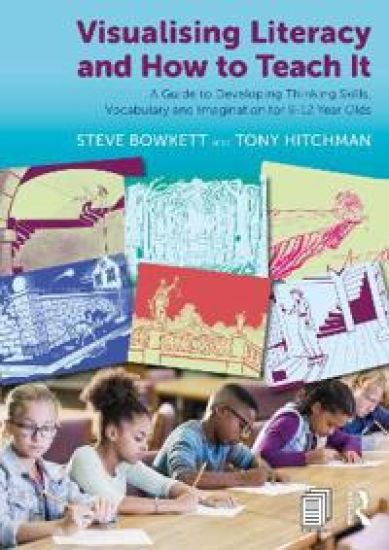
Technological advances and the way young people interact with them means children are thinking and processing information in an increasingly visual manner. Visualising Literacy and How to Teach It recognises that many, if not most, children are attracted to visual images and uses this as a basis for introducing and developing a range of thinking skills and strategies for learning. This practical resource offers a selection of visuals, each accompanied by activities that give children practice in using their imaginations in different ways. Visualising Literacy and How to Teach It not only explores creative and critical thinking skills but also pays close attention to the overarching thinking skill that we call imagination. The book contains around 150 practical activities that develop children’s imaginations, focussing on a range of thinking skills, including but not limited to the following: developing observational/attentional skills noticing details (focussing of attention) assimilating visual information increasing experience of inferential thinking, speculation, dealing with generalisations boosting vocabulary empowering one’s attitude towards exploring ideas learning different questioning techniques increasing the ability to empathise becoming comfortable with uncertainty and ambiguityMany of the visualisation techniques can be applied to developing different aspects of emotional resourcefulness, including empathy, positive self-image, anchoring positive thoughts and modifying negative thoughts and feelings. This is, therefore, an essential resource for any teacher or education professional who is keen on developing children’s ability to think and express their own ideas.
Visualising Literacy and How to Teach It

Visualising Literacy and How to Teach It

Steve Bowkett; Tony Hitchman

Taylor Francis Ltd
2021
nidottu
Technological advances and the way young people interact with them means children are thinking and processing information in an increasingly visual manner. Visualising Literacy and How to Teach It recognises that many, if not most, children are attracted to visual images and uses this as a basis for introducing and developing a range of thinking skills and strategies for learning. This practical resource offers a selection of visuals, each accompanied by activities that give children practice in using their imaginations in different ways. Visualising Literacy and How to Teach It not only explores creative and critical thinking skills but also pays close attention to the overarching thinking skill that we call imagination. The book contains around 150 practical activities that develop children’s imaginations, focussing on a range of thinking skills, including but not limited to the following: developing observational/attentional skills noticing details (focussing of attention) assimilating visual information increasing experience of inferential thinking, speculation, dealing with generalisations boosting vocabulary empowering one’s attitude towards exploring ideas learning different questioning techniques increasing the ability to empathise becoming comfortable with uncertainty and ambiguityMany of the visualisation techniques can be applied to developing different aspects of emotional resourcefulness, including empathy, positive self-image, anchoring positive thoughts and modifying negative thoughts and feelings. This is, therefore, an essential resource for any teacher or education professional who is keen on developing children’s ability to think and express their own ideas.
Developing Thinking Skills Through Creative Writing

Developing Thinking Skills Through Creative Writing

Steve Bowkett; Tony Hitchman

Routledge
2019
nidottu
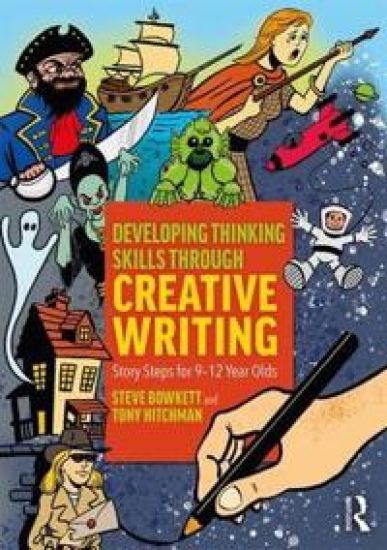
Developing Thinking Skills Through Creative Writing: Story Steps for 9-12 Year Olds is a practical and easy-to-use teacher resource helping children across a wide age and ability range to develop the skills necessary to write more effectively. Step-by-step instructions encourage children to tackle tasks of increasing difficulty while broadening their knowledge and experiences of fictional genres. With chapters separated into distinct genres: ghost story, fantasy, science fiction, history, pirate story, thriller and Gothic horror, this book: Offers a summary at the start of each chapter to help teachers select the relevant activities. Covers multiple aspects of storytelling from narrative structure, plots, characters and settings to vocabulary, word choice, sentence structure and punctuation. Provides a cross referencing grid showing which aspects of writing appear in each chapter. Includes guidance notes, extension activities and general tips. Adaptable to different teaching situations, this book offers the opportunity for teachers to work through the book genre by genre or take a 'skills route' with different activities from different chapters to create their own programme of study. Fully illustrated and supporting the requirements of the National Curriculum, Developing Thinking Skills Through Creative Writing is a valuable aid for all Key Stage 2 teachers.
Developing Thinking Skills Through Creative Writing

Developing Thinking Skills Through Creative Writing

Steve Bowkett; Tony Hitchman

Routledge
2019
sidottu
Developing Thinking Skills Through Creative Writing: Story Steps for 9-12 Year Olds is a practical and easy-to-use teacher resource helping children across a wide age and ability range to develop the skills necessary to write more effectively. Step-by-step instructions encourage children to tackle tasks of increasing difficulty while broadening their knowledge and experiences of fictional genres. With chapters separated into distinct genres: ghost story, fantasy, science fiction, history, pirate story, thriller and Gothic horror, this book: Offers a summary at the start of each chapter to help teachers select the relevant activities. Covers multiple aspects of storytelling from narrative structure, plots, characters and settings to vocabulary, word choice, sentence structure and punctuation. Provides a cross referencing grid showing which aspects of writing appear in each chapter. Includes guidance notes, extension activities and general tips. Adaptable to different teaching situations, this book offers the opportunity for teachers to work through the book genre by genre or take a 'skills route' with different activities from different chapters to create their own programme of study. Fully illustrated and supporting the requirements of the National Curriculum, Developing Thinking Skills Through Creative Writing is a valuable aid for all Key Stage 2 teachers.
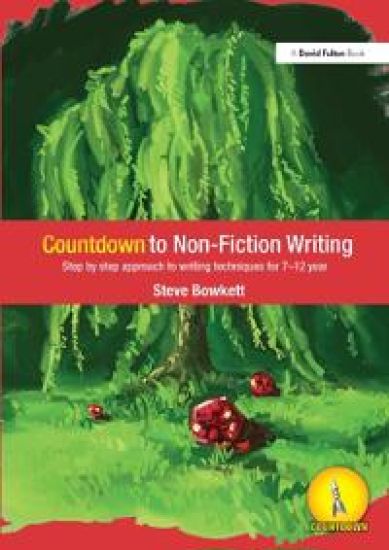
Countdown to Non-Fiction Writing

Countdown to Non-Fiction Writing

Steve Bowkett

CRC Press
2019
sidottu
Developing children's writing abilities boosts their confidence, creates enjoyment and relevance in the task and cultivates a range of decision-making and problem-solving skills that can then be applied across the curriculum. The Countdown series provides all the support you need in helping children to improve their prose, poetry and non-fiction writing. Countdown to Non-Fiction Writing is a comprehensive and flexible resource which you can use in different ways. It includes: 37 stand-alone modules which cover all aspects of writing and understanding non-fiction texts, including the nature of language, logical thinking, recognising ‘facts’ and planning; A countdown flowchart provides an overview, showing how modules are linked and allowing teachers and pupils to track their progress; Photocopiable activity sheets for each module that show how to make decisions and solve problems which writers face on the journey to a finished piece of work; Teachers’ notes for each module with tips and guidance, including how modules can be used in the classroom, links to other modules and curriculum links, and advice on helping and guiding pupils in their writing; A self-study component so pupils can make their own progress through the material. This option gives young writers a sense of independence in thinking about their work and through offering a scaffolding of tasks, encourages confident and effective writing; 'Headers' for each module showing where along the 'countdown path' you are at that point; Contents page for quick access to particular modules and relevant aspects of writing. In short, Countdown to Non-Fiction Writing saves valuable planning time and gives you all the flexibility you need in helping pupils to prepare for, understand, and write non-fiction. The structure of the book allows teachers to utilise the modules for ‘self-study’, as a longer programme following the ‘countdown’ structure, or to dip into the book for individual lesson activities and ideas to fit in with wider programmes of study.
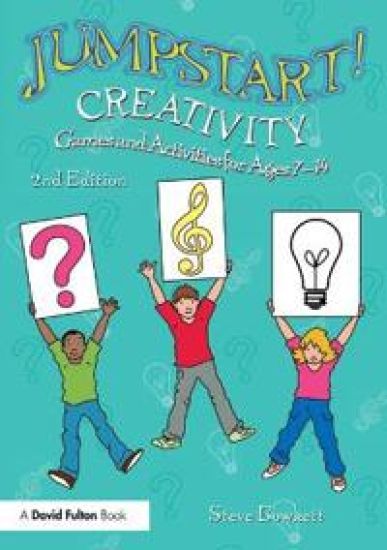
Jumpstart! Creativity

Jumpstart! Creativity

Steve Bowkett

CRC Press Inc
2018
nidottu
Jumpstart! Creativity contains over 70 games and activities that any primary teacher can use to quickly and easily boost students’ creative and critical thinking skills, allowing their thinking to flourish. Now in its second edition, the book contains fresh material that will help children to engage with the new National Curriculum. Applicable across a wide age and ability range, Jumpstart! Creativity is designed to help children learn to generate, organise and refine their own ideas and to explore, question and connect knowledge presented to them in the classroom. Focusing on getting the children to do the thinking work, the jumpstarts cover: Creative thinking Creative questioning Creating reasoning Creative problem solving Creative wordplayFilled with practical, fun-packed and easy-to-do activities, Jumpstart! Creativity is an essential companion to any primary teacher looking to inspire creativity and independent thinking in their students.
Jumpstart! Creativity

Jumpstart! Creativity

Steve Bowkett

CRC Press Inc
2018
sidottu
Jumpstart! Creativity contains over 70 games and activities that any primary teacher can use to quickly and easily boost students’ creative and critical thinking skills, allowing their thinking to flourish. Now in its second edition, the book contains fresh material that will help children to engage with the new National Curriculum. Applicable across a wide age and ability range, Jumpstart! Creativity is designed to help children learn to generate, organise and refine their own ideas and to explore, question and connect knowledge presented to them in the classroom. Focusing on getting the children to do the thinking work, the jumpstarts cover: Creative thinking Creative questioning Creating reasoning Creative problem solving Creative wordplayFilled with practical, fun-packed and easy-to-do activities, Jumpstart! Creativity is an essential companion to any primary teacher looking to inspire creativity and independent thinking in their students.
Jumpstart! Philosophy in the Classroom
This collection of inspiring and simple-to-use activities will jumpstart students' understanding of philosophy, and is a treasure trove of ideas for building philosophical enquiry into the curriculum. It offers teachers a range of quick, easy and effective ways for developing children’s comprehension of and engagement with philosophy, and will help them ‘learn how to learn’. With a wealth of activities, including puzzles, class discussion techniques and group tasks, Jumpstart! Philosophy in the Classroom covers the following topics: curiosity and imagination language for thinking critical thinking creating a community of enquiry. Practical and immersive methods will encourage children to think, analyse, evaluate, discuss, judge and arrive at reasoned conclusions across all areas of the curriculum, stimulating philosophical conversation and changing the way that content is processed and understood in the classroom. This book will be a vital resource for all those who want to develop thinking skills and philosophical enquiry in their school.
Developing Self-Confidence in Young Writers

Developing Self-Confidence in Young Writers

Steve Bowkett

Bloomsbury Education
2017
nidottu
How many times as a teacher have you heard the cry 'But I don't know what to write'? This all too familiar fear of the blank page can be overcome by using the wealth of practical suggestions for helping children to feel more confident as they strive to master the complex combination of skills that make up the craft of writing. Steve Bowkett, an experienced author and writer, suggests a two-pronged attack: giving children a toolkit of techniques for generating and organising ideas of their own, coupled with methods for perceiving themselves as writers - all designed to boost self-esteem and self-confidence. This book will help to motivate children (Primary and Lower Secondary) towards becoming more creative, confident and effective writers - an attitude that will lead to beneficial effects in many other areas of learning too.
Countdown to Poetry Writing

Countdown to Poetry Writing

Steve Bowkett

CRC Press
2016
sidottu
Developing children's writing abilities boosts their confidence, creates enjoyment and relevance in the task and cultivates a range of decision-making and problem-solving skills that can then be applied across the curriculum. The Countdown series provides all the support you need in helping children to improve their prose, poetry and non-fiction writing. This guide provides all the support you need in helping pupils to improve their poetry writing. Countdown to Poetry Writing is a comprehensive and flexible resource that you can use in different ways, including: stand-alone modules that cover all the essential aspects of writing a poem, including word play, use of metaphor, rhyme and many otherscountdown flowchart providing an overview showing how modules are linked and how teachers can progress through them with the pupilsphotocopiable activity sheets for each module that show how to make the decisions and solve the problems that all writers face along the road from first idea to finished piece of work teachers’ notes for modules, with tips and guidance, including how modules can be used in the classroom, links to other modules and curriculum links, and advice on helping and guiding pupils in their writinga self-study component so that children can make their own progress through the materials, giving young writers a sense of independence in thinking about their work and offering built-in scaffolding of tasks so that less experienced or less confident children get more support from the resource 'headers' for each module showing where along the 'countdown path' you are at that point. In short, Countdown to Poetry Writing saves valuable planning time and gives you all the flexibility you need - teachers might want to utilise either the self-study or 'countdown' aspects of the book, or simply dip into it for individual lesson activities to fit in with their own programmes of work.
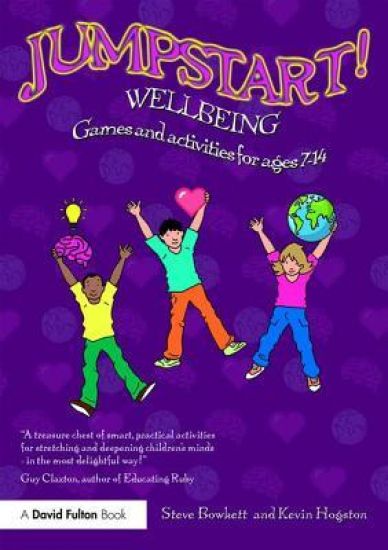
Jumpstart! Wellbeing

Jumpstart! Wellbeing

Steve Bowkett; Kevin Hogston

Routledge
2016
nidottu
This collection of engaging and simple to use activities will help teachers to develop children’s mental and emotional wellbeing while also including the thinking skills necessary for learning. The authors show how developing such skills within the context of a wellbeing agenda aids children’s motivation, their ability to concentrate and their willingness to explore, investigate and question, bringing huge benefits for children’s sense of achievement, self-confidence and resilience. Drawing on a wealth of practical activities that include both creative and critical ways of thinking, chapters cover: Wellbeing in the Classroom; Emotional Resourcefulness; Relaxation and Meditation; Mindfulness and Reflectiveness; Being Well. Jumpstart! Wellbeing is a treasure trove of fun activities and ideas for building wellbeing and its constituent skills into the curriculum.
Jumpstart! Wellbeing

Jumpstart! Wellbeing

Steve Bowkett; Kevin Hogston

Routledge
2016
sidottu
This collection of engaging and simple to use activities will help teachers to develop children’s mental and emotional wellbeing while also including the thinking skills necessary for learning. The authors show how developing such skills within the context of a wellbeing agenda aids children’s motivation, their ability to concentrate and their willingness to explore, investigate and question, bringing huge benefits for children’s sense of achievement, self-confidence and resilience. Drawing on a wealth of practical activities that include both creative and critical ways of thinking, chapters cover: Wellbeing in the Classroom; Emotional Resourcefulness; Relaxation and Meditation; Mindfulness and Reflectiveness; Being Well. Jumpstart! Wellbeing is a treasure trove of fun activities and ideas for building wellbeing and its constituent skills into the curriculum.
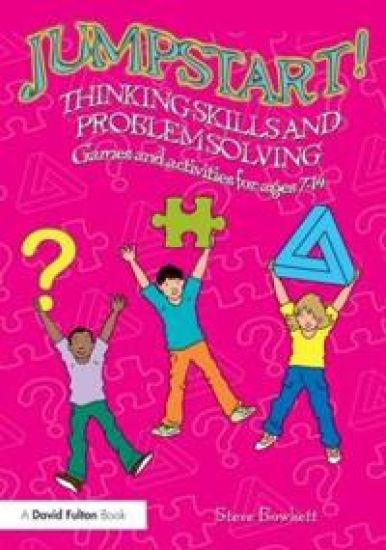
Jumpstart! Thinking Skills and Problem Solving
Jumpstart! Thinking Skills and Problem Solving presents a collection of simple to use, multi-sensory games and activities which will jumpstart students’ understanding of problem solving in action. If you are one of the thousands of teachers looking for a range of practical and fun ideas to engage pupils in effective proactive learning, then this is the perfect book for you. Specifically written to help teachers work within the guidelines of the new curriculum, activities in the book will help pupils to explore and learn a wide range of problem solving and independent thinking skills in an atmosphere of fun, mutual support and tolerance. Sections within the book reflect key areas of the new curriculum and offer a treasure trove of ideas for building problem solving and thinking skills into daily teaching.and provide tried and tested methods of helping children ‘learn how to learn’. Areas include:- Building problem solving confidence Thinking and problem solving in literacy Thinking and Problem solving in science Problem solving in philosophy Emotional resourcefulness and life skills Jumpstart! Thinking Skills and Problem Solving will celebrate the joy of critical and independent thinking and become a vital resource for all classroom teachers at Key Stage 2 and 3.
100 Ideas for Primary Teachers: Developing Thinking Skills
Thinking skills are the cornerstones of effective learning. When children are familiar with their 'thinking toolkit' they will engage more actively and confidently with the knowledge and information you teach them. In this brand new edition, author and education consultant Steve Bowkett offers 100 tried and tested activities and techniques to help children become more creative, analytical and flexible in their thinking. Whether you are an experienced teacher or you are just starting your teaching career, there are strategies in this book that you can apply across a wide age and ability range and areas of the primary curriculum. Dip in and use the activities as 'mind warm-ups' and lesson starters, or combine techniques to form the basis of whole topics and more extended programmes of study.