Kirjojen hintavertailu – 12 859 826 kirjaa ja 27 kauppaa

Kirjailija

Steve Chan

Kirjat ja teokset yhdessä paikassa: 33 kirjaa, julkaisuja vuosilta 1992–2026, suosituimpiin kuuluu Geography and International Conflict. Vertaile teosten hintoja ja tarkista saatavuus suomalaisista kirjakaupoista.

33 kirjaa

Kirjojen julkaisuvuodet: 1992–2026.

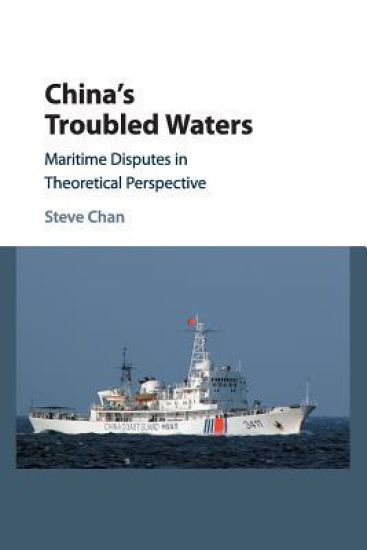
China's Troubled Waters

China's Troubled Waters

Steve Chan

Cambridge University Press
2018
pokkari
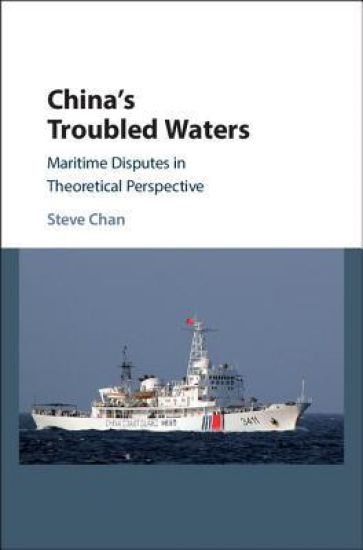
How are China's ongoing sovereignty disputes in the East and South China Seas likely to evolve? Are relations across the Taiwan Strait poised to enter a new period of relaxation or tension? How are economic interdependence, domestic public opinion, and the deterrence role played by the US likely to affect China's relations with its counterparts in these disputes? Although territorial disputes have been the leading cause for interstate wars in the past, China has settled most of its land borders with its neighbours. Its maritime boundaries, however, have remained contentious. This book examines China's conduct in these maritime disputes in order to analyse Beijing's foreign policy intentions in general. Rather than studying Chinese motives in isolation, Steve Chan uses recent theoretical and empirical insights from international relations research to analyse China's management of its maritime disputes.
China's Troubled Waters

China's Troubled Waters

Steve Chan

Cambridge University Press
2016
sidottu
How are China's ongoing sovereignty disputes in the East and South China Seas likely to evolve? Are relations across the Taiwan Strait poised to enter a new period of relaxation or tension? How are economic interdependence, domestic public opinion, and the deterrence role played by the US likely to affect China's relations with its counterparts in these disputes? Although territorial disputes have been the leading cause for interstate wars in the past, China has settled most of its land borders with its neighbours. Its maritime boundaries, however, have remained contentious. This book examines China's conduct in these maritime disputes in order to analyse Beijing's foreign policy intentions in general. Rather than studying Chinese motives in isolation, Steve Chan uses recent theoretical and empirical insights from international relations research to analyse China's management of its maritime disputes.
Flexibility, Foresight and Fortuna in Taiwan's Development
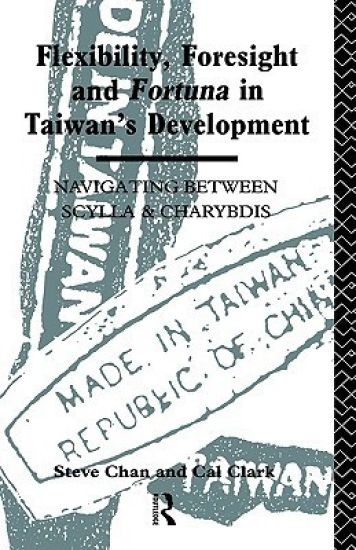
Using the developmental history of Taiwan as a starting point, Flexibility, Foresight and Fortuna critically examines several prevalent formulations of domestic development and international economy. The authors examine Taiwan's policy performance from, in turn, the developmental, the dependency, the statist, and the trade-off perspectives on political economy. They reject these approaches in favour of the key ideas of flexibility, foresight and fortuna as an explanation of Taiwan's relatively unusual success in achieving domestic development and upward mobility in the international system.
Enduring Rivalries in the Asia-Pacific

Enduring Rivalries in the Asia-Pacific

Steve Chan

Cambridge University Press
2013
sidottu
Enduring rivalries recurrently ensnare states in militarized disputes and wars. Are they poised to intensify in the Asia-Pacific, a region characterized by regime and cultural differences, territorial contests, and competing nationalist and regime claims? It is often argued that these conditions and recent power shifts are likely to lead to conflict escalation and contagion, especially in Sino-American relations. Steve Chan's book challenges this common view and argues instead that Asia-Pacific rivalries are likely to be held in abeyance. He suggests that the majority of leaders in the region wish to base their political legitimacy on their economic performance rather than popular mobilization against foreign enemies. Economic interdependence and political multilateralism have restrained and in some cases reversed rivalries. Although Asia-Pacific states will continue to quarrel, Chan argues that their relations are more stable today than at any other time since 1945.
Looking for Balance

Looking for Balance

Steve Chan

Stanford University Press
2013
pokkari
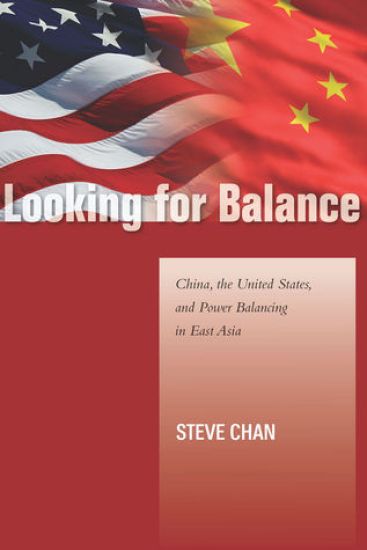
Debate surrounding "China's rise," and the prospects of its possible challenge to America's preeminence, has focused on two questions: whether the United States should "contain" or "engage" China; and whether the rise of Chinese power has inclined other East Asian states to "balance" against Beijing by alignment with the United States or ramping up their military expenditures. By drawing on alternative theoretic approaches—most especially "balance-of-threat" theory, political economic theory, and theories of regime survival and economic interdependence, Steve Chan is able to create an explanation of regional developments that differs widely from the traditional "strategic vision" of national interest. He concludes that China's primary aim is not to match U. S. military might or the foreign policy influence that flows from that power, and that its neighbors are not balancing against its rising power because, in today's guns-versus-butter fiscal reality, balancing policies would entail forfeiting possible gains that can accrue from cooperation, economic growth, and the application of GDP to nonmilitary ends. Instead, most East Asian countries have collectively pivoted to a strategy of elite legitimacy and regime survival based on economic performance.
Looking for Balance

Looking for Balance

Steve Chan

Stanford University Press
2012
sidottu
Debate surrounding "China's rise," and the prospects of its possible challenge to America's preeminence, has focused on two questions: whether the United States should "contain" or "engage" China; and whether the rise of Chinese power has inclined other East Asian states to "balance" against Beijing by alignment with the United States or ramping up their military expenditures. By drawing on alternative theoretic approaches—most especially "balance-of-threat" theory, political economic theory, and theories of regime survival and economic interdependence, Steve Chan is able to create an explanation of regional developments that differs widely from the traditional "strategic vision" of national interest. He concludes that China's primary aim is not to match U. S. military might or the foreign policy influence that flows from that power, and that its neighbors are not balancing against its rising power because, in today's guns-versus-butter fiscal reality, balancing policies would entail forfeiting possible gains that can accrue from cooperation, economic growth, and the application of GDP to nonmilitary ends. Instead, most East Asian countries have collectively pivoted to a strategy of elite legitimacy and regime survival based on economic performance.
China, the US and the Power-Transition Theory
China’s recent growth has called attention to the power-transition theory, which contends that the danger of a major war is the greatest when a rising dissatisfied challenger threatens to overtake a declining satisfied hegemon. Steve Chan questions this prevailing view by analyzing the extent of ongoing power shifts among the leading powers, exploring the portents for their future growth, and seeking indicators of their relative commitment to the existing international order. To better understand the strategic motivations of ascending and declining states, insights are drawn from prospect theory and past episodes of peaceful and violent transition (such as the end of the Cold War and the outbreak of the First and Second World Wars). He concludes that China is unlikely to instigate a confrontation with the US, and that whilst military conflict over the Taiwan Strait is possible, this is more likely to be due to China’s inability to prevent US involvement than its willingness to provoke the US. This book places China in a comparative and historical context, in which inquiry is informed by the experiences of other major powers and pertinent theories in international relations, such as those on extended deterrence, preventive war, and democratic peace. Its comparative and theoretical orientation and its contrarian perspective will be of great interest not only to students and scholars of international relations and Chinese politics, but also to policy makers and professionals.
Flexibility, Foresight and Fortuna in Taiwan's Development
Using the developmental history of Taiwan as a starting point, Flexibility, Foresight and Fortuna critically examines several prevalent formulations of domestic development and international economy. The authors examine Taiwan's policy performance from, in turn, the developmental, the dependency, the statist, and the trade-off perspectives on political economy. They reject these approaches in favour of the key ideas of flexibility, foresight and fortuna as an explanation of Taiwan's relatively unusual success in achieving domestic development and upward mobility in the international system.