Kirjojen hintavertailu – 12 903 737 kirjaa ja 27 kauppaa
Kirjailija
Steven Pinker
Kirjat ja teokset yhdessä paikassa: 51 kirjaa, julkaisuja vuosilta 1999–2026, suosituimpiin kuuluu When Everyone Knows That Everyone Knows.... Vertaile teosten hintoja ja tarkista saatavuus suomalaisista kirjakaupoista.
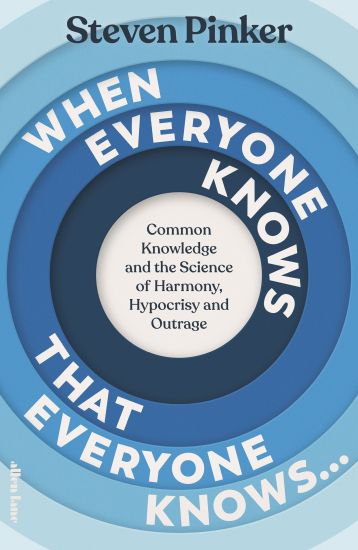
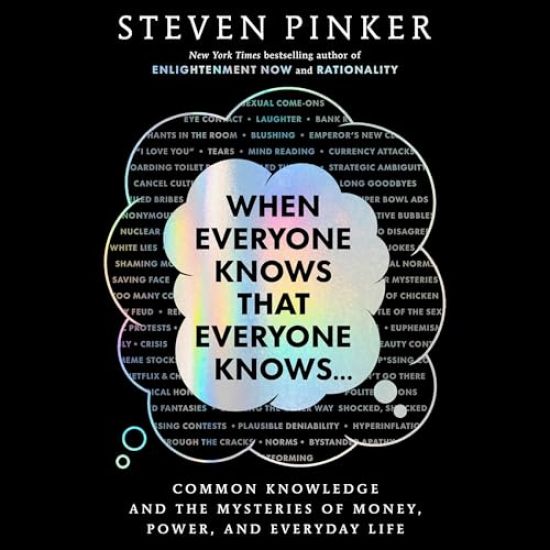
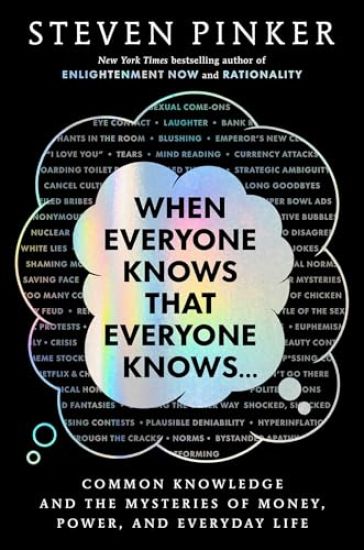
'One of the most insightful books I’ve read about what makes us human and how we understand each other' Bill GatesSteven Pinker, one of the world's greatest thinkers and bestselling author of Enlightenment Now, The Better Angels of Our Nature and The Language Instinct, reveals the power and perils of thinking alike As a cognitive scientist, the ultimate subject of Steven Pinker’s fascination is how we think about each other’s thoughts, ad infinitum. It sounds impossible, but Steven Pinker shows that we do it all the time. This awareness, which we experience as something that is public or “out there,” is called common knowledge, and it has a momentous impact on our social, political, and economic lives. Common knowledge, Pinker shows, can make sense of many of life’s enigmas: financial bubbles and crashes, revolutions that come out of nowhere, the posturing and pretence of diplomacy, the eruption of social media shaming mobs and academic cancel culture, the awkwardness of a first date. But people also go to great lengths to avoid common knowledge—to ensure that even if everyone knows something, they can’t know that everyone else knows they know it. And so we get rituals like benign hypocrisy, veiled bribes and threats, sexual innuendo, and pretending not to see the elephant in the room. In exploring the paradoxes of human behaviour, When Everyone Knows that Everyone Knows… invites us to understand the ways we try to get into each other’s heads, and the harmonies, hypocrisies, and outrages that result.
If you follow the headlines, the world in the 21st century appears to be sinking into chaos, hatred, and irrationality. Yet Steven Pinker shows that this is an illusion - a symptom of historical amnesia and statistical fallacies. If you follow the trendlines rather than the headlines, you discover that our lives have become longer, healthier, safer, happier, more peaceful, more stimulating and more prosperous - not just in the West, but worldwide. Such progress is no accident: it's the gift of a coherent and inspiring value system that many of us embrace without even realizing it. These are the values of the Enlightenment: of reason, science, humanism and progress. The challenges we face today are formidable, including inequality, climate change, Artificial Intelligence and nuclear weapons. But the way to deal with them is not to sink into despair or try to lurch back to a mythical idyllic past; it's to treat them as problems we can solve, as we have solved other problems in the past. In making the case for an Enlightenment newly recharged for the 21st century, Pinker shows how we can use our faculties of reason and sympathy to solve the problems that inevitably come with being products of evolution in an indifferent universe. We will never have a perfect world, but - defying the chorus of fatalism and reaction - we can continue to make it a better one. The challenges we face today are formidable, including inequality, climate change, Artificial Intelligence and nuclear weapons. But the way to deal with them is not to sink into despair or try to lurch back to a mythical idyllic past; it's to treat them as problems we can solve, as we have solved other problems in the past. In making the case for an Enlightenment newly recharged for the 21st century, Pinker shows how we can use our faculties of reason and sympathy to solve the problems that inevitably come with being products of evolution in an indifferent universe. We will never have a perfect world, but - defying the chorus of fatalism and reaction - we can continue to make it a better one.
Steven Pinker, the bestselling author of The Language Instinct, deploys his gift for explaining big ideas in The Sense of Style - an entertaining writing guide for the 21st centuryWhat is the secret of good prose? Does writing well even matter in an age of instant communication? Should we care? In this funny, thoughtful book about the modern art of writing, Steven Pinker shows us why we all need a sense of style. More than ever before, the currency of our social and cultural lives is the written word, from Twitter and texting to blogs, e-readers and old-fashioned books. But most style guides fail to prepare people for the challenges of writing in the 21st century, portraying it as a minefield of grievous errors rather than a form of pleasurable mastery. They fail to deal with an inescapable fact about language: it changes over time, adapted by millions of writers and speakers to their needs. Confusing changes in the world with moral decline, every generation believes the kids today are degrading society and taking language with it. A guide for the new millennium, writes Steven Pinker, has to be different. Drawing on the latest research in linguistics and cognitive science, Steven Pinker replaces the recycled dogma of previous style guides with reason and evidence. This thinking person's guide to good writing shows why style still matters: in communicating effectively, in enhancing the spread of ideas, in earning a reader's trust and, not least, in adding beauty to the world. Eye-opening, mind-expanding and cheerful, The Sense of Style shows that good style is part of what it means to be human.
In this classic, the world's expert on language and mind lucidly explains everything you always wanted to know about language: how it works, how children learn it, how it changes, how the brain computes it, and how it evolved. With deft use of examples of humor and wordplay, Steven Pinker weaves our vast knowledge of language into a compelling story: language is a human instinct, wired into our brains by evolution. The Language Instinct received the William James Book Prize from the American Psychological Association and the Public Interest Award from the Linguistics Society of America. This edition includes an update on advances in the science of language since The Language Instinct was first published.
Hur uppfattar du andras sätt att tänka? Och hur uppfattar andra hur du tänker? Vårt vetande skapas i grupp, och det vi kallar gemensam kunskap formas både av vad vi föreställer oss att andra vill veta, och vad vi tror att andra vill veta. Vi tänker i grupp, som en grupp, och vi tänker utifrån hur vi tänker att andra tänker. Tack vare teorin om gemensam kunskap kan vi förstå hur politisk makt, humor och finansiella marknader fungerar, samt oräkneliga egenheter i privatlivet och det offentliga såsom finansbubblor, börskrascher, vredesutbrott i trafiken, utdragna avsked, revolutioner, mobbning på sociala medier och akademisk cancelkultur. Steven Pinker har med ett flertal bästsäljare utmärkt sig som en av världens främsta populärvetenskapliga författare, där den mänskliga kulturen och tänkandet alltid står i centrum för hans originella, tankeväckande och underhållande analyser. Med När alla vet att alla vet har Pinker överträffat sig själv med en bok som kommer att förändra din uppfattning av världen på ett sätt du inte visste att du var intresserad av att förstå.
'One of the most insightful books I’ve read about what makes us human and how we understand each other' Bill Gates Steven Pinker, one of the world's greatest thinkers and bestselling author of Enlightenment Now, The Better Angels of Our Nature and The Language Instinct, reveals the power and perils of thinking alike As a cognitive scientist, the ultimate subject of Steven Pinker’s fascination is how we think about each other’s thoughts, ad infinitum. It sounds impossible, but Steven Pinker shows that we do it all the time. This awareness, which we experience as something that is public or “out there,” is called common knowledge, and it has a momentous impact on our social, political, and economic lives. Common knowledge, Pinker shows, can make sense of many of life’s enigmas: financial bubbles and crashes, revolutions that come out of nowhere, the posturing and pretence of diplomacy, the eruption of social media shaming mobs and academic cancel culture, the awkwardness of a first date. But people also go to great lengths to avoid common knowledge?to ensure that even if everyone knows something, they can’t know that everyone else knows they know it. And so we get rituals like benign hypocrisy, veiled bribes and threats, sexual innuendo, and pretending not to see the elephant in the room. In exploring the paradoxes of human behaviour, When Everyone Knows that Everyone Knows… invites us to understand the ways we try to get into each other’s heads, and the harmonies, hypocrisies, and outrages that result. Read less
One of the world's greatest thinkers investigates the logic and psychology of common knowledge As a cognitive scientist, the ultimate subject of Steven Pinker's fascination is how we think about each other's thoughts, ad infinitum. It sounds impossible, but Steven Pinker shows that we do it all the time. This awareness, which we experience as something that is public or "out there," is called common knowledge, and it has a momentous impact on our social, political, and economic lives. Common knowledge, Pinker shows, can make sense of many of life's enigmas: financial bubbles and crashes, revolutions that come out of nowhere, the posturing and pretence of diplomacy, the eruption of social media shaming mobs and academic cancel culture, the awkwardness of a first date. But people also go to great lengths to avoid common knowledge-to ensure that even if everyone knows something, they can't know that everyone else knows they know it. And so we get rituals like benign hypocrisy, veiled bribes and threats, sexual innuendo, and pretending not to see the elephant in the room. In exploring the paradoxes of human behaviour, When Everyone Knows that Everyone Knows... invites us to understand the ways we try to get into each other's heads, and the harmonies, hypocrisies, and outrages that result.
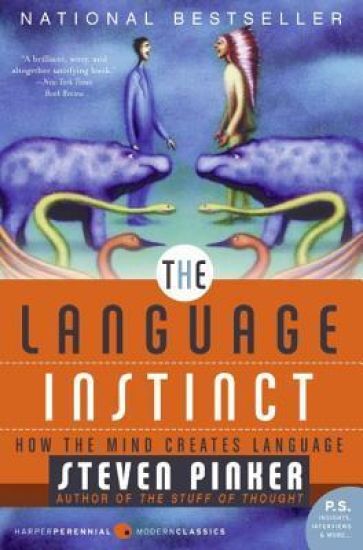
Kniga izvestnogo kanadskogo lingvista i nejropsikhologa "Jazyk kak instinkt" byla napisana v 1994 godu i s tekh por stala priznannym bestsellerom. Prednaznachennaja dlja samogo shirokogo kruga chitatelej, ona takzhe sluzhit vvedeniem v nauku o jazyke dlja mnogikh professionalov. Stivenu Pinkeru udalos v nej sovmestit entuziazm jarkogo rasskazchika i skrupuleznost podkhoda istinnogo uchenogo. Opirajas na postulaty Darvina i Khomskogo, Pinker idet dalshe i vydvigaet ideju o tom, chto chelovek s rozhdenija imeet sposobnost k jazyku. Rebenok spontanno usvaivaet grammatiku dazhe v smeshannoj kulturnoj srede, dlja razvitija rechi emu ne nuzhny formalnye pravila ili ispravlenija so storony roditelej. Ogromnyj krug problem, podnimaemykh avtorom, ne ostavljaet ravnodushnym nikogo, kto polzuetsja jazykom. V chem sut jazyka? Kak on ustroen? Razrushajut li ego slova, pronikajuschie v nashu zhizn s kazhdym novym pokoleniem? Kak svjazany jazyk i myshlenie? Eti i mnogie drugie voprosy, rassmatrivaemye Pinkerom v knige, chasto zadavalis i otrabatyvalis v khode ego lektsij, stavshikh dlja publiki znakovymi. Zanimatelnye primery iz sovremennogo anglijskogo, v tom chisle poezii, pesen, slenga, delajut povestvovanie legkim i zhivym.
Na protjazhenii neskolkikh stoletij mnogie intellektualy pytalis ustanovit printsipy spravedlivosti, osnovyvajas na ubezhdenii, chto chelovek rozhdaetsja "chistym listom", na kotorom roditeli i obschestvo zapisyvajut ego biografiju. Mnogie avtory otchajanno pytajutsja diskreditirovat predpolozhenie o vrozhdennom kharaktere chelovecheskikh svojstv, ved esli ljudi rozhdajutsja raznymi, to opravdany diskriminatsija i rasizm, esli chelovek - produkt biologii, togda svoboda voli javljaetsja vsego lish mifom, a zhizn ne imeet vysshego smysla i tseli. Pinker ubeditelno pokazyvaet, chto otkaz ot analiza voprosov chelovecheskoj prirody ne tolko protivorechit sovremennym otkrytijam v genetike, nejrobiologii i teorii evoljutsii, no i iskazhaet nashi predstavlenija o samikh sebe. Nasledujutsja li intellekt i talanty? Mozhno li iskorenit nasilie v otnoshenijakh mezhdu ljudmi i gosudarstvami? Suschestvuet li svoboda voli, a vmeste s nej - i otvetstvennost za svoi postupki? Ob etikh voprosakh rassuzhdaet kognitivnyj psikholog Stiven Pinker v odnoj iz samykh znachimykh svoikh knig.
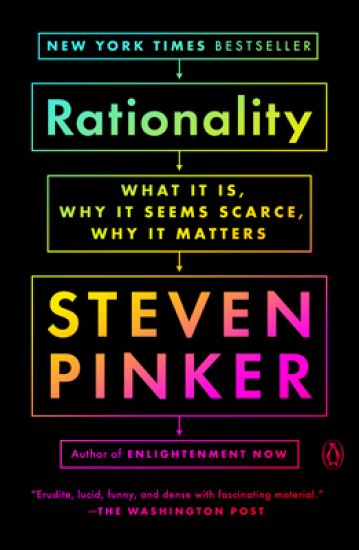
NEW YORK TIMES BESTSELLER "In our uncertain age, which can so often feel so dark and disturbing, Steven Pinker has distinguished himself as a voice of positivity." - New York Times Can reading a book make you more rational? Can it help us understand why there is so much irrationality in the world? Steven Pinker, author of Enlightenment Now (Bill Gates's "new favorite book of all time") answers all the questions here Today humanity is reaching new heights of scientific understanding--and also appears to be losing its mind. How can a species that developed vaccines for Covid-19 in less than a year produce so much fake news, medical quackery, and conspiracy theorizing? Pinker rejects the cynical clich that humans are simply irrational--cavemen out of time saddled with biases, fallacies, and illusions. After all, we discovered the laws of nature, lengthened and enriched our lives, and set out the benchmarks for rationality itself. We actually think in ways that are sensible in the low-tech contexts in which we spend most of our lives, but fail to take advantage of the powerful tools of reasoning we've discovered over the millennia: logic, critical thinking, probability, correlation and causation, and optimal ways to update beliefs and commit to choices individually and with others. These tools are not a standard part of our education, and have never been presented clearly and entertainingly in a single book--until now. Rationality also explores its opposite: how the rational pursuit of self-interest, sectarian solidarity, and uplifting mythology can add up to crippling irrationality in a society. Collective rationality depends on norms that are explicitly designed to promote objectivity and truth. Rationality matters. It leads to better choices in our lives and in the public sphere, and is the ultimate driver of social justice and moral progress. Brimming with Pinker's customary insight and humor, Rationality will enlighten, inspire, and empower.
A TIMES BOOK OF THE YEAR 2021 'Punchy, funny and invigorating ... Pinker is the high priest of rationalism' Sunday Times 'If you've ever considered taking drugs to make yourself smarter, read Rationality instead. It's cheaper, more entertaining, and more effective' Jonathan Haidt, author of The Righteous Mind In the twenty-first century, humanity is reaching new heights of scientific understanding - and at the same time appears to be losing its mind. How can a species that discovered vaccines for Covid-19 in less than a year produce so much fake news, quack cures and conspiracy theorizing? In Rationality, Pinker rejects the cynical cliché that humans are simply an irrational species - cavemen out of time fatally cursed with biases, fallacies and illusions. After all, we discovered the laws of nature, lengthened and enriched our lives and set the benchmarks for rationality itself. Instead, he explains, we think in ways that suit the low-tech contexts in which we spend most of our lives, but fail to take advantage of the powerful tools of reasoning we have built up over millennia: logic, critical thinking, probability, causal inference, and decision-making under uncertainty. These tools are not a standard part of our educational curricula, and have never been presented clearly and entertainingly in a single book - until now. Rationality matters. It leads to better choices in our lives and in the public sphere, and is the ultimate driver of social justice and moral progress. Brimming with insight and humour, Rationality will enlighten, inspire and empower. 'A terrific book, much-needed for our time' Peter Singer