Kirjojen hintavertailu – 12 903 737 kirjaa ja 27 kauppaa
Kirjailija
Steven Pinker
Kirjat ja teokset yhdessä paikassa: 51 kirjaa, julkaisuja vuosilta 1999–2026, suosituimpiin kuuluu When Everyone Knows That Everyone Knows.... Vertaile teosten hintoja ja tarkista saatavuus suomalaisista kirjakaupoista.
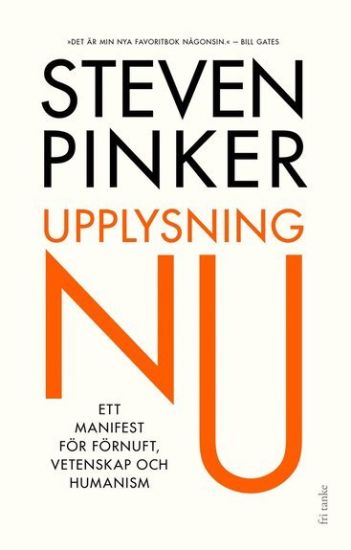
Vad är det för fel på folk? Vi föds med ofattbart avancerade hjärnor, anpassade för att ständigt lära sig nya saker om världen. Vår tillgång till kunskap är större än någonsin. Ändå fastnar många av oss i faktaresistens och konspirationsteorier. I sin nya bok argumenterar Steven Pinker för att det rationella resonemanget kan göra världen bättre, på nästan alla sätt. Med intellektuell precision och en stor dos humor visar han varför våra felbara hjärnor ibland går vilse, men också hur medvetna strategier kan göra oss mer rationella.
Esli vam kazhetsja, chto mir katitsja v propast, ogljanites vokrug. Ljudi teper zhivut dolshe, oni zdorovee, svobodnee i schastlivee, chem kogda by to ni bylo. V zakhvatyvajuschem dukh obzore sostojanija chelovechestva v tretem tysjacheletii psikholog i populjarizator nauki Stiven Pinker prizyvaet nas otvlechsja ot sensatsionnykh zagolovkov novostej i katastroficheskikh predskazanij, kotorye tak lovko igrajut na svojstvennykh nashemu myshleniju kognitivnykh iskazhenijakh. Vmesto etogo on predlagaet obratitsja k tsifram i s pomoschju semi desjatkov porazitelnykh grafikov demonstriruet nevidannyj progress ne tolko Zapada, no i vsego mira vo vsekh oblastjakh, ot zdorovja i blagosostojanija do bezopasnosti, mira i prav cheloveka.
NEW YORK TIMES BESTSELLER "In our uncertain age, which can so often feel so dark and disturbing, Steven Pinker has distinguished himself as a voice of positivity." - New York Times Can reading a book make you more rational? Can it help us understand why there is so much irrationality in the world? Steven Pinker, author of Enlightenment Now (Bill Gates's "new favorite book of all time") answers all the questions here Today humanity is reaching new heights of scientific understanding--and also appears to be losing its mind. How can a species that developed vaccines for Covid-19 in less than a year produce so much fake news, medical quackery, and conspiracy theorizing? Pinker rejects the cynical clich that humans are simply irrational--cavemen out of time saddled with biases, fallacies, and illusions. After all, we discovered the laws of nature, lengthened and enriched our lives, and set out the benchmarks for rationality itself. We actually think in ways that are sensible in the low-tech contexts in which we spend most of our lives, but fail to take advantage of the powerful tools of reasoning we've discovered over the millennia: logic, critical thinking, probability, correlation and causation, and optimal ways to update beliefs and commit to choices individually and with others. These tools are not a standard part of our education, and have never been presented clearly and entertainingly in a single book--until now. Rationality also explores its opposite: how the rational pursuit of self-interest, sectarian solidarity, and uplifting mythology can add up to crippling irrationality in a society. Collective rationality depends on norms that are explicitly designed to promote objectivity and truth. Rationality matters. It leads to better choices in our lives and in the public sphere, and is the ultimate driver of social justice and moral progress. Brimming with Pinker's customary insight and humor, Rationality will enlighten, inspire, and empower.
INSTANT NEW YORK TIMES BESTSELLER A NEW YORK TIMES NOTABLE BOOK OF 2018ONE OF THE ECONOMIST'S BOOKS OF THE YEAR"My new favorite book of all time." --Bill Gates If you think the world is coming to an end, think again: people are living longer, healthier, freer, and happier lives, and while our problems are formidable, the solutions lie in the Enlightenment ideal of using reason and science. By the author of the new book, Rationality. Is the world really falling apart? Is the ideal of progress obsolete? In this elegant assessment of the human condition in the third millennium, cognitive scientist and public intellectual Steven Pinker urges us to step back from the gory headlines and prophecies of doom, which play to our psychological biases. Instead, follow the data: In seventy-five jaw-dropping graphs, Pinker shows that life, health, prosperity, safety, peace, knowledge, and happiness are on the rise, not just in the West, but worldwide. This progress is not the result of some cosmic force. It is a gift of the Enlightenment: the conviction that reason and science can enhance human flourishing. Far from being a na ve hope, the Enlightenment, we now know, has worked. But more than ever, it needs a vigorous defense. The Enlightenment project swims against currents of human nature--tribalism, authoritarianism, demonization, magical thinking--which demagogues are all too willing to exploit. Many commentators, committed to political, religious, or romantic ideologies, fight a rearguard action against it. The result is a corrosive fatalism and a willingness to wreck the precious institutions of liberal democracy and global cooperation. With intellectual depth and literary flair, Enlightenment Now makes the case for reason, science, and humanism: the ideals we need to confront our problems and continue our progress.
"Världen blir allt bättre, även om det inte alltid känns så. Upplysning Nu! är min nya favoritbok någonsin." - Bill GatesHåller världen verkligen på att falla sönder? Riskerar religiösa och auktoritära rörelser att försvaga demokratin och det globala samarbetet? Steven Pinker visar att hälsan, välståndet, freden, kunskapen och lyckan ökar i hela världen, men inte till följd av någon kosmisk kraft, utan på grund av upplysningsidealen: förnuft och vetenskap. Här finns försvaret vi behöver för att möta världens problem och fortsätta mänsklighetens utveckling. Steven Pinker är professor i psykologi vid Harvard University. Han forskar i språk och kognition och är känd för sin evolutionspsykologiskt baserade teori om språkutvecklingen hos barn. Han har tidigare skrivit ett flertal uppmärksammade populärvetenskapliga böcker, bland annat The Language Instinct (1994), Ett oskrivet blad: och andra myter om människans natur (2002, på svenska 2006) och The Better Angels of our Nature: Why Violence has Declined (2011)." Om man just nu tycker att det ser mörkt ut i världen ska man läsa Steven Pinkers briljanta Upplysning Nu! . Så trösterikt!" - David Lagercrantz"Pinker är en förebild med just den intellektuella hederlighet och tapperhet vi behöver för att återupprätta samtalet och gemenskapen." - David Brooks, The New York Times"Upplysning Nu! är magnifik och upplyftande, och får dig att vilja rusa till datorn och stänga ditt twitterkonto." - The Economist
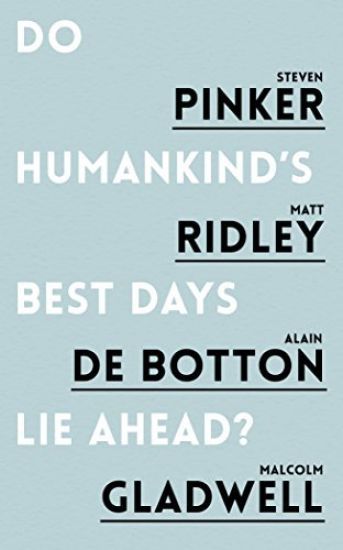
‘It’s just a brute fact that we don’t throw virgins into volcanoes any more. We don’t execute people for shoplifting a cabbage. And we used to.’ –Steven Pinker ‘The idea that because things have gotten better in the past they will continue to do so in the future is a fallacy I would have thought confined to the lower reaches of Wall Street.’ –Malcolm Gladwell In a world driven by technology and globalization, is humanity approaching a Golden Age or is the notion of progress a Western delusion? Four of the world’s most renowned thinkers take on one of the biggest debates of the modern era…
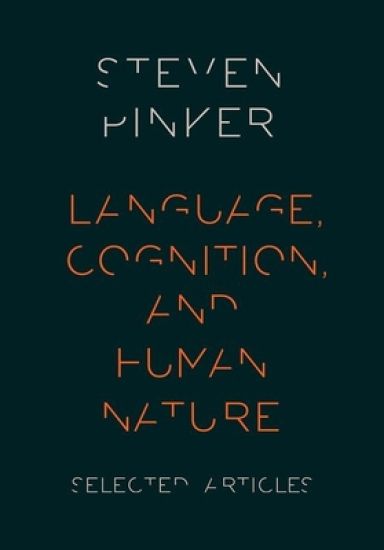
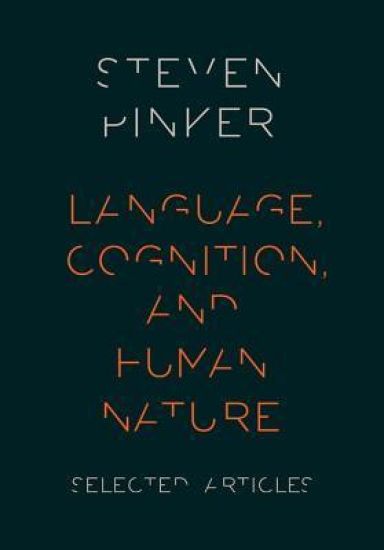
Language, Cognition, and Human Nature collects together for the first time much of Steven Pinker's most influential scholarly work on language and cognition. Pinker's seminal research explores the workings of language and its connections to cognition, perception, social relationships, child development, human evolution, and theories of human nature. This eclectic collection spans Pinker's thirty-year career, exploring his favorite themes in greater depth and scientific detail. It includes thirteen of Pinker's classic articles, ranging over topics such as language development in children, mental imagery, the recognition of shapes, the computational architecture of the mind, the meaning and uses of verbs, the evolution of language and cognition, the nature-nurture debate, and the logic of innuendo and euphemism. Each outlines a major theory or takes up an argument with another prominent scholar, such as Stephen Jay Gould, Noam Chomsky, or Richard Dawkins. Featuring a new introduction by Pinker that discusses his books and scholarly work, this collection reflects essential contributions to cognitive science by one of our leading thinkers and public intellectuals.
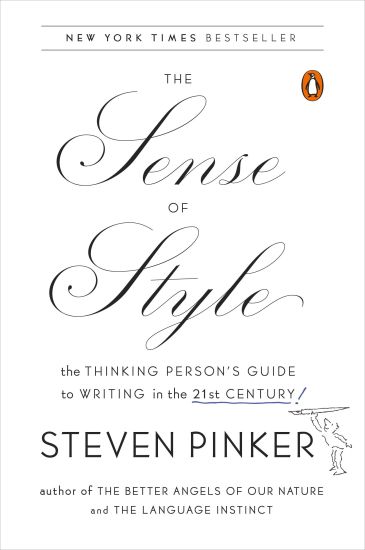
"Charming and erudite," from the author of Rationality and Enlightenment Now, "The wit and insight and clarity he brings . . . is what makes this book such a gem." --Time.com Why is so much writing so bad, and how can we make it better? Is the English language being corrupted by texting and social media? Do the kids today even care about good writing--and why should we care? From the author of The Better Angels of Our Nature and Enlightenment Now. In this entertaining and eminently practical book, the cognitive scientist, dictionary consultant, and New York Times-bestselling author Steven Pinker rethinks the usage guide for the twenty-first century. Using examples of great and gruesome modern prose while avoiding the scolding tone and Spartan tastes of the classic manuals, he shows how the art of writing can be a form of pleasurable mastery and a fascinating intellectual topic in its own right. The Sense of Style is for writers of all kinds, and for readers who are interested in letters and literature and are curious about the ways in which the sciences of mind can illuminate how language works at its best.
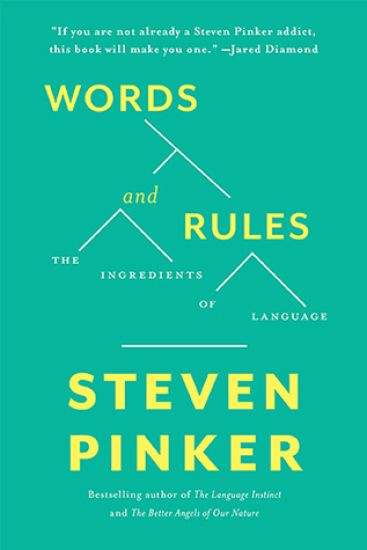
How does language work? How do children learn their mother tongue? Why do languages change over time, making Shakespearean English difficult for us and Chaucer's English almost incomprehensible? Why do languages have so many quirks and irregularities? Are they all fundamentally alike? How are new words created? Where in the brain does language reside? In Words and Rules , Steven Pinker answers these and many other questions. His book shares the wit and style of his classic, The Language Instinct , but explores language in a completely different way. In Words and Rules , Pinker explains the profound mysteries of language by picking a deceptively simple phenomenon and examining it from every angle. The phenomenon,regular and irregular verbs,connects an astonishing array of topics in the sciences and humanities: the history of languages, the theories of Noam Chomsky and his critics the attempts to simulate language using computer simulations of neural networks the illuminating errors of children as they begin to speak the nature of human concepts the peculiarities of the English language major ideas in the history of Western philosophy the latest techniques in identifying genes and imaging the living brain. Pinker makes sense of all of this with the help of a single, powerful idea: that language comprises a mental dictionary of memorized words and a mental grammar of creative rules. The idea extends beyond language and offers insight into the very nature of the human mind. This is a sparkling, eye-opening and utterly original book by one of the world's leading cognitive scientists.
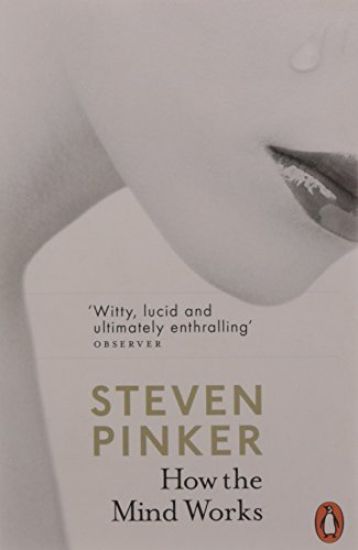
Why do we laugh? What makes memories fade? Why do people believe in ghosts? How the Mind Works explores every aspect of mental life, showing that our minds are not a mystery, but a system of organs of computation designed by natural selection.
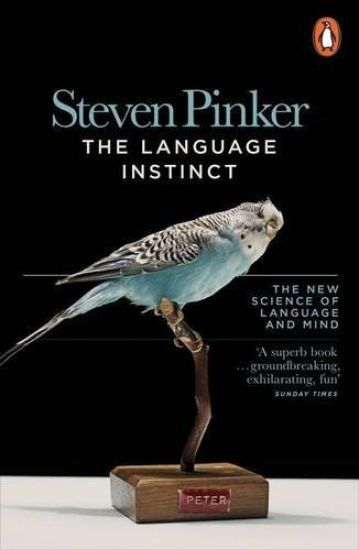
'Dazzling... Pinker's big idea is that language is an instinct...as innate to us as flying is to geese... Words can hardly do justice to the superlative range and liveliness of Pinker's investigations'- Independent'A marvellously readable book... illuminates every facet of human language: its biological origin, its uniqueness to humanity, it acquisition by children, its grammatical structure, the production and perception of speech, the pathology of language disorders and the unstoppable evolution of languages and dialects' - Nature
What motivates violence? How can good and compassionate people hurt and kill others or themselves? Why are people much more likely to kill or assault people they know well, rather than strangers? This provocative and radical book shows that people mostly commit violence because they genuinely feel that it is the morally right thing to do. In perpetrators' minds, violence may be the morally necessary and proper way to regulate social relationships according to cultural precepts, precedents, and prototypes. These moral motivations apply equally to the violence of the heroes of the Iliad, to parents smacking their child, and to many modern murders and everyday acts of violence. Virtuous Violence presents a wide-ranging exploration of violence across different cultures and historical eras, demonstrating how people feel obligated to violently create, sustain, end, and honor social relationships in order to make them right, according to morally motivated cultural ideals.
What motivates violence? How can good and compassionate people hurt and kill others or themselves? Why are people much more likely to kill or assault people they know well, rather than strangers? This provocative and radical book shows that people mostly commit violence because they genuinely feel that it is the morally right thing to do. In perpetrators' minds, violence may be the morally necessary and proper way to regulate social relationships according to cultural precepts, precedents, and prototypes. These moral motivations apply equally to the violence of the heroes of the Iliad, to parents smacking their child, and to many modern murders and everyday acts of violence. Virtuous Violence presents a wide-ranging exploration of violence across different cultures and historical eras, demonstrating how people feel obligated to violently create, sustain, end, and honor social relationships in order to make them right, according to morally motivated cultural ideals.
Language, Cognition, and Human Nature collects together for the first time Steven Pinker's most influential scholarly work on language and cognition. Pinker is a highly eminent cognitive scientist, and his research emphasizes the importance of language and its connections to cognition, social relationships, child development, human evolution, and theories of human nature. The thirteen essays in this eclectic collection span Pinker's thirty-year career, ranging over topics such as language acquisitions, visual cognition, the meaning and syntax of verbs, regular and irregular phenomena in language and their implications for the mechanisms of cognition, and the social psychology of direct and indirect speech. Each outlines a major theory - such as evolution, or nature vs. nurture - or takes up an argument with other prominent scholars such as Stephen Jay Gould, Noam Chomsky, or Richard Dawkins. Featuring a new introduction by Pinker that discusses his books and scholarly work, this book represents a major contribution to the field of cognitive science, by one of the field's leading thinkers.
A classic book about language acquisition and conceptual structure, with a new preface by the author, "The Secret Life of Verbs." Before Steven Pinker wrote bestsellers on language and human nature, he wrote several technical monographs on language acquisition that have become classics in cognitive science. Learnability and Cognition, first published in 1989, brought together two big topics: how do children learn their mother tongue, and how does the mind represent basic categories of meaning such as space, time, causality, agency, and goals? The stage for this synthesis was set by the fact that when children learn a language, they come to make surprisingly subtle distinctions: pour water into the glass and fill the glass with water sound natural, but pour the glass with water and fill water into the glass sound odd. How can this happen, given that children are not reliably corrected for uttering odd sentences, and they don't just parrot back the correct ones they hear from their parents? Pinker resolves this paradox with a theory of how children acquire the meaning and uses of verbs, and explores that theory's implications for language, thought, and the relationship between them. As Pinker writes in a new preface, "The Secret Life of Verbs," the phenomena and ideas he explored in this book inspired his 2007 bestseller The Stuff of Thought: Language as a Window into Human Nature. These technical discussions, he notes, provide insight not just into language acquisition but into literary metaphor, scientific understanding, political discourse, and even the conceptions of sexuality that go into obscenity.
Can violence really have declined? The images of conflict we see daily on our screens from around the world suggest this is an almost obscene claim to be making. In this title, the author shows violence within and between societies - both murder and warfare.