Kirjojen hintavertailu – 12 874 849 kirjaa ja 26 kauppaa
Kirjailija
Sylvia Townsend Warner
Kirjat ja teokset yhdessä paikassa: 51 kirjaa, julkaisuja vuosilta 1984–2026, suosituimpiin kuuluu Lolly Willowes. Vertaile teosten hintoja ja tarkista saatavuus suomalaisista kirjakaupoista.
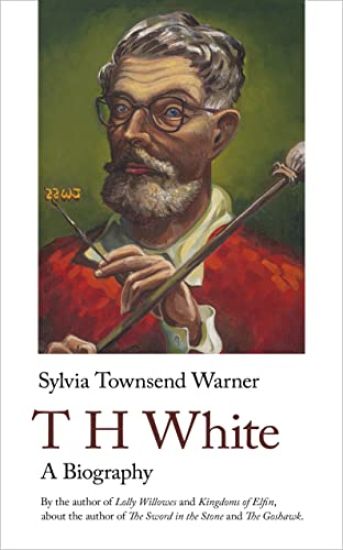
T H White, author of the much-loved The Sword in The Stone, The Once and Future King, The Goshawk, and many other works of English literature, died in Greece from a heart attack in 1964, aged 57. When the eminent novelist and critic Sylvia Townsend Warner heard of his death she wrote in her diary: ‘T H White is dead, alas! – a friend I never managed to have.’ Warner was invited by White’s executors to write his biography. She visited his home in Alderney in the Channel Islands to see what material was available and felt that he followed her around in his house; ‘his angry, suspicious, furtive stare directed at my back, gone when I turned around’. When she finished his biography, nearly three years later, she wrote, ‘O Tim, I don’t like to lose you … it has been a strange love story between an old woman and a dead man’. T H White. A Biography was published in 1967 and was Warner’s greatest critical success since her first novel, Lolly Willowes (1926). It reveals White’s passions: for life, for learning, for all animals and birds, particularly hawks and dogs; his self-exile to Ireland during the Second World War, the creation of his tetralogy The Once and Future King, and the unexpected wealth and fame that came from The Sword in the Stone, the Disney cartoon and the Broadway musical Camelot. Warner treats White’s repressed sexual predilections with humane understanding in this wise portrait of a tormented literary giant, written by a novelist and a poet. White’s writing on falconry was the inspiration for Helen Macdonald’s acclaimed H is for Hawk.
This Christmas, 'hand yourself over to be enchanted' (Guardian) by the English genius behind witchcraft classic Lolly Willowes.'Worth £9.99 for the book jacket alone (trust Faber) ... It's exquisite and shivery, just like the stories within ... By turns creepy, melancholy, horrifying, tragic and beltingly romantic.' Sunday Times'One of our finest writers.' Neil Gaiman'One of the most shamefully under-read great British authors of the past 100 years.' Sarah Waters'Diminutive masterpieces ... Hand yourself over to be enchanted.' Guardian'Extraordinary, lucid wildness.' Helen MacDonald'Glinting perfection' The TimesDecades after her divorce, a lady returns to the village of her tumultuous marriage. A railway carriage hosts a charged schoolboy encounter. A murder raises fears of blackmail. A woman waits anxiously in a café before eloping to Paris. Another steals a friend's kitchen knife. In these bittersweet tales, the author of Lolly Willowes reveals her mastery of the short story, celebrated by the New Yorker for decades. Sylvia Townsend Warner is a tragicomic chronicler of the heart's entanglements, from marriages and affairs to widowhood; and a champion of outsiders, whether single women, the elderly or wartime refugees. Witty and subversive, her stories meld tradition and transgression, with secret sins and fetishes as much a feature of English life as eccentric aunts, country houses and parish churches.
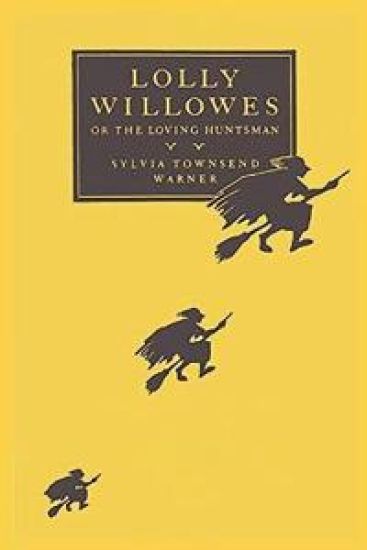
Lolly Willowes is a novel by Sylvia Townsend Warner, described as an early feminist classic. It is a satirical comedy story with elements of fantasy. It tells about a middle-aged spinster Laura Willowes who escapes from her relatives and takes up the practice of witchcraft. The whole plot of the story tells about Laura's attempt to escape from the roles the society expects from her. Yet, even when she left her brother's family and settled in a lonely village house, her nephew decides to move in with her. Infuriated Laura makes a spell to drive away the attention of the nasty relatives and suddenly a train of misfortunes persuades her nephew leave the village and his aunt's house. Laura now truly believes that every woman is a witch and is left alone to practice her favorite craft in peace.
Lolly Willowes is a satirical comedy of manners incorporating elements of fantasy. It is the story of a middle-aged spinster who moves to a country village to escape her controlling relatives and takes up the practice of witchcraft. The novel opens at the turn of the twentieth century, with Laura Willowes moving from Somerset to London to live with her brother Henry and his family. The move comes in the wake of the death of Laura's father, Everard, with whom she lived at the family home, Lady Place. Laura's other brother, James, moves into Lady Place with his wife and his young son, Titus, with the intention to continue the family's brewing business. However, James dies suddenly of a heart attack and Lady Place is rented out, with the view that Titus, once grown up, will return to the home and run the business. After twenty years of being a live-in aunt, Laura finds herself feeling increasingly stifled both by her obligations to the family and by living in London. When shopping for flowers on the Moscow Road, Laura decides she wishes to move to the Chiltern Hills and, buying a guidebook and map to the area, she picks the village of Great Mop as her new home. Against the wishes of her extended family, Laura moves to Great Mop and finds herself entranced and overwhelmed by the chalk hills and beech woods. Though sometimes disturbed by strange noises at night, she settles in and befriends her landlady and a poultry farmer. After a while, Titus decides to move from his lodgings in Bloomsbury to Great Mop and be a writer, rather than managing the family business. Titus's renewed social and domestic reliance on Laura makes her feel frustrated that even living in the Chilterns she cannot escape the duties expected of women. When out walking, she makes a pact with a force that she takes to be Satan, to be free from such duties. On returning to her lodgings, she discovers a kitten, whom she takes to be Satan's emissary, and names him Vinegar, in reference to an old picture of witches' familiars. Subsequently, her landlady takes her to a Witches' Sabbath attended by many of the villagers. Titus is plagued with misadventures, such as having his milk constantly curdle and falling into a nest of wasps. Finally, he proposes marriage to a London visitor, Pandora Williams, who has treated his wasp stings, and the two retreat to London. Laura, relieved, meets Satan at Mulgrave Folly and tells him that women are like 'sticks of dynamite' waiting to explode and that all women are witches even 'if they never do anything with their witchcraft, they know it's there - ready ' The novel ends with Laura acknowledging that her new freedom comes at the expense of knowing that she belongs to the 'satisfied but profound indifferent ownership' of Satan.
First published in 1926, "Lolly Willowes" is Sylvia Townsend Warner's satirical feminist comedy of manners. Set in the first part of the twentieth century, the novel concerns the aging spinster Laura Willowes who comes to live with her elder brother and his family in London following the death of her father. After many years of living in the shadow of her controlling family, Laura, while shopping for flowers, on a whim decides to break free and move to the English countryside. Her destination is the town of Great Mop in the Chiltern Hills northwest of London. Her escape from the duties her family imposes upon her is soon foiled when her nephew Titus decides to abandon the family business and moves to Great Mop to become a writer. What follows is a pact with the devil, the adoption of an emissary of Satan which comes in the form of a cat named Vinegar, and a turn towards the practice of witchcraft. In this fantastic turn of events we find a hilarious exposition of the lengths a woman must go to escape the burdens placed upon her by society at the turn of the twentieth century. This edition is printed on premium acid-free paper.
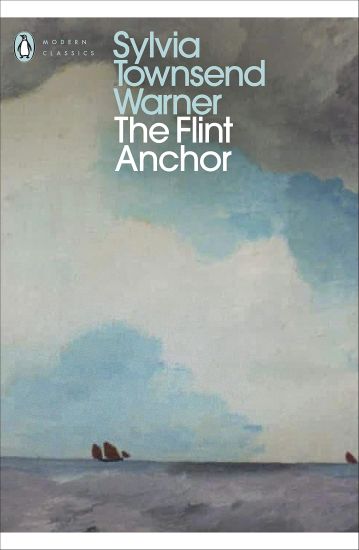
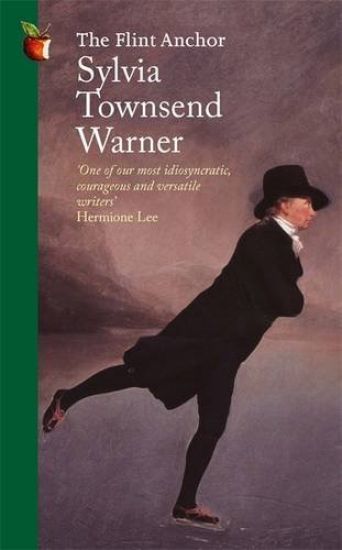
'A comic masterpiece' Patrick Gale, GuardianPillar of society and stern upholder of Victorian values, god-fearing Norfolk merchant John Barnard presides over a large and largely unhappy family. This is their story - his brandy-swilling wife, their hapless offspring and their changing fortunes - over the decades. Sylvia Townsend Warner's last novel, The Flint Anchor gloriously overturns our ideas of history, family and storytelling itself.'A novel created with solidity and subtlety of feeling, a fusion of warmth, wit and quietly biting shrewdness that are reminiscent of Jane Austen' Atlantic Review'As a sustained work of historical imagination, it has few rivals ... one of the most acute and intelligent writers of her age' Claire Harman
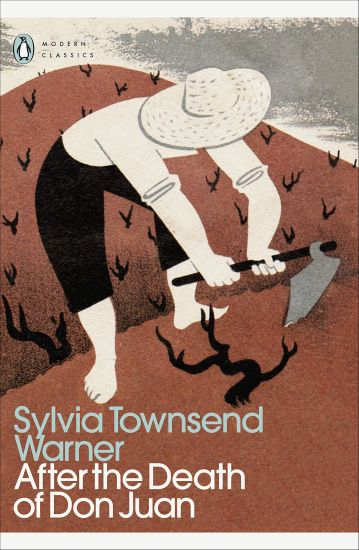
'She has a talent amounting to genius' John UpdikeDon Juan, that notorious libertine, has disappeared. Has he been dragged down to hell by demons, as rumoured - or has he escaped? Doña Ana, the woman he tried to seduce, will stop at nothing to discover the truth. Set in a rural eighteenth-century Spain rife with suspicion and cruelty, and featuring a glorious cast of peasants, aristocrats and vengeful ghosts, this moving, surprising tragicomedy is also Sylvia Townsend Warner's response to the dark days of the Spanish Civil War.'The kind of novelist who inspires an intense sense of ownership in her fans' Sarah Waters
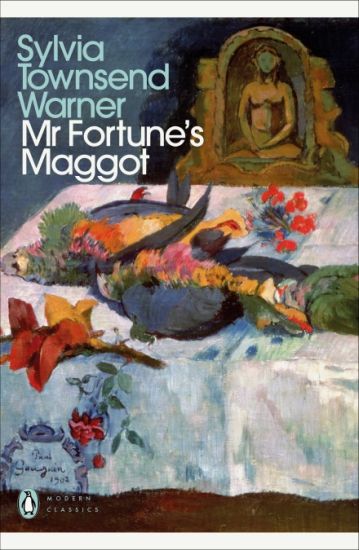
'Witty, poetic, clairvoyant' John UpdikeThe Reverend Timothy Fortune, ex-clerk of the Hornsey branch of Lloyds Bank, has found his vocation: to convert the inhabitants of the remote tropical island of Fanua to Christianity. Even when everyone except for a young boy called Lueli remains indifferent to his preaching, Mr Fortune's good spirits cannot be dampened - until one day his faith is put to a terrible test.'This quizzical tale is so intensely moving' Gillian Beer, New Statesman'Original, elegant and hypnotically strange' Miranda Seymour, The New York Times'Sylvia Townsend Warner pursues the psychology of the story with beautiful accuracy' John Carey
'The kind of novelist who inspires an intense sense of ownership in her fans ... her sympathies tended naturally to the marginal, the vulnerable, the exploited, the obscure' Sarah WatersSukey Bond, a sixteen-year-old orphan, is sent to work as a servant at a farm on the remote Essex Marshes. There she falls in love with gentle, unworldly Eric, the son of the rector's wife, only for them to be separated when their relationship is discovered. But nothing will deter Sukey in her quest to be reunited with her true love, even if it means seeking the help of Queen Victoria herself.'One of our most idiosyncratic, courageous and versatile writers' Hermione Lee 'One can't be too thankful that Miss Townsend Warner has lived to discover the alchemist's secret of transmuting the past into pure gold' Hilary Spurling
'One of the great British novels of the twentieth century: a narrative of extraordinary reach, power and beauty' Sarah WatersThe nuns who enter a medieval Norfolk convent are told to renounce the world, but the world still finds ways to trouble them, whether it is through fire, floods, pestilence, a collapsing spire, jealous rivalries, a priest with a secret or a plague of caterpillars. As we follow their daily lives over three centuries, this masterpiece of historical fiction re-creates a world run by women.'As an act of imagined history this novel has few rivals. Also, as it happens, a work of high, frequent comedy' George Steiner, The Times Literary Supplement'Spellbinding . . . One starts rereading as soon as one has reached the last page' Sunday Times'Magnificent' Philip Hensher, Daily Telegraph
'A novel of love, war and death; brilliantly entertaining and far ahead of its time' Guardian 'She is my husband's mistress - and here am I, taking her out to dinner'Sophia Willoughby of Blandamer House, upstanding Victorian matriarch, has packed her errant husband off to Paris with his mistress Minna. But when tragedy throws her life off balance Sophia goes to seek him out, and instead finds herself intensely attracted to the charismatic, bohemian Minna, who leads her on a wild, chaotic adventure through a city in the throes of revolution.'One of the great under-read British novelists of the twentieth century. This is my favourite of her novels' Sarah Waters'Every page contains something brilliant, arresting or amusing, and one comes away from it staggered' Claire Harman
Following the success of Handheld Press's republication of Sylvia Townsend Warner's fantasy collection Kingdoms of Elfin, in October 2018, the remaining four Elfin stories are gathered together with the remarkable forgotten tales of The Cat's Cradle Book (1940). This is the last major fantasy collection by Warner to be republished for a new generation of fantasy enthusiasts and Warner fans. The twenty-three stories in Of Cats and Elfins encompass scholarship (Warner's ground-breaking essay from 1927 on modern Elfinology), black humour, the Gothic, and the bizarrely anthropomorphic cats of The Cat's Cradle Book, which enact Warner's preoccupation with the dark forces at large in Europe in the later 1930s. The Cat's Cradle opens with a story about the talking cats that die of a murrain in a manor based on Warner's own Norfolk home with Valentine Ackland. `The Castle of Carabas' continues the story begun in `Dick Whittington'. `The Magpie Charity' is a political fable satirising institutional charity, `The Phoenix' relates an unfortunate combustion in the bird collection of Lord Strawberry, and `Bluebeard's Daughter' narrates the adventures of Bluebeard's daughter by his third wife, and her propensity for locked doors. Warner mixes fables and myths with storytelling traditions old and new to express her unease with modern society, and its cruelties and injustices. Greer Gilman's Introduction studies the amalgamation of fantasy and political concern that produces Warner's most radical writing. Greer Gilman is the author of Moonwise and Cloud & Ashes, and two critically-acclaimed novellas about the poet Ben Jonson, as well as poetry and criticism. Her fantasy fiction, rooted in British myth and ritual, has won the Tiptree, World Fantasy, and Shirley Jackson Awards.
A unique novel about life in a 14th-century convent by one of England's most original authors. Sylvia Townsend Warner's The Corner That Held Them is a historical novel like no other, one that immerses the reader in the dailiness of history, rather than history as the given sequence of events that, in time, it comes to seem. Time ebbs and flows and characters come and go in this novel, set in the era of the Black Death, about a Benedictine convent of no great note. The nuns do their chores, and seek to maintain and improve the fabric of their house and chapel, and struggle with each other and with themselves. The book that emerges is a picture of a world run by women but also a story--stirring, disturbing, witty, utterly entrancing--of a community. What is the life of a community and how does it support, or constrain, a real humanity? How do we live through it and it through us? These are among the deep questions that lie behind this rare triumph of the novelist's art.
John Barnard, leading merchant at a Norfolk port, is a pillar of nineteenth-century rectitude. Though stern and aloof with his indolent, tippling wife and watchful children, he is undermined by helpless love for his pretty, cold-hearted daughter Mary. THE FLINT ANCHOR subverts the rules of the historical novel and shows how family history is made- which stories can be trusted, whose voices hold influence and whose are forgotten. Wit, charm and intelligence illuminate several decades of family life and the events of small town society in this tragi-comedy of manners, the last of the author's seven novels.