
Kirjailija
Tacitus
Kirjat ja teokset yhdessä paikassa: 95 kirjaa, julkaisuja vuosilta 1864–2025, suosituimpiin kuuluu Agricola. Vertaile teosten hintoja ja tarkista saatavuus suomalaisista kirjakaupoista.
95 kirjaa
Kirjojen julkaisuvuodet: 1864–2025.
Three Works by Tacitus (Latin Text): Agricola - Dialogus de Oratoribus - Germania
Tacitus
Createspace Independent Publishing Platform
2016
nidottu
The Reign of Tiberius out of the first six Annal of Tacitus with his account of Germany and Life of Agricola
Tacitus
Createspace Independent Publishing Platform
2015
nidottu
The Reign of Tiberius Out of the First Six Annals of Tacitus
Tacitus
Createspace Independent Publishing Platform
2015
nidottu
One of the raciest texts around, full of up-to date relevance too! Two translations to compare plus essential questions for those studying this text at advanced level, and their teachers Callender clear-text study guides and classical text series
The first work of any great historian has always commanded attention, and Tacitus was ancient Rome's very greatest historian. His biography of his father-in-law, governor of Britain in the years AD 77–84, is a literary masterpiece: it combines penetrating political history with gripping military narrative and throughout poses the question (still very much alive today) of how one should live one's life under a tyranny. This is the first commentary in English on the Agricola for almost half a century: in keeping with the aims of the series, particular attention is paid to the understanding of Tacitus' Latin, but a whole range of generic, historical, textual and narrative topics is covered, and it will be suitable for advanced undergraduates and graduate students as well as scholars. Tacitus' Agricola remains a key text for anyone with an interest in Roman Britain as well as ancient biography.
The first work of any great historian has always commanded attention, and Tacitus was ancient Rome's very greatest historian. His biography of his father-in-law, governor of Britain in the years AD 77–84, is a literary masterpiece: it combines penetrating political history with gripping military narrative and throughout poses the question (still very much alive today) of how one should live one's life under a tyranny. This is the first commentary in English on the Agricola for almost half a century: in keeping with the aims of the series, particular attention is paid to the understanding of Tacitus' Latin, but a whole range of generic, historical, textual and narrative topics is covered, and it will be suitable for advanced undergraduates and graduate students as well as scholars. Tacitus' Agricola remains a key text for anyone with an interest in Roman Britain as well as ancient biography.
Tacituksen teos Historiae kuvaa Rooman historiaa vuodesta 69 vuoteen 96, ja siitä on säilynyt kaikkein dramaattisin osa. Se kuvaa lyhyttä ajanjaksoa, jolloin keisarit Galba, Otho ja Vitellius hallitsivat Roomaa ja Vespasianuksen valtakausi alkoi. Näkökulma siirtyy sujuvasti yksilöiden teoista kokonaisiin sotajoukkoihin, ja vauhdikkaiden tapahtumien paikat vaihtuvat Juudeasta Britanniaan ja Germaniasta Pohjois-Afrikkaan. Samalla Tacitus analysoi kiinnostavasti valtaa ja sen käyttäjiä. Teos havainnollistaa monikulttuurisen Rooman kansalaisten käsityksiä ja ennakkoluuloja elävällä tavalla. Se tarjoaa ainutlaatuisen näkökulman roomalaisen sääty-yhteiskunnan todellisuuteen. Teoksen ovat suomentaneet Heikki Laakkonen ja Kalle Korhonen. Cornelius Tacitus (n. 55-120 jKr.) oli roomalainen senaattori ja historioitsija. Häntä pidetään yhtenä huomattavimmista roomalaisista kirjailijoista.

Book 11, the first of the later books of the Annals to survive, narrates two years in the reign of Claudius, AD 47-8. While Claudius is busy with the duties of his censorship, his wife Messalina is having a very public love affair with the young aristocrat Silius that eventually ruins her. In a book that also treats German, eastern, and other Roman internal affairs, a third of the surviving narrative is devoted to the destruction of Messalina. Here we encounter the classic portrayal of a Claudius ignorant and manipulated by those around him in an extended narrative that shows Tacitus at his dramatic and cynical best. This edition of Book 11, the first scholarly one in English in over a hundred years, contains a full introduction, a newly-edited Latin text with apparatus, and a comprehensive commentary that illuminates historical, historiographical, textual, linguistic, and literary issues that arise from the narrative.
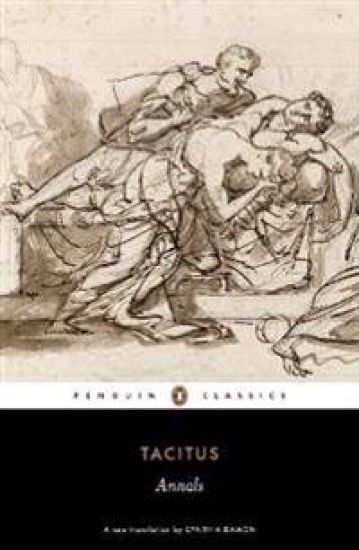
A compelling new translation of Tacitus' Annals, one of the greatest accounts of ancient Rome, by Cynthia Damon. Tacitus' Annals recounts the major historical events from the years shortly before the death of Augustus to the death of Nero in AD 68. With clarity and vivid intensity Tacitus describes the reign of terror under the corrupt Tiberius, the great fire of Rome during the time of Nero and the wars, poisonings, scandals, conspiracies and murders that were part of imperial life. Despite his claim that the Annals were written objectively, Tacitus' account is sharply critical of the emperors' excesses and fearful for the future of imperial Rome, while also filled with a longing for its past glories.
Paul and Jesus: How the Church Destroyed Christianity
Tacitus
Createspace Independent Publishing Platform
2012
nidottu
JESUS AND PAUL tells the story of how the organized church under Constantine destroyed the essence of Christianity. What really happened after the crucifixion? Among the controversial points that will be made in this book are: -Jesus believed in reincarnation, but this view was played down by the early apostles who wanted to keep the message simple to convert as many people to Christianity as possible. -Jesus never claimed to be the Messiah, but rather the son of the Father in the same sense we all are. He had achieved a level of spiritual perfection and his main mission was to bring the truth about existence to everyone to bring them closer to the Creator. -Anti-Semitic passages were deliberately introduced into the New Testament by early church translators to deflect the blame for the crucifixion from the Roman authorities to the Jews. The reality was that Jesus was causing disturbances in Judea, posing problems for Rome. -The 20th century "sleeping prophet" and psychic healer, Edgar Cayce, revealed through his own readings that Jesus came from a long line of mystery religions, including the cabala, that predated Jung's secular views of the conscious mind, the personal subconscious, and the universal unconscious--in other words, the spirit world in religious terms. -Jesus could not have been born of a virgin since he came from the line of David, which passed through his father Joseph, not Mary. He also had several brothers and sisters, a fact played down by the early church.. -Jesus appeared to Mary Magdalene first in spirit form, non-corporeal, since she was the woman he loved more than any other and was the first among his disciples. His appearances to the other disciples also took the form of a spirit-body, which they did not recognize at first, not the flesh-and-blood man they had known in life.
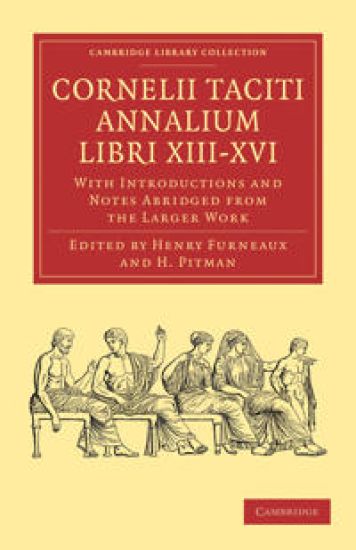
A classical scholar from the University of Oxford, Henry Furneaux (1829–1900) specialised in the writings of the Roman historian Tacitus. This work acquired the name of Annals for the style of history it presents, dealing with events year by year, rather than thematically. The Annals cover the reigns of four Roman emperors, beginning after the death of Augustus. The work originally consisted of sixteen books dealing with a period of 54 years, but several of them are incomplete or have not survived at all. This volume contains the text of Books 13 to 16 (the final book being incomplete), and covers the reign of Nero, a subject which brought out to the full Tacitus' famous style of condemnation through cutting irony. This reissue is taken from Pitman's 1904 edition, abridged 'to serve the needs of students requiring a less copious and advanced commentary' than that supplied by Furneaux.