Kirjojen hintavertailu – 12 903 724 kirjaa ja 27 kauppaa

Kirjailija

Tacitus

Kirjat ja teokset yhdessä paikassa: 95 kirjaa, julkaisuja vuosilta 1864–2025, suosituimpiin kuuluu Agricola. Vertaile teosten hintoja ja tarkista saatavuus suomalaisista kirjakaupoista.

95 kirjaa

Kirjojen julkaisuvuodet: 1864–2025.

Tacitus: Germania

Tacitus: Germania

Tacitus

Clarendon Press
1999
sidottu
The Germania of Tacitus is the most extensive account of the ancient Germans written during the Roman period, but has been relatively neglected in the scholarship of the English-speaking world: the last commentary appeared in 1938, and only a handful of studies have appeared since that time. In recent decades, however, there have been important scholarly developments that significantly affect our understanding of it. Ongoing archaeological work in western and central Europe has greatly increased our knowledge of the iron-age cultures in those regions, while new anthropological and literary approaches have called into question some of the traditional assumptions that shaped the use of this text as a historical source. This new commentary, together with the extensive introduction, provides a current and comprehensive guide to the relevant textual and archaeological evidence and also examines the methodological issues involved in the interpretation of this important work.
Tacitus: Germania

Tacitus: Germania

Tacitus

Clarendon Press
1999
nidottu

Halvin toimitettuna 64,80 €

The Germania of Tacitus is the most extensive account of the ancient Germans written during the Roman period, but has been relatively neglected in the scholarship of the English-speaking world: the last commentary appeared in 1938, and only a handful of studies have appeared since that time. In recent decades, however, there have been important scholarly developments that significantly affect our understanding of it. Ongoing archaeological work in western and central Europe has greatly increased our knowledge of the iron-age cultures in those regions, while new anthropological and literary approaches have called into question some of the traditional assumptions that shaped the use of this text as a historical source. This new commentary, together with the extensive introduction, provides a current and comprehensive guide to the relevant textual and archaeological evidence and also examines the methodological issues involved in the interpretation of this important work.
Tacitus: Germania

Tacitus: Germania

Tacitus

Bristol Classical Press
1998
nidottu

Halvin toimitettuna 48,60 €

Tacitus's Germania has been an abiding interest for all who study the Roman world from a northern European perspective. Anderson’s edition, first published in 1938, was designed to replace that of Furneaux and to take particular account of the light thrown by archaeology on Tacitus's account of the Germanic peoples. It is so thorough an edition, it has never been replaced, and is reprinted now in paperback. The commentary gives comprehensive cover of matters historical-archaeological and linguistic. Updated to include the findings of archaeological investigation over the century, it serves to lift the veil that shrouded the pre-history of the Germanic peoples and the process of their expansion over central Europe.
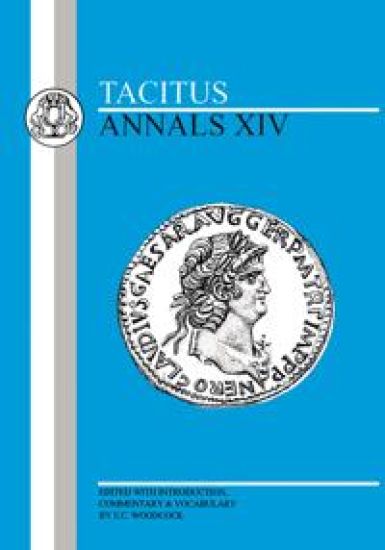
Tacitus: Annals XIV

Tacitus: Annals XIV

Tacitus

Bristol Classical Press
1998
nidottu
This edition of the fourteenth book of Tacitus’ Annals remains one of the most thorough editions of any book of Tacitus for use by school adn undergraduate students. Its meticulous commentary and vocabulary are supplemented by over fifity pages of introduction, covering Tacitus himself, a succinct but comprehensive account of his sytle and syntax. It also contains sections on the main themes of the book: the deterioration of nero’s reign internally contrasted with the external successes of Domitus Corbulo in Armenia, and Suetonius Paulinus in Britain (the defeat of Boudicca). Also available: Tacitus, Annals I; and Tacitus, Annals XV, both edited by N. MillerTacitus, Annals 14: A companion to the Penguin translation, edited by N. MillerSuetonius, Nero, edited by B. H. Warmington
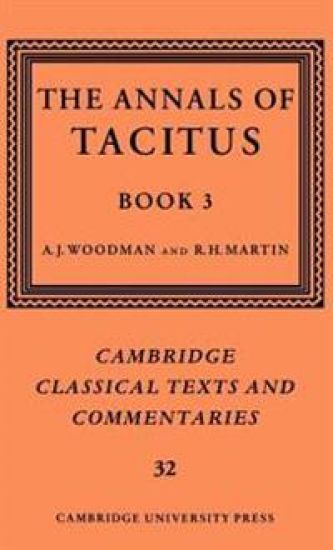
The Annals of Tacitus: Book 3

The Annals of Tacitus: Book 3

Tacitus

Cambridge University Press
1996
sidottu
Books 1 and 2 of Tacitus’ Annals were edited and annotated in two earlier volumes of this series (1972 and 1981) by the late F. R. D. Goodyear. Now A. J. Woodman and R. H. Martin have added a third volume: Book 3 of the Annals. This book covers the years AD 20–22, including the aftermath of Germanicus’ death and the trial of his alleged murderer Calpurnius Piso and contains some of Tacitus’ most well known and important programmatic and reflective passages. In their commentary the editors are the first to attempt a systematic comparison of the documentary record provided by a recently discovered senatus consultum relating to Piso’s trial with Tacitus’ narrative of the same episode. More attention is given to literary matters than by Goodyear but textual, linguistic and historical issues are treated fully and new interpretations frequently offered.
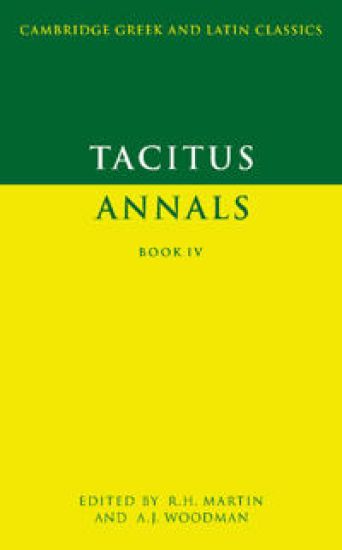
Tacitus: Annals Book IV

Tacitus: Annals Book IV

Tacitus

Cambridge University Press
1990
pokkari
The fourth book of Tacitus' Annals has been described as 'the best that Tacitus ever wrote'. It covers the years AD 23-28, beginning at the point where Tacitus noted a significant deterioration in the principate of the emperor Tiberius, and the increasingly malign influence of his 'evil genius' Sejanus. In this new edition the editors present an improved text of Annals IV, explain in detail the difficulties and unusual features of Tacitus' Latin, and discuss the dramatic, structural and literary qualities of the narrative. In the introduction they express radical views on how the Romans wrote history and consider the political, moral and stylistic dimensions of the historiographical tradition. Although intended primarily as a textbook for sixth-forms and undergraduates, the edition contains much which will be of interest to scholars of Latin literature and to Roman historians.
Annals

Annals

Tacitus

LOEB
1937
sidottu

Halvin toimitettuna 38,10 €

The paramount historian of the early Roman empire. Tacitus (Cornelius), famous Roman historian, was born in AD 55, 56 or 57 and lived to about 120. He became an orator, married in 77 a daughter of Julius Agricola before Agricola went to Britain, was quaestor in 81 or 82, a senator under the Flavian emperors, and a praetor in 88. After four years' absence he experienced the terrors of Emperor Domitian's last years and turned to historical writing. He was a consul in 97. Close friend of the younger Pliny, with him he successfully prosecuted Marius Priscus. Works: (i) Life and Character of Agricola, written in 97–98, specially interesting because of Agricola's career in Britain. (ii) Germania (98–99), an equally important description of the geography, anthropology, products, institutions, and social life and the tribes of the Germans as known to the Romans. (iii) Dialogue on Oratory (Dialogus), of unknown date; a lively conversation about the decline of oratory and education. (iv) Histories (probably issued in parts from 105 onwards), a great work originally consisting of at least twelve books covering the period AD 69–96, but only Books 1–4 and part of Book 5 survive, dealing in detail with the dramatic years 69–70. (v) Annals, Tacitus's other great work, originally covering the period AD 14–68 (Emperors Tiberius, Gaius, Claudius, Nero) and published between 115 and about 120. Of sixteen books at least, there survive Books 1–4 (covering the years 14–28); a bit of Book 5 and all Book 6 (31–37); part of Book 11 (from 47); Books 12–15 and part of Book 16 (to 66). Tacitus is renowned for his development of a pregnant concise style, character study, and psychological analysis, and for the often terrible story which he brilliantly tells. As a historian of the early Roman empire he is paramount. The Loeb Classical Library edition of Tacitus is in five volumes.
Annals

Annals

Tacitus

LOEB
1937
sidottu
The paramount historian of the early Roman empire. Tacitus (Cornelius), famous Roman historian, was born in AD 55, 56 or 57 and lived to about 120. He became an orator, married in 77 a daughter of Julius Agricola before Agricola went to Britain, was quaestor in 81 or 82, a senator under the Flavian emperors, and a praetor in 88. After four years' absence he experienced the terrors of Emperor Domitian's last years and turned to historical writing. He was a consul in 97. Close friend of the younger Pliny, with him he successfully prosecuted Marius Priscus. Works: (i) Life and Character of Agricola, written in 97–98, specially interesting because of Agricola's career in Britain. (ii) Germania (98–99), an equally important description of the geography, anthropology, products, institutions, and social life and the tribes of the Germans as known to the Romans. (iii) Dialogue on Oratory (Dialogus), of unknown date; a lively conversation about the decline of oratory and education. (iv) Histories (probably issued in parts from 105 onwards), a great work originally consisting of at least twelve books covering the period AD 69–96, but only Books 1–4 and part of Book 5 survive, dealing in detail with the dramatic years 69–70. (v) Annals, Tacitus's other great work, originally covering the period AD 14–68 (Emperors Tiberius, Gaius, Claudius, Nero) and published between 115 and about 120. Of sixteen books at least, there survive Books 1–4 (covering the years 14–28); a bit of Book 5 and all Book 6 (31–37); part of Book 11 (from 47); Books 12–15 and part of Book 16 (to 66). Tacitus is renowned for his development of a pregnant concise style, character study, and psychological analysis, and for the often terrible story which he brilliantly tells. As a historian of the early Roman empire he is paramount. The Loeb Classical Library edition of Tacitus is in five volumes.
Histories

Histories

Tacitus

LOEB
1931
sidottu
The paramount historian of the early Roman empire. Tacitus (Cornelius), famous Roman historian, was born in AD 55, 56 or 57 and lived to about 120. He became an orator, married in 77 a daughter of Julius Agricola before Agricola went to Britain, was quaestor in 81 or 82, a senator under the Flavian emperors, and a praetor in 88. After four years' absence he experienced the terrors of Emperor Domitian's last years and turned to historical writing. He was a consul in 97. Close friend of the younger Pliny, with him he successfully prosecuted Marius Priscus. Works: (i) Life and Character of Agricola, written in 97–98, specially interesting because of Agricola's career in Britain. (ii) Germania (98–99), an equally important description of the geography, anthropology, products, institutions, and social life and the tribes of the Germans as known to the Romans. (iii) Dialogue on Oratory (Dialogus), of unknown date; a lively conversation about the decline of oratory and education. (iv) Histories (probably issued in parts from 105 onwards), a great work originally consisting of at least twelve books covering the period AD 69–96, but only Books 1–4 and part of Book 5 survive, dealing in detail with the dramatic years 69–70. (v) Annals, Tacitus's other great work, originally covering the period AD 14–68 (Emperors Tiberius, Gaius, Claudius, Nero) and published between 115 and about 120. Of sixteen books at least, there survive Books 1–4 (covering the years 14–28); a bit of Book 5 and all Book 6 (31–37); part of Book 11 (from 47); Books 12–15 and part of Book 16 (to 66). Tacitus is renowned for his development of a pregnant concise style, character study, and psychological analysis, and for the often terrible story which he brilliantly tells. As a historian of the early Roman empire he is paramount. The Loeb Classical Library edition of Tacitus is in five volumes.
Histories

Histories

Tacitus

LOEB
1925
sidottu
The paramount historian of the early Roman empire. Tacitus (Cornelius), famous Roman historian, was born in AD 55, 56 or 57 and lived to about 120. He became an orator, married in 77 a daughter of Julius Agricola before Agricola went to Britain, was quaestor in 81 or 82, a senator under the Flavian emperors, and a praetor in 88. After four years' absence he experienced the terrors of Emperor Domitian's last years and turned to historical writing. He was a consul in 97. Close friend of the younger Pliny, with him he successfully prosecuted Marius Priscus. Works: (i) Life and Character of Agricola, written in 97–98, specially interesting because of Agricola's career in Britain. (ii) Germania (98–99), an equally important description of the geography, anthropology, products, institutions, and social life and the tribes of the Germans as known to the Romans. (iii) Dialogue on Oratory (Dialogus), of unknown date; a lively conversation about the decline of oratory and education. (iv) Histories (probably issued in parts from 105 onwards), a great work originally consisting of at least twelve books covering the period AD 69–96, but only Books 1–4 and part of Book 5 survive, dealing in detail with the dramatic years 69–70. (v) Annals, Tacitus's other great work, originally covering the period AD 14–68 (Emperors Tiberius, Gaius, Claudius, Nero) and published between 115 and about 120. Of sixteen books at least, there survive Books 1–4 (covering the years 14–28); a bit of Book 5 and all Book 6 (31–37); part of Book 11 (from 47); Books 12–15 and part of Book 16 (to 66). Tacitus is renowned for his development of a pregnant concise style, character study, and psychological analysis, and for the often terrible story which he brilliantly tells. As a historian of the early Roman empire he is paramount. The Loeb Classical Library edition of Tacitus is in five volumes.
Agricola. Germania. Dialogus
The paramount historian of the early Roman empire. Tacitus (Cornelius), famous Roman historian, was born in AD 55, 56 or 57 and lived to about 120. He became an orator, married in 77 a daughter of Julius Agricola before Agricola went to Britain, was quaestor in 81 or 82, a senator under the Flavian emperors, and a praetor in 88. After four years’ absence he experienced the terrors of Emperor Domitian’s last years and turned to historical writing. He was a consul in 97. Close friend of the younger Pliny, with him he successfully prosecuted Marius Priscus. Works: (i) Life and Character of Agricola, written in 97–98, specially interesting because of Agricola’s career in Britain. (ii) Germania (98–99), an equally important description of the geography, anthropology, products, institutions, and social life and the tribes of the Germans as known to the Romans. (iii) Dialogue on Oratory (Dialogus), of unknown date; a lively conversation about the decline of oratory and education. (iv) Histories (probably issued in parts from 105 onwards), a great work originally consisting of at least twelve books covering the period AD 69–96, but only Books 1–4 and part of Book 5 survive, dealing in detail with the dramatic years 69–70. (v) Annals, Tacitus’s other great work, originally covering the period AD 14–68 (Emperors Tiberius, Gaius, Claudius, Nero) and published between 115 and about 120. Of sixteen books at least, there survive Books 1–4 (covering the years 14–28); a bit of Book 5 and all Book 6 (31–37); part of Book 11 (from 47); Books 12–15 and part of Book 16 (to 66). Tacitus is renowned for his development of a pregnant concise style, character study, and psychological analysis, and for the often terrible story which he brilliantly tells. As a historian of the early Roman empire he is paramount. The Loeb Classical Library edition of Tacitus is in five volumes.