

Kirjailija
Theodore Dreiser
Kirjat ja teokset yhdessä paikassa: 515 kirjaa, julkaisuja vuosilta 1925–2026, suosituimpiin kuuluu An American Tragedy. Vertaile teosten hintoja ja tarkista saatavuus suomalaisista kirjakaupoista.
515 kirjaa
Kirjojen julkaisuvuodet: 1925–2026.








The Symbolic Drawings of Hubert Davis for an American Tragedy
Theodore Dreiser; Hubert Davis
Literary Licensing, LLC
2011
nidottu

How the Great Corporations Rule the United States
Theodore Dreiser; Thomas A. Latta; John W. Gunn
Literary Licensing, LLC
2011
nidottu

Harlan Miners Speak: Report on Terrorism in the Kentucky Coal Fields
Theodore Dreiser; Sherwood Anderson
Literary Licensing, LLC
2011
nidottu

Harlan Miners Speak: Report on Terrorism in the Kentucky Coal Fields
Theodore Dreiser; Sherwood Anderson
Literary Licensing, LLC
2011
sidottu
Harlan Miners Speak: Report On Terrorism In The Kentucky Coal Fields is a non-fiction book written by Theodore Dreiser. The book is a report on the terrorism that was rampant in the Kentucky coal fields during the early 20th century. The book is based on Dreiser's first-hand experiences and interviews with the miners and their families. The book provides a detailed account of the violence, intimidation, and exploitation that the miners faced at the hands of the mine owners and their hired thugs. The book also highlights the miners' struggle for better working conditions, fair wages, and unionization. Harlan Miners Speak is an important historical document that sheds light on the brutal realities of the coal mining industry in Kentucky and the United States. The book is a powerful indictment of the exploitation of workers and the collusion between big business and government. It is a must-read for anyone interested in the history of labor and social justice in America. This scarce antiquarian book is a facsimile reprint of the old original and may contain some imperfections such as library marks and notations. Because we believe this work is culturally important, we have made it available as part of our commitment for protecting, preserving, and promoting the world's literature in affordable, high quality, modern editions, that are true to their original work.

How the Great Corporations Rule the United States
Theodore Dreiser; Thomas A. Latta; John W. Gunn
Literary Licensing, LLC
2011
sidottu
""How The Great Corporations Rule The United States"" by Theodore Dreiser is a non-fiction book that explores the power and influence of large corporations in American society. The book examines how big business has come to dominate politics, media, and the economy, shaping the country's social and political landscape in profound ways. Dreiser argues that the concentration of wealth and power in the hands of a few corporate giants has led to a system of inequality and injustice that undermines democracy and the common good. Drawing on his own experiences as a journalist and observer of American life, Dreiser provides a critical analysis of the role of corporations in American society, and offers a compelling critique of the capitalist system that underpins it. This book is a must-read for anyone interested in understanding the dynamics of power and influence in contemporary America. Additional Authors Include Orus M. Mooney, James M. Harris And Holland Patterson. Little Blue Book No. 1590. This scarce antiquarian book is a facsimile reprint of the old original and may contain some imperfections such as library marks and notations. Because we believe this work is culturally important, we have made it available as part of our commitment for protecting, preserving, and promoting the world's literature in affordable, high quality, modern editions, that are true to their original work.

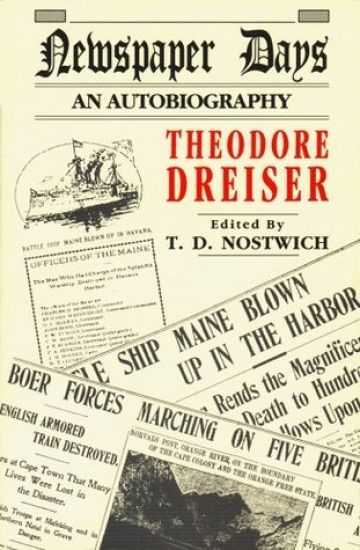
During Christmas 1891, Dreiser, age twenty-one and miserable as a bill collector in Chicago, decided to find a job as a reporter: “I conceived of newspapers as wonderlands in which all concerned were prosperous and happy. . . I was also determined to shake off the garments of the commonplace in which I seemed swathed and step forth into the public arena, where I could be seen and understood for what I was—a writer.” He at last found a slot at the Chicago Daily Globe, helping cover the 1892 Democratic National Convention. This, in turn, led to jobs with newspapers in St. Louis, Toledo, Cleveland, Buffalo, and Pittsburgh—a scraping, unremunerative, eight-year journey through bustling railroad towns, with New York and Pulitzer’s World the final terminal. He started as a reporter, but found greater success as a feature writer, where he was better able to bend fact toward fiction. He specialized in lowlife stories, the research for which was a working education in the brutalities of life: “The police courts, the jails, the houses of ill repute, trade failures and trickery—it was all a grand magnificent spectacle:” a pageant of human weakness, wickedness, and survival through cunning and courage. “Everywhere I looked I found a terrifying desire for lust or pleasure or wealth, accompanied by a heartlessness which was freezing to the soul, or a dogged resignation to deprivation and misery.” He covered lynchings, streetcar strikes, robberies and murders—all of it testing his abilities as an observer and awakening the novelist within. It was the school that would prepare him for Sister Carrie (1900), Jennie Gerhardt (1911), and An American Tragedy (1925). First published in 1922 in what the editor calls an “expurgated abridgment,” Newspaper Days is here published in an edition based on Dreiser’s original typescript.

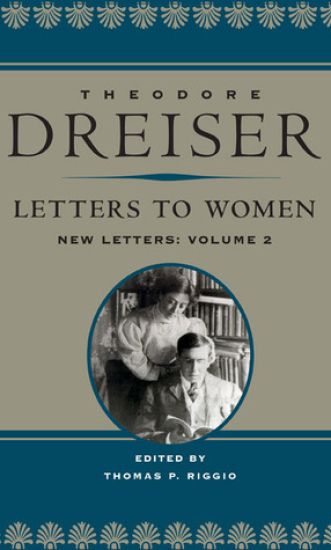
Theodore Dreiser led a long and controversial life, almost always pursuing some serious question, and not rarely pursuing women. This collection, the second volume of Dreiser correspondence to be published by the University of Illinois Press, gathers previously unpublished letters Dreiser wrote to women between 1893 and 1945, many of them showing personal feelings Dreiser revealed nowhere else. Here he both preens and mocks himself, natters and scolds, relates his jaunts with Mencken and his skirmishes with editors and publishers. He admits his worries, bemoans his longings, and self-consciously embarks on love letters that are unafraid to smolder and flame. To one reader he sends "Kisses, Kisses, Kisses, for your sweety mouth" and urges his needy requests: "Write me a love-letter Honey girl." Alongside such amorous play, he often expressed his deepest feelings on philosophical, religious, and social issues that characterize his public writing. Chronologically arranged and meticulously edited by Thomas P. Riggio, these letters reveal how wide and deep Dreiser's needs were. Dreiser often discussed his writing in his letters to women friends, telling them what he wanted to do, where he thought he succeeded and failed, and seeking approval or criticism. By turns seductive, candid, coy, and informative, these letters provide an intimate view of a master writer who knew exactly what he was after.