

Kirjailija
Theodore Dreiser
Kirjat ja teokset yhdessä paikassa: 515 kirjaa, julkaisuja vuosilta 1925–2026, suosituimpiin kuuluu An American Tragedy. Vertaile teosten hintoja ja tarkista saatavuus suomalaisista kirjakaupoista.
515 kirjaa
Kirjojen julkaisuvuodet: 1925–2026.


Before publishing Dreiser's European travel book in 1913, the Century Company editors had heavily excised autobiographical reminiscences, philosophical speculations, revealing portraits of prominent figures, Dreiser's relationships with women, and his carefully observed renditions of lower-class urban life. This newly edited text is based on the typescript that Dreiser himself had prepared from his holograph in order to preserve it fully for future publication. The text reveals Dreiser's multiple motives in going to Europe--not least the cultivation of his reputation in England and the exploration of his ancestral roots in Germany. The earlier edition is about places; this fuller text is about Dreiser himself.




'It has long been known that Dreiser devoted much effort during the final two decades of his lfe to the preparation of a major philosophical work which remained unfinished at his death.... The best evidence of Dreiser's later thought would appear to be [t]his treatise, and it is appropriate that Marguerite Tjader and John J. McAleer--the two Dreiserians most sympathetic to the mystical religiosity of the later Dreiser--should make it available in published form.' --American Literary Realism
Although world-famous for his novels Sister Carrie and Jennie Gerhardt, Theodore Dreiser was also highly accomplished in journalism, autobiography, and travel writing. In 1919, having recently accepted the publishing contract of a new publisher, Boni and Liveright, Dreiser proposed to publish a "book of characters" that would collect twelve biographical sketches of individuals who were major influences on Dreiser, both as a man and as a writer. The resulting narratives combine the best attributes of the character sketch, the autobiography, and the short story into miniature masterpieces of prose. The men profiled in Twelve Men are a diverse and colorful group: from Dreiser's equally famous brother, the songwriter Paul Dresser ("My Brother Paul"), to the entirely obscure railroad foreman Michael Burke ("The Mighty Rourke"), on whose work crew Dreiser had labored in 1903. The twelve narratives are compelling portraits of the men portrayed, but they also reveal many insights into Dreiser's own life and work. These factors elevate the significance of Twelve Men to a level consistent with other major works in the Dreiser canon.
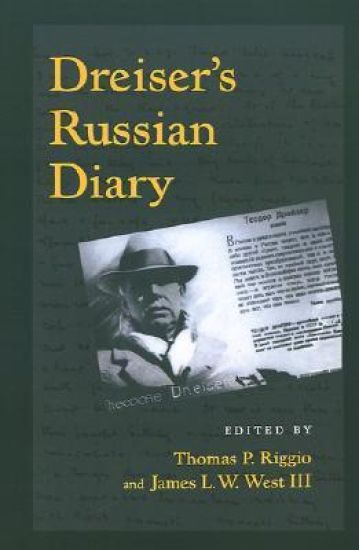
Theodore Dreiser's Russian Diary is an extended record of the American writer's travels throughout the Soviet Union in 1927-28. Dreiser was initially invited to Moscow for a week-long observance of the tenth anniversary of the October Revolution. He asked, and was granted, permission to make an extended tour of the country. This previously unpublished diary is a firsthand record of life in the USSR during the 1920s as seen by a leading American cultural figure. It is a valuable primary source, surely among the last from this period of modern history.
In stories such as ""Six O'Clock"", ""The City Awakes"" and ""The Waterfront"", the author returns the reader to turn-of-the-century New York with his early memories of the city.
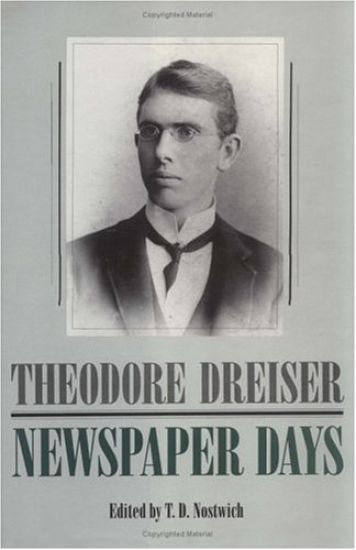
In Newspaper Days, first published in 1922 under the title A Book about Myself, Theodore Dreiser explored his personal life during the time he spent as a reporter for newspapers in Chicago, St. Louis, Pittsburgh, and New York in the 1890s.
Dreiser's careful preservation of his papers bears new fruit with the publication of his personal diaries for the years 1902-26. This volume presents all seven of Dreiser's hitherto unpublished American diaries, the intermittent journals he kept during the most productive years of his literary career. Together they constitute a revealing self-portrait as well as a valuable commentary on the American scene during the first quarter of the twentieth century. They offer reflections on turn-of-the-century Philadelphia, the American South and Mid-West, Greenwich Village of the nineteen-teens, and Hollywood of the twenties. The diaries begin in 1902, when Dreiser was at a low point after the "suppression" of Sister Carrie, and continue until 1926, when he was enjoying the greatest success of his career with An American Tragedy. This publication constitutes in its entirety a new source for biographical and critical study. This is particularly true of the diaries covering Dreiser's experience in Philadelphia, Greenwich Village, and with Helen Richardson-all of which were not available to previous biographers. The present Introduction by Professor Riggio is the first biographical narrative to make use of these materials. Future biographers will now be able to speak with more assurance of Dreiser's whereabouts, the people he knew, what he was reading, which writings were in progress, and of his fascinating private affairs in general. In addition, these diaries will be of interest to students of Dreiser's literary art, as they reveal subtle aspects of how Dreiser viewed the external world and transmuted it in his daily creative efforts.
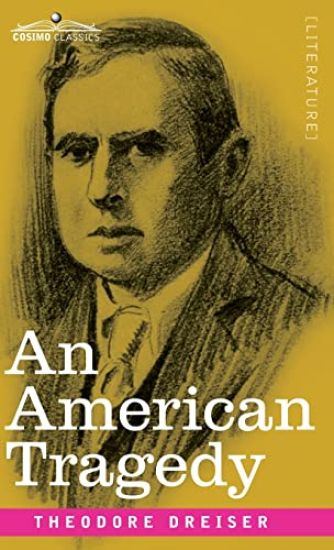
"Who were these people with money, and what had they done that they should enjoy so much luxury, where others as good seemingly as themselves had nothing? And wherein did these latter differ so greatly from the successful?"-Theodore Dreiser, An American Tragedy (1925)An American Tragedy (1925) by Theodore Dreiser is based on the 1906 murder of Grace Brown, her lover's immorality, and his subsequent trial. The novel, laced with dramatic intrigue, is on Time magazine's list of Top 100 All-Time novels. Dreiser's tale follows the life of Clyde Griffiths and his struggle to live a successful life. His ultimate desire for status and women thwart his life goal. A tragedy in all definitions of the term, this novel is for those interested in the human condition and the demise of a common man.