Kirjojen hintavertailu – 12 859 818 kirjaa ja 27 kauppaa
Kirjailija
Theodore Dreiser
Kirjat ja teokset yhdessä paikassa: 515 kirjaa, julkaisuja vuosilta 1925–2026, suosituimpiin kuuluu An American Tragedy. Vertaile teosten hintoja ja tarkista saatavuus suomalaisista kirjakaupoista.
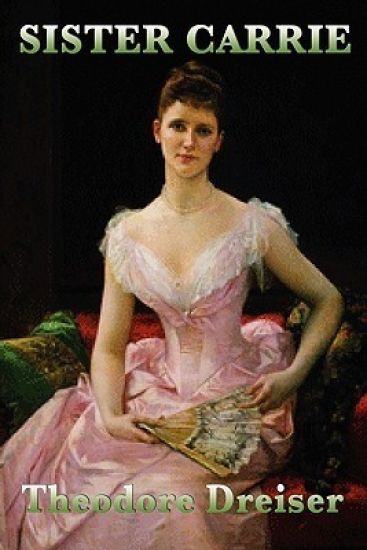
Sister Carrie by Theodore Dreiser has been called the "greatest of all American urban novels." Caroline "Sister Carrie" Meeber, a young country girl, moves to the big city where she starts realizing her own American Dream, first as a mistress to men that she perceives as superior, and later becoming a famous actress. Dissatisfied with life in her rural Wisconsin home, 18-year-old Caroline takes the train to Chicago, where her older sister Minnie haa agreed to take her in. On the train, Carrie meets Charles Drouet, a traveling salesman, who is attracted to her because of her simple beauty and unspoiled manner. They exchange contact information, but upon discovering the "steady round of toil" and somber atmosphere at her sister's flat, she writes to Drouet and discourages him from calling on her there. One day, after an illness that costs her job, she encounters Drouet on a downtown street. Once again taken by her beauty, and moved by her poverty, he encourages her to dine with him, where, over sirloin and asparagus, he persuades her to leave her sister and move in with him. To press his case, he slips Carrie two ten dollar bills, opening a vista of material possibilities to her. The next day, he rebuffs her feeble attempts to return the money, taking her shopping at a Chicago department store and securing a jacket she covets and some shoes. That night, she writes a good-bye note to Minnie and moves in with Drouet. Theodore Dreiser is considered one of America's greatest naturalists, notable because he wrote at the early stages of the naturalist movement. Sister Carrie was a movement away from the emphasis on morals of the Victorian era and focused more on realism and the base instincts of humans. Sister Carrie went against social and moral norms of the time, as Dreiser presented his characters without judging them. Dreiser fought against censorship of Sister Carrie, brought about because Carrie engaged in affairs and other "illicit sexual relationships" without suffering any consequences. This flouted prevailing norms, that a character who practiced such sinful behavior must be punished in the course of the plot in order to be taught a lesson.
Dissatisfied with life in her rural Wisconsin home, 18-year-old Caroline moves to the big city where she starts realizing her own American Dream by first becoming a mistress to men that she perceives as superior and later as a famous actress. It has been called the "greatest of all American urban novels."
`When a girl leaves her home at eighteen, she does one of two things. Either she falls into saving hands and becomes better, or she rapidly assumes the cosmopolitan standard of virtue and becomes worse.' The tale of Carrie Meeber's rise to stardom in the theatre and George Hurstwood's slow decline captures the twin poles of exuberance and exhaustion in modern city life as never before. The premier example of American naturalism, Dreiser's remarkable first novel has deeply influenced such key writers as William Faulkner, F. Scott Fitzgerald, Saul Bellow, and Joyce Carol Oates. This edition uses the 1900 text, which is regarded as the author's final version. ABOUT THE SERIES: For over 100 years Oxford World's Classics has made available the widest range of literature from around the globe. Each affordable volume reflects Oxford's commitment to scholarship, providing the most accurate text plus a wealth of other valuable features, including expert introductions by leading authorities, helpful notes to clarify the text, up-to-date bibliographies for further study, and much more.
This epic of urban life tells of small- town heroine Carrie Meeber, adrift in an indifferent Chicago. Setting out, she has nothing but a few dollars and an unspoiled beauty. Hers is a story of struggle? from sweatshop to stage success?and of the love she inspires in an older, married man whose obsession with her threatens to destroy him.
The novel is followed by "A Note on the Text," which discusses the relationship between this edition’s text and that of the Pennsylvania Edition (1981), and a "Textual Appendix," which provides a generous sampling of the cuts Dreiser and his friend Arthur Henry made in the typescript version of Sister Carrie. "Backgrounds and Sources" reprints generous excerpts from Dreiser’s autobiographies and other writings that help establish his personal connection to the novel. Coverage of the supposed "suppression" of Sister Carrie by its first publisher is drawn from Dreiser’s correspondence with Frank Norris, Arthur Henry, Walter H. Page, and F. N. Doubleday. "Criticism" collects thirteen essays, six of them new to the Third Edition, that discuss Dreiser’s distinctive literary naturalism and narrative technique, the novel’s relationship to American culture, and issues of gender and class in the novel, among other topics. Contributors include Ellen Moers, Robert Penn Warren, Amy Kaplan, Alan Trachtenberg, and Donald Pizer, among others. A Chronology of Sister Carrie and a Selected Bibliography are also included.