Kirjojen hintavertailu – 12 859 829 kirjaa ja 27 kauppaa

Kirjailija

Thomas Anderson

Kirjat ja teokset yhdessä paikassa: 53 kirjaa, julkaisuja vuosilta 1999–2026, suosituimpiin kuuluu The Case of Enola Holmes 3 Freedom, Family and Finding Your Own Name. Vertaile teosten hintoja ja tarkista saatavuus suomalaisista kirjakaupoista.

53 kirjaa

Kirjojen julkaisuvuodet: 1999–2026.

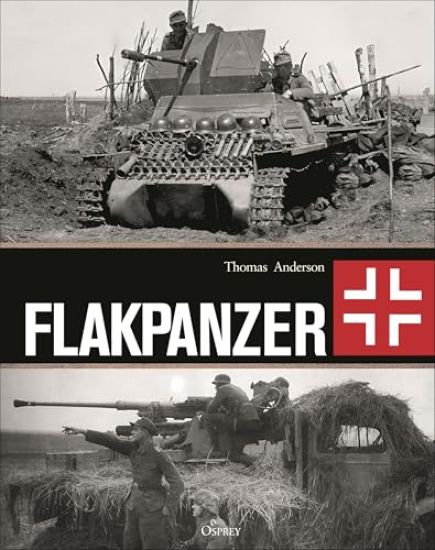
Flakpanzer

Flakpanzer

Thomas Anderson

BLOOMSBURY PUBLISHING PLC
2026
sidottu
Based on first-hand accounts, original documentation and unpublished images, this is a highly illustrated history of the Flakpanzer in World War II. As the war progressed, Allied and Soviet forces began to deploy ground-attack aircraft armed with cannons, bombs or rockets to halt German armoured columns. Consequently, field commanders began to demand for their units to be issued with effective armoured anti-aircraft weapons. Renowned armour expert Thomas Anderson explains how the weapons were first mounted on light trucks and then, more effectively, on the chassis of light, medium or heavy half-tracks before orders were issued for a dedicated armoured Flakpanzer – the 2cm Flakpanzer 38(t) based on the chassis of a Czech-built PzKpfw 38(t). The effectiveness of this type saw the development of four further vehicles on the PzKpfw IV chassis: FlakPz IV Wirbelwind (whirlwind), 3.7cm FlaK 43 L/50 Ostwind (east wind): 3.7cm FlaK 43 L/60 Möbelwagen (furniture van) and the 2cm Vierlingsflak 38 L/55. The final stages of the war also German field engineers mounting Flak weapons on all types of heavy truck or half-track chassis available. This new study draws on after-action reports, original wartime documents and rare and previously unseen photographs in this comprehensive and fully illustrated study of the German development of Flakpanzers throughout World War II.
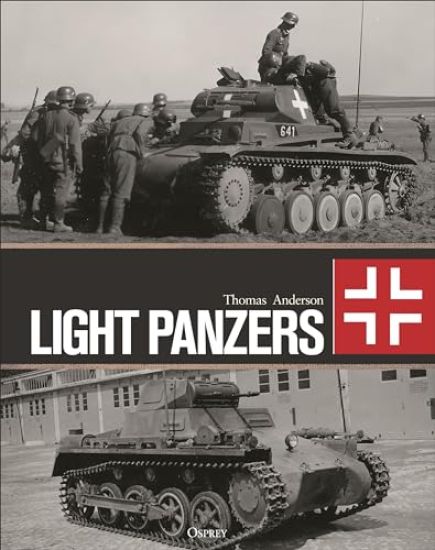
Light Panzers

Light Panzers

Thomas Anderson

BLOOMSBURY PUBLISHING PLC
2025
sidottu

Halvin toimitettuna 32,50 €

This highly illustrated new study tells the full story of the German light Panzers in World War II. The light Panzers that equipped the first Panzer divisions were originally intended as training or stopgap machines, suitable only until the arrival of the better-armed and -armoured PzKpfw III and PzKpfw IV. However, despite their limitations, they ended up playing key roles in the victorious campaigns waged by the German Army from 1939 to 1942. This highly illustrated title describes the development and organizational history of the PzKpfw I, introduced in 1934, and the PzKpfw II, introduced in 1936. It explains how the annexation of German-speaking Sudetenland in 1938 and, subsequently, of Czechoslovakia itself delivered an unexpected bonus for the Panzerwaffe in the form of two Czech Army light tanks, introduced into German service as the PzKpfw 35(t) and PzKpfw 38(t). It goes on to cover the considerable operational service of these tanks in Poland, France and the invasion of the Soviet Union in 1941. From late 1941 onwards, they were withdrawn from front-line service but the chassis were used until the end of the war for self-propelled artillery and tank destroyers. German armour expert Thomas Anderson draws on archival material, after-action reports and rare photographs in this comprehensive study of the German light Panzers that played a key role in the early years of World War II.
Wings for Liberty and Justice

Wings for Liberty and Justice

Thomas Anderson; Tom Floyd; Jim Zietlow; Stephanie Pati; Christine Dolan

Histria LLC
2024
sidottu
This is the definitive account of a small group of determined United Airlines employees in their relentless effort to find one another amidst a worldwide pandemic; to stand up against draconian United Airlines company policies to PCR test, mask up and force an illegal medical product injection on 100% of its US-based employees. You will see the struggles, victories and faithful commitment to God and prayer that unify this small group of employees (known as Gideon's Army) to face the giant United Airlines Corporation in their true David versus Goliath story. They seek true justice and leadership accountability the law necessitates.
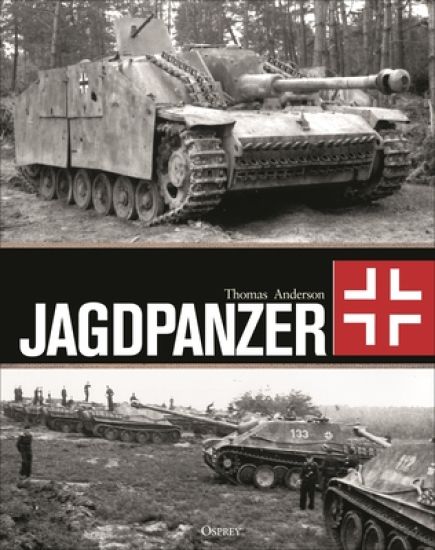
Jagdpanzer

Jagdpanzer

Thomas Anderson

BLOOMSBURY PUBLISHING PLC
2024
sidottu

Halvin toimitettuna 32,50 €

This highly illustrated title details the history of the Jagdpanzer, the self-propelled German tank destroyers introduced in the second half of World War II. Throughout World War II all sides grappled with how to deal with the threat of enemy armour. The German Army had adopted the 3.7cm anti-tank gun in the inter-war years. However, it was already apparent that the towed weapons lacked firepower and more powerful weapons were introduced in 1942 and 1943. By 1942, hard-pressed Panzerjäger (anti-tank) units equipped with towed anti-tank weapons fighting on the Eastern Front increasingly sought assistance from StuG-equipped assault artillery units. By late 1943 the StuG was being issued to new tank destroyer units and at the same time a dedicated Jagdpanzer (hunting tank) was ordered, based on the chassis and running gear of the PzKpfw IV. This highly illustrated study by German armour expert Thomas Anderson uses archival material and after-action reports to describe the development of the Jagdpanzer, and the many variants built on other German tank chassis. It also covers in detail how Jagdpanzer units were organized as well as their operational experience on the battlefield.
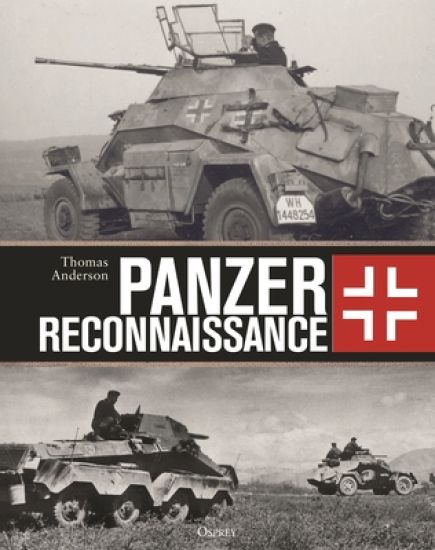
Panzer Reconnaissance

Panzer Reconnaissance

Thomas Anderson

BLOOMSBURY PUBLISHING PLC
2023
sidottu

Halvin toimitettuna 32,50 €

Using first-hand accounts and rare and unpublished images, this highly illustrated title tells the full story of the German reconnaissance troops in World War II. When the Wehrmacht was first formed in 1935, tactical reconnaissance was carried out by motorcycle rifle units (Kradschützen). However, with the development and large-scale introduction of wheeled armoured vehicles in the late 1930s, motorized reconnaissance battalions (Aufklärungs-Abteilungen) were introduced. Equipped with a mixture of armoured cars and motorcycles, they often operated far ahead of battlefront to survey the terrain, observe enemy positions and identify enemy forces – key information required ahead of any armoured assault. In the second half of the war, with Germany on the strategic defensive, armoured reconnaissance troops found themselves increasingly drawn into combat operations, and even holding sectors of the line. At the same time, more modern equipment was introduced with motorcycles phased out and purpose-built armoured personnel carriers (Schützenpanzerwagen) introduced. Renowned armour expert Thomas Anderson draws on first-hand accounts and rare and previously unseen photographs in this comprehensive and fully illustrated study of the Panzer reconnaissance troops, the crucial eyes and ears of the German armoured forces of World War II.
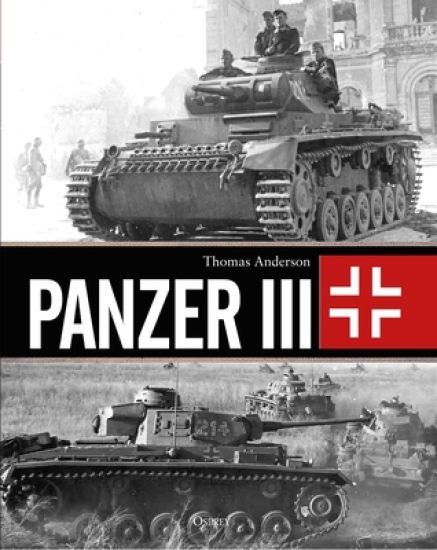
Panzer III

Panzer III

Thomas Anderson

Osprey Publishing
2022
sidottu
This highly illustrated title details the history of the Panzer III throughout World War II, from its early development in the pre-war years, through its pivotal role in the Blitzkrieg campaigns in Poland and Western Europe, to its eventual obsolescence on the Eastern Front. The Panzer III was the mainstay of the German armoured forces in the early years of World War II and spearheaded the victories in Poland, Western Europe and the Balkans. Designed and developed in the mid-1930s, it was originally equipped with a 3.7cm gun and with 30mm-thick armour. Early combat in Poland and France saw the need for this to be upgraded, and later models were armed with a 5cm KwK L/42 gun and had the frontal armour reinforced to 60mm by adding extra plating. This later version proved to be particularly effective during the campaigns in the Balkans and against British armour in the North African desert campaign. However, in the first months of Operation Barbarossa – the German invasion of the Soviet Union – it became obvious to battlefield commanders that the Panzer III had become obsolete as a main battle tank and it began to be replaced by the Panzer IV as the main front-line battle tank. The Panzer III was relegated to a secondary role, but its chassis proved the basis for the Sturmgeschutz III, which became the most widespread German armoured vehicle of World War II.
31 Prayers for 31 Days

31 Prayers for 31 Days

Thomas Anderson

Christian Faith
2021
pokkari
Thirty-one prayers, in as many days, began with apprehension concerning retirement. Working had grown into my hobby. Each morning, I looked forward to going into the main post office on Brook Road, standing behind the counter, and asking the customers, "May I help you, please?" Such joy came from serving the public. Now I stood perplexed with indecision about my continued future-which drew me into continual prayer. In fact, each time I logged into the computer with my password, "LORDhelpmetoholdout66," the Lord was invoked. Before leaving home, I read devotionals, then I prayed. One morning, I typed a prayer in text form. I took a chance and sent it to a couple of friends. Their responses empowered me to do it the next day, and soon it became my morning ritual. My son, Thomas, and his family presented me a book of my prayers as a Christmas gift in 2019. Then my daughter, Teah, saved each one daily beginning 2020. So I told her I think I should become published. She had saved thirty-one prayers. Thus, the title was born.

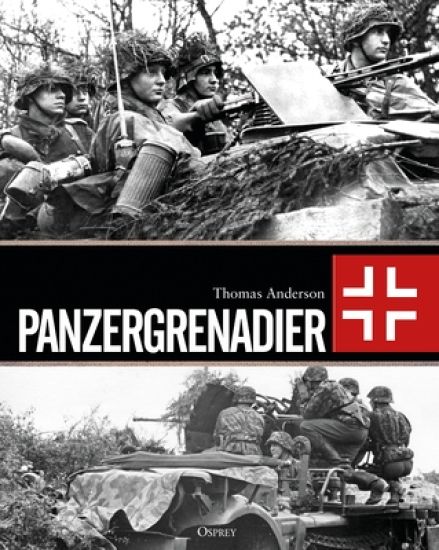
Panzergrenadier

Panzergrenadier

Thomas Anderson

Osprey Publishing
2021
sidottu
Using first-hand accounts and many previously unpublished images, this highly illustrated new book provides a detailed analysis of Germany’s Panzergrenadier in World War II. Throughout history, infantry has been the main attacking force deployed by armies around the world, but positioning substantial infantry forces has always required precious time to assemble the troops to launch an attack or form defensive positions. Transportation of men and their equipment has been a major issue through the ages, and one that was only partly alleviated by the establishment of railway systems in the 19th century and motor vehicles in the early 20th century. With the development of the German Panzerwaffe, military planners realized both the enormous potential of the tank as a breakthrough weapon, but also the issues faced by support units following the attacking force – including the infantry. A tank assault moved rapidly forwards and this required a motorized infantry which could keep pace with the attack and provide all necessary support. This motorized infantry element for a Panzer division was an integral Schützenbrigade (rifle brigade), and it was equipped with a suitable means of transport – the Schützenpanzerwagen (armoured personnel carrier). During Operation Barbarossa, German forces were faced by the Red Army and unforeseen weather conditions. With the onset of the harsh Russian winter the operation failed, and the war in the east entered a new phase. From experience gained from the operation, a new arm of the military was created: the Panzergrenadier This groundbreaking book describes the development and evolution of the armoured infantry force that accompanied the German Panzers as they crossed the battlefields of Europe, as well as detailing the vehicles and equipment that were developed to support their specialized role.
Elements of Agricultural Chemistry

Elements of Agricultural Chemistry

Thomas Anderson

ALPHA EDITION
2021
pokkari
Elements of Agricultural Chemistry, has been considered important throughout the human history, and so that this work is never forgotten we have made efforts in its preservation by republishing this book in a modern format for present and future generations. This whole book has been reformatted, retyped and designed. These books are not made of scanned copies of their original work and hence the text is clear and readable.