Kirjojen hintavertailu – 12 859 819 kirjaa ja 27 kauppaa

Kirjailija

Thomas Aquinas

Kirjat ja teokset yhdessä paikassa: 251 kirjaa, julkaisuja vuosilta 1968–2026, suosituimpiin kuuluu Complete Works of Thomas Aquinas,The. Vertaile teosten hintoja ja tarkista saatavuus suomalaisista kirjakaupoista.

251 kirjaa

Kirjojen julkaisuvuodet: 1968–2026.

Disputed Questions on Virtue

Disputed Questions on Virtue

Thomas Aquinas

St Augustine's Press
1999
sidottu
During his second stint as regent master of theology at the University of Paris in 1269-1272, Thomas Aquinas fulfilled the threefold magisterial task:'legere, disputare, praedicare' - to lecture, to dispute, to preach. 'On Virtues in General' and 'On the Cardinal Virtues' are two series of disputed questions which date from this period. In them Thomas, at the height of his powers and under the pressure of the raging dispute over Aristotle, discusses the central feature of his moral doctrine, virtue. During the same period was composing his commentrary on Aristotle's 'Nicomachean Ethics' and completing the moral part of the 'Summa Theologiae'. These disputed questions are the work of a theologian for whom philosophy was the necessary prerequisite of his discipline. Thomas discusses virtue with reference to the definitions of St. Augustine and Aristotle and develops a distinction between the acquired virtues and the virtues which are infused into the soul by grace. The subtle interactions of the natural and supernatural have never been discussed with more clarity. Justice, prudence, courage, and temperance - the cardinal virtues - are shown to have both acquired and infused instances.
A Commentary on Aristotle's 'de Anima'

A Commentary on Aristotle's 'de Anima'

Thomas Aquinas

Yale University Press
1999
sidottu
"This translation is an important research tool for all philosophers interested in Aquinas's philosophy of mind and epistemology. . . . Every library of both undergraduate and graduate philosophy programs needs this work, and all of us interested in the history of medieval philosophy of mind should have this new translation on our desks. Highly recommended."-Anthony J. Lisska, The Medieval Review
On Human Nature

On Human Nature

Thomas Aquinas

Hackett Publishing Co, Inc
1999
pokkari
This volume begins with excerpts from Aquinas' commentary on De Anima, excerpts that proceed from a general consideration of soul as common to all living things to a consideration of the animal soul and, finally, to what is peculiar to the human soul. These are followed by the Treatise on Man, Aquinas' most famous discussion of human nature, but one whose organization is dictated by theological concerns and whose philosophical importance is thus best appreciated when seen as presented here: within the historical philosophical framework of which it constitutes a development. Aquinas' discussions of the will and the passions follow, providing fruitful points of comparison with other philosophers.
On Human Nature

On Human Nature

Thomas Aquinas

Hackett Publishing Co, Inc
1999
sidottu
This volume begins with excerpts from Aquinas' commentary on De Anima, excerpts that proceed from a general consideration of soul as common to all living things to a consideration of the animal soul and, finally, to what is peculiar to the human soul. These are followed by the Treatise on Man, Aquinas' most famous discussion of human nature, but one whose organization is dictated by theological concerns and whose philosophical importance is thus best appreciated when seen as presented here: within the historical philosophical framework of which it constitutes a development. Aquinas' discussions of the will and the passions follow, providing fruitful points of comparison with other philosophers.
On Faith and Reason

On Faith and Reason

Thomas Aquinas

Hackett Publishing Co, Inc
1999
sidottu
The selections included in this anthology, drawn from a variety of Aquinas' works, focus on the roles of reason and faith in philosophy and theology. Expanding on these themes are Aquinas' discussions of the nature and domain of theology; the knowledge of God and of God's attributes attainable through natural reason; the life of God, including God’s will, justice, mercy, and providence; and the principal Christian mysteries treated in theology properly speaking--the Trinity and the Incarnation.
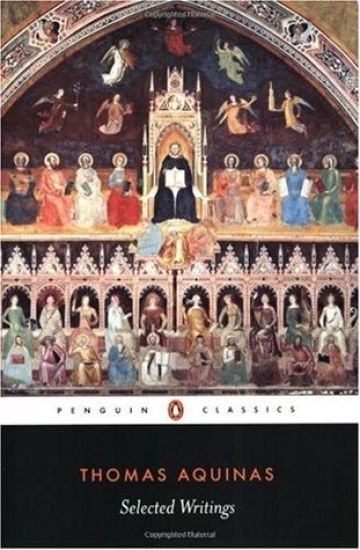
Selected Writings

Selected Writings

Thomas Aquinas

Penguin Classics
1998
pokkari

Halvin toimitettuna 23,60 €

In his reflections on Christianity, Saint Thomas Aquinas forged a unique synthesis of ancient philosophy and medieval theology. Preoccupied with the relationship between faith and reason, he was influenced both by Aristotle's rational world view and by the powerful belief that wisdom and truth can ultimately only be reached through divine revelation. Thomas's writings, which contain highly influential statements of fundamental Christian doctrine, as well as observations on topics as diverse as political science, anti-Semitism and heresy, demonstrate the great range of his intellect and place him firmly among the greatest medieval philosophers.
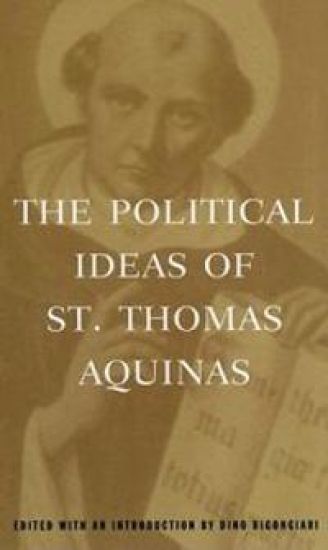
The Political Ideas of St. Thomas Aquinas

The Political Ideas of St. Thomas Aquinas

Thomas Aquinas

The Free Press
1998
pokkari
Originally published in The Hafner Library of Classics in 1953, The Political Ideas of St. Thomas Aquinas provides important insights into the human side of one of the most influential medieval philosophers. St. Thomas Aquinas (c. 1226–1274) is recognized for having synthesized Christian theology with Aristotelian metaphysics, and for his spirited philosophical defense of Christianity that was addressed to the non-Christian reader. In this collection, editor Dino Bigongiari has selected Aquinas’s key writings on politics, justice, social problems, and forms of government, including the philosopher’s main works: Regimine Principus (On Kinship) and The Summa Theologica. In an authoritative discussion of the historical background and evolution of St. Thomas Aquinas’s political ideas, Dr. Bigongiari’s commentary explains this philosopher’s enduring influence and legacy. Accompanying explanatory notes and a helpful glossary of unusual terms and familiar words help to make this practical volume an ideal text for students and general readers alike.
Basic Writings of St. Thomas Aquinas: (Volume 1)

Basic Writings of St. Thomas Aquinas: (Volume 1)

Thomas Aquinas

Hackett Publishing Co, Inc
1997
nidottu
Includes the whole of the First Part of the Summa Theologica. Pegis's revision and correction of the English Dominican Translation renders Aquinas' technical terminology consistently as it conveys the directness and simplicity of Aquinas' writing; the Introduction, notes, and index aim at giving the text its proper historical setting, and the reader the means of studying St. Thomas within that setting.
Basic Writings of St. Thomas Aquinas: (Volume 2)

Basic Writings of St. Thomas Aquinas: (Volume 2)

Thomas Aquinas

Hackett Publishing Co, Inc
1997
nidottu
Includes substantial selections from the Second Part of the Summa Theologica and the Summa Contra Gentiles. Pegis's revision and correction of the English Dominican Translation renders Aquinas' technical terminology consistently as it conveys the directness and simplicity of Aquinas' writing; the Introduction, notes, and index aim at giving the text its proper historical setting, and the reader the means of studying St. Thomas within that setting.
On the Government of Rulers

On the Government of Rulers

Ptolemy of Lucca; Thomas Aquinas

University of Pennsylvania Press
1997
sidottu
Ptolemy, considered a proto-Humanist by some, combined the principles of Northern Italian republicanism with Aristotelian theory in his De Regimine Principum, a book that influenced much of the political thought of the later Middle Ages, the Renaissance, and the early modern period. He was the first to attack kingship as despotism and to draw parallels between ancient Greek models of mixed constitution and the Roman Republic, biblical rule, the Church, and medieval government. In addition to his translation of this important and radical medieval political treatise, written around 1300, James M. Blythe includes a sixty-page introduction to the work and provides over 1200 footnotes that trace Ptolemy's sources, explain his references, and comment on the text, the translation, the context, and the significance.
Commentary on Aristotle`s Metaphysics

Commentary on Aristotle`s Metaphysics

Thomas Aquinas

Dumb Ox Books,US
1995
nidottu
Of all Thomas Aquinas's Commentaries on Aristotle, that on the 'Metaphysics' is a compilation of disparate marerials, probably made by someone after Aristotle, and that the order of the books cannot be taken to represent any literary unity. Indeed, the internal contents of the books were said to represent materials of different date and purpose. Furthermore, the presumed aim of these treatises, and indeed of philosophy generally, the aquisition of wisdom, receives in the 'Metaphysics' two radically different accounts. Is God the object of Wisdom or is wisdom the most comprehensive view of the natural world? Is the science Aristotle is seking in the treatises an ontology or a theology? In marked contrast to such imaginitive accounts, the net effect of which is to discourage rather than to encourage reading of the work, Thomas Aquinas finds the twelve books he comments on wonderful for their order, both overall and in the minutest detail. His reading is governed by what he takes to be the clear sense of the text, his interpretations keep close to what Aristotle actually said, his account is breath-taking in ts acuity. Thomas's commentary belongs to the great tradition that was broken - one hopes temporarily - by the rise of philology, which a cynic has described as the effort to read text without understanding it. Any student of Aristotle can appraise Thomas's interpretation since its measure is the text of Aristotle. This edition reproduces the translation of John Rowan as well as his introduction, but in a single volume, rather than in two.
On Evil

On Evil

Thomas Aquinas

University of Notre Dame Press
1995
nidottu
Many great thinkers have wrestled with the topic of evil. St. Thomas Aquinas's disputed question On Evil merges as the longest and most comprehensive study on the subject of evil available. This long-awaited translation is based on the critical edition of the Latin text published by the Leonine Commission in 1982. The disputed question De malo (On Evil) was first presented as a series of oral debates at the University of Paris (1263-1272) and subsequently recorded in the form in which it now appears. The length of the work and the thoroughness of the treatment is eloquent testimony of the importance St. Thomas attached to this topic.
Commentary on Aristotle`s De Anima

Commentary on Aristotle`s De Anima

Thomas Aquinas

Dumb Ox Books,US
1994
nidottu
The commentary Thomas Aquinas completed on Aristotle's 'De Anima' is thought to be the first of some dozen such commentaries that he wrote toward the end of his short career. He may have produced the work in 1268 while teaching in the Dominican house of Santa Sabina in Rome. Shortly thereafter he returned to Paris where he swept into the Latin Averroist controversy, at the centre of which was the proper interpretation of the De Anima. Avicenna and Averroes, the great Arabic commentators, read the 'De Anima' in such a way that intellect was taken to be a separate substance and not a faculty of the human soul. Some of Thomas's contemporaries, Masters of the Faculty of Arts, accepted the Avicennian and Averroist interpretations as good money and thus came to old positions incompatible with their Christian faith. What is the correct reading of the 'De Anima'? This commentary, composed before Thomas was caught up in the contemporary controversy, sets out to understand what it is that the text teaches. Many students of Aristotle have come to see this commentary as indespensible to reading the text aright.
Commentary on Aristotle`s Nicomachean Ethics

Commentary on Aristotle`s Nicomachean Ethics

Thomas Aquinas

Dumb Ox Books,US
1993
nidottu
Thomas Aquinas was introduced to the "New" Aristotle at the University of Naples and, after becoming a Dominican, studied under Albert the Great at Cologne and edited Albert's commentary on the 'Ethics' of Aristotle. Throughout his career, Thomas exhibits a more-than ordinary interest in the philosophy of Aristotle and an ever deeper appreciation of it. Nonetheless, it was relatively late in his short life that he composed a dozen commentaries on Aristotelian works, spurred on, doubtless, by the controversial use to which Aristotle was put by those in Faculty of Arts at Paris who are variously called Latin Averroists or Heterodox Aristoltelians. These commentaries are among the most careful, helpful, and insightful ever written on the text of Aristotle. It is sometimes mistakenly thought that in them Thomas was somehow "baptizing" Aristotle, wrenching his thought into conformity with Christian doctrine. No one who reads the commentaries could long entertain this libelous view of them. The translation of Thomas's Commentary on the 'Nichomachean Ethics' made by Father Litzinger has long been out of print. It is here reprinted in a somewhat altered form. The translation itself stands as Litzinger produced it, but the presentation of the Aristotelian text, with accurate indentification of Bekker numbers as well as the mode of referring to Aristotle in the commentary have been changed so that the commentary can function better as a commentary.
The Treatise on Law

The Treatise on Law

Thomas Aquinas

University of Notre Dame Press
1993
sidottu
In this translation of Saint Thomas Aquinas's The Treatise on Law, R. J. Henle, S. J., a well-known authority on philosophy and jurisprudence, fluently and accurately presents the Latin and English translation of this important work. Henle provides the necessary background for an informed reading of the Treatise, as well as the only in-depth commentary available in English on this text. The first section of the book contains an introduction to St. Thomas's life, work, writings, and jurisprudence. Henle discusses the structure of St. Thomas's magnum opus, Summa Theologiae, from which The Treatise on Law is excerpted. A brief section is included on Scholastic philosophy and also on St. Thomas's approach to the study of law. Henle then examines Thomas's definition of a law and the general doctrinal background for the Treatise. Finally Henle explores St. Thomas's sources, including his use of auctoritates, or authoritative quotations drawn primarily from the Bible, Aristotle, St. Augustine, and St. Isidore of Seville. The second part of the book contains the Latin text of the Treatise presented unit by unit, each followed by the English translation and, when appropriate, by a comment. The Treatise on Law will be of interest to law students, lawyers, judges, and legal scholars. It will also appeal to those interested in St. Thomas's legal philosophy, such as political scientists, theoretical sociologists, and cultural historians. For philosophers, especially beginners in medieval philosophy, it serves as a good introduction to the thought of St. Thomas.
The Treatise on Law

The Treatise on Law

Thomas Aquinas

University of Notre Dame Press
1993
nidottu
In this translation of Saint Thomas Aquinas's The Treatise on Law, R. J. Henle, S. J., a well-known authority on philosophy and jurisprudence, fluently and accurately presents the Latin and English translation of this important work. Henle provides the necessary background for an informed reading of the Treatise, as well as the only in-depth commentary available in English on this text. The first section of the book contains an introduction to St. Thomas's life, work, writings, and jurisprudence. Henle discusses the structure of St. Thomas's magnum opus, Summa Theologiae, from which The Treatise on Law is excerpted. A brief section is included on Scholastic philosophy and also on St. Thomas's approach to the study of law. Henle then examines Thomas's definition of a law and the general doctrinal background for the Treatise. Finally Henle explores St. Thomas's sources, including his use of auctoritates, or authoritative quotations drawn primarily from the Bible, Aristotle, St. Augustine, and St. Isidore of Seville. The second part of the book contains the Latin text of the Treatise presented unit by unit, each followed by the English translation and, when appropriate, by a comment. The Treatise on Law will be of interest to law students, lawyers, judges, and legal scholars. It will also appeal to those interested in St. Thomas's legal philosophy, such as political scientists, theoretical sociologists, and cultural historians. For philosophers, especially beginners in medieval philosophy, it serves as a good introduction to the thought of St. Thomas.
On Faith

On Faith

Thomas Aquinas

University of Notre Dame Press
1990
nidottu
The organization of Thomas Aquinas' Summa Theologiae is a remarkable feat of clarity in comparison with its predecessors. Although Aquinas incorporates materials from very different theological traditions he reduces all of these topics to a concise and clear plan. Mark D. Jordan's translation, On Faith, captures this clarity, Aquinas' most characteristic achievement. v. 1. On faith, Summa theologiae, part 2-2, questions 1-16 of St. Thomas Aquinas.
On Faith

On Faith

Thomas Aquinas

University of Notre Dame Press
1990
sidottu
The organization of Thomas Aquinas' Summa Theologiae is a remarkable feat of clarity in comparison with its predecessors. Although Aquinas incorporates materials from very different theological traditions he reduces all of these topics to a concise and clear plan. Mark D. Jordan's translation, On Faith, captures this clarity, Aquinas' most characteristic achievement. v. 1. On faith, Summa theologiae, part 2-2, questions 1-16 of St. Thomas Aquinas.