
Kirjailija
Thomas Aquinas
Kirjat ja teokset yhdessä paikassa: 251 kirjaa, julkaisuja vuosilta 1968–2026, suosituimpiin kuuluu Complete Works of Thomas Aquinas,The. Vertaile teosten hintoja ja tarkista saatavuus suomalaisista kirjakaupoista.
251 kirjaa
Kirjojen julkaisuvuodet: 1968–2026.
Commentary On The Metaphysics Of Aristotle V1 is a book written by Thomas Aquinas, a prominent philosopher and theologian of the Middle Ages. The book is a commentary on Aristotle's work on metaphysics, which is a branch of philosophy that deals with the nature of reality and existence. Aquinas provides an in-depth analysis of Aristotle's ideas and concepts, exploring topics such as substance, causation, and the relationship between matter and form. The book is divided into several sections, each of which focuses on a specific aspect of Aristotle's metaphysics. Aquinas' commentary is known for its clarity and depth, making it a valuable resource for students and scholars of philosophy and theology. Overall, Commentary On The Metaphysics Of Aristotle V1 is an important work that sheds light on one of the most influential philosophical texts in history. In Two Volumes. This scarce antiquarian book is a facsimile reprint of the old original and may contain some imperfections such as library marks and notations. Because we believe this work is culturally important, we have made it available as part of our commitment for protecting, preserving, and promoting the world's literature in affordable, high quality, modern editions, that are true to their original work.
Commentary On The Metaphysics Of Aristotle V2 is a book written by the renowned philosopher and theologian, Thomas Aquinas. This book is a comprehensive commentary on Aristotle's Metaphysics, one of the most important philosophical works of all time. Aquinas provides a detailed analysis of Aristotle's ideas on the nature of reality, including the concepts of substance, causation, and the nature of being. He also explores the relationship between faith and reason, and the role of philosophy in understanding the world around us. This book is a valuable resource for students of philosophy, theology, and anyone interested in understanding the fundamental nature of reality. With clear and concise language, Aquinas presents complex ideas in a way that is accessible to readers of all levels. This volume is the second of two volumes, and it is an essential addition to any library of philosophical and theological texts. In Two Volumes. This scarce antiquarian book is a facsimile reprint of the old original and may contain some imperfections such as library marks and notations. Because we believe this work is culturally important, we have made it available as part of our commitment for protecting, preserving, and promoting the world's literature in affordable, high quality, modern editions, that are true to their original work.
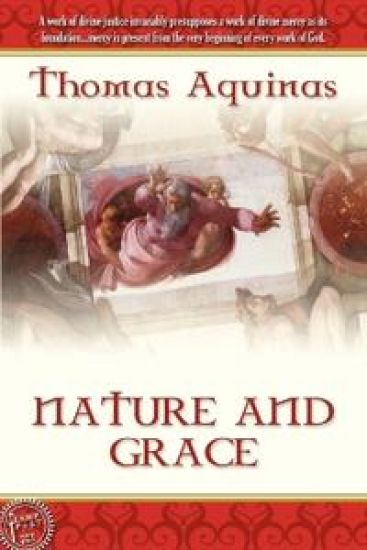
Nature and Grace: Selections from the Summa Theologica of Thomas Aquinas
Thomas Aquinas; A. M. Fairweather
Literary Licensing, LLC
2011
sidottu
Nature and Grace: Selections from the Summa Theologica of Thomas Aquinas is a collection of writings by the famous medieval philosopher and theologian, Thomas Aquinas. The book includes a selection of Aquinas' most important and influential works, focusing specifically on his discussions of the relationship between nature and grace. Aquinas was one of the foremost thinkers of his time, and his writings continue to be studied and debated by scholars and theologians today. In this book, readers will find a comprehensive exploration of Aquinas' views on the nature of God, the role of human reason in understanding the divine, and the relationship between the natural and supernatural realms. The book is organized into several sections, each of which covers a different aspect of Aquinas' philosophy. These include discussions of the nature of God, the nature of human beings, the relationship between faith and reason, and the role of grace in the salvation of human souls. Throughout the book, Aquinas draws on a wide range of sources, including the Bible, classical philosophy, and the writings of other theologians and philosophers. His arguments are rigorous and carefully reasoned, and he offers insights into some of the most important questions of human existence. Overall, Nature and Grace: Selections from the Summa Theologica of Thomas Aquinas is an essential read for anyone interested in the history of philosophy and theology, and it offers valuable insights into some of the most important issues facing human beings today. Preface By John Baillie, John T. McNeill And Henry P. Van Dusen. From The Library Of Christian Classics, Volume 11. The Library Of Christian Classics Is In Thirteen Volumes. This scarce antiquarian book is a facsimile reprint of the old original and may contain some imperfections such as library marks and notations. Because we believe this work is culturally important, we have made it available as part of our commitment for protecting, preserving, and promoting the world's literature in affordable, high quality, modern editions, that are true to their original work.
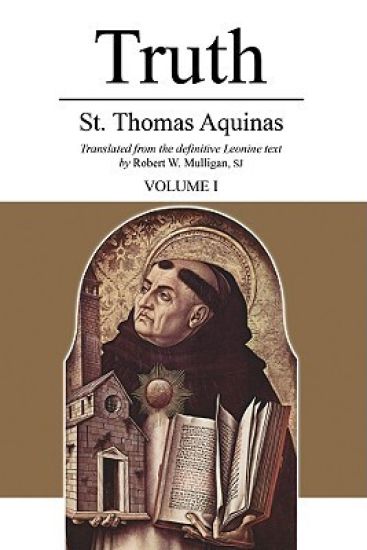
The first English translation of the authoritative Leonine edition of Q. 3 of St. Thomas Aquinas’s De Potentia Dei. It includes a new English translation of Question 3, in which Thomas takes up questions and ideas about divine and human freedom.
Treatise on Human Nature – The Complete Text (Summa Theologiae I, Questions 75–102)
Thomas Aquinas; Alfred J. Freddoso
ST AUGUSTINE'S PRESS
2010
nidottu
Commentary on the Gospel of John Bks. 1-5
Thomas Aquinas
The Catholic University of America Press
2010
nidottu
Halvin toimitettuna 40,40 €
Thomas Aquinas possessed excellent knowledge of the commentaries of Origen, John Chrysostom, and Augustine. On the basis of this foundation, he produced his own commentary on the Gospel of John as part of his task as a Master of the Sacred Page. Considered a landmark theological introduction to the Fourth Gospel, these lectures were delivered to Dominican friars when Aquinas was at the height of his theological powers, when he was also composing the Summa theologiae. For numerous reasons, the Summa has received far more attention over the centuries than has his Commentary on the Gospel of John. However, scholars today recognize Aquinas's biblical commentaries as central sources for understanding his theological vision and for appreciating the scope of his Summa theologiae. The first English translation of Aquinas's Commentary on the Gospel of John by Fabian Larcher and James Weisheipl, originally published nearly two decades ago and long out of print, is available to scholars and students once again with this edition. Published in three volumes simultaneously, it includes a new introduction and notes pointing readers to the links between Aquinas's biblical commentary and his Summa theologiae. When a verse from the Gospel of John is directly quoted in the Summa theologiae, the editors note this in the Commentary. Aquinas's patristic sources, including Origen and Augustine, are carefully identified and referenced to the Patriologia Latina and Patrologia Graeca. The Commentary's connections with Aquinas's Catena Aurea are also identified.
Commentary on the Gospel of John Bks. 6-12
Thomas Aquinas
The Catholic University of America Press
2010
nidottu
Thomas Aquinas possessed excellent knowledge of the commentaries of Origen, John Chrysostom, and Augustine. On the basis of this foundation, he produced his own commentary on the Gospel of John as part of his task as a Master of the Sacred Page. Considered a landmark theological introduction to the Fourth Gospel, these lectures were delivered to Dominican friars when Aquinas was at the height of his theological powers, when he was also composing the Summa theologiae. For numerous reasons, the Summa has received far more attention over the centuries than has his Commentary on the Gospel of John. However, scholars today recognize Aquinas's biblical commentaries as central sources for understanding his theological vision and for appreciating the scope of his Summa theologiae. The first English translation of Aquinas's Commentary on the Gospel of John by Fabian Larcher and James Weisheipl, originally published nearly two decades ago and long out of print, is available to scholars and students once again with this edition. Published in three volumes simultaneously, it includes a new introduction and notes pointing readers to the links between Aquinas's biblical commentary and his Summa theologiae. When a verse from the Gospel of John is directly quoted in the Summa theologiae, the editors note this in the Commentary. Aquinas's patristic sources, including Origen and Augustine, are carefully identified and referenced to the Patriologia Latina and Patrologia Graeca. The Commentary's connections with Aquinas's Catena Aurea are also identified. ""While the most significant aspect of the publication is Aquinas's text itself, the introduction and notes provide excellent aides to the reader and enrich the text. Daniel Keating and Matthew Levering contribute a clear and helpful introduction to the translation, providing brief but very useful explanatory notes about early writers and controversies.""--David M. Gallagher. The three volumes in the Commentary on the Gospel of John will be sold individually and as a set.
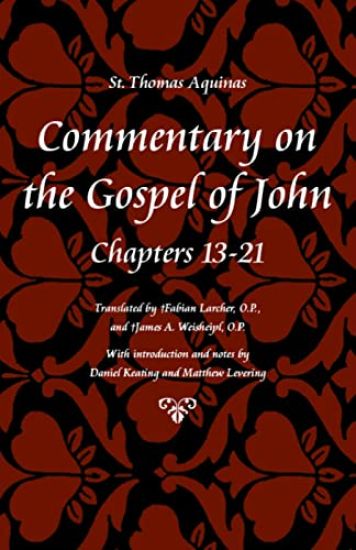
Commentary on the Gospel of John Bks. 13-21
Thomas Aquinas
The Catholic University of America Press
2010
nidottu
Thomas Aquinas possessed excellent knowledge of the commentaries of Origen, John Chrysostom, and Augustine. On the basis of this foundation, he produced his own commentary on the Gospel of John as part of his task as a Master of the Sacred Page. Considered a landmark theological introduction to the Fourth Gospel, these lectures were delivered to Dominican friars when Aquinas was at the height of his theological powers, when he was also composing the Summa theologiae. For numerous reasons, the Summa has received far more attention over the centuries than has his Commentary on the Gospel of John. However, scholars today recognize Aquinas's biblical commentaries as central sources for understanding his theological vision and for appreciating the scope of his Summa theologiae. The first English translation of Aquinas's Commentary on the Gospel of John by Fabian Larcher and James Weisheipl, originally published nearly two decades ago and long out of print, is available to scholars and students once again with this edition. Published in three volumes simultaneously, it includes a new introduction and notes pointing readers to the links between Aquinas's biblical commentary and his Summa theologiae. When a verse from the Gospel of John is directly quoted in the Summa theologiae, the editors note this in the Commentary. Aquinas's patristic sources, including Origen and Augustine, are carefully identified and referenced to the Patriologia Latina and Patrologia Graeca. The Commentary's connections with Aquinas's Catena Aurea are also identified. ""While the most significant aspect of the publication is Aquinas's text itself, the introduction and notes provide excellent aides to the reader and enrich the text. Daniel Keating and Matthew Levering contribute a clear and helpful introduction to the translation, providing brief but very useful explanatory notes about early writers and controversies.""--David M. Gallagher. The three volumes in the Commentary on the Gospel of John will be sold individually and as a set.
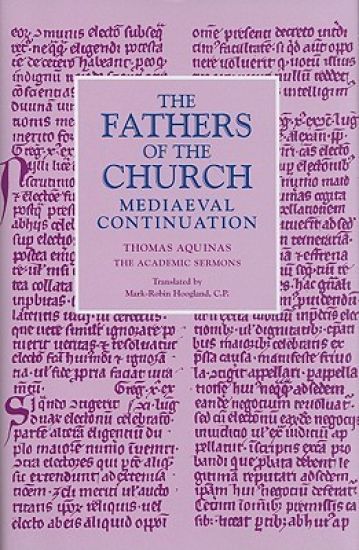
The philosophical and theological works of St. Thomas Aquinas are held in universal esteem. His commentaries on Scripture and the role of Scripture in his theological works have garnered considerable attention. Yet Thomas' academic sermons delivered on Sundays and special occasions have been widely overlooked. Considering that Thomas was a Dominican, a member of the Order of Preachers, and that he held the position of Magister in Sacra Pagina at the University of Paris - wherein preaching was a required task - the oversight is remarkable. Though hundreds of medieval sermons are attributed to Thomas Aquinas, the Leonine Commission has identified only 20 as his. This book features all 20 sermons, translated from the original Latin texts, five of which have never been published before. An introduction and notes accompany the first-ever English translation. Readers will gain insight into the way in which Thomas translated his exegesis and thoughts into his sermons. The sermons cover an array of topics, among them Advent, the Holy Spirit, the Trinity, the Exaltation of the Cross, Mary, other Saints, and ordinary Sundays. Thus, from different angles readers will have a better view of Thomas' spirituality and also of the way in which he translated his theological and spiritual thoughts into consequences for an authentic Christian life, the religious life, doing good to one's neighbor, and pastoral work. ""The Academic Sermons"" will fascinate readers as it presents Thomas' unique style of preaching and how he skillfully communicated the things he contemplated. With this book, Thomas the preacher comes to the fore. This is the first English translation of Aquinas' complete series of academic sermons.
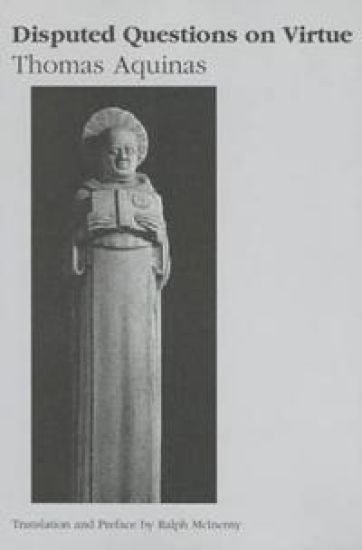
Disputed Questions on Virtue – Quaestio disputata de virtutibus in communi and Quaestio disputata de virtutibus cardinalibus
Thomas Aquinas
ST AUGUSTINE'S PRESS
2009
nidottu
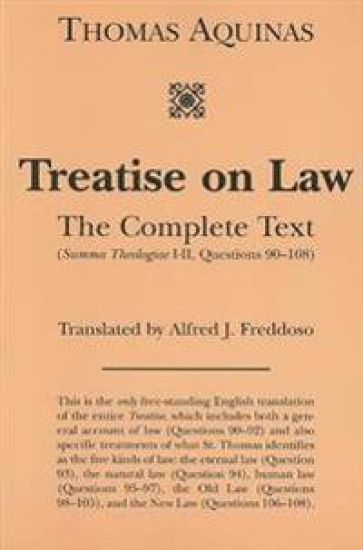
Treatise on Law – The Complete Text
Thomas Aquinas; Alfred J. Freddoso
ST AUGUSTINE'S PRESS
2009
nidottu
This is a new English translation of St. Thomas Aquinas’s Treatise on Law, found in Questions 90–108 of the First Part of the Second Part of the Summa Theologiae. In fact, it is the only free-standing English translation of the entire Treatise, which includes both a general account of law (Questions 90–92) and also specific treatments of what St. Thomas identifies as the five kinds of law: the eternal law (Question 93), the natural law (Question 94), human law (Questions 95–97), the Old Law (Questions 98–105), and the New Law (Questions 106–108). All other extant editions of Treatise on Law stop with the human law, and are thus approximately one-third the size of the full Treatise. St. Thomas’s account of law is firmly embedded within a general moral theory that begins with a rich conception of human flourishing, i.e., the good for human beings (Questions 1–5). This good consists, first and foremost, in our ultimate and intimate union with the Persons of the Blessed Trinity – a union that in our present state we can grasp intellectively and pursue affectively only with God’s supernatural assistance. It is within this framework that we order our loves and pursue the more proximate goals they open up to us as human beings in this life. Given the appropriate goals, the next question is how we can get from where we are, in the grips of the consequences of Original Sin, to where we want to be. The answer is: by means of (a) human actions that are good, i.e., rightly ordered toward our ultimate end and (b) the habits that these actions either engender or flow from. In analyzing human actions (Questions 6–21) and their relation to the passions (Questions 22–48), St. Thomas gives a general account of what he calls the ‘intrinsic principles’ of human actions and their associated habits – both virtues (Questions 49–70) and vices (Questions 71–89). It is only then that he turns to what he calls the ‘extrinsic principles’ of good human actions, viz., law (Questions 90–108) and grace (Questions 109–114). According to St. Thomas, law, far from supplanting virtue as a basic principle of action, serves as an independent principle of action that complements virtue and is itself capable of being factored into practical deliberation. The reason is that all of God’s precepts, prohibitions, and punishments are aimed at promoting the good of the whole universe and, more particularly, the good for human beings, both individually and within the various forms of social life. Because of this, law serves as both a restraint on bad actions and a spur to good action, i.e., a restraint on actions that take us away from virtue and genuine human flourishing and a spur to actions that promote virtue and flourishing. There are many benefits of having the whole treatise rather than just the first few questions, as has been the standard practice in previous editions of the Treatise on Law. To mention just a few of these benefits, the question on the moral precepts of the Old Law (question 100) helps to illuminate in many different ways the earlier questions on natural law and human law (questions 94–97). Again, the questions on the ceremonial and judicial precepts of the Old Law (questions 101–105) demon-strate in depth the symbiotic relationship that St. Thomas takes to obtain between the Old Testament and the New Testament. The questions on the New Law provide an introduction to the Christian way of life that will be described in incomparable detail in the Second Part of the Second Part, the bulk of which is structured around the treatment of the three theological virtues and the four cardinal virtues.
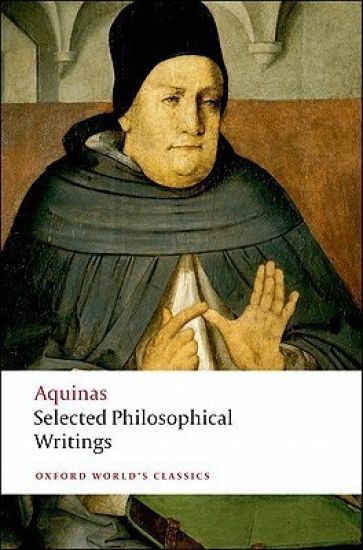
Selected Philosophical Writings
Thomas Aquinas
Oxford University Press
2008
nidottu
Halvin toimitettuna 20,90 €
St Thomas Aquinas (1225-1274) saw religion as part of the natural human propensity to worship. His ability to recognize the naturalness of this phenomenon and simultaneously to go beyond it, to explore spiritual revelation, makes his work fresh and highly readable today. While drawing on a strong distinction between theology and philosophy, Aquinas interleaved them intricately in his writings, which range from an examination of the structures of thought to the concept of God as the end of all things. This accessible new translation chooses substantial passages not only from the indispensable Summa Theologicae, but from many other works, fully illustrating the breadth and progression of Aquinas's philosophy. ABOUT THE SERIES: For over 100 years Oxford World's Classics has made available the widest range of literature from around the globe. Each affordable volume reflects Oxford's commitment to scholarship, providing the most accurate text plus a wealth of other valuable features, including expert introductions by leading authorities, helpful notes to clarify the text, up-to-date bibliographies for further study, and much more.
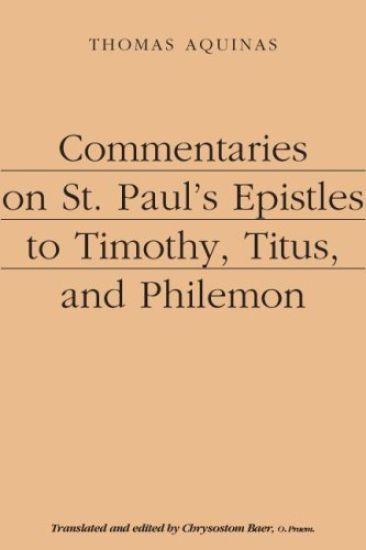
Commentaries on St. Paul`s Epistles to Timothy, Titus, and Philemon
Thomas Aquinas; Chrysostom Baer
St Augustine's Press
2008
nidottu

Commentaries on St. Paul`s Epistles to Timothy, Titus, and Philemon
Thomas Aquinas; Chrysostom Baer
ST AUGUSTINE'S PRESS
2008
sidottu
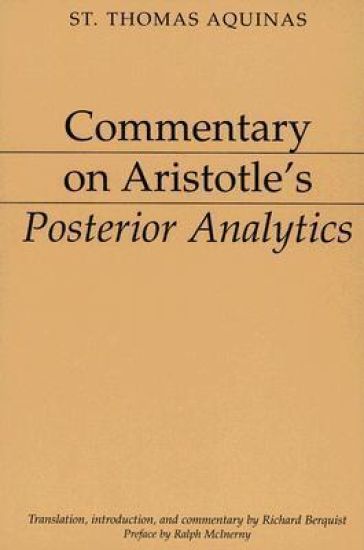
Commentary on Aristotle`s Posterior Analytics
Thomas Aquinas; Richard Berquist; Ralph Mcinerny
Dumb Ox Books,US
2008
nidottu
Commentary on Aristotle`s Posterior Analytics
Thomas Aquinas; Richard Berquist; Ralph Mcinerny
Dumb Ox Books,US
2008
sidottu