Kirjojen hintavertailu – 12 903 725 kirjaa ja 27 kauppaa

Kirjailija

Thomas Bernhard

Kirjat ja teokset yhdessä paikassa: 171 kirjaa, julkaisuja vuosilta 1984–2026, suosituimpiin kuuluu Ja. Vertaile teosten hintoja ja tarkista saatavuus suomalaisista kirjakaupoista.

171 kirjaa

Kirjojen julkaisuvuodet: 1984–2026.

Werke in 22 Bänden

Werke in 22 Bänden

Thomas Bernhard

SUHRKAMP VERLAG
2003
sidottu
Physiotherapie ist eine facettenreiche und vielschichtige Therapieform, die in der Humanmedizin einen großen Raum in Vorbeugung, Behandlung und Rehabilitation von Störungen am Bewegungsapparat einnimmt. Sie lässt sich nicht auf einzelne Komponenten wie Massage oder Geräteanwendungen reduzieren. Wer die Chancen der Physiotherapie nutzen will, muss sich zunächst einen Überblick verschaffen, welche Möglichkeiten diese Therapieform bietet, aber auch, welchen Grenzen sie unterliegt. Inhalte und Wirkungsweisen werden dargestellt, damit der Leser die Möglichkeit bekommt, frühzeitig die optimale Versorgung für sein Pferd einzuleiten. Die Darstellungen sind klar und eindeutig strukturiert, damit sich Pferdebesitzer wie Tierärzte gleichermaßen orientieren können, um gemeinsam eine für das Pferd optimale Therapie zu gestalten.
Werke in 22 Bänden

Werke in 22 Bänden

Thomas Bernhard

SUHRKAMP VERLAG
2003
sidottu
Ein Pferd, das sowohl Leistung bringen als auch ausgeglichen und freundlich im Wesen und dazu noch gesund bleiben soll, muss optimal gehalten werden. Das steht in der Regel für jeden Pferdebesitzer außer Frage. Stimmen die Bedingungen in einem Stall nicht, können die Pferde sehr anfällig für Erkrankungen werden. Atemwegsprobleme, Allergien, Leistungsabfall usw. sind die Folge. Die Agrarwissenschaftlerin Regine Gruber hat sich diesem Thema intensiv angenommen und beleuchtet Haltungsfragen im Zusammenhang mit der Gesundheit bzw. Gesunderhaltung des Pferdes.
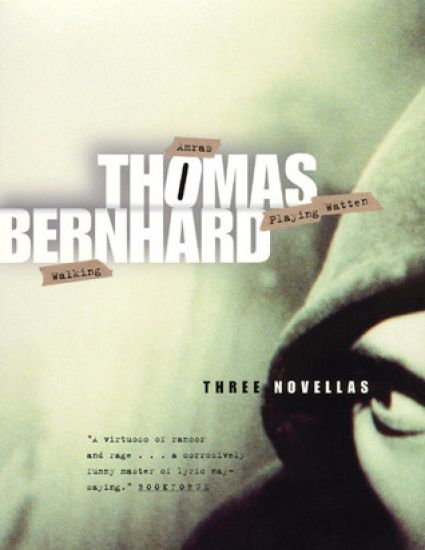
Three Novellas

Three Novellas

Thomas Bernhard

University of Chicago Press
2003
sidottu
Three novellas by the European novelist--Amras, Playing Watten, and Walking--explore the psychological crisis precipitated by modern life, with two being translated into English for the first time. (General Fiction)
Correction

Correction

Thomas Bernhard

Vintage
2003
pokkari

Halvin toimitettuna 16,20 €

Roithamer has committed suicide having been driven to madness by his own frightening powers of pure thought. We witness the gradual breakdown of a genius ceaselessly compelled to correct and refine his perceptions until the only logical conclusion of the negation of his own soul.
Gathering Evidence

Gathering Evidence

Thomas Bernhard

Vintage
2003
pokkari

Halvin toimitettuna 23,90 €

From the age of 21, everything he wrote was shaped by the urgency of a dying man's testament - his witness, the quintessence of his life and knowledge - and where this account of his life ends, his art begins.
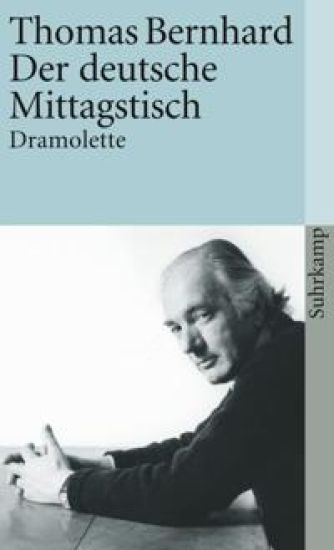
Der deutsche Mittagstisch

Der deutsche Mittagstisch

Thomas Bernhard

Suhrkamp Verlag AG
1999
pokkari
Thomas Bernhard gibt in diesen Dramoletten Kurzaufnahmen der deutschen Zustände. Und was sich in ihnen zeigt - sei es bei Kirchgängerinnen in Oberbayern, Gerichtspräsidenten oder den 'Spitzen unseres Staates' -, ist eindeutig: Kaum fangen sie an zu reden, schon geben sie sich als Nazis zu erkennen. darüber kann dann nur noch gelacht werden, auch wenn das Lachen im Halse steckenzubleiben droht und die Komödie für den Zuschauer und Leser sich zur Tragödie wandelt.
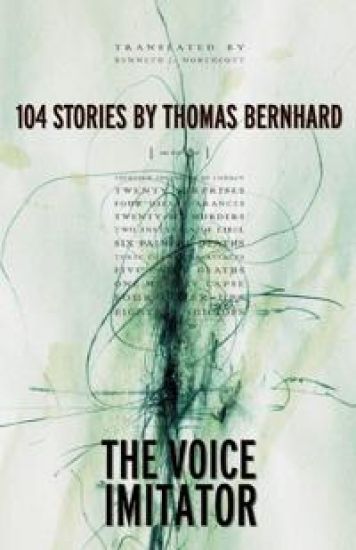
The Voice Imitator

The Voice Imitator

Thomas Bernhard; Kenneth J. Northcott

University of Chicago Press
1998
nidottu
The Austrian playwright, novelist, and poet Thomas Bernhard (1931-89) is acknowledged as among the major writers of our times. At once pessimistic and exhilarating, Bernhard's work depicts the corruption of the modern world, the dynamics of totalitarianism, and the interplay of reality and appearance. In this stunning translation of The Voice Imitator, Bernhard gives us one of his most darkly comic works. A series of parable-like anecdotes—some drawn from newspaper reports, some from conversation, some from hearsay—this satire is both subtle and acerbic. What initially appear to be quaint little stories inevitably indict the sterility and callousness of modern life, not just in urban centers but everywhere. Bernhard presents an ordinary world careening into absurdity and disaster. Politicians, professionals, tourists, civil servants—the usual victims of Bernhard's inspired misanthropy—succumb one after another to madness, mishap, or suicide. The shortest piece, titled "Mail," illustrates the anonymity and alienation that have become standard in contemporary society: "For years after our mother's death, the Post Office still delivered letters that were addressed to her. The Post Office had taken no notice of her death." In his disarming, sometimes hilarious style, Bernhard delivers a lethal punch with every anecdote. George Steiner has connected Bernhard to "the great constellation of Kafka, Musil, and Broch," and John Updike has compared him to Grass, Handke, and Weiss. The Voice Imitator reminds us that Thomas Bernhard remains the most caustic satirist of our age.
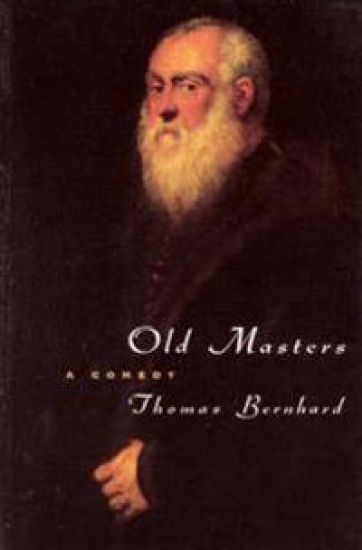
Old Masters

Old Masters

Thomas Bernhard; Ewald (TRN) Osers

University of Chicago Press
1992
pokkari
In this exuberantly satirical novel, the tutor Atzbacher has been summoned by his friend Reger to meet him in a Viennese museum. While Reger gazes at a Tintoretto portrait, Atzbacher--who fears Reger's plans to kill himself--gives us a portrait of the musicologist: his wisdom, his devotion to his wife, and his love-hate relationship with art. With characteristically acerbic wit, Bernhard exposes the pretensions and aspirations of humanity in a novel at once pessimistic and strangely exhilarating. "Bernhard's . . . most enjoyable novel."--Robert Craft, "New York Review of Books." "Bernhard is one of the masters of contemporary European fiction." --George Steiner
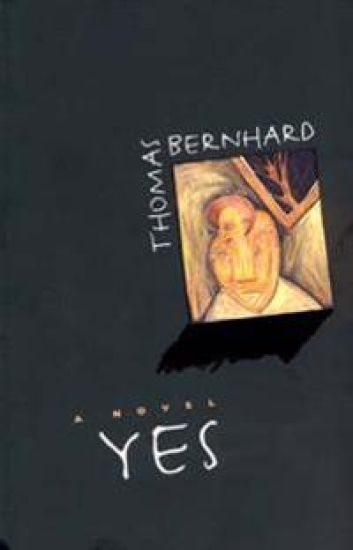
Yes

Yes

Thomas Bernhard; Ewald (TRN) Osers

University of Chicago Press
1992
pokkari
The narrator, a scientist working on antibodies and suffering from emotional and mental illness, meets a Persian woman, the companion of a Swiss engineer, at an office in rural Austria. For the scientist, his endless talks with the strange Asian woman mean release from his condition, but for the Persian woman, as her own circumstances deteriorate, there is only one answer. . . Thomas Bernhard was one of the few major writers of the second half of this century.--Gabriel Josipovici, "Independent." With his death, European letters lost one of its most perceptive, uncompromising voices since the war.-- "Spectator" Widely acclaimed as a novelist, playwright, and poet, Thomas Bernhard (1931-89) won many of the most prestigious literary prizes of Europe, including the Austrian State Prize, the Bremen and Bru chner prizes, and Le Prix Se guier.
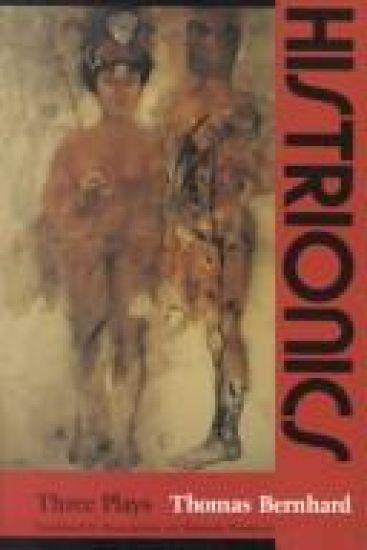
Histrionics

Histrionics

Thomas Bernhard; Peter K. Jansen; Kenneth (TRN) Northcott

University of Chicago Press
1990
sidottu
Although he is best known in the United States as a novelist, Austrian writer Thomas Bernhard has been hailed in Europe as one of the most significant and controversial of contemporary playwrights. George Steiner has predicted that the current era in German-language literature will be recognized as the "Bernhard period"; John Updike compares Bernhard with Kafka, Grass, Handke, and Weiss. His dark, absurdist plays can be likened to those of Beckett and Pinter, but their cultural and political concerns are distinctly Bernhard's. While Austria's recent political history lends particular credibility to Bernhard's satire, his criticisms are directed at the modern world generally; his plays grapple with questions of totalitarianism and the subjection of the individual and with notions of reality and appearance.