Kirjojen hintavertailu – 12 859 819 kirjaa ja 27 kauppaa
Kirjailija
Thomas Carlyle
Kirjat ja teokset yhdessä paikassa: 1 353 kirjaa, julkaisuja vuosilta 1850–2026, suosituimpiin kuuluu The Carlyle anthology. Vertaile teosten hintoja ja tarkista saatavuus suomalaisista kirjakaupoista.
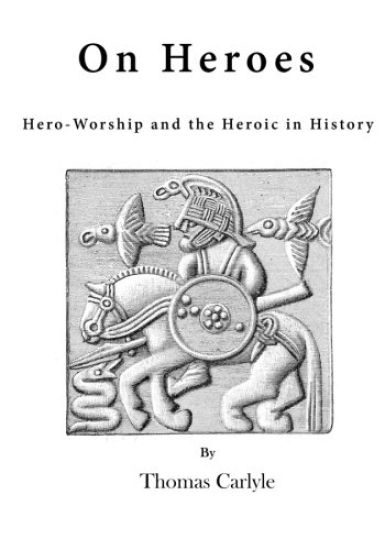
On HeroesHero-Worship and the Heroic in HistoryBy Thomas CarlyleWe have undertaken to discourse here for a little on Great Men, their manner of appearance in our world's business, how they have shaped themselves in the world's history, what ideas men formed of them, what work they did;--on Heroes, namely, and on their reception and performance; what I call Hero-worship and the Heroic in human affairs. Too evidently this is a large topic; deserving quite other treatment than we can expect to give it at present. A large topic; indeed, an illimitable one; wide as Universal History itself. For, as I take it, Universal History, the history of what man has accomplished in this world, is at bottom the History of the Great Men who have worked here. They were the leaders of men, these great ones; the modellers, patterns, and in a wide sense creators, of whatsoever the general mass of men contrived to do or to attain; all things that we see standing accomplished in the world are properly the outer material result, the practical realization and embodiment, of Thoughts that dwelt in the Great Men sent into the world: the soul of the whole world's history, it may justly be considered, were the history of these. Too clearly it is a topic we shall do no justice to in this place One comfort is, that Great Men, taken up in any way, are profitable company. We cannot look, however imperfectly, upon a great man, without gaining something by him. He is the living light-fountain, which it is good and pleasant to be near. The light which enlightens, which has enlightened the darkness of the world; and this not as a kindled lamp only, but rather as a natural luminary shining by the gift of Heaven; a flowing light-fountain, as I say, of native original insight, of manhood and heroic nobleness;--in whose radiance all souls feel that it is well with them. On any terms whatsoever, you will not grudge to wander in such neighborhood for a while. These Six classes of Heroes, chosen out of widely distant countries and epochs, and in mere external figure differing altogether, ought, if we look faithfully at them, to illustrate several things for us. Could we see them well, we should get some glimpses into the very marrow of the world's history. LECTURES ON HEROES. LECTURE I. THE HERO AS DIVINITY. ODIN. PAGANISM: SCANDINAVIAN MYTHOLOGY. LECTURE II. THE HERO AS PROPHET. MAHOMET: ISLAM. LECTURE III. THE HERO AS POET. DANTE: SHAKSPEARE. LECTURE IV. THE HERO AS PRIEST. LUTHER; REFORMATION: KNOX; PURITANISM. LECTURE V. THE HERO AS MAN OF LETTERS. JOHNSON, ROUSSEAU, BURNS. LECTURE VI. THE HERO AS KING. CROMWELL, NAPOLEON: MODERN REVOLUTIONISM.
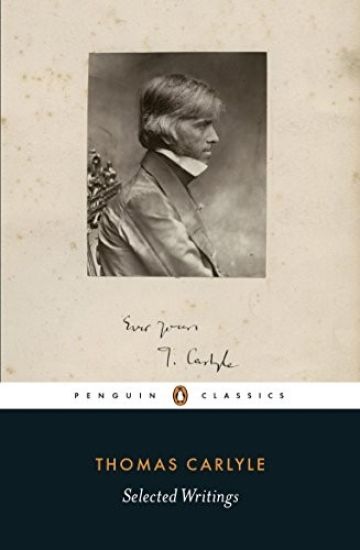
The most important writings by the great and controversial Victorian polemicist. Carlyle was one of the great figures of his age: thunderous, passionate, irascible, sceptical and idealistic. This selection is representative of all stages of Carlyle's career, and includes 'Sign of the Times', his essay against the mechanization of the age and the rise of the machines; the whole of 'Chartism'; and extracts from The French Revolution, Heroes and Hero-Worship, Sartor Resartus, Past and Present, as well as other pieces. The book also includes an introduction and notes by Alan Shelston. Thomas Carlyle was born in Dumfriesshire, Scotland, in 1795. Intended by his family to become a Presbyterian minister, he was influenced by the Scottish Enlightenment while at the University of Edinburgh and became a teacher instead. He later turned to literary work, publishing a life of Schiller and translations of Goethe in the 1820s. His first truly successful book was The French Revolution, which was followed by many others. He died in 1881. Alan Shelston was Senior Lecturer in English Literature at the University of Manchester until retirement in 2002. He has edited a number of Gaskell's works including The Life of Charlotte Bronte (1975) and North and South (2005), and was joint editor with John Chapple of The Further Letters of Mrs Gaskell (2000). He has published a selection of Hardy's poetry and written on a number of nineteen century authors including Dickens and Henry James.
Till about the Year of Grace 860 there were no kings in Norway, nothing but numerous jarls, -essentially kinglets, each presiding over a kind of republican or parliamentary little territory; generally striving each to be on some terms of human neighborhood with those about him, but, -in spite of "Fylke Things" (Folk Things, little parish parliaments), and small combinations of these, which had gradually formed themselves, -often reduced to the unhappy state of quarrel with them. Harald Haarfagr was the first to put an end to this state of things, and become memorable and profitable to his country by uniting it under one head and making a kingdom of it; which it has continued to be ever sin
Ralph Waldo Emerson (May 25, 1803 - April 27, 1882) was an American essayist, lecturer, and poet who led the Transcendentalist movement of the mid-19th century. He was seen as a champion of individualism and a prescient critic of the countervailing pressures of society, and he disseminated his thoughts through dozens of published essays and more than 1,500 public lectures across the United States. Emerson gradually moved away from the religious and social beliefs of his contemporaries, formulating and expressing the philosophy of Transcendentalism in his 1836 essay, Nature. Following this ground-breaking work, he gave a speech entitled "The American Scholar" in 1837, which Oliver Wendell Holmes, Sr. considered to be America's "Intellectual Declaration of Independence". Emerson wrote most of his important essays as lectures first, then revised them for print. His first two collections of essays - Essays: First Series and Essays: Second Series, published respectively in 1841 and 1844 - represent the core of his thinking, and include such well-known essays as Self-Reliance, The Over-Soul, Circles, The Poet and Experience. Together with Nature, these essays made the decade from the mid-1830s to the mid-1840s Emerson's most fertile period. Emerson wrote on a number of subjects, never espousing fixed philosophical tenets, but developing certain ideas such as individuality, freedom, the ability for humankind to realize almost anything, and the relationship between the soul and the surrounding world. Emerson's "nature" was more philosophical than naturalistic: "Philosophically considered, the universe is composed of Nature and the Soul." Emerson is one of several figures who "took a more pantheist or pandeist approach by rejecting views of God as separate from the world." He remains among the linchpins of the American romantic movement, and his work has greatly influenced the thinkers, writers and poets that have followed him. When asked to sum up his work, he said his central doctrine was "the infinitude of the private man." Emerson is also well known as a mentor and friend of fellow Transcendentalist Henry David Thoreau.
Ralph Waldo Emerson (May 25, 1803 - April 27, 1882) was an American essayist, lecturer, and poet who led the Transcendentalist movement of the mid-19th century. He was seen as a champion of individualism and a prescient critic of the countervailing pressures of society, and he disseminated his thoughts through dozens of published essays and more than 1,500 public lectures across the United States. Emerson gradually moved away from the religious and social beliefs of his contemporaries, formulating and expressing the philosophy of Transcendentalism in his 1836 essay, Nature. Following this ground-breaking work, he gave a speech entitled "The American Scholar" in 1837, which Oliver Wendell Holmes, Sr. considered to be America's "Intellectual Declaration of Independence". Emerson wrote most of his important essays as lectures first, then revised them for print. His first two collections of essays - Essays: First Series and Essays: Second Series, published respectively in 1841 and 1844 - represent the core of his thinking, and include such well-known essays as Self-Reliance, The Over-Soul, Circles, The Poet and Experience. Together with Nature, these essays made the decade from the mid-1830s to the mid-1840s Emerson's most fertile period. Emerson wrote on a number of subjects, never espousing fixed philosophical tenets, but developing certain ideas such as individuality, freedom, the ability for humankind to realize almost anything, and the relationship between the soul and the surrounding world. Emerson's "nature" was more philosophical than naturalistic: "Philosophically considered, the universe is composed of Nature and the Soul." Emerson is one of several figures who "took a more pantheist or pandeist approach by rejecting views of God as separate from the world." He remains among the linchpins of the American romantic movement, and his work has greatly influenced the thinkers, writers and poets that have followed him. When asked to sum up his work, he said his central doctrine was "the infinitude of the private man." Emerson is also well known as a mentor and friend of fellow Transcendentalist Henry David Thoreau.