Kirjojen hintavertailu – 12 859 819 kirjaa ja 27 kauppaa

Kirjailija

Thomas Hardy

Kirjat ja teokset yhdessä paikassa: 1 546 kirjaa, julkaisuja vuosilta 1832–2027, suosituimpiin kuuluu Kaukana maailman melskeestä. Vertaile teosten hintoja ja tarkista saatavuus suomalaisista kirjakaupoista.

1 546 kirjaa

Kirjojen julkaisuvuodet: 1832–2027.

Jude the Obscure

Jude the Obscure

Thomas Hardy

Bibliotech Press
2022
pokkari
Jude the Obscure is a novel by Thomas Hardy, which began as a magazine serial in December 1894 and was first published in book form in 1895 (though the title page says 1896). It is Hardy's last completed novel. The protagonist, Jude Fawley, is a working-class young man; he is a stonemason who dreams of becoming a scholar. The other main character is his cousin, Sue Bridehead, who is also his central love interest. The novel is concerned in particular with issues of class, education, religion, morality and marriage. (wikipedia.org)
A Pair of Blue Eyes

A Pair of Blue Eyes

Thomas Hardy

Bibliotech Press
2022
pokkari
A Pair of Blue Eyes is a novel by Thomas Hardy, published in 1873, first serialised between September 1872 and July 1873. It was Hardy's third published novel, and the first not published anonymously upon its first publication. Hardy included it with his "romances and fantasies". A Pair of Blue Eyes normally is categorised as one of Hardy's minor works, "a book with a few good points but a failure as a whole". Like Desperate Remedies, it contains melodramatic scenes that appear disconnected from the characters and plot. A focus of critical interest of the novel is the scene in which Henry Knight reviews the entire history of the world as he hangs over the edge of a cliff (reputedly the origin of the term "cliffhanger"), and eventually is rescued by a rope of Elfride's underwear. Carl J. Weber sources the scene to a picnic Hardy and his wife had, in which he was sent to search for a lost earring, claiming this passage is the "first indication in the novels of Hardy's ability to sustain interest in a tense situation by sheer power of vivid description." On the other hand, Millgate claims the scene forms part of the "irrelevant" description suited to the "rag-bag" of a novel. For Jean Brooks, the scene is "macabre" and an illustration of "cosmic indifference", also highlighting the comic in the rescue. However, Gittings and Halperin claim it is more likely the idea for this scene comes from an essay by Leslie Stephen titled "Five minutes in the Alps". The "cliff without a name", as it is referred to, is probably based on Beeny Cliff. (wikipedia.org)
A Laodicean

A Laodicean

Thomas Hardy

Bibliotech Press
2022
pokkari
A Laodicean; or, The Castle of the De Stancys. A Story of To-Day is a novel by Thomas Hardy, first published in 1880-81 in Harper's New Monthly Magazine. The plot exhibits devices uncommon in Hardy's other fiction, such as falsified telegrams and faked photographs. Paula Power inherits a medieval castle from her industrialist father who had purchased it from the aristocratic De Stancy family. She employs two architects, one local and one, George Somerset, newly qualified from London. Somerset represents modernity in the novel. In the village there is an amateur photographer, William Dare, the illegitimate son of Captain De Stancy, an impoverished scion of that family. Captain De Stancy represents to Paula the notion of medieval nobility. She is attracted to each man for his respectively different virtues. William Dare, bastard and unrecognised son of Captain de Stancy, and a thorough wastrel, decides to intervene to promote his father in her affections (solely so that he, Wade, can continue to gamble and live off Paula's income). He fakes a telegram and a photograph to make it appear that Somerset is leading a dissolute lifestyle as a drunken gambler. His subterfuge is discovered by Captain De Stancy's sister Charlotte who has befriended Paula. She decides to tell Paula the truth and Paula pursues Somerset to the continent where he has gone mistakenly believing Paula and the Captain to have been married. She finds him and they are reunited and marry. In revenge, Wade burns down the castle using his family's portraits and furniture as kindling; Somerset proposes to build a modern house in its place. The last line has Paula summing up her dichotomy of mind between modernity and romantic medievalism, and thus the two men, also emphasising the title "a Laodicean" (someone indifferent or half-hearted) - "I wish my castle wasn't burnt; and I wish you were a De Stancy " The usage of "Laodicean" to mean someone lacking commitment comes from a reference in the New Testament: To the angel of the church in Laodicaea write: - "These are the words of the Unchanging One, 'the witness faithful and true, the beginning of the Creation of God': -I know your life; I know that you are neither cold nor hot. If only you were either cold or hot But now, because you are lukewarm, neither hot nor cold, I am about to spit you out of my mouth."- Revelation 3:14-16 OEB (wikipedia.org)

A Pair of Blue Eyes

A Pair of Blue Eyes

Thomas Hardy

Bibliotech Press
2022
sidottu
A Pair of Blue Eyes is a novel by Thomas Hardy, published in 1873, first serialised between September 1872 and July 1873. It was Hardy's third published novel, and the first not published anonymously upon its first publication. Hardy included it with his "romances and fantasies". A Pair of Blue Eyes normally is categorised as one of Hardy's minor works, "a book with a few good points but a failure as a whole". Like Desperate Remedies, it contains melodramatic scenes that appear disconnected from the characters and plot. A focus of critical interest of the novel is the scene in which Henry Knight reviews the entire history of the world as he hangs over the edge of a cliff (reputedly the origin of the term "cliffhanger"), and eventually is rescued by a rope of Elfride's underwear. Carl J. Weber sources the scene to a picnic Hardy and his wife had, in which he was sent to search for a lost earring, claiming this passage is the "first indication in the novels of Hardy's ability to sustain interest in a tense situation by sheer power of vivid description." On the other hand, Millgate claims the scene forms part of the "irrelevant" description suited to the "rag-bag" of a novel. For Jean Brooks, the scene is "macabre" and an illustration of "cosmic indifference", also highlighting the comic in the rescue. However, Gittings and Halperin claim it is more likely the idea for this scene comes from an essay by Leslie Stephen titled "Five minutes in the Alps". The "cliff without a name", as it is referred to, is probably based on Beeny Cliff. (wikipedia.org)
Far from the Madding Crowd

Far from the Madding Crowd

Thomas Hardy

Bibliotech Press
2022
sidottu
Far from the Madding Crowd (1874) is Thomas Hardy's fourth novel and his first major literary success. It originally appeared anonymously as a monthly serial in Cornhill Magazine, where it gained a wide readership. The novel is set in Thomas Hardy's Wessex in rural southwest England, as had been his earlier Under the Greenwood Tree. It deals in themes of love, honour and betrayal, against a backdrop of the seemingly idyllic, but often harsh, realities of a farming community in Victorian England. It describes the life and relationships of Bathsheba Everdene with her lonely neighbour William Boldwood, the faithful shepherd Gabriel Oak, and the thriftless soldier Sergeant Troy. On publication, critical notices were plentiful and mostly positive. Hardy revised the text extensively for the 1895 edition and made further changes for the 1901 edition. The novel has an enduring legacy. In 2003, the novel was listed at number 48 on the BBC's survey The Big Read, while in 2007, it was ranked 10th on The Guardian's list of greatest love stories of all time. The novel has also been dramatised several times, notably in the Oscar-nominated 1967 film directed by John Schlesinger. (wikipedia.org)
Jude the Obscure

Jude the Obscure

Thomas Hardy

Bibliotech Press
2022
sidottu
Jude the Obscure is a novel by Thomas Hardy, which began as a magazine serial in December 1894 and was first published in book form in 1895 (though the title page says 1896). It is Hardy's last completed novel. The protagonist, Jude Fawley, is a working-class young man; he is a stonemason who dreams of becoming a scholar. The other main character is his cousin, Sue Bridehead, who is also his central love interest. The novel is concerned in particular with issues of class, education, religion, morality and marriage. (wikipedia.org)
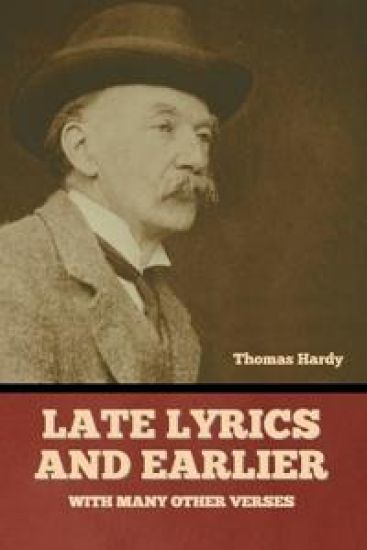
Late Lyrics and Earlier, With Many Other Verses
Late Lyrics and Earlier with Many Other Verses is a collection of poems by English poet Thomas Hardy, and was published in 1922. While covering a typical (for Hardy) range of subjects - such as mismatchings, grotesqueries, and ironic memories - the poems generally take a musical shape, often remembering the past in ballad format. Hardy prefaced the collection with a self-styled Apology, beginning prosaically by reporting some half of the poems included as recent, the remainder as old, but continuing with a broader defence of his poetic principles. Against charges of systematic pessimism, he maintained that his poetry was instead "really a series of fugitive impressions which I have never tried to co-ordinate". As if to protest further the charge of pessimism, Hardy opened the collection with the cheerfully lyrical 'Weathers', though he closed it with the self-searching meditation 'Surview'. Other notable poems paid tribute to the friend of his youth, Horace Moule, and to his second wife, Florence Dugdale; while others recalled once again Hardy's first wife Emma, perhaps representing a final coming-to-terms with the memory of their marriage. Many of the poems have been subsequently set to music, by a variety of different composers. (wikipedia.org)
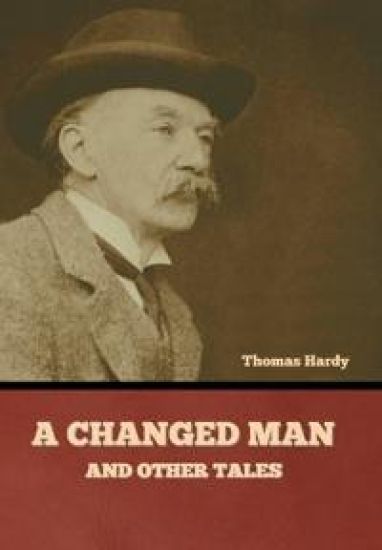
A Changed Man and Other Tales

A Changed Man and Other Tales

Thomas Hardy

Bibliotech Press
2022
sidottu
A Changed Man and Other Tales is a collection of twelve tales written by Thomas Hardy. The collection was originally published in book form in 1913, although all of the tales had been previously published in newspapers or magazines from 1881 to 1900. There are eleven short stories and a novella The Romantic Adventures of a Milkmaid. At the end of the book there is a map of the imaginary Wessex of Hardy's novels and poems. Six of the stories were published before 1891 and therefore lacked international copyright protection when the collection began to be sold in October 1913.
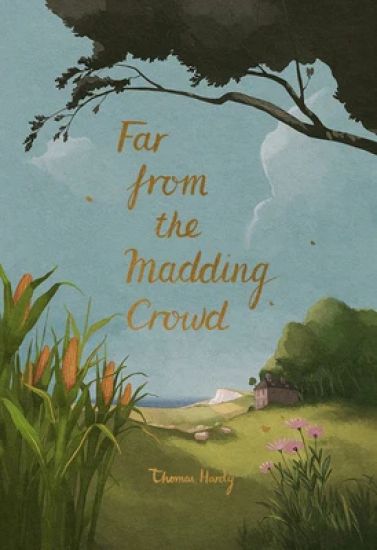
Far from the Madding Crowd

Far from the Madding Crowd

Thomas Hardy

WORDSWORTH EDITIONS LTD
2022
sidottu

Halvin toimitettuna 18,90 €

Far from the Madding Crowd is perhaps the most pastoral of Hardy's Wessex novels. It tells the story of the young farmer Gabriel Oak and his love for and pursuit of the elusive Bathsheba Everdene, whose wayward nature leads her to both tragedy and true love. It tells of the dashing Sergeant Troy whose rakish philosophy of life was ‘…the past was yesterday; never, the day after’, and lastly, of the introverted and reclusive gentleman farmer, Mr Boldwood, whose love fills him with ‘…a fearful sense of exposure’, when he first sets eyes on Bathsheba. The background of this tale is the Wessex countryside in all its moods, contriving to make it one of the most English of great English novels.
The Mayor of Casterbridge

The Mayor of Casterbridge

Thomas Hardy

Hansebooks
2022
pokkari
The Mayor of Casterbridge - A novel is an unchanged, high-quality reprint of the original edition of 1886. Hansebooks is editor of the literature on different topic areas such as research and science, travel and expeditions, cooking and nutrition, medicine, and other genres. As a publisher we focus on the preservation of historical literature. Many works of historical writers and scientists are available today as antiques only. Hansebooks newly publishes these books and contributes to the preservation of literature which has become rare and historical knowledge for the future.