Kirjojen hintavertailu – 12 859 819 kirjaa ja 27 kauppaa

Kirjailija

Thomas Hardy

Kirjat ja teokset yhdessä paikassa: 1 546 kirjaa, julkaisuja vuosilta 1832–2027, suosituimpiin kuuluu Kaukana maailman melskeestä. Vertaile teosten hintoja ja tarkista saatavuus suomalaisista kirjakaupoista.

1 546 kirjaa

Kirjojen julkaisuvuodet: 1832–2027.

Tess of the d'Urbervilles

Tess of the d'Urbervilles

Thomas Hardy

Wordsworth Editions Ltd
1992
nidottu

Halvin toimitettuna 11,90 €

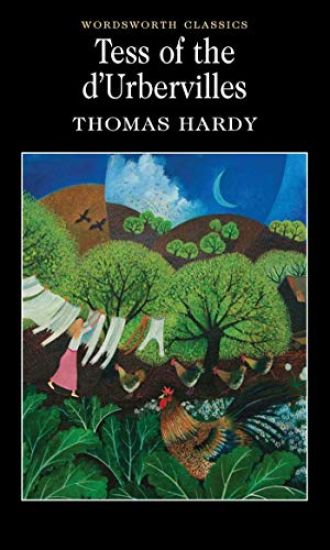
Introduction and Notes by Michael Irwin, Professor of English Literature, University of Kent at Canterbury. Set in Hardy's Wessex, Tess is a moving novel of hypocrisy and double standards. Its challenging sub-title, A Pure Woman, infuriated critics when the book was first published in 1891, and it was condemned as immoral and pessimistic. It tells of Tess Durbeyfield, the daughter of a poor and dissipated villager, who learns that she may be descended from the ancient family of d'Urbeville. In her search for respectability her fortunes fluctuate wildly, and the story assumes the proportions of a Greek tragedy. It explores Tess's relationships with two very different men, her struggle against the social mores of the rural Victorian world which she inhabits and the hypocrisy of the age. In addressing the double standards of the time, Hardy’s masterly evocation of a world which we have lost, provides one of the most compelling stories in the canon of English literature, whose appeal today defies the judgement of Hardy’s contemporary critics.

Tess of the d'Urbervilles

Tess of the d'Urbervilles

Thomas Hardy

Hawk Press
1991
pokkari
When Tess Durbeyfield is driven by family poverty to claim kinship with the wealthy D'Urbervilles and seek a portion of their family fortune, meeting her 'cousin' Alec proves to be her downfall. A very different man, Angel Clare, seems to offer her love and salvation, but Tess must choose whether to reveal her past or remain silent in the hope of a peaceful future. With its sensitive depiction of the wronged Tess and powerful criticism of social convention, Tess of the D'Urbervilles, subtitled "A Pure Woman," is one of the most moving and poetic of Hardy's novels.
Far from the Madding Crowd

Far from the Madding Crowd

Thomas Hardy

RANDOM HOUSE USA INC
1991
sidottu
Far From the Madding Crowd, published in 1874, is the book that made Hardy famous. Bathsheba Everdene is a prosperous farmer in Hardy's fictional Wessex county whose strong-minded independence and vanity lead to disastrous consequences for her and the three very different men who pursue her: the obsessed farmer William Boldwood, dashing and seductive Sergeant Frank Troy, and the devoted shepherd Gabriel Oak. Despite the violent ends of several of its major characters, Far from the Madding Crowd is the sunniest and least brooding of Hardy's great novels, as Bathsheba and her suitors move through a beautifully realized late-nineteenth-century agrarian landscape that is still almost untouched by the industrial revolution and the encroachment of modern life. With an introduction by Michael Slater
Tess Of The D'urbervilles

Tess Of The D'urbervilles

Thomas Hardy

Everyman's Library
1991
sidottu
When Tess Durbeyfield is driven by family poverty to claim kinship with the wealthy D’Urbervilles and seek a portion of their family fortune, meeting her ‘cousin’ Alec proves to be her downfall. A very different man, Angel Clare, seems to offer her love and salvation, but Tess must choose whether to reveal her past or remain silent in the hope of a peaceful future
Tess of the d'Urbervilles: A Norton Critical Edition
The text is fully annotated and includes a separate table of contents for the novel to assist readers in locating specific episodes or passages. Hardy's hand-drawn map of Wessex and the manuscript title page for the first edition of his novel are also included. Hardy and the Novel includes seven poems by Hardy that provide greater insight into his ethos; selections from Michael Millgate's biography of Hardy that depict the relationship between episodes in Tess of the D'Urbervilles and events in the author's life; and excerpts from Grindle and Gatrell's introduction to the 1983 edition that discuss Hardy's revision process in both manuscripts and early printed editions of the novel. Criticism features three contemporary reviews of the novel not printed in the earlier Norton editions, including the first feminist review of Tess of the D'Urbervilles. Also new are "A Chat with Mr. Hardy," a hitherto unprinted post-publication interview with the author about his new novel, and five carefully selected critical interpretations. Essays by Elliot B. Gose, Jr., Peter R. Morton, and Gillian Beer address Hardy's debt to Charles Darwin, perhaps the single most important influence on Hardy's thought and imagination; Raymond Williams's essay presents a Marxist perspective; and Adrian Poole discusses the significance of Hardy's wisdom concerning "the trouble men's words have with women and the trouble women have with men's words." A Chronology, new to this edition, and a Selected Bibliography are included.
Selected Letters

Selected Letters

Thomas Hardy

Oxford University Press
1990
sidottu
Thomas Hardy's greatness as a novelist and poet is universally acknowledged. These letters provide invaluable glimpses into his life, from the years as an unknown architect's assistant in London in the 1860s to the final period of extensive productivity in the relative isolation of Max Gate. The more than three hundred letters included here have been drawn from the recently completed seven-volume Clarendon Press edition of the Collected Letters of Thomas Hardy, which was edited by Michael Millgate in collaboration with Richard L. Purdy. Although all aspects of Hardy's career are reflected, the selection particularly emphasizes his personal rather than his purely professional relationships: ample representation is therefore given to his correspondence with his family, with his two wives, and with such close friends as Edmund Gosse and Florence Henniker. Many other notable figures are also addressed, among them Walter de la Mare, Millicent Fawcett, Harley Granville Barker, Ezra Pound, Marie Stopes, Robert Louis Stevenson, Algernon Charles Swinburne, and Virginia Woolf. The full and immediately accessible annotations to individual letters are supplemented by editorial commentaries designed to place particular letters or sequences of letters within the broader contexts of Hardy's life and literary career. The volume also includes a brief introduction, a chronology, and an index.
The Life and Work of Thomas Hardy

The Life and Work of Thomas Hardy

Thomas Hardy

Palgrave Macmillan
1989
nidottu
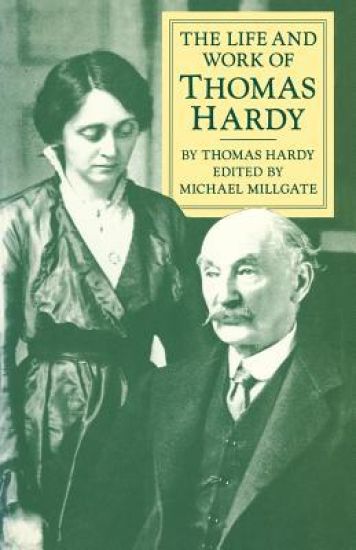
One of the literary world's great deceptions was perpetrated when Thomas Hardy wrote his Life in secret for publication after his death as an official biography. Since the true circumstances of its composition have been known The Early Life and Later Years of Thomas Hardy, published over the name of Florence Emily Hardy, has frequently been referred to as Hardy's autobiography. But this is not the whole truth: Florence altered much of what Hardy meant to appear in his 'biography'. Through careful examination of pre- publication texts, Michael Millgate has retrieved the text as it stood at the time of Hardy's final revision. For the first time The Life and Work of Thomas Hardy can be read as a true work of autobiography - an addition to the Hardy canon.
Far from the Madding Crowd

Far from the Madding Crowd

Thomas Hardy

WW Norton Co
1986
nidottu
It also incorporates revisions that Hardy made in his "study copy" of the novel and in his marked printer’s copy and page proofs for the Harper and Brothers "sixpenny edition" of 1901, whenever these revisions could be confidently judged to represent Hardy’s final deliberate intent. The resulting text includes revisions by Hardy which have never appeared before in a modern edition. The novel is fully annotated and is accompanied by Hardy’s map of Wessex and a simplified map of the landscape of Far from the Madding Crowd. "Textual Notes" include a list of emendations, examples of variant readings from the manuscript to the Wessex edition, and a discussion of the choice of copy text. The textual history of the novel is traced in extracts from studies by Richard Little Purdy and Simon Gatrell. "Backgrounds" includes substantial extracts from Hardy’s correspondence with Leslie Stephen and is followed by a selection of contemporary reviews. Twentieth-century "Criticism" is represented by Howard Babb, Roy Morrell, Alan Friedman, J. Hillis Miller, Michael Millgate, Penelope Vigar, Peter J. Casagrande, Ian Gregor, and Albert C. Schweik.
Jude the Obscure

Jude the Obscure

Thomas Hardy

Bantam Doubleday Dell Publishing Group
1985
pokkari
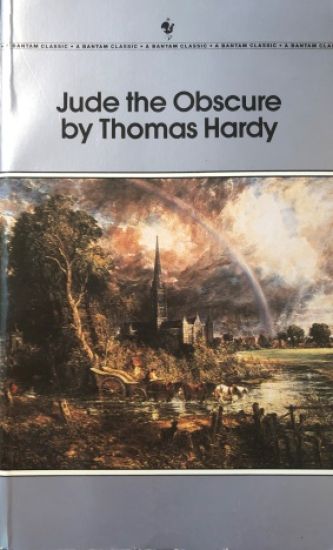
In 1895 Hardy's final novel, the great tale of Jude The Obscure, sent shockwaves of indignation rolling across Victorian England. Hardy had dared to write frankly about sexuality and to indict the institutions of marriage, education, and religion. But he had, in fact, created a deeply moral work. The stonemason Jude Fawley is a dreamer; his is a tragedy of unfulfilled aims. With his tantalizing cousin Sue Bridehead, the last and most extraordinary of Hardy's heroines, Jude takes on the world--and discovers, tragically, its brutal indifference. The most powerful expression of Hardy's philosophy, and a profound exploration of man's essential loneliness, Jude The Obscure is a great and beautiful book. "His style touches sublimity."--T. S. Eliot
The Life and Work of Thomas Hardy

The Life and Work of Thomas Hardy

Thomas Hardy

Palgrave Macmillan
1985
sidottu
One of the literary world's great deceptions was perpetrated when Thomas Hardy wrote his Life in secret for publication after his death as an official biography. Since the true circumstances of its composition have been known The Early Life and Later Years of Thomas Hardy, published over the name of Florence Emily Hardy, has frequently been referred to as Hardy's autobiography. But this is not the whole truth: Florence altered much of what Hardy meant to appear in his 'biography'. Through careful examination of pre- publication texts, Michael Millgate has retrieved the text as it stood at the time of Hardy's final revision. For the first time The Life and Work of Thomas Hardy can be read as a true work of autobiography - an addition to the Hardy canon.
Tess of the d'Urbervilles

Tess of the d'Urbervilles

Thomas Hardy

BANTAM DOUBLEDAY DELL PUBLISHING GROUP INC
1984
pokkari
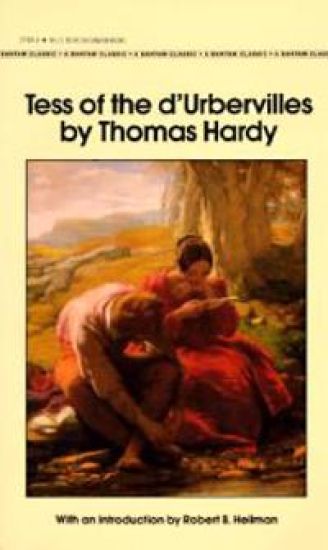
Violated by one man, forsaken by another, Tess Durbeyfield is the magnificent and spirited heroine of Thomas Hardy's immortal work. Of all the great English novelists, no one writes more eloquently of tragic destiny than Hardy. With the innocent and powerless victim Tess, he creates profound sympathy for human frailty while passionately indicting the injustices of Victorian society. Scorned by outraged readers upon its publication in 1891, Tess of the d'Urbervilles is today one of the enduring classics of nineteenth-century literature.
A Group of Noble Dames

A Group of Noble Dames

Thomas Hardy

Sutton Publishing Ltd
1983
nidottu
The ten stories contained in this volume are ranged around a "store of ladies, whose bright eyes rain influence". Hardy plumbs the hidden depths of country families to reveal what went on behind the scenes.
Far from the Madding Crowd

Far from the Madding Crowd

Thomas Hardy

Bantam USA
1983
pokkari
An immediate success when it was first published in 1874, Thomas Hardy's 'pastoral tale' of the wilful and capricious Bathsheba Everdene, her three suitors - the faithful shepherd Gabriel Oak, the lonely widower Farmer Boldwood, and the dashing but faithless Sergeant Troy - and the tragic consequence of her eventual choice remains one of the most enduring and popular English novels.
The Return of the Native

The Return of the Native

Thomas Hardy

Bantam USA
1982
pokkari
This fine novel sets in opposition two of Thomas Hardy's most unforgettable creations: his heroine, the sensuous, free-spirited Eustacia Vye, and the solemn, majestic stretch of upland in Dorsetshire he called Egdon Heath. The famous opening reveals the haunting power of that dark, forbidding moon where proud Eustacia fervently awaits a clandestine meeting with her lover, Damon Wildeve. But Eustacia's dreams of escape are not to be realized--neither Wildeve nor the retuming native Clym Yeobright can bring her salvation. Injured by forces beyond their control, Hardy's characters struggle vainly in the net of destiny. In the end, only the face of the lonely heath remains untouched by fate in this masterpiece of tragic passion, a tale that perfectly epitomizes the author's own unique and melancholy genius.