Kirjailija
Thomas Hardy
Kirjat ja teokset yhdessä paikassa: 1 546 kirjaa, julkaisuja vuosilta 1832–2027, suosituimpiin kuuluu Kaukana maailman melskeestä. Vertaile teosten hintoja ja tarkista saatavuus suomalaisista kirjakaupoista.
1 546 kirjaa
Kirjojen julkaisuvuodet: 1832–2027.
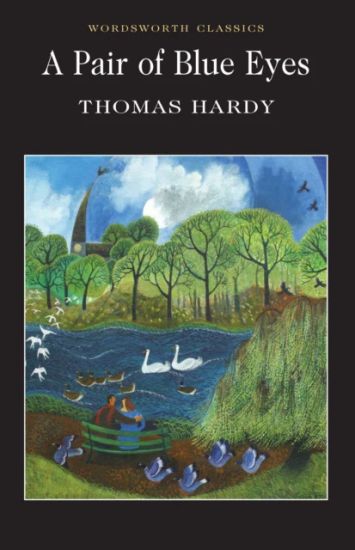
With a new Introduction by Cedric Watts, Research Professor of English, University of Sussex. A Pair of Blue Eyes, though early in the sequence of Hardy's novels, is lively and gripping. Its dramatic cliff-hanging episode, for example, is at once tense, ironic, feministic and erotic. With settings in Wessex and London, the novel also has some strongly autobiographical features, as the blue-eyed heroine, Elfride Swancourt, is based largely on Emma Gifford, who became Thomas Hardy's first wife. Elfride's vivacious nature attracts several lovers, but she is beset by sexual prejudice, and the ensuing ironies reveal the constraints of her times. A Pair of Blue Eyes provides an engaging and moving experience for today's readers.
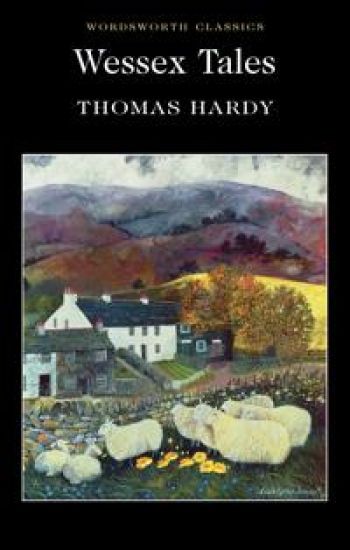
Introduction and Notes by Michael Irwin, Professor of English Literature, University of Kent at Canterbury. Wessex Tales was the first collection of Hardy's short stories, and they reflect the experience of a novelist at the height of his powers. These seven tales, in which characters and scenes are imbued with a haunting realism, show considerable diversity of content, form and style, and range from fantasy to realism and from tragedy to comedy. In insisting on the unusual nature of any story worth the telling, and with his gift for irony and compassion, Hardy achieves more in the genre of the short story than any English novelist before him.
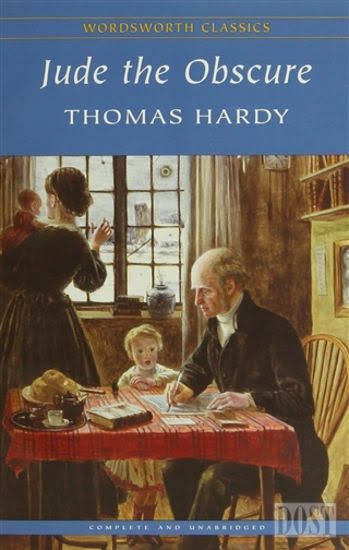
Introduction and Notes by Norman Vance, Professor of English, University of Sussex. Jude Fawley is a rural stone mason with intellectual aspirations. Frustrated by poverty and the indifference of the academic institutions at the University of Christminster, his only chance of fulfilment seems to lie in his relationship with his unconventional cousin, Sue Bridehead. But life as social outcasts proves undermining, and when tragedy occurs, Sue has no resilience and Jude is left in despair. Hardy’s portrait of Jude, the idealist and dreamer who is a prisoner of his own physical nature, is one of the most haunting and desperate of his creations. Jude the Obscure is a dark yet compassionate account of the insurmountable frustrations of human existence which reflect Hardy’s yearning for the spiritual values of the past and his despair at their decline.
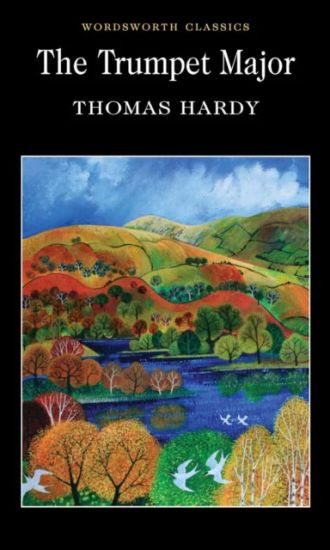
With an Introduction and Notes by Charles P. C. Pettit. Thomas Hardy's only historical novel, The Trumpet Major is set in Wessex during the Napoleonic Wars. Hardy skilfully immerses us in the life of the day, making us feel the impact of historical events on the immemorial local way of life - the glamour of the coming of George III and his soldiery, fears of the press-gang and invasion, and the effect of distant but momentous events like the Battle of Trafalgar. He interweaves a compelling, bitter-sweet romantic love story of the rivalry of two brothers for the hand of the heroine Anne Garland, played out against the loves of a lively gallery of other characters. While there are elements of sadness and even tragedy, The Trumpet-Major shows Hardy's skills of story-telling, characterisation and description in a novel of vitality, comedy and warmth.
Distringuished as both a great novelist and a great poet. Thomas Hardy (1840-1928) had a writing career which spanned more than sixty years, concentrating first on prose and then, after publishing his last novel in 1895, on verse.
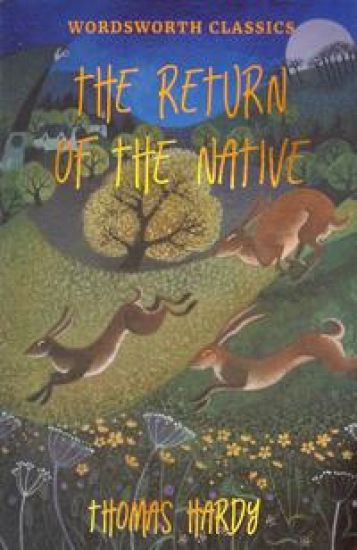
The Return of the Native
Thomas Hardy
Wordsworth Editions Ltd
1995
nidottu
Halvin toimitettuna 11,90 €
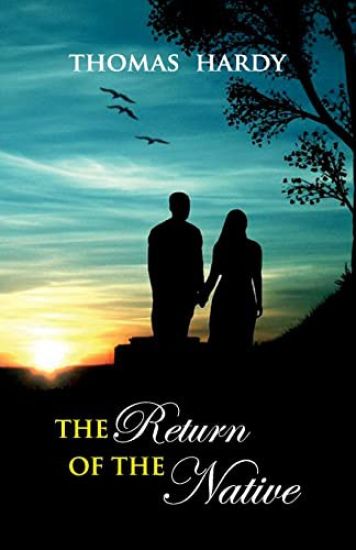
With an Introduction and Notes by Claire Seymour, University of Kent at Canterbury. The Return of the Native is widely recognised as the most representative of Hardy's Wessex novels. He evokes the dismal presence and menacing beauty of Egdon Heath - reaching out to touch the lives and fate of all who dwell on it. The central figure is Clym Yeobright, the returning ‘native’ and the story tells of his love for the beautiful but capricious Eustacia Vye. As the narrative unfolds and character after character is driven to self-destruction the presence of the Heath becomes all-embracing, while Clym becomes a travelling preacher in an attempt to assuage his guilt.
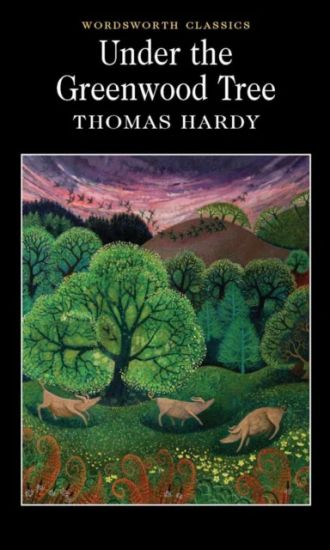
Under the Greenwood Tree
Thomas Hardy
Wordsworth Editions Ltd
1994
nidottu
Halvin toimitettuna 11,90 €
With an Introduction and Notes by Dr Claire Seymour, University of Kent at Canterbury. Under the Greenwood Tree is Hardy's most bright, confident and optimistic novel. This delightful portrayal of a picturesque rural society, tinged with gentle humour and quiet irony, established Hardy as a writer. However, the novel is not merely a charming rural idyll. The double-plot, in which the love story of Dick Dewey and Fancy Day is inter-related with a tragic chapter in the history of Mellstock Choir, hints at the poignant disappearance of a long-lived and highly-valued traditional way of life.
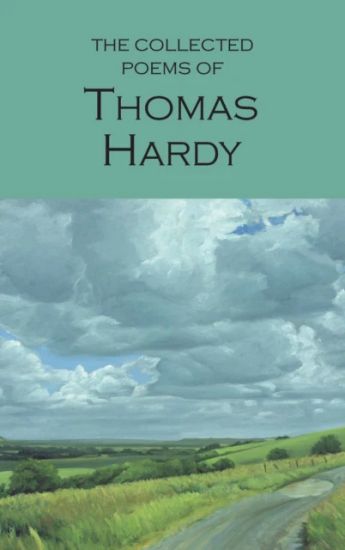
The Collected Poems of Thomas Hardy
Thomas Hardy
Wordsworth Editions Ltd
1994
nidottu
Halvin toimitettuna 11,90 €
With an Introduction, Bibliography and Glossary by Michael Irwin, Professor of English Literature University of Kent at Canterbury. Thomas Hardy started composing poetry in the heyday of Tennyson and Browning. He was still writing with unimpaired power sixty years later, when Eliot and Yeats were the leading names in the field. His extraordinary stamina and a consistent individuality of style and vision made him a survivor, immune to literary fashion. At the start of the twenty-first century his reputation stands higher than it ever did, even in his own lifetime. He is now recognised not only as a great poet, but as one who is widely loved. He speaks with directness, humanity and humour to scholarly or ordinary readers alike.
The Mayor of Casterbridge, one of Thomas Hardy's most powerful novels, opens with a scene of shocking heartlessness. In a fit of drunken rage, Michael Henchard, an out-of-work laborer, sells his wife and baby daughter to a passing sailor. When the horror of what he has done dawns on him the next day, he determines to set his life on a different path, and through years of hard work and ambition rises to become the rich and respectable mayor of his town. Secret guilt continues to haunt this proud and brooding man, however, and when his wife and grown daughter return to Casterbridge, Henchard is set on the path to a dramatic confrontation with his own deeply flawed nature. Hardy's keen insight into the course of wayward lives and his instinctive feel for the beauty of the rural landscape come together in this unforgettable portrait of a tragic hero.
"It is difficult for a woman to define her feelings in language which is chiefly made by men to express theirs."-Thomas HardyFar from the Madding Crowd (1874) is Thomas Hardy's fourth novel and his first major literary success. It originally appeared anonymously as a monthly serial in Cornhill Magazine, where it gained a wide readership. The novel is the first to be set in Thomas Hardy's Wessex in rural southwest England. It deals in themes of love, honour and betrayal, against a backdrop of the seemingly idyllic, but often harsh, realities of a farming community in Victorian England. It describes the life and relationships of Bathsheba Everdene with her lonely neighbour William Boldwood, the faithful shepherd Gabriel Oak, and the thriftless soldier Sergeant Troy. On publication, critical notices were plentiful and mostly positive. Hardy revised the text extensively for the 1895 edition and made further changes for the 1901 edition. In 2003, the novel was listed at number 48 on the BBC's survey The Big Read. In 2007, the book finished 10th on the Guardian's list of greatest love stories of all time.
The Mayor of Casterbridge
Thomas Hardy
Wordsworth Editions Ltd
1994
nidottu
Halvin toimitettuna 11,90 €
With an Introduction and Notes by Michael Irwin, Professor of English Literature, University of Kent at Canterbury. None of the great Victorian novels is more vivid and readable than The Mayor of Casterbridge. Set in the heart of Hardy's Wessex, the 'partly real, partly dream country' he founded on his native Dorset, it charts the rise and self-induced downfall of a single 'man of character'. The fast-moving and ingeniously contrived narrative is Shakespearian in its tragic force, and features some of the author's most striking episodes and brilliant passages of description.
Although best remembered today for his novels, Thomas Hardy thought of himself as a poet forced by circumstance to write fiction for a living. This generous selection of nearly two hundred poems includes such familiar pieces as "During Wind and Rain," "Channel Firing," "Afterwards," "The Darkling Thrush," and "The Oxen," but it will also acquaint readers with many less-celebrated works, among them "To Lizbie Browne," "After the Last Breath," "My Spirit Will Not Haunt the Mound," "The Haunter," "Old Furniture," "A Procession of Dead Days," "The Harbour Bridge," "At a Country Fair," "Last Love-Word," "Waiting Both," and "Proud Songsters." With an introduction and annotations by Robert Mezey, this Penguin Classics edition will help readers to recognize Hardy as one of the greatest English poets of this century.
Far from the Madding Crowd
Thomas Hardy
Wordsworth Editions Ltd
1993
nidottu
Halvin toimitettuna 9,90 €
Introduction and Notes by Norman Vance, Professor of English, University of Sussex. Far from the Madding Crowd is perhaps the most pastoral of Hardy's Wessex novels. It tells the story of the young farmer Gabriel Oak and his love for and pursuit of the elusive Bathsheba Everdene, whose wayward nature leads her to both tragedy and true love. It tells of the dashing Sergeant Troy whose rakish philosophy of life was ‘…the past was yesterday; never, the day after’, and lastly, of the introverted and reclusive gentleman farmer, Mr Boldwood, whose love fills him with ‘…a fearful sense of exposure’, when he first sets eyes on Bathsheba. The background of this tale is the Wessex countryside in all its moods, contriving to make it one of the most English of great English novels.
The Mayor of Casterbridge is a man haunted by his past. In his youth he betrayed his wife and baby daughter in a shocking incident that led him to swear never to tough alcohol again for twenty-one years. He has since risen from his humble origins to become a respected pillar of the community in Casterbridge, but his secrets cannot stay hidden forever and he has many hard lessons left to learn. Thomas Hardy's almost supernatural insight into the course of wayward lives, his instinctive feeling for the beauty of the rural landscape, and his power to invest that landscape with moral significance all came together in an utterly fluent way in "The Mayor of Casterbridge." A classically shaped story about the rise and fall of the brooding and sometimes brutal Michael Henchard in the harsh world of nineteenth-century rural England, "The Mayor of Casterbridge" is an emblematic product of Hardy's maturity-vigorous, forceful, and unclouded by illusions. (Book Jacket Status: Jacketed)
D H Lawrence remarked that Hardy's best novels were about 'the struggle into love and the struggle with love', and THE MAJOR OF CASTLEBRIDGE is no exception. One of the long series of Wessex tales include FAR FROM THE MADDING CROWD, it is the story of the brooding and sometimes brutal Michael Henchard and the women with whom he searches for happiness in the harsh world of the nineteenth-century rural England
Hardy's last novel is the story of a young working man destroyed by the partial fulfilment of his dreams. He is torn between his desires for the life of the body and the life of the mind, as represented by two women - the vulgar but lustrous Arabella and the refined and frigid Sue.
Wild passion leads to tragedy as love is perverted by marriage. But the concerns of mortals are belittled by the sombre, immemorial presence of Egdon Heath, perhaps Hardy's finest evocation of his native landscape. The text is accompanied by a critical introduction.
Included in this edition are ten stories, varying in length from sketch to novella, which were never collected into volumes during Hardy's lifetime. Some contained references to actual people, or plot elements that he reused elsewhere; others, such as his only stories for children, were simply too different from his other work in the short-story form; the longest, `An Indiscretion in the Life of an Heiress', was apparently left uncollected to allow for a possible reconstruction of the `lost' novel, The Poor Man and the Lady, from which it was drawn. The three final stories resulted from literary collaborations which were also emotional involvements, with Florence Henniker in `The Spectre of the Real', and with Florence Dugdale, later the second Mrs Hardy, in `Blue Jimmy: The Horse Stealer' and `The Unconquerable' (now published for the first time). Although all of these stories occupy significant positions within Hardy's career as a writer of fiction - extending that career, indeed, both earlier and later than the standard account would allow - none of them has previously received serious editorial treatment. For the most part they have also been ignored or lightly passed over by critics and biographers, and such discussion as they have aroused has frequently been based on false assumptions. This edition remedies some of these deficiencies in Hardy scholarship, both in its historical introductions and in its critically edited texts, which are based on full collations of all editions published before Hardy's death and all surviving manuscripts, typescripts, and proofs (many of which have gone almost entirely unexamined in the past). Complete lists of the variants in these pre-publication witnesses and in all authorially authorized printings supplement the edited texts.