Kirjojen hintavertailu – 12 859 818 kirjaa ja 27 kauppaa

Kirjailija

Thomas Hobbes

Kirjat ja teokset yhdessä paikassa: 275 kirjaa, julkaisuja vuosilta 1967–2026, suosituimpiin kuuluu Leviatán. Vertaile teosten hintoja ja tarkista saatavuus suomalaisista kirjakaupoista.

275 kirjaa

Kirjojen julkaisuvuodet: 1967–2026.

Leviathan

Leviathan

Thomas Hobbes

Meiner Felix Verlag GmbH
2005
nidottu
Vom "Leviathan", einem der bedeutendsten theoretischen Werke über die Ursprünge und Grundlagen der Idee des Staates und der bürgerlichen Gesellschaft, liegt nun erstmalig eine deutschsprachige Ausgabe vor, die den Text der englischen Erstausgabe von 1651 vollständig und nach den allgemein anerkannten philologischen Kriterien textgetreu darbietet. Die Ausgabe enthält die umfangreichen Marginalien der Erstausgabe und ist quellenkritisch kommentiert. Mit einer Einführung, Chronologie, Literaturverzeichnis, Register und umfangreiche Anmerkungen.
Leviathan eller En kyrklig och civil stats innehåll, form och makt
Thomas Hobbes huvudverk, Leviathan (1651), föreligger nu i svensk översättning av Eva Backelin. Texten består av fyra böcker och av dem är numera framför allt de två första kända, »Om människan» och »Om staten». Där etablerar Hobbes sina grundläggande principer för politisk organisation och styrning. Den tredje boken, »Om en kristen stat», skall visa att Bibeln ger stöd åt hans politiska filosofi. Den sista, »Om mörkrets rike», innehåller hans förklaringar till de krig som drabbat den kristna mänskligheten i alla tider och England under inbördeskriget. I förordet skriver Eva-Lena Dahl, professor i idé- och lärdomshistoria: »Hobbes konstruktion av människans existentiella situation, av naturtillståndet, har en suggestiv kraft. Den visar människan ensam i en ständig kamp för livet. Självbevarelsedriften blir till en hämningslös våldsbenägenhet, varje annan människa ett öppet eller latent hot. Kampen om makt för den tillfälliga njutningens skull eller för att avvärja möjliga dödshot är ett grundläggande existensvillkor. Människan är ensam, pendlande mellan aggressivitet och skräck. Individens utsatthet kan möjligen mildras men aldrig helt utplånas ur mänskligt liv. Denna hobbesianska bild möter oss ständigt i en rad olika filosofiska och konstnärliga framställningar av den mänskliga existensen. Rousseau har tagit starka intryck, Hegel likaså. Via dem och andra har denna människosyn förmedlats även till olika typer av existentialistisk filosofi. Exemplen från konstens värld är oräkneliga. Mångahanda problem har kunnat diskuteras utifrån denna individualistiska syn på mänsklig existens. Det gäller den individuella frihetens problematik och den kollektiva disciplineringensgränser, ensamheten i en värld, där politiken utpekar människor som individer och begär att de skall kunna identifiera sig med en abstrakt och för dem främmande centralmakt ? för att bara nämna några av de svårigheter Hobbes pekar ut som konstitutiva för det moderna samhället. Hans språk är hårt, hans tro på en våldsam statsmakts möjligheter stora. Men han är inte obsolet. Hans förmåga att lokalisera och analysera den problematik den moderna staten och den moderna individualismen föder är precis. Leviathan är en tänkvärd bok.»
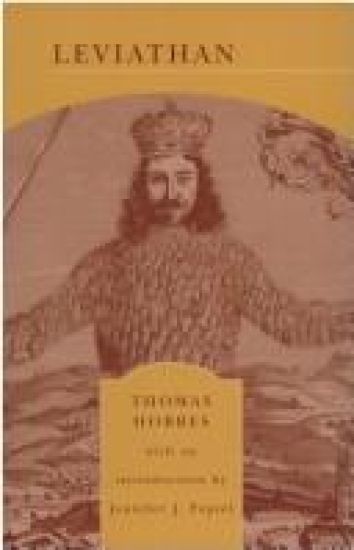
Leviathan (Barnes & Noble Library of Essential Reading)
After the publication of his masterpiece of political theory, "Leviathan, Or the Matter, and Power of Commonwealth Ecclesiastic and Civil", in 1651, opponents charged Thomas Hobbes with atheism and banned and burned his books. The English Parliament, in a search for scapegoats, even claimed that the theories found in "Leviathan" were a likely cause of the Plague of 1665 and the Great Fire of 1666. For the modern reader, though, Hobbes is more recognized for his popular belief that humanity's natural condition is a state of perpetual war, with life being 'solitary, poor, nasty, brutish, and short'. Despite frequent challenges by other philosophers, "Leviathan's" secular theory of absolutism no longer stands out as particularly objectionable. In the description of the organization of states, moreover, we see Hobbes as strikingly current in his use of concepts that we still employ today, including the ideas of natural law, natural rights, and the social contract. Based on this work, one could even argue that Hobbes created English-language philosophy, insofar as "Leviathan" was the first great philosophical work written in English and one whose impact continues to the present day.

de Corpore

de Corpore

Thomas Hobbes

Librarie Philosophique J. Vrin
2000
nidottu
Le De Corpore, publie pour la premiere fois en 1655, est non seulement l'oeuvre majeure de Hobbes en matiere de logique, de philosophie premiere et de physique, mais egalement un des plus grands textes metaphysiques du XVIIe siecle. On y trouve une theorie de la logique comme calcul dont l'un des elements decisifs est une critique du langage en vue de determiner exactement les modalites par lesquelles nous signifions nos pensees et designons les choses. Cette logique est la condition d'une philosophie premiere sur laquelle repose une nouvelle conception du monde. La theorie physique dans sa totalite, ainsi que plusieurs aspects de l'ethique et de la politique, dependent d'une telle position metaphysique.
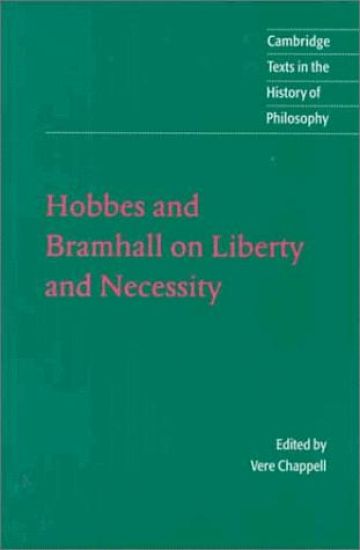
Hobbes and Bramhall on Liberty and Necessity

Hobbes and Bramhall on Liberty and Necessity

Thomas Hobbes; John Bramhall

Cambridge University Press
1999
sidottu
Do human beings ever act freely, and if so what does freedom mean? Is everything that happens antecedently caused, and if so how is freedom possible? Is it right, even for God, to punish people for things that they cannot help doing? This volume presents the famous seventeenth-century controversy in which Thomas Hobbes and John Bramhall debate these questions and others. The complete texts of their initial contributions to the debate are included, together with selections from their subsequent replies to one another and from other works of Hobbes, in a collection that offers an illuminating commentary on issues still of concern to philosophers today. The volume is completed by a historical and philosophical introduction that explains the context in which the debate took place.
Hobbes and Bramhall on Liberty and Necessity

Hobbes and Bramhall on Liberty and Necessity

Thomas Hobbes; John Bramhall

Cambridge University Press
1999
pokkari
Do human beings ever act freely, and if so what does freedom mean? Is everything that happens antecedently caused, and if so how is freedom possible? Is it right, even for God, to punish people for things that they cannot help doing? This volume presents the famous seventeenth-century controversy in which Thomas Hobbes and John Bramhall debate these questions and others. The complete texts of their initial contributions to the debate are included, together with selections from their subsequent replies to one another and from other works of Hobbes, in a collection that offers an illuminating commentary on issues still of concern to philosophers today. The volume is completed by a historical and philosophical introduction that explains the context in which the debate took place.
Hobbes: On the Citizen

Hobbes: On the Citizen

Thomas Hobbes

Cambridge University Press
1998
sidottu
De Cive (On the Citizen) is the first full exposition of the political thought of Thomas Hobbes, the greatest English political philosopher of all time. Professors Tuck and Silverthorne have undertaken the first complete translation since 1651, a rendition long thought (in error) to be at least sanctioned by Hobbes himself. On the Citizen is written in a clear, straightforward, expository style, and in many ways offers students a more digestible account of Hobbes's political thought than the Leviathan itself. This new translation is both accurate and accessible, and is itself a significant scholarly event: it is accompanied by a full glossary of Latin terms, a chronology, bibliography, and an expository introduction. Throughout the editors have emphasised consistency in the translation and usage of Hobbes's basic conceptual vocabulary, respecting Hobbes's own concern for accurate definition of terms.
The Correspondence of Thomas Hobbes: Volume II: 1660-1679
[NB in publicity materials use short description + first few review quotes if short of space] Thomas Hobbes (1588-1679) is one of the most important figures in the history of European thought. Although best known for his political theory, he also wrote about theology, metaphysics, physics, optics, mathematics, psychology, and literary criticism. All of these interests are reflected in his correspondence. Some small groups of his letters have been printed in the past (often in inaccurate transcriptions), but this edition is the first complete collection of his correspondence, nearly half of which has never been printed before. All the letters have been transcribed from the original sources, and all materials in Latin, French, and Italian are printed together with translations in clear modern English. The letters are fully annotated, and there are long biographical entries on all of his correspondents, based on extensive original research. These two volumes form one of the most significant and valuable publications of Hobbes scholarship this century, casting a new light on the whole pattern of his intellectual life and personal friendships.
The Correspondence of Thomas Hobbes: The Correspondence of Thomas Hobbes
[NB in publicity materials use short description + first few review quotes if short of space] Thomas Hobbes (1588-1679) is one of the most important figures in the history of European thought. Although best known for his political theory, he also wrote about theology, metaphysics, physics, optics, mathematics, psychology, and literary criticism. All of these interests are reflected in his correspondence. Some small groups of his letters have been printed in the past (often in inaccurate transcriptions), but this edition is the first complete collection of his correspondence, nearly half of which has never been printed before. All the letters have been transcribed from the original sources, and all materials in Latin, French, and Italian are printed together with translations in clear modern English. The letters are fully annotated, and there are long biographical entries on all of his correspondents, based on extensive original research. These two volumes form one of the most significant and valuable publications of Hobbes scholarship this century, casting a new light on the whole pattern of his intellectual life and personal friendships.
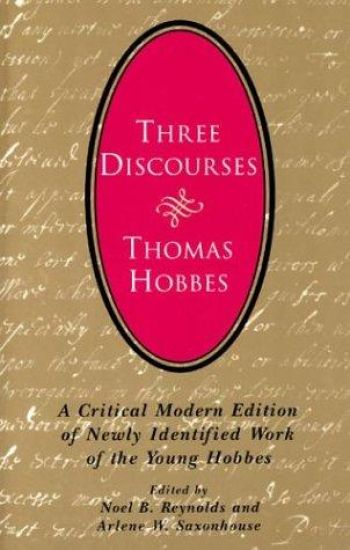
Three Discourses

Three Discourses

Thomas Hobbes

University of Chicago Press
1997
nidottu
The three discourses presented here are now confirmed to have been written by the young Thomas Hobbes. Their contents may well lead to a resolution of the long-standing controversy surrounding Hobbes's early influences and the subsequent development of his thought. The volume begins with the recent history of the discourses, first published as part of the anonymous 17th-century work, "Horae Subsecivae". The editors present the complete texts of the discourse with full annotations and modernized spellings. These are followed by an essay analyzing the pieces' significance for Hobbes's intellectual development and modern political thought more generally. The discourses provide the strongest evidence to date for the profound influences of Bacon and Machiavelli on the young Hobbes, and contribute to the debated impact of the scientific method on his thought. The book also contains both introductory and in-depth explanations of statistical "wordprinting."
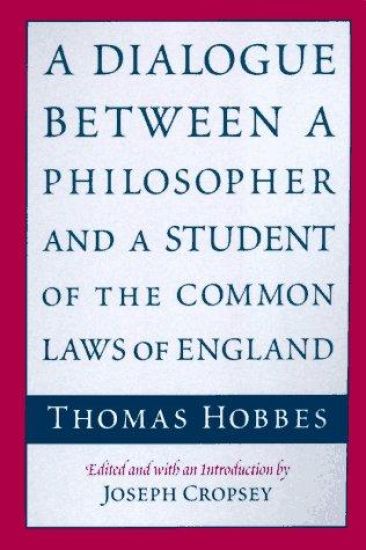
A Dialogue between a Philosopher and a Student of the Common Laws of England
This is an essay by the philosopher Thomas Hobbes, first published posthumously in 1681. In the essay Hobbes sets forth his mature reflections of the relations between reason and law, and proposes a separation in the functions of government in the interests of common sense and humanity, without visibly violating his dictum that the sharing or division of sovereignty is an absurdity. This edition seeks to provide an accessible and dependable text.