
Kirjailija
Thomas Jefferson
Kirjat ja teokset yhdessä paikassa: 481 kirjaa, julkaisuja vuosilta 1901–2027, suosituimpiin kuuluu A Defence of the Revolutionary History of North Carolina from the Aspersions of Mr. Jefferson. Vertaile teosten hintoja ja tarkista saatavuus suomalaisista kirjakaupoista.
481 kirjaa
Kirjojen julkaisuvuodet: 1901–2027.
Autobiography Of Thomas Jefferson, 1743-1790
Thomas Jefferson; Paul Leicester (CON) Ford; George Haven (FRW) Putnam
Kessinger Pub
2007
sidottu
Autobiography Of Thomas Jefferson, 1743-1790
Thomas Jefferson; Paul Leicester (INT) Ford; George Haven (FRW) Putnam
Kessinger Pub
2007
pokkari

Co-author of the groundbreaking Empire and Multitude, Michael Hardt examines the Declaration of Independence and other texts by Jefferson, arguing that his powerful concept of democracy provides a biting critique of the current American administration. Introducing this collection of Jefferson's writings, Michael Hardt makes a powerful case for re-examining the foundational writings of this American revolutionary in order to reignite the dialogue that first conceived of a "land of the free."
THE COMPLETE ANAS OF THOMAS JEFFERSON
Thomas Jefferson; Franklin B. (EDT) Sawvel
UNKNOWN
2007
sidottu
Manual of Parliamentary Practice Composed for the Use of the Senate of the United States
Thomas Jefferson
KESSINGER PUBLISHING CO
2007
muu
The Writings of Thomas Jefferson
Thomas Jefferson; Andrew A. (EDT) Lipscomb; Albert Ellery (EDT) Bergh
Kessinger Pub
2007
sidottu
The Writings of Thomas Jefferson
Thomas Jefferson; Andrew A. (EDT) Lipscomb; Albert Ellery (EDT) Bergh
Kessinger Pub
2007
sidottu
Documents Relating to the Purchase and Exploration of Louisiana
Thomas Jefferson; William Dunbar
Kessinger Pub
2007
sidottu
The Writings of Thomas Jefferson
Thomas Jefferson; Andrew A. (EDT) Lipscomb; Albert Ellery (EDT) Bergh
Kessinger Pub
2007
sidottu
Documents Relating to the Purchase and Exploration of Louisiana
Thomas Jefferson; William Dunbar
Kessinger Pub
2007
pokkari
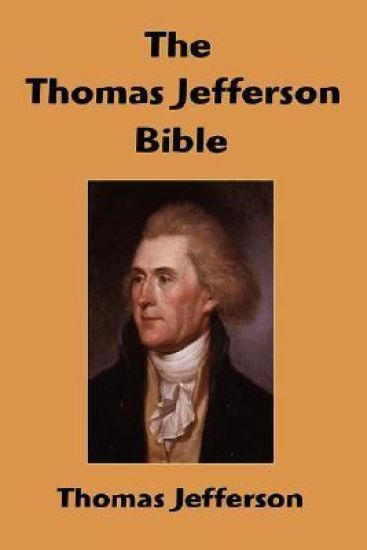
Autobiography of Thomas Jefferson & The Jefferson Bible
Thomas Jefferson
Frederick Ellis
2007
sidottu

Under normal circumstances, Thomas Jefferson would have had more than two months to prepare for his presidency. However, since the House of Representatives finally settled a tied electoral vote only on 17 February 1801, he had two weeks. This book, which covers the two-and-a-half-month period from that day through April 30, is the first of some twenty volumes that will document Jefferson's two terms as President of the United States. Here, Jefferson drafts his Inaugural Address, one of the landmark documents of American history. In this famous speech, delivered before a packed audience in the Senate Chamber on March 4, he condemns "political intolerance" and asserts that "we are all republicans: we are all federalists," while invoking a policy of "friendship with all nations, entangling alliances with none." Jefferson appoints his Cabinet members and deals with the time-consuming process of sifting through the countless appeals and supporting letters of recommendation for government jobs as he seeks to reward loyal Republicans and maintain bipartisan harmony at the same time. Among these letters is one from Catharine Church, who remarks that only women, excluded as they are from political favor or government employment, can be free of "ignorant affectation" and address the president honestly. Jefferson also initiates preparations for a long cruise by a squadron of American warships, with an unstated expectation that their destination will probably be the Barbary Coast of the Mediterranean.
The Papers of Thomas Jefferson, Retirement Series, Volume 3
Thomas Jefferson
Princeton University Press
2007
sidottu
Volume Three of the definitive edition of Thomas Jefferson's papers from the end of his presidency until his death presents 567 documents covering the period from 12 August 1810 to 17 June 1811. Jefferson is now firmly ensconced in retirement at Monticello and Poplar Forest. He is not free from legal and political concerns, however, with the controversy over the 1807 federal seizure of the Batture Sainte Marie at New Orleans looming particularly large. Jefferson prepares for his defense against Edward Livingston's lawsuit by corresponding at length with his counsel and involved public officials, and seeking out documents and legal authorities to vindicate himself. He also seeks to end Philadelphia journalist William Duane's growing estrangement from mainstream Republican politics, lobbies for the appointment of a committed Republican to fill a vacancy on the Supreme Court, and argues with the Rivanna Company over its proposed encroachments on his property. Other highlights are Jefferson's draft constitution for an agricultural society, his astronomical calculations, his notes on plantings at Poplar Forest, and his estimate of the cost of shipping flour. Documents on slaves and slavery include discussions of schemes for colonizing freed slaves in Africa, information on the medical condition of some of Jefferson's slaves, and an account of a visit to Monticello with a distinctly unflattering portrayal of the ex-president's standing in the community and his relations with his slaves.