Kirjailija
Thomas Jefferson
Kirjat ja teokset yhdessä paikassa: 481 kirjaa, julkaisuja vuosilta 1901–2027, suosituimpiin kuuluu A Defence of the Revolutionary History of North Carolina from the Aspersions of Mr. Jefferson. Vertaile teosten hintoja ja tarkista saatavuus suomalaisista kirjakaupoista.
481 kirjaa
Kirjojen julkaisuvuodet: 1901–2027.
As this volume opens, partisan politics in the United States are building to a crescendo with the approach of the presidential election. Working for a Republican victory, Jefferson consults frequently with Madison, Monroe, and others to achieve favorable results in state elections. He corresponds with controversial journalist James T. Callender. Sifting information from published rumors and private letters, he follows events in Europe, including Bonaparte's unexpected rise to power in France, and sees the value of his tobacco crop plummet as U. S. legislation cuts off the French market. Jefferson grows concerned at Federalist promotion of English common law in American jurisprudence and at proceedings in the Senate against William Duane, printer of the Philadelphia Aurora. Drawing heavily on British legislative practice, however, as well as advice from Virginia, he begins in earnest to compile a manual of parliamentary procedures for the Senate. As president of the American Philosophical Society, Jefferson calls for reform of the United States census. He publishes an appendix to Notes on the State of Virginia defending his account of the Mingo Indian Logan's legendary 1774 speech. And Jefferson consults Joseph Priestley and Pierre Samuel Du Pont de Nemours about the curriculum for a projected new university in Virginia. While continuing the reconstruction of Monticello, he mourns the death of the infant girl of his younger daughter, Mary Jefferson Eppes.
Includes some 100 observations about life, liberty and the pursuit of happiness-as well as art and culture-from the author of the Declaration of Independence.
During the thirteen months covered by this volume, Thomas Jefferson spent more than half of his time in Philadelphia serving as vice president under President John Adams and presiding over a Senate that was dominated by his political opponents, the Federalists. Debates in Congress took place against a backdrop of bitter partisan rivalry, characterized most famously by the near-brawl on the floor of the House between Matthew Lyon and Roger Griswold. Congress and the nation waited, in a "state of extraordinary suspense," for dispatches from the American envoys in France. When the accounts of the XYZ Affair became public, the nation prepared for war. Two days after the Alien Friends Act was signed into law Jefferson left for Monticello, stopping at Montpelier to convey the latest news to James Madison. Disheartened and frustrated by the Alien and Sedition Acts, Jefferson penned the famous resolutions adopted in November by the Kentucky legislature. He kept his authorship a secret, however, seeking to avoid any appearance of "rashness" by Republicans. This endeavor reflected his struggle to make sense of the political direction of the nation in times he could neither comprehend nor accept. Jefferson continued to engage in scientific pursuits and fulfill his role as a promoter of American science and learning. He was reelected to the presidency of the American Philosophical Society, to which he presented his paper on the moldboard plow. He corresponded on American Indian languages, astronomy, and the Anglo-Saxon language. He longed for Monticello, and, as Jefferson had learned before, his property fell into neglect when he was away on public business. Renovations to the house slowed, supplies for the nailery were disrupted, and he had to arrange for the sale of his crops through intermediaries. With the prices of wheat low, he was drawn back into financial dependence on tobacco.
In the twenty-two months covered by this volume, Jefferson spent most of his time at Monticello, where in his short-lived retirement from office he turned in earnest to the renovation of his residence and described himself as a "monstrous farmer." Yet he narrowly missed being elected George Washington's successor as president and took the oath of office as vice president in March 1797. In early summer he presided over the Senate after President John Adams summoned Congress to deal with the country's worsening relations with France. As the key figure in the growing "Republican quarter," Jefferson collaborated with such allies as James Monroe and James Madison and drafted a petition to the Virginia House of Delegates upholding the right of representatives to communicate freely with their constituents. The unauthorized publication of a letter to Philip Mazzei, in which Jefferson decried the former "Samsons in the field and Solomons in the council" who had been "shorn by the harlot England," made the vice president the uncomfortable target of intense partisan attention. In addition, Luther Martin publicly challenged Jefferson's treatment, in Notes on Virginia, of the famous oration of Logan. Jefferson became president of the American Philosophical Society and presented a paper describing the fossilized remains of the megalonyx, or "great claw." At Monticello he evaluated the merits of threshing machines, corresponded with British agricultural authorities, sought new crops for his rotation schemes, manufactured nails, and entertained family members and visitors.
"We must reduce our volume to the simple evangelists, select, even from them, the very words only of Jesus. There will be remaining the most sublime and benevolent code of morals which has ever been offered to man."--Thomas Jefferson Featuring an introduction by Forrest Church, this reissue of "The Jefferson Bible" offers extraordinary insight into the logic of Thomas Jefferson and the Gospel of Jesus. Working in the White House in 1804, Jefferson set out to edit the Gospels in order to uncover the essence of true religion in the simple story of the life of Jesus. Jefferson was convinced that the authentic message of Jesus could be found only by extracting from the Gospels Jesus's message of absolute love and service, rather than the miracle of the Annunciation, Virgin Birth, or even the Resurrection. Completed in 1819, this little book is the remarkable result of Jefferson's efforts.
This volume brings Jefferson into retirement after his tenure as Secretary of State and returns him to private life at Monticello. He professes his desire to be free of public responsibilities and live the life of a farmer, spending his time tending to his estates. Turning his attention to the improvement of his farms and finances, Jefferson surveys his fields, experiments with crop rotation, and establishes a nailery on Mulberry Row. He embarks upon an ambitious plan to renovate Monticello, a long-term task that will eventually transform his residence. Although Jefferson is distant from Philadelphia, the seat of the federal government, he is not completely divorced from the politics of the day. His friends, especially James Madison, with whom he exchanges almost sixty letters in the period covered by this volume, keep him fully informed about the efforts of Republican county and town meetings, the Virginia General Assembly, Congress, and the press to counter Federalist policies. An emerging Republican opposition is taking shape in response to the Jay Treaty, and Jefferson is keenly interested in its progress. Although in June, 1795, he claims to have "proscribed newspapers" from Monticello, in fact he never entirely cuts himself off from the world. At the end of that year, he takes pains to ensure that he will have two full sets of Benjamin Franklin Bache's Aurora, the influential Republican newspaper, one set to be held in Philadelphia for binding and one to be sent directly to Monticello.
Jefferson, Political Writings
Thomas Jefferson; Joyce Oldham Appleby; Terence Ball
Cambridge Univ Pr
1999
sidottu
Thomas Jefferson is among the most important and controversial of American political thinkers: his influence (libertarian, democratic, participatory, and agrarian-republican) is still felt today. A prolific writer, Jefferson left 18,000 letters, Notes on the State of Virginia, an Autobiography, and numerous other papers. Joyce Appleby and Terence Ball have selected the most important of these for presentation in the Cambridge Texts series: Jefferson’s views on topics such as revolution, self-government, the role of women and African-American and Native Americans emerge to give a fascinating insight into a man who owned slaves, yet advocated the abolition of slavery. The texts are supported by a concise introduction, suggestions for further reading and short biographies of key figures, all providing invaluable assistance to the student encountering the breadth and richness of Jefferson’s thought for the first time.
"Jefferson aspired beyond the ambition of a nationality, and embraced in his view the whole future of man." --Henry Adams
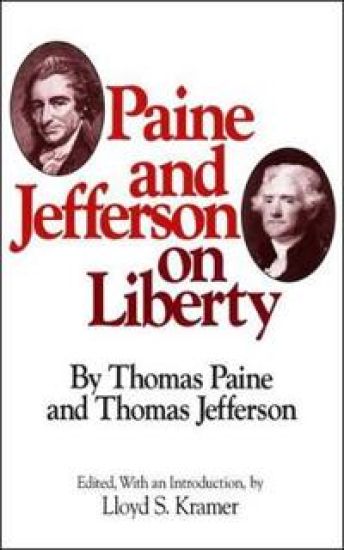
Paine and Jefferson on Liberty
Thomas Paine; Thomas Jefferson
Continuum International Publishing Group Ltd.
1997
nidottu
Drawing from numerous historical sources, the editor summarizes the views of Paine and Jefferson on liberty in America, and on the contrasting political realities in Europe as well.
This volume brings to a close Jefferson's increasingly stormy tenure as Secretary of State, documenting, among many things, his epochal duel with Treasury Secretary Alexander Hamilton over the conduct of American foreign policy. Against the background of the deadly yellow fever in Philadelphia, he copes with obstreperous French consuls and informs Edmond Charles Genet that the American government has requested his recall. After resuming his work on the definition of U. S. maritime limits, Jefferson prevails upon President Washington to inform Congress not only of Genet's recall but also of the British refusal to carry out the disputed provisions of the Treaty of Paris. In a final effort to implement his policy of commercial retaliation against Great Britain, Jefferson submits to Congress in December his long-awaited Report on Commerce, vividly detailing the various forms of discrimination imposed on American trade by the British. The volume presents the early and final versions of the in all their textual complexity. Disappointed by Washington's tepid response to his criticisms of Hamilton's fiscal policies, frustrated by the Treasury Secretary's rising influence over American foreign policy, and eager to enjoy uninterruptedly the pleasures of domestic life, Jefferson retires from office on 31 December 1793, determined never again to suffer the torments of public life. Volume 27 contains a supplement that covers some 270 documents for the period 1764-93 that have been found or reclassified since the publication of the last supplement in Volume 15.
Proudly printed in America, this beautiful gift edition contains the Declaration of Independence along with illustrations and biographies of the signers. It is a treasure for Americans of any age. Drafted by Thomas Jefferson between June 11 and June 28, 1776, the Declaration of Independence summarizes America's founding political philosophy. At once a cherished symbol of liberty and an expression of Jefferson's monumental talents as a writer, the document captures in unforgettable phrases the ideals of individual liberty and formed the backbone of American's Revolutionary movement. In setting forth these self-evident truths alongside a list of grievances against King George's Brittain, the Declaration of Independence justified the breaking of ties with Mother England and the formation of a new country.
This volume documents exhaustively for the first time Edmond Charles Genet's dramatic challenges to American neutrality and Jefferson's diplomatic and political responses. After welcoming Genet's arrival as the harbinger of closer relations between the American and French republics, Jefferson becomes increasingly distressed by the French minister's defiance of the Washington administration's ban on the outfitting of French privateers in American ports, the enlistment of American citizens in French service, and the exercise of admiralty jurisdiction by French consuls in American ports. Although the Supreme Court declines to advise the executive branch on neutrality questions that Jefferson prepares with the President and the Cabinet, he helps to formulate a set of neutrality rules to meet Genet's challenge. Unable to convince the impetuous French envoy to adopt a more moderate course, Jefferson works in the Cabinet to bring about Genet's recall so as to preserve friendly relations with France and minimize political damage to the Republican party, in which he takes a more active role to prevent the Federalists from capitalizing on Genet's defiance of the President. Grappling with the threat of war with Spain, Jefferson involves himself equivocally in a diplomatically explosive plan by Genet to liberate Louisiana from Spanish rule. In this volume Jefferson also plays a decisive role in resolving a dispute over the design of the Capitol and plans agricultural improvements at Monticello in preparation for his retirement to private life.
The dramatic escalation in the conflict between Thomas Jefferson and Alexander Hamilton to determine the future course of the new American nation is the main theme of this volume. Under pressure from other Republicans, Jefferson decides to continue as Secretary of State instead of retiring to Monticello at the end of President Washington's first term. At the same time he begins to play a more active role as a Republican party leader, involving himself secretly in a major effort by House Republicans to have Hamilton dismissed from office by censuring his management of public finances. France's declaration of war on Great Britain and the Netherlands leads Jefferson into a serious conflict with Hamilton over how to protect American neutrality in the face of the widening European war. After persuading Washington to preserve the treaties of alliance and commerce with France, Jefferson must then confront the first in a series of French violations of American neutrality that will sorely test the relationship between the two republics. Testifying to the catholicity of Jefferson's interests, this volume also deals with his efforts to promote a voyage of western exploration by the noted French botanist Andr Michaux, his observation of the first manned balloon flight in America by the celebrated French aeronaut Jean Pierre Blanchard, and his concern for expediting work on the new national capital.
Thomas Jefferson's Garden Book, 1766-1824
Thomas Jefferson
American Philosophical Society Press
1992
sidottu
This volume finds Thomas Jefferson grappling with problems arising from the radicalization of the French Revolution in Europe and the polarization of domestic politics in the United States. The overthrow of the French monarchy leads the Secretary of State to suspend debt payments to that nation and to formulate a diplomatic recognition policy that will long guide American diplomacy. After an abortive effort to initiate negotiations with the British minister in Philadelphia on the execution of the Treaty of Paris, Jefferson deflects a British proposal to establish a neutral Indian barrier state in the Northwest Territory. As he awaits the start of negotiations on major diplomatic issues with Spain, he deals with a Spanish effort to incite hostilities between the Southern Indians and the United States. The conflict between Jefferson and Alexander Hamilton reaches a new stage when the Secretary of the Treasury brings the cabinet struggle into full public view with four series of pseudonymous newspaper attacks on Jefferson. In letters to President Washington, Jefferson insists that Hamiltonian policies pose a fundamental threat to American republicanism, and in other documents he sets forth remedies for the defects he sees in Hamilton's system. During this period he also finds time to investigate the ravages of the Hessian fly on American wheat and to make plans to remodel Monticello.
The months covered by this volume illustrate the variety of topics characteristic of the Jefferson Papers. Subjects range from Jefferson's continued overseeing of the planning of the Federal District that became Washington, D. C., to his worries over his debts and his exchange of correspondence with the free black Benjamin Banneker. This period, an unusually significant time for Jefferson as Secretary of State, saw the opening of a new phase of diplomacy. When Jefferson returned to the capital after a stay at Monticello in the fall, the first British minister to the United States had arrived, and the new representative from France had been in the city since August. During this time Jefferson began keeping private notes on important political conversations, notes that he later collected and bound. These notes were published after his death as Jefferson's Anas, a work never closely examined until now and often extended beyond Jefferson's evident intention. Ascertaining that Jefferson collected and intended only those documents from his tenure as Secretary of State to be used to challenge the Federalist interpretation of Washington's administration, the present editors publish the Anas notes not as compiled late in Jefferson's life or as amplified by others, but in chronological order, in the context in which they were written. Also discovered during the preparation of this volume was a new, later date or that portion of Jefferson's famous Espistolary Record written in his own hand.
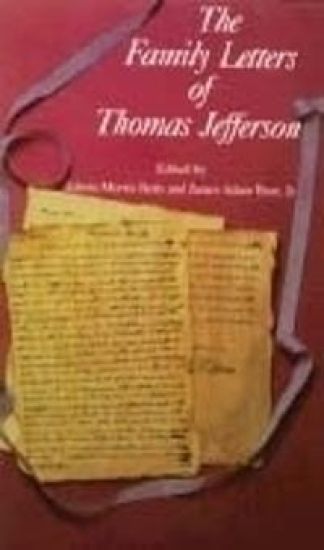
Thomas Jefferson was a prolific letter writer; it has been estimated that he wrote and received as many as fifty thousand letters. The letters here are not limited strictly to family matters but deal with local events in Paris, Philadelphia, New York, Washington, and Albemarle County, Virginia, or wherever the correspondents happened to be.
The description for this book, The Papers of Thomas Jefferson, Volume 21: Index, Vols. 1-20, will be forthcoming.