
Kirjailija
Thomas Jefferson
Kirjat ja teokset yhdessä paikassa: 481 kirjaa, julkaisuja vuosilta 1901–2027, suosituimpiin kuuluu A Defence of the Revolutionary History of North Carolina from the Aspersions of Mr. Jefferson. Vertaile teosten hintoja ja tarkista saatavuus suomalaisista kirjakaupoista.
481 kirjaa
Kirjojen julkaisuvuodet: 1901–2027.
The Writings of Thomas Jefferson
Thomas Jefferson; Henry Augustine Washington
Hansebooks
2019
nidottu
As a law student and young lawyer in the 1760s, Thomas Jefferson began writing abstracts of English common law reports. Even after abandoning his law practice, he continued to rely on his legal commonplace book to document the legal, historical, and philosophical reading that helped shape his new role as a statesman. Indeed, he made entries in the notebook in preparation for his mission to France, as president of the United States, and near the end of his life. This authoritative volume is the first to contain the complete text of Jefferson’s notebook. With more than 900 entries on such thinkers as Beccaria, Montesquieu, and Lord Kames, Jefferson’s Legal Commonplace Book is a fascinating chronicle of the evolution of Jefferson’s searching mind. Jefferson’s abstracts of common law reports, most published here for the first time, indicate his deepening commitment to whig principles and his incisive understanding of the political underpinnings of the law. As his intellectual interests and political aspirations evolved, so too did the content and composition of his notetaking. Unlike the only previous edition of Jefferson’s notebook, published in 1926, this edition features a verified text of Jefferson’s entries and full annotation, including essential information on the authors and books he documents. In addition, the volume includes a substantial introduction that places Jefferson’s text in legal, historical, and biographical context.

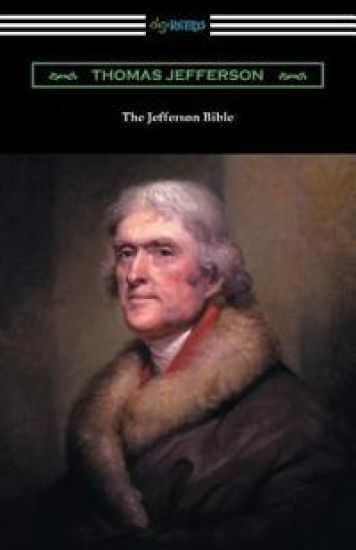
"The Jefferson Bible" or "The Life and Morals of Jesus of Nazareth" as it was originally entitled is an extraction of biblical passages constructed by Thomas Jefferson sometime around 1819. In an 1803 letter Jefferson remarks that he first conceived of the idea of writing his interpretation of the "Christian System" sometime during 1788-89. He first accomplishes it in a more limited fashion in 1804 with "The Philosophy of Jesus of Nazareth" which he describes in an 1813 letter to John Adams as follows: "In extracting the pure principles which Jesus] taught, we should have to strip off the artificial vestments in which they have been muffled by priests, who have travestied them into various forms, as instruments of riches and power to themselves... There will be found remaining the most sublime and benevolent code of morals which has ever been offered to man." The work is notable in the absence of any reference to the supernatural aspects of Jesus' life including the divine birth and the resurrection. According to Jefferson "Jesus did not mean to impose himself on mankind as the son of God" and he believed that "the day would] come when the mystical generation of Jesus, by the supreme being as his father in the womb of a virgin, would] be classed with the fable of the generation of Minerva in the brain of Jupiter." Presented here is the 1904 Government Printing Office edition presented to members of Congress with the original introduction by Cyrus Adler printed on premium acid-free paper.

Letters and Addresses
Thomas Jefferson; William D. Parker; Jonas Viles
Creative Media Partners, LLC
2019
sidottu

The Works of Thomas Jefferson; Volume VIII
Thomas Jefferson
Creative Media Partners, LLC
2019
sidottu
The Papers of Thomas Jefferson: Retirement Series, Volume 15
Thomas Jefferson
PRINCETON UNIVERSITY PRESS
2019
sidottu
The 618 documents in this volume span 1 September 1819 to 31 May 1820. Jefferson suffers from a “colic,” recovery from which requires extensive rest and medication. He spends much time dealing with the immediate effects of the $20,000 addition to his debts resulting from his endorsement of notes for the bankrupt Wilson Cary Nicholas. Jefferson begins to correspond with his carpenter, the enslaved John Hemmings, as Hemmings undertakes maintenance and construction work at Poplar Forest. Jefferson and his allies in the state legislature obtain authorization for a $60,000 loan for the fledgling University of Virginia, the need for which becomes painfully clear when university workmen complain that they have not been paid during seven months of construction work. In the spring of 1820, following congressional discussion leading to the Missouri Compromise, Jefferson writes that the debate, “like a fire bell in the night, awakened and filled me with terror,” and that with regard to slavery, Americans have “the wolf by the ear, and we can neither hold him, nor safely let him go.”

The Garden, the Wilderness, and the Wall: A Brief and Clear Abridgment of Roger Williams' Bloody Tenet of Persecution for Cause of Conscience
Roger Williams; Thomas Jefferson
Independently Published
2018
nidottu
Roger Williams' "The Bloody Tenet for the Cause of Persecution of Conscience" is perhaps the single most important document in American history pertaining to the Establishment Clause of the First Amendment: "Congress shall make no law respecting an establishment of religion, or prohibiting the free exercise thereof." Dr. Brunson has excerpted the seminal ideas from Williams' massive book and updated Williams' 17th-century language to be accessible to all readers interested in early American history, especially those interested in the relationship between church and state. Any student of history or government, or any teacher, from the university to high-school level, will find this summary and new translation valuable to an understanding of the dynamic tensions between European and British traditionalists who brought their theocratic ideas to the New World, versus colonial separatists and deists who longed for a new "nation under God" where citizens of different faiths could coexist peaceably without the dictates or interference of the secular state. The book also includes three other important documents: a key passage from Roger Williams' letter to John Cotton in which Williams coins the phrase "wall of separation," and two of Jefferson's most important writings on the relationship between church and state, his "Letter to the Danbury Baptists" and "The Virginia Statute of Religious Freedom."
Drafted by Thomas Jefferson between June 11 and June 28, 1776, the Declaration of Independence summarizes America's founding political philosophy. At once a cherished symbol of liberty and an expression of Jefferson's monumental talents as a writer, the document captures in unforgettable phrases the ideals of individual liberty that formed the backbone of American's Revolutionary movement. In setting forth these self-evident truths alongside a list of grievances against King George's Britain, the Declaration of Independence justified the breaking of ties with Mother England and the formation of a new country. This gift edition, printed in two colors on acid-free paper, contains illustrations and biographies of the signers alongside the document itself.
The Virginia Report of 1799-1800, Touching the Alien and Sedition Laws; Together with the Virginia Resolutions of December 21, 1798, the Debate and Proceedings Thereon in the House of Delegates of Virginia, and Several Other Documents Illustrative of the Repor
James Madison; Thomas Jefferson
Lawbook Exchange, Ltd.
2018
sidottu
A collection of important writings that had a profound effect on the debates that led to the Civil War. The Virginia Resolutions were written by James Madison 1751-1836] and adopted by the Virginia legislature in 1798, the Kentucky Resolutions were written by Thomas Jefferson 1743-1826] and adopted by the Kentucky legislature in 1798. Both opposed the Alien and Sedition Acts and initiated a debate about the respective powers of the federal government and states. This edition collects these three works, and adds the texts of the Alien and Sedition acts, comments from other states and relevant extracts from Madison's letters. vii]-xvi, 17]-264 pp.
The Writings of Thomas Jefferson
Thomas Jefferson
Createspace Independent Publishing Platform
2018
nidottu
The Writings of Thomas Jefferson. Thomas Jefferson (April 13 1743 - July 4, 1826) was an American Founding Father who was the principal author of the Declaration of Independence and later served as the third President of the United States from 1801 to 1809. Previously, he had been elected the second Vice President of the United States, serving under John Adams from 1797 to 1801. He was a proponent of democracy, republicanism, and individual rights motivating American colonists to break from Great Britain and form a new nation; he produced formative documents and decisions at both the state and national level. Containing His Autobiography, notes on Virginia, Parliamentary Manual, Official Papers, messages and addresses, and other writings, official and private, now collected and published in their entirety for the first time including all of the original manuscripts, deposited in the department of state and published in 1853 by order of the joint committee of congress
Reproduction of the original: State of the Union Addresses of Thomas Jefferson by Thomas Jefferson

Reproduction of the original: State of the Union Addresses of Thomas Jefferson by Thomas Jefferson
Memoir, Correspondence, and Miscellanies, from the Papers of Thomas Jefferson
Thomas Jefferson
Outlook Verlag
2018
pokkari
Reproduction of the original: Memoir, Correspondence, and Miscellanies, from the Papers of Thomas Jefferson by Thomas Jefferson
Memoir, Correspondence, and Miscellanies, from the Papers of Thomas Jefferson
Thomas Jefferson
Outlook Verlag
2018
sidottu
Memoir, Correspondence, and Miscellanies, from the Papers of Thomas Jefferson
Thomas Jefferson
Outlook Verlag
2018
pokkari
Reproduction of the original: Memoir, Correspondence, and Miscellanies, from the Papers of Thomas Jefferson by Thomas Jefferson
Memoir, Correspondence, and Miscellanies, from the Papers of Thomas Jefferson
Thomas Jefferson
Outlook Verlag
2018
pokkari
Reproduction of the original: Memoir, Correspondence, and Miscellanies, from the Papers of Thomas Jefferson by Thomas Jefferson
Memoir, Correspondence, and Miscellanies, from the Papers of Thomas Jefferson
Thomas Jefferson
Outlook Verlag
2018
sidottu
Reproduction of the original: Memoir, Correspondence, and Miscellanies, from the Papers of Thomas Jefferson by Thomas Jefferson
Memoir, Correspondence, and Miscellanies, from the Papers of Thomas Jefferson
Thomas Jefferson
Outlook Verlag
2018
sidottu
Reproduction of the original: Memoir, Correspondence, and Miscellanies, from the Papers of Thomas Jefferson by Thomas Jefferson