
Kirjailija
Thomas Mann
Kirjat ja teokset yhdessä paikassa: 525 kirjaa, julkaisuja vuosilta 1975–2027, suosituimpiin kuuluu Mario and the Magician. Vertaile teosten hintoja ja tarkista saatavuus suomalaisista kirjakaupoista.
525 kirjaa
Kirjojen julkaisuvuodet: 1975–2027.
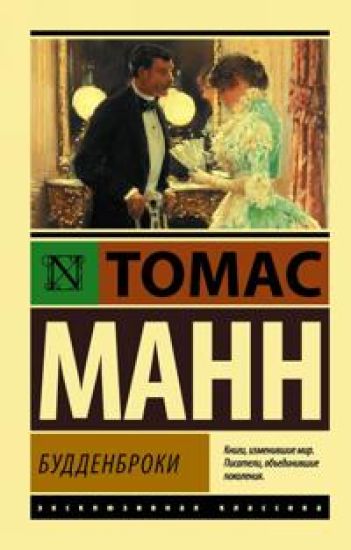
Zhemchuzhina tvorcheskogo nasledija Tomasa Manna. Edva li ne luchshij roman v zhanre "semejnoj sagi" nemetskojazychnoj prozy. Istorija vzleta i padenija bogatoj i moguschestvennoj semi Budenbrok, na pervyj vzgljad slovno voploschajuschej v sebe ideal germanskikh dobrodetelej. Istorija trekh pokolenij predstavitelej etogo klana - ot vlastnogo i bezzhalostnogo patriarkha do ego vnukov, uzhe podverzhennykh vsem porokam i slabostjam intellektualov. Istorija ljubvi i predatelstv, vrazhdy i intrig, borby i zavisti, isstuplennoj strasti - i zhguchej nenavisti...

While Sherlock Holmes and Dr. Watson sit comfortably by their fireplace on the evening of December 24th of 1894, Dr. Watson's memory of previous Christmas Eves draws forth an unexpected response from his companion. Holmes, normally very reticent to speak about his early life, meditatively recalls a particular incident that happened on the same date in his own past: that when he was a very young man, before ever meeting Watson, he had occasion to meet and to be of great service to none other than a very old Ebeneezer Scrooge.
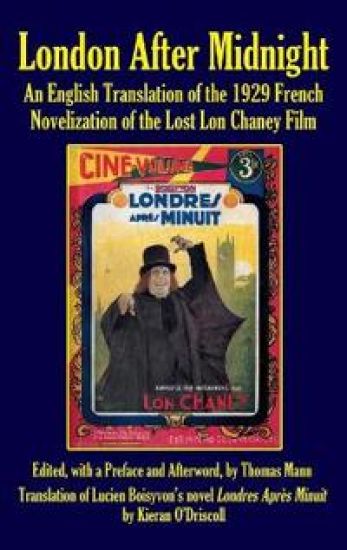
The last known copy of London After Midnight, the lost 1927 Lon Chaney film, was destroyed in an MGM studio fire in 1967. Since then researchers have been combing film archives throughout the world in hopes of finding a surviving copy, but without success. Different 'reconstructions' of the film--one in book format, the other as a motion picture--have continued to generate interest in recent years, both relying primarily on the many surviving still photos, arranged in sequence according to the film's surviving cutting continuity (with the motion picture camera's panning and zooming across them). Thomas Mann, who discovered the long-lost 1928 Boy's Cinema literary version of the film (published by BearManor Media), now offers a new and comparably important discovery: an English translation of an equally "lost" French novelization of the story dating from 1929, written by someone who actually saw the film. In a detailed comparison of this literary take on the story to the movie itself (as represented by its cutting continuity), Mann sheds considerable new light on the range of incoherent plot problems known to have bedeviled the film, and on how they were creatively dealt with by a contemporary story teller. Thomas Mann is a retired librarian and independent scholar living in Washington, DC. He is the author of The Oxford Guide to Library Research (Oxford University Press, 2015). Lucien Boisyvon (1886-1967), author of Londres Apr s Minuit, was a prolific writer, newspaper critic, and popular novelist. Kieran O'Driscoll holds a doctorate in French-English Literary Translation from Dublin City University. Among other works he has translated two plays by Jules Verne in BearManor Media's Palik Series of the North American Jules Verne Society.
The last known copy of London After Midnight, the lost 1927 Lon Chaney film, was destroyed in an MGM studio fire in 1967. Since then researchers have been combing film archives throughout the world in hopes of finding a surviving copy, but without success. Different 'reconstructions' of the film--one in book format, the other as a motion picture--have continued to generate interest in recent years, both relying primarily on the many surviving still photos, arranged in sequence according to the film's surviving cutting continuity (with the motion picture camera's panning and zooming across them). Thomas Mann, who discovered the long-lost 1928 Boy's Cinema literary version of the film (published by BearManor Media), now offers a new and comparably important discovery: an English translation of an equally "lost" French novelization of the story dating from 1929, written by someone who actually saw the film. In a detailed comparison of this literary take on the story to the movie itself (as represented by its cutting continuity), Mann sheds considerable new light on the range of incoherent plot problems known to have bedeviled the film, and on how they were creatively dealt with by a contemporary story teller. Thomas Mann is a retired librarian and independent scholar living in Washington, DC. He is the author of The Oxford Guide to Library Research (Oxford University Press, 2015). Lucien Boisyvon (1886-1967), author of Londres Apr s Minuit, was a prolific writer, newspaper critic, and popular novelist. Kieran O'Driscoll holds a doctorate in French-English Literary Translation from Dublin City University. Among other works he has translated two plays by Jules Verne in BearManor Media's Palik Series of the North American Jules Verne Society.
First published in 1912, "Death in Venice" is Thomas Mann's novella concerning Gustav von Aschenbach, a famous middle-aged author who in order to alleviate a terrible case of writer's black decides to go on holiday. Gustav first travels to the coast of Austria-Hungary but soon is overcome with the feeling that he is meant to travel to Venice. On Lido Island he takes up residence in a suite at the Grand Hotel des Bains. During dinner one evening at the hotel he sees a family at a table nearby and becomes fascinated by the beauty of their adolescent fourteen year old boy named Tadzio. His interest in Tadzio at first enlivens in him an uplifting and artistic spirit, however as the days pass his interest begins to grow into an unhealthy obsession. As the weather in Venice turns hot and humid, Gustav, feeling his health to be in decline, decides to travel to a cooler locale, however a mix up with his luggage, draws him back to the hotel and Tadzio, which he inwardly rejoices. Though Gustav never acts on his feelings regarding the boy he nevertheless feels himself drawn down a path of ruinous inward desire. A classic depiction of emotional suffering, "Death in Venice" brilliantly depicts the tragic intensity of inner psychological torment. This edition is printed on premium acid-free paper and follows the translation of Martin C. Doege.
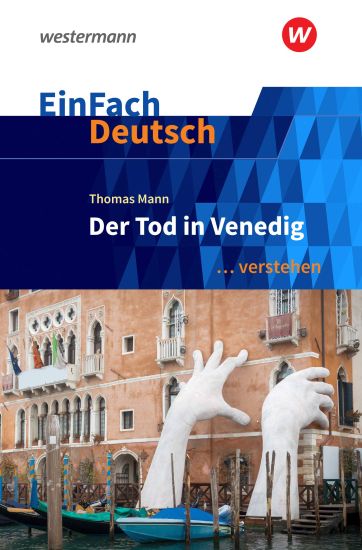
Der Tod in Venedig. EinFach Deutsch ... verstehen
Thomas Mann; Michael Völkl
Schoeningh Verlag
2018
nidottu

Buddenbrooks Verfall einer Familie
Thomas Mann
Createspace Independent Publishing Platform
2018
nidottu
Rare edition with unique illustrations and elegant classic cream paper. It is the story of four generations of a wealthy bourgeois family in northern Germany facing the advent of modernity; in an uncertain new world, the family's bonds and traditions begin to disintegrate. As Mann charts the Buddenbrooks' decline from prosperity to bankruptcy, from moral and psychic soundness to sickly piety, artistic decadence, and madness, he ushers the reader into a world of stunning vitality, pieced together from births and funerals, weddings and divorces, recipes, gossip, and earthy humor. Includes unique illustrations.

Der Tod in Venedig es, das ihm als der Inbegriffleitend-t tiger Tugend erschien. Auch w nschte er sehnlichst, alt zu werden, denn er hatte von jeher daf r gehalten, da wahrhaft gro , umfassend, ja wahrhaft ehrenwert nur das K nstlertum zu nennen sei, dem es beschieden war, auf allen Stufen des Menschlichen charakteristisch fruchtbar zu sein. Da er also die Aufgaben, mit denen sein Talent ihn belud, auf zarten Schultern tragen und weit gehen wollte, so bedurfte er h chlich der Zucht, --und Zucht war ja zum Gl cke sein eingeborenes Erbteil von v terlicher Seite. Mit vierzig, mit f nfzig Jahren wie schon in einem Alter, wo andere verschwenden, schw rmen, die Ausf hrung gro er Pl ne getrost verschieben, begann er seinen Tag beizeiten mit St rzen kalten Wassers ber Brust und R cken und brachte dann, ein Paar hoher Wachskerzen in silbernen Leuchtern zu H upten des Manuskripts, die Kr fte, die er im Schlaf gesammelt, in zwei oder drei inbr nstig gewissenhaften Morgenstunden der Kunst zum Opfer dar. Es war verzeihlich, ja, es bedeu We are delighted to publish this classic book as part of our extensive Classic Library collection. Many of the books in our collection have been out of print for decades, and therefore have not been accessible to the general public. The aim of our publishing program is to facilitate rapid access to this vast reservoir of literature, and our view is that this is a significant literary work, which deserves to be brought back into print after many decades. The contents of the vast majority of titles in the Classic Library have been scanned from the original works. To ensure a high quality product, each title has been meticulously hand curated by our staff. Our philosophy has been guided by a desire to provide the reader with a book that is as close as possible to ownership of the original work. We hope that you will enjoy this wonderful classic work, and that for you it becomes an enriching experience.
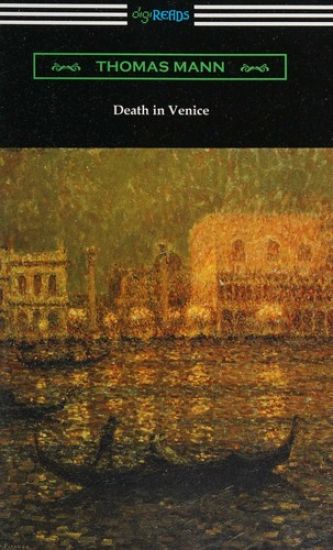
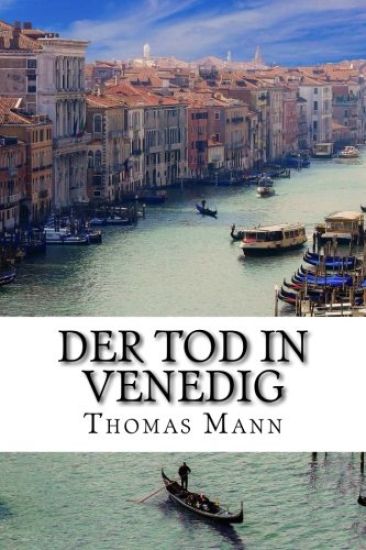
First published in 1912, "Death in Venice" is Thomas Mann's novella concerning Gustav von Aschenbach, a famous middle-aged author who in order to alleviate a terrible case of writer's black decides to go on holiday. Gustav first travels to the coast of Austria-Hungary but soon is overcome with the feeling that he is meant to travel to Venice. On Lido Island he takes up residence in a suite at the Grand Hotel des Bains. During dinner one evening at the hotel he sees a family at a table nearby and becomes fascinated by the beauty of their adolescent fourteen year old boy named Tadzio. His interest in Tadzio at first enlivens in him an uplifting and artistic spirit, however as the days pass his interest begins to grow into an unhealthy obsession. As the weather in Venice turns hot and humid, Gustav, feeling his health to be in decline, decides to travel to a cooler locale, however a mix up with his luggage, draws him back to the hotel and Tadzio, which he inwardly rejoices. Though Gustav never acts on his feelings regarding the boy he nevertheless feels himself drawn down a path of ruinous inward desire. A classic depiction of emotional suffering, "Death in Venice" brilliantly depicts the tragic intensity of inner psychological torment. This edition is printed on premium acid-free paper and follows the translation of Martin C. Doege.




Der Tod in Venedig
Thomas Mann
Createspace Independent Publishing Platform
2018
nidottu
Halvin toimitettuna 12,60 €
Der Tod in Venedig ist eine Novelle von Thomas Mann, die 1911 entstanden ist. Sie erschien zun chst als Vorzugsausgabe in einer Auflage von 100 nummerierten und von Thomas Mann signierten Exemplaren, danach in der Neuen Rundschau und ab 1913 als Einzeldruck im S. Fischer Verlag. Original-Verlagsbroschur der Erstauflage im S. Fischer Verlag, Berlin 1913 Thomas Mann nannte seine Novelle die Trag die einer Entw rdigung: Gustav von Aschenbach, ein ber hmter Schriftsteller von etwas ber 50 Jahren und schon l nger verwitwet, hat sein Leben ganz auf Leistung gestellt. Eine sommerliche Erholungsreise f hrt ihn nach Venedig. Dort beobachtet er am Strand t glich einen sch nen Knaben, der mit seiner eleganten Mutter und seinen Schwestern samt Gouvernante im selben Hotel wohnt. In ihn verliebt sich der Alternde. Er bewahrt zwar stets eine scheue Distanz zu dem Knaben, der sp te Gef hlsrausch jedoch, dem sich der sonst so selbstgestrenge von Aschenbach nun willenlos hingibt, macht aus ihm letztlich einen w rdelosen Greis.

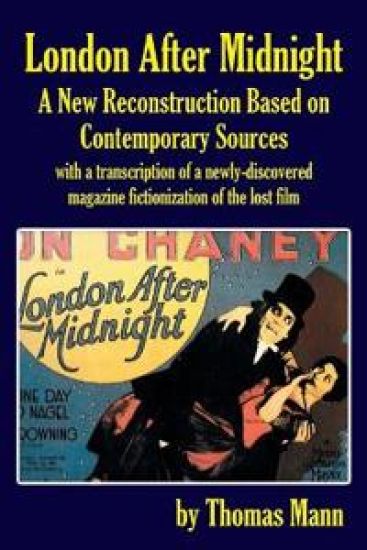
Tod Browning's silent movie horror film, London After Midnight (1927) starring Lon Chaney, Marceline Day, Conrad Nagel, Henry B. Walthall, and Polly Moran, has intrigued silent movie fans for decades. Now considered a lost film, surviving production stills, a Photoplay Edition novel, scripts, and other memorabilia give some feel for the actual film, but their varying plot gaps, anomalies, and inconsistencies leave viewers wondering how the actual film unfolded . . . until now. Author Thomas Mann offers a fascinating reconstruction based on his transcription of a rediscovered 11,000-word fictionization first published in Boy's Cinema (1928) that may resolve the conflicts between previous versions. His detailed comparison of all surviving sources sheds new light on the discovery of a second murder victim, a plot element not in the final film; Lon Chaney's two different makeups in playing detective Edward C. Burke; Henry Walthall as Sir James Hamlin holding two guns rather than one in the scene in which his character, under hypnosis, re-enacts a crime. The last known film print is believed to have been destroyed in a 1967 MGM vault fire, but you can now take a front row seat into the haunted mansion filled with vampires, cobwebs, bats, and "The Man of a Thousand Faces." About the author: Thomas Mann is an independent scholar living in Washington, DC. He spent more than three decades as a general reference librarian at the Library of Congress. He is the author of The Oxford Guide to Library Research (Oxford University Press, 2015) and of Horror & Mystery Photoplay Editions and Magazine Fictionizations (McFarland, 2004; vol. II, BearManor Media, 2016).