Kirjailija
Thomas Merton
Kirjat ja teokset yhdessä paikassa: 124 kirjaa, julkaisuja vuosilta 1956–2026, suosituimpiin kuuluu Bread and Wine. Vertaile teosten hintoja ja tarkista saatavuus suomalaisista kirjakaupoista.
124 kirjaa
Kirjojen julkaisuvuodet: 1956–2026.
In this diary-like memoir, composed of his most poignant and insightful journal entries, The Intimate Merton lays bare the steep ways of Thomas Merton's spiritual path. Culled from the seven volumes of his personal journals, this twenty nine year chronicle deepens and extends the story Thomas Merton recounted and made famous in The Seven Storey Mountain. This book is the spiritual autobiography of our century's most celebrated monk -- the wisdom gained from the personal experience of an enduring spiritual teacher. Here is Merton's account of his life's major challenges, his confrontations with monastic and church hierarchies, his interaction with religious traditions east and west, and his antiwar and civil-rights activities. In The Intimate Merton we engage a writer's art of "confession and witness" as he searches for a contemporary, authentic, and global spirituality. Recounting Merton's earliest days in the monastery to his journey east to meet the Dalai Lama, The Intimate Merton captures the essence of what makes Thomas Merton's life journey so perennially relevant.

A book which traces the development of the thoughts and writings of the 20th-century Cistercian monk, Thomas Merton, on the subject of contemplation.
The Eastern religious traditions, especially the varieties of Buddhism, were the last great passion in Thomas Merton's life. His participation in a monastic conference in Asia led to his premature, accidental death. He discoursed on equal terms with the Dalai Lama, and extracts from their interviews appear in this book. The introduction brings together extracts from Merton's "Asian Journal" (Hinduism and varieties of Buddhism), and other short works on Eastern religions written in the last few years of his life. They all combine to demonstrate the breadth of vision that is such an integral part of Merton's lasting appeal, his quest for a deeper unity underlying apparent fragmentation. They might be regarded as steps toward the great book on monasticism that Merton might have written but never did. As they stand, they provide Merton's essential definitions of the religions that so interested him in the last years of his life, and of which he became a skilful Western interpreter.
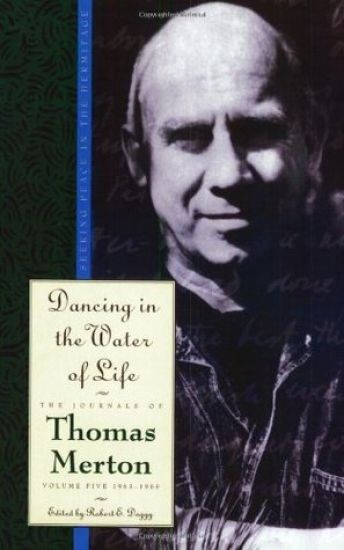
The journal kept by Merton during 1964 and 1965, containing his daily meditations during the crucial and difficult period in which the permission he had awaited so long -- to live alone in his hermitage -- was finally given. These pages reveal his reflections as a hermit on the joys and dangers of a life of solitude in the woods.
Mystics and Zen Masters
Thomas Merton
Farrar, Straus Giroux Inc
1999
nidottu
Halvin toimitettuna 19,90 €
Thomas Merton was recognized as one of those rare Western minds that are entirely at home with the Zen experience. In this collection, he discusses diverse religious concepts-early monasticism, Russian Orthodox spirituality, the Shakers, and Zen Buddhism-with characteristic Western directness. Merton not only studied these religions from the outside but grasped them by empathy and living participation from within. "All these studies," wrote Merton, "are united by one central concern: to understand various ways in which men of different traditions have conceived the meaning and method of the 'way' which leads to the highest levels of religious or of metaphysical awareness."
Thoughts in Solitude
Thomas Merton
Farrar, Straus and Giroux
1999
nidottu
Halvin toimitettuna 20,70 €
Thoughtful and eloquent, as timely (or timeless) now as when it was originally published in 1956, Thoughts in Solitude addresses the pleasure of a solitary life, as well as the necessity for quiet reflection in an age when so little is private. Thomas Merton writes: "When society is made up of men who know no interior solitude it can no longer be held together by love: and consequently it is held together by a violent and abusive authority. But when men are violently deprived of the solitude and freedom which are their due, the society in which they live becomes putrid, it festers with servility, resentment and hate." Thoughts in Solitude stands alongside The Seven Storey Mountain as one of Merton's most uring and popular works. Thomas Merton, a Trappist monk, is perhaps the foremost spiritual thinker of the twentiethcentury. His diaries, social commentary, and spiritual writings continue to be widely read after his untimely death in 1968.
Thomas Merton wrote The Silent Life a decade after he took orders. In his Prologue, Merton describes the book as "a meditation on the monastic life by one who, without any merit of his own, is privileged to know that life on the inside . . . who seeks only to speak as the mouthpiece of a tradition centuries old." It is a remarkable work-one that combines a lucid and informative description of the nature and forms of monasticism, communal and solitary, with a passionate defense of the contemplative's quest for God. The intense beauty of Merton's meditation, radiating from beneath its surface calm, makes The Silent Life a classic of its kind.
"The New Man shows Thomas Merton at the height of his powers and has as its theme the question of spiritual identity. What must we do to recover possession of our true selves? By way of an answer, Merton discusses how we have become strangers to ourselves by our depence on outward identity and success, while our real need is for a concern with the image of God in ourselves. At a time of retrieval of our religious traditions, Merton's voice is both intelligent and spiritually compelling. Thomas Merton, a Trappist monk, is perhaps the foremost spiritual thinker of the twentiethcentury. His diaries, social commentary, and spiritual writings continue to be widely read after his untimely death in 1968.
The seventh and final volume of Thomas Merton's journals finds him exploring new territory, both spiritual and geographic, in the last great journey prior to his untimely death. Traveling in the United States and the Far East, Merton enjoys a new freedom that brings with it a rich mix of solitude, spirited friendship, and interactive with monks of other traditions.
In the fifth volume of Thomas Merton's acclaimed journals, the renowned monk and writer immerses himself in the revolutionary ideas of the sixties and finally begins to live full-time at his own hermitage. "Making his struggles and his happiness practically tangible on these pages, Merton was never a better writer than in his journals. His gifts are as abundantly clear in this volume as in this predecessors."--Publishers Weekly"Merton at his best: sophisticated, honest, humorous, and mystical."--Kirkus Reviews"When all the journals are published, it is likely that they will take their place with the famous journals of Henry David Thoreau, G. M. Hopkins, Edmund Wilson, and perhaps be seen as an American version of St. Augustine's 'Confessions.'"--Catholic News Service
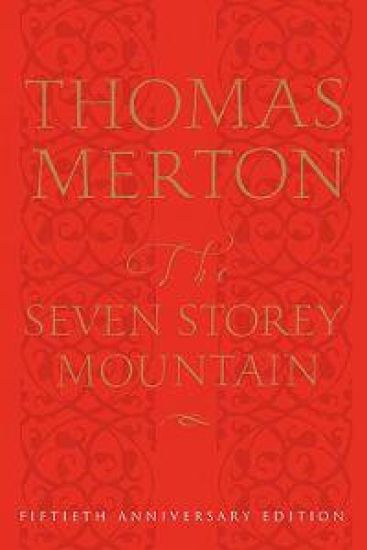
The Seven Storey Mountain: Fiftieth-Anniversary Edition
Thomas Merton; Merton
HarperOne
1998
sidottu
Halvin toimitettuna 32,00 €
One of the most famous books ever written about a man's search for faith and peace. The Seven Storey Mountain tells of the growing restlessness of a brilliant and passionate young man, who at the age of twenty-six, takes vows in one of the most demanding Catholic orders--the Trappist monks. At the Abbey of Gethsemani, "the four walls of my new freedom," Thomas Merton struggles to withdraw from the world, but only after he has fully immersed himself in it. At the abbey, he wrote this extraordinary testament, a unique spiritual autobiography that has been recognized as one of the most influential religious works of our time. Translated into more than twenty languages, it has touched millions of lives. This beautifully produced commemorative edition includes an account of the book's original publication by Merton's editor, Robert Giroux, an Introduction by Merton's biographer, Father William Shannon, and Merton's own Introduction to the Japanese edition.
The spiritual and psychological insights of these essays were nurtured in a monastic milieu, but their issues are universally human. Thomas Merton lays a foundation for personal growth and transformation through fidelity to "our own truth and inner being." His main focus is our desire and need to attain "a fully human and personal identity." This classic is a newly restored and corrected edition and the inaugural volume of Gethsemani Studies in Psychological and Religious Anthropology, a series of books that explores, through the twin perspectives of psychology and religion, the dynamics and depths of being fully human. "When I speak of the contemplative life I do not mean the institutional, cloistered life, . . . I am talking about a special dimension of inner discipline and experience, a certain integrity and fullness of personal development . . . . Discovering the contemplative life is a new self-discovery. One might say it is the flowering of a deeper identity on an entirely different plane . . ." --Thomas Merton, from the book
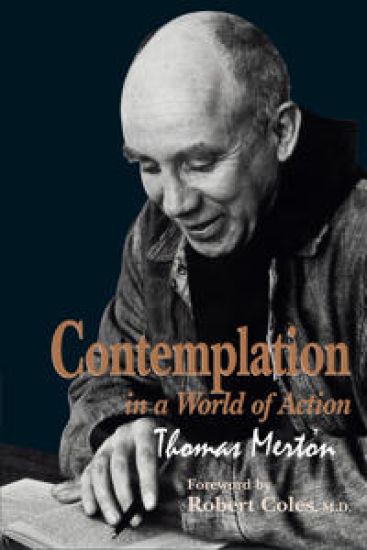
Contemplation in a World of Action
Thomas Merton
University of Notre Dame Press
1998
nidottu
Halvin toimitettuna 38,50 €
The spiritual and psychological insights of these essays were nurtured in a monastic milieu, but their issues are universally human. Thomas Merton lays a foundation for personal growth and transformation through fidelity to "our own truth and inner being." His main focus is our desire and need to attain "a fully human and personal identity." This classic is a newly restored and corrected edition and the inaugural volume of Gethsemani Studies in Psychological and Religious Anthropology, a series of books that explores, through the twin perspectives of psychology and religion, the dynamics and depths of being fully human. "When I speak of the contemplative life I do not mean the institutional, cloistered life, . . . I am talking about a special dimension of inner discipline and experience, a certain integrity and fullness of personal development . . . . Discovering the contemplative life is a new self-discovery. One might say it is the flowering of a deeper identity on an entirely different plane . . ." --Thomas Merton, from the book
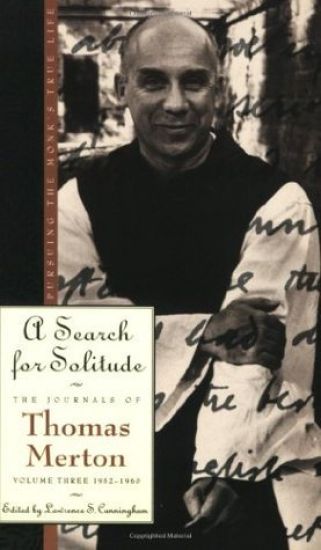
The third volume of Thomas Merton's journals chronicles Merton's attempts to reconcile his desire for solitude and contemplation with the demands of his new-found celebrity status within the strictures of conventional monastic life.
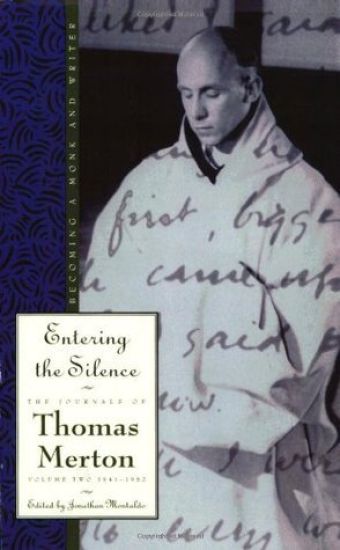
The second volume of Thomas Merton's "gusty, passionate journals" (Thomas Moore) chronicles Merton's advancements to priesthood and emergence as a bestselling author with the surprise success of his autobiography, The Seven Storey Mountain. Spanning an eleven-year period, Entering the Silence reflects Merton's struggle to balance his vocation to solitude with the budding literary career that would soon established him as one of the most important spiritual writers of our century.
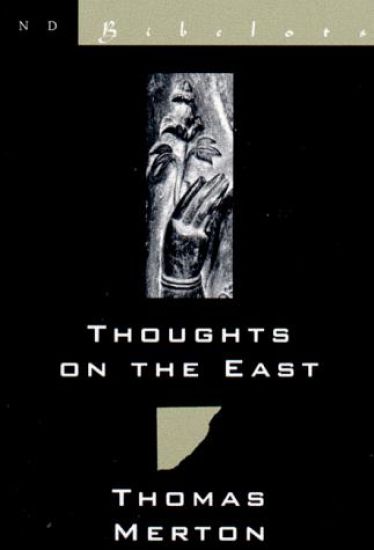
Unified by Merton's belief that East and West share "a unity of outlook and purpose, a common spiritual climate," this eclectic selection also offers a fascinating introduction by the late George Woodcock, author of the acclaimed critical study, Thomas Merton: Monk and Poet.
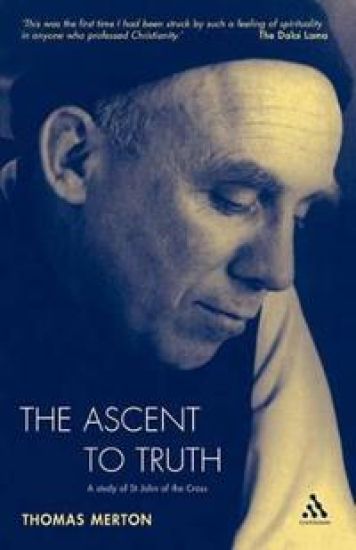
Showing that the summit of ultimate truth is reached in contemplation, this book offers an exposition of the doctrines of St John of the Cross. The expositions and meditations are nourishment for the spirit journeying towards truth.
To learn more about Rowman & Littlefield titles please visit us at www.rowmanlittlefield.com.