Kirjojen hintavertailu – 12 859 818 kirjaa ja 27 kauppaa
Kirjailija
Thomas Merton
Kirjat ja teokset yhdessä paikassa: 124 kirjaa, julkaisuja vuosilta 1956–2026, suosituimpiin kuuluu Bread and Wine. Vertaile teosten hintoja ja tarkista saatavuus suomalaisista kirjakaupoista.
This edition brings us Thomas Merton is all his aspects: spiritual writer, poet, peacemaker, man among men, servant of God -- a one-volume synopsis of his quest for truth, drawn not only from his major works but from his lesser-known writings as well.
In the Sixties, Merton invited a group of contemplative women -- cut off by inflexible rules from any analysis of important movements in the Church and the world -- to make a retreat with him at his abbey in Kentucky. What he and they said on such themes as "Zen, a Way of Living Life Directly," "Prophetic Choices," and "The Feminine Mystique," is the text of this book.
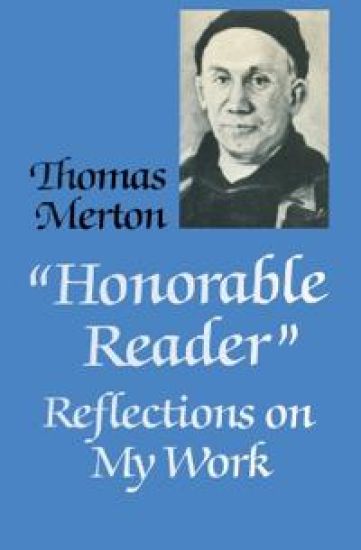
Thomas Merton (1915--1968) was a Trappist monk of the Abbey of Gethsemani, Kentucky, as well as a bestselling writer, poet, social activist, and student of comparative religion. This posthumously published book is a collection of prefaces that Merton wrote for international editions of his books, which often give insight as he looks back with the advantage of hindsight. Merton suggests that the major message in his books is that "the contemplative life applies wherever there is life."
Thomas Merton spent two weeks in Alaska in 1968 just prior to his fateful trip to the East. He had no thought of publication either of his journal or his conferences--the talks he gave to religious communities there. Although it was his nature to give his attention to what was immediately before him, he was counting the days until he would step onto the plane that would take off across the Pacific. This book contains the journal and letters Merton wrote during his Alaskan visit that were published in a limited edition in 1988 as The Alaskan Journal by Turkey Press. To this have been added the transcriptions of the informal but pithy talks he gave in Eagle River and Anchorage. These conferences are interesting for the direct light they throw on Merton's thinking about prayer, religious life and community, the priestly tradition, and they are enhanced by their spontaneous quality which gives a palpable sense of being in Merton's presence. Robert E. Daggy, curator of The Thomas Merton Studies Center, transcribed Merton's journal and letters and has contributed a fine introduction. Also included is a preface by David D. Cooper of Michigan State University and a group of some of the photographs Merton took on his Alaskan adventure.
As wide a following as the late Thomas Merton had while he lived, ever since his tragic accidental death in Bangkok in 1968, there has been a steady upsurge of interest in both his life and writings. A priest and Trappist monk by vocation, his theological works have been instrumental in reforming Western monasticism and in carrying on the religious dialogue between East and West; an enormously productive poet, his poems display an astonishing technical versatility and deeply felt humanity. Merton's stature as a critic, however, was not fully appreciated until the publication in 1981 of the first full collection of his distinctly literary essays, now available as a paperbook. The fifty-six pieces included in The Literary Essays of Thomas Merton present every known article by the author, though written for the most part during the last years of his life. The mature Merton ranges across the modern literary landscape with impressive ease. Joyce, Pasternak, and Zukofsky are only a few of the authors discussed in "Literary Essays (1959-68)." These are followed, in turn, by "Seven Essays on Albert Camus"; nine essays "Introducing Poets in Translation"; and "Related Literary Questions," linking Merton's literary thought with his aesthetic, religious, and social concerns. His earlier work, such as his 1939 Master's thesis on Blake as well as newspaper and periodical reviews written prior to 1941, are included in appendices; to these are added transcripts of two talks he gave on Faulkner in 1967. The Literary Essays were collected and edited by Brother Patrick Hart, Father Merton's secretary at the Abbey of Gethsemani in Kentucky.
Merton presents one of the most significant encyclical letters of Saint Bernard of Clairvaux, together with an introduction to the life and teachings of the great mystic. "A study that will have to be on the shelves of all libraries and in the personal collections of all who are interested in spirituality" (Catholic World). Index.
The writings in this work were precipitated by a variety of events during the last decades of Merton's life - the civil rights and peace movements of the 1960s among them. His timeless moral integrity and tireless concern for nonviolent solutions to war are eloquently expressed.
The best-known Cistercian of the twentieth century reflects on the teaching and life of the most renowned Cistercian of the twelfth century. Three essays written in the 1950s explore the relation of contemplation and action in the monastic vocation and in the life of Christians.
Thomas Merton (1915-1968) is one of the foremost spiritual thinkers of the twentieth century. Though he lived a mostly solitary existence as a Trappist monk, he had a dynamic impact on world affairs through his writing. An outspoken proponent of the antiwar and civil rights movements, he was both hailed as a prophet and castigated for his social criticism. He was also unique among religious leaders in his embrace of Eastern mysticism, positing it as complementary to the Western sacred tradition. Merton is the author of over forty books of poetry, essays, and religious writing, including "Mystics and Zen Masters," and "The Seven Story Mountain," for which he is best known. His work continues to be widely read to this day.
"The whole problem of our time is the problem of love. How are we going to recover the ability to love ourselves and to love one another?""We cannot be at peace with others because we are not at peace with ourselves, and we cannot be at peace with ourselves because we are not at peace with God.""There is a distinction between a contrite sense of sin and a feeling of guilt. The former is a true and healthy thing, the latter tends to be false and pathological.""The man who suffers from a sense of guilt does not want to feel guilty, but at the same time he does not want to be innocent. He wants to do what he thinks he must not do, without the pain of worrying about the consequences.""The history of our time has been made by dictators whose characters, often transparently easy to read, have been full of repressed guilt. They have managed to enlist the support of masses of men moved by the same repressed drives as themselves.""Modern dictatorships display everywhere a deliberate and calculated hatred for human nature as such. The technique of degradation used in concentration camps and in staged trials are all too familiar in our time. They have one purpose: to defile the human person."
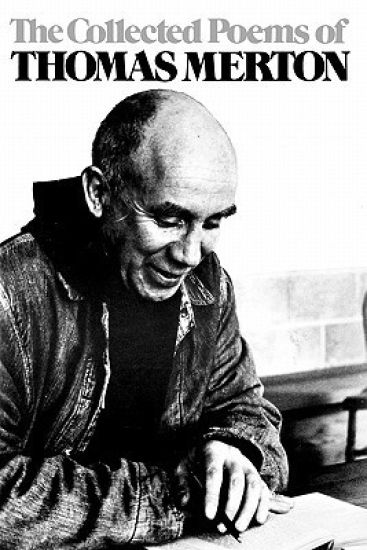
In 1944, New Directions brought out Thomas Merton’s first book of verse. By the time of his tragic, untimely death in 1968, Father Louis (as he was known at the Trappist monastery where he lived for twenty-seven years) had published upwards of fifty books and pamphlets, including several more collections of poetry. All of these poems have been assembled in a single, definitive volume (first published by New Directions in 1977) which includes much additional unpublished or uncollected material drawn from the archive of the Merton Studies Center at Bellarmine College in Louisville, Kentucky, or supplied by the poet’s friends and associates. Brought together in The Collected Poems of Thomas Merton are: Early Poems (1940-42, published posthumously in 1971), Thirty Poems (1944), A Man in the Divided Sea (1946), Figures for an Apocalypse (1947), The Tear of the Blind Lions (1949), The Strange Islands (1957), Original Child Bomb (1962), Emblems of a Season of Fun (1963), Cables to Ace (1968), and The Geography of Lograire (completed in 1968 and published posthumously). These are followed by Sensation Time at the Home and Other New Poems, a book which Merton completed shortly before his death. There are also sections of uncollected poems, humorous verse, poems written in French, with some English translations, Merton’s translations of poetry from various languages, drafts and fragments, and a selection of concrete poems. With the availability of The Collected Poems of Thomas Merton as a New Directions paperbook, an ever wider audience may more fully appreciate the impressive range of the poet’s technique, the scope of his concerns, and the humaneness of his vision.
Noted member of the Cistercian Order, commonly known as Trappists, and noted for its auster, contemplative life style, studies the historical and philosophic development of the order from its 12th century roots to the flowering in America
Although it first appeared after his death in 1968, he had arranged for its publication, written a foreword for it, and was delighted with the prospect of its at last becoming a part of his published works. My Argument with the Gestapo tells of the adventures of a young man, clearly identified by the name Thomas Merton, who travels from America to Europe to report on the war with Germany from the viewpoint of a poet. He hates the war, yet is driven to come to terms with it. There is a pervading sense of dreamworld or hallucination, heightened by the device of passages written in a macaronic language, invented from multilingual roots, to satirize and parody political propaganda speeches dealing with the war. A work of imagination (Merton did not in fact return to England after the start of World War II in Europe), it nevertheless contains much that is autobiographical and revealing of the young Merton. Most clearly visible are the seeds of his never-forsaken concern with peace and nonviolence and his abhorrence of war. Indeed, his outspoken criticism of Britain at a time when all the emphasis was on 'the brave little island standing alone' foreshadows his devotion to truth as he saw it, no matter what the cost. And students of Merton will find scenes in the book that are straight autobiography, amplifying and perhaps filling in gaps in what later was to be the beginning of Merton's great literary success, The Seven Storey Mountain (1948).
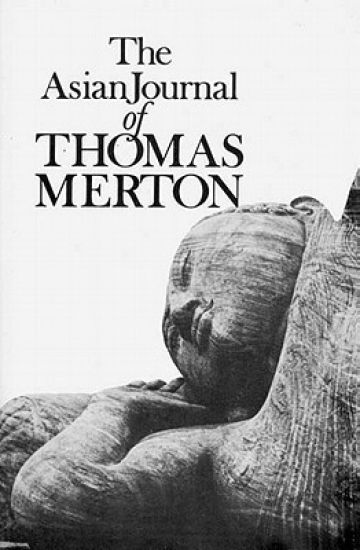
"The moment of takeoff was ecstatic...joy. We left the ground—I with Christian mantras and a great sense of destiny, of being at last on my true way after years of waiting and wondering..." With these words, dated October 15. 1968, the late Father Thomas Merton recorded the beginning of his fateful journey to the Orient. His travels led him from Bangkok, through India to Ceylon, and back again to Bangkok for his scheduled talk at a conference of Asian monastic orders. There he unequivocally reaffirmed his Christian vocation. His last journal entry was made on December 8, 1968, two days before his untimely, accidental death. Amply illustrated with photographs he himself took along the way and fully indexed, the book also contains a glossary of Asian religious terms, a preface by the Indian scholar Amiya Chakravarty, a foreword and postscript by Brother Patrick Hart of the Abbey of Gethsemani, as well as several appendices, among them the text of Merton's final address.
In this classic text, Thomas Merton offers valuable guidance for prayer. He brings together a wealth of meditative and mystical influences-from John of the Cross to Eastern desert monasticism-to create a spiritual path for today. Most important, he shows how the peace contacted through meditation should not be sought in order to evade the problems of contemporary life, but can instead be directed back out into the world to affect positive change. Contemplative Prayer is one of the most well-known works of spirituality of the last one hundred years, and it is a must-read for all seeking to live a life of purpose in today's world. In a moving and profound introduction, Thich Nhat Hanh offers his personal recollections of Merton and compares the contemplative traditions of East and West.
The personal tones of the translations, the blend of reverence and humor so characteristic of him, show how deeply Merton identified with the legendary authors of these sayings and parables, the fourth-century Christian Fathers who sought solitude and contemplation in the deserts of the Near East. The hermits of Screte who turned their backs on a corrupt society remarkably like our own had much in common with the Zen masters of China and Japan, and Father Merton made his selection from them with an eye to the kind of impact produced by the Zen mondo.
It was completed in the summer of 1968, a few months before he set out from Our Lady of Gethsemani monastery in Kentucky on the Asian journey from which he did not return. The text is as he left it. It lacks that final editing that he would have done in proof, but it is substantially a completed, self-contained work. Lograire, as with William Carlos Williams’s Paterson, is first of all a country of the imagination, but it is also a person––Merton himself––for its "geography" is the map, the inner choreography, of his mind. The charting in the poem is his search for self-location: where, and even how, does a man find himself in the geography of all men? Sections of personal experience are set against passages re-imagined from anthropological and historical texts, material that Merton chose for its character of myth to illustrate the general experience of mankind. The myths of Lograire form a mosaic of African legends, Mixtecart motifs and Mayan religious customs, the pantheism of the fanatical Ranters in 17th-century England, the records of an early arctic expedition and of Ibn Battuta, the 14th-century Arab traveler, the Cargo Cults of Melanesia and the Ghost Dances of the American Indians. "A poet," Merton wrote in his prefatory note to Lograire, "spends his life attempting to build or to dream the world in which he lives. But more than that he realizes that this world is at once his and everybody’s. It grows out of a common participation which is nevertheless recorded in authentically personal images. I have without scruple mixed what is my own experience with what is almost everybody else’s." Many modern poets have used history and myth in their work; what sets The Geography of Lograire apart is the invention of Merton’s method––his process for elevating fact to the level of myth. It is a complex technique of fractured syntax, multiple meanings; the distortion of dream, irony and parody.
"Zen enriches no one," Thomas Merton provocatively writes in his opening statement to Zen and the Birds of Appetite—one of the last books to be published before his death in 1968. "There is no body to be found. The birds may come and circle for a while... but they soon go elsewhere. When they are gone, the 'nothing,' the 'no-body' that was there, suddenly appears. That is Zen. It was there all the time but the scavengers missed it, because it was not their kind of prey." This gets at the humor, paradox, and joy that one feels in Merton's discoveries of Zen during the last years of his life, a joy very much present in this collection of essays. Exploring the relationship between Christianity and Zen, especially through his dialogue with the great Zen teacher D. T. Suzuki, the book makes an excellent introduction to a comparative study of these two traditions, as well as giving the reader a strong taste of the mature Merton. Never does one feel him losing his own faith in these pages; rather one feels that faith getting deeply clarified and affirmed. Just as the body of "Zen" cannot be found by the scavengers, so too, Merton suggests, with the eternal truth of Christ.