Kirjojen hintavertailu – 12 859 829 kirjaa ja 27 kauppaa

Kirjailija

Titus Maccius Plautus

Kirjat ja teokset yhdessä paikassa: 160 kirjaa, julkaisuja vuosilta 1865–2026, suosituimpiin kuuluu M. Accii Plauti Comoediae Quatuor. Vertaile teosten hintoja ja tarkista saatavuus suomalaisista kirjakaupoista.

160 kirjaa

Kirjojen julkaisuvuodet: 1865–2026.

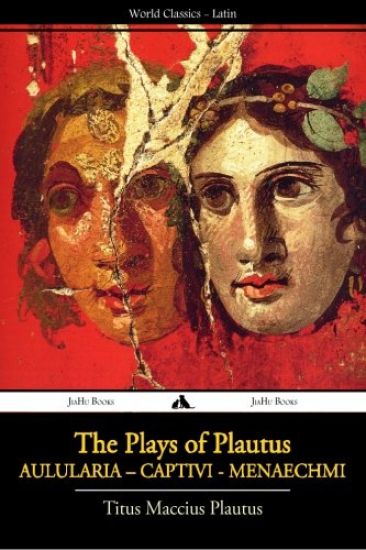
The Plays of Plautus

The Plays of Plautus

Titus Maccius Plautus

Jiahu Books
2014
nidottu
Titus Maccius Plautus (254-184 BC), commonly known as "Plautus", was a Roman playwright of the Old Latin period. His comedies are the earliest surviving intact works in Latin literature. The language and style of Plautus are not easy or simple. He wrote in a colloquial style far from the codified form of Latin that is found in Ovid or Virgil. This colloquial style is the everyday speech that Plautus would have been familiar with, yet that means that most students of Latin are unfamiliar with it. This volumes contains the original text of three of his most famous plays - Aulularia, Captivi and Menaechmi.
T. Macci Plauti Comoediae 2 Part Set

T. Macci Plauti Comoediae 2 Part Set

Titus Maccius Plautus

Cambridge University Press
2010
muu
The foundation for the modern study of Titus Maccius Plautus rests on this monumental four-volume edition, begun by the eminent German philologist Friedrich Ritschl and completed by his colleagues Gustav Loewe, Georg Goetz, and Fritz Schöll. Scrupulously edited from existing manuscripts, including the famed Ambrosian palimpsest, this edition offers valuable insights into the metrics, literary and historical contexts, and textual history of the Latin comedic playwright. Volume 4 (1890–1894) contains editions of Casina, Miles Gloriosus, Persa, Mostellaria, Cistellaria, and various fragments. Each play is provided with a thorough preface, analysing the work's structures and themes and explaining its reconstruction from manuscript. A central contribution to the study of Plautine drama, Ritschl's Comoediae is also a remarkable achievement of textual criticism, a model of nineteenth-century philology at its most ambitious.

T. Macci Plauti Comoediae

T. Macci Plauti Comoediae

Titus Maccius Plautus

Cambridge University Press
2010
pokkari
The foundation for the modern study of Titus Maccius Plautus rests on this monumental four-volume edition, begun by the eminent German philologist Friedrich Ritschl and completed by his colleagues Gustav Loewe, Georg Goetz, and Fritz Schöll. Scrupulously edited from existing manuscripts, including the famed Ambrosian palimpsest, this edition offers valuable insights into the metrics, literary and historical contexts, and textual history of the Latin comedic playwright. Volume 2 (1881–1884) includes editions of Aulularia, Amphitryon, Mercator, Stichus, and Poenulus. Each play is provided with a thorough preface, analysing the work's structures and themes and explaining its reconstruction from manuscript. A central contribution to the study of Plautine drama, Ritschl's Comoediae is also a remarkable achievement of textual criticism, a model of nineteenth-century philology at its most ambitious.
T. Macci Plauti Comoediae

T. Macci Plauti Comoediae

Titus Maccius Plautus

Cambridge University Press
2010
pokkari
The foundation for the modern study of Titus Maccius Plautus rests on this monumental four-volume edition, begun by the eminent German philologist Friedrich Ritschl and completed by his colleagues Gustav Loewe, Georg Goetz, and Fritz Schöll. Scrupulously edited from existing manuscripts, including the famed Ambrosian palimpsest, this edition offers valuable insights into the metrics, literary and historical contexts, and textual history of the Latin comedic playwright. Volume 1 (1871–1881) includes Ritschl's indispensable overview of his critical method and his introduction to Trinummus, the only play he finished editing before his death, together with editions of Epidicus, Curculio, Asinaria, and Truculentus. Each play is provided with a preface, analysing the work's structures and themes and explaining its reconstruction from manuscript. A central contribution to the study of Plautine drama, Ritschl's Comoediae is also a remarkable achievement of textual criticism, a model of nineteenth-century philology at its most ambitious.