Kirjailija
Tommaso Campanella
Kirjat ja teokset yhdessä paikassa: 61 kirjaa, julkaisuja vuosilta 1981–2026, suosituimpiin kuuluu Selected Philosophical Poems of Tommaso Campanella. Vertaile teosten hintoja ja tarkista saatavuus suomalaisista kirjakaupoista.
61 kirjaa
Kirjojen julkaisuvuodet: 1981–2026.
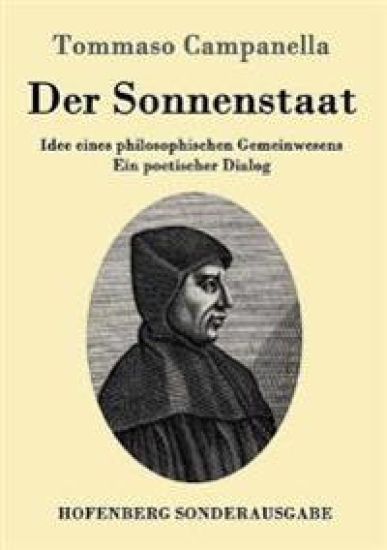
Tommaso Campanella: Der Sonnenstaat. Idee eines philosophischen Gemeinwesens Ein poetischer Dialog Lesefreundlicher Gro druck in 16-pt-Schrift Gro format, 210 x 297 mm Berliner Ausgabe, 2020 Durchgesehener Neusatz mit einer Biographie des Autors bearbeitet und eingerichtet von Theodor Borken La Citt del Sole. Dialogo di Repubblica nel quale si dimostra l'idea di riforma della Repubblica cristiana conforme alla promessa da Dio fatta alle Sante Caterina et Brigida. Entstanden 1602, zweite Fassung 1611, lateinische Fassung 1613. Erstdruck der lateinischen Fassung unter dem Titel Civitas solis idea republicae philosophicae: Frankfurt am Main 1623. Erstdruck der italienischen Fassung nach dem Originalmanuskript: Modena 1904. Erste deutsche bersetzung (anonym): Altenburg 1789. Der Text folgt der bersetzung durch Ignaz Emanuel Wessely von 1900. Auch ver ffentlicht unter dem Titel Die Sonnenstadt. Textgrundlage ist die Ausgabe: Thomas Campanella: Der Sonnenstaat. bersetzt und mit einer biographischen Skizze, sowie mit sachlichen Anmerkungen versehen von Ignaz Emanuel Wessely, M nchen: M. Ernst, 1900 (Sammlung gesellschaftswissenschaftlicher Aufs tze, Heft 14/15). Umschlaggestaltung von Thomas Schultz-Overhage. Gesetzt aus der Minion Pro, 16 pt. Henricus Edition Deutsche Klassik UG (haftungsbeschr nkt)
Sonnenstaat ist ein Werk, das den wirtschaftlichen und politischen Aufbau eines idealen Staates darstellt. Die Darstellung erfolgt in Form eines poetischen Dialoges zwischen einem genuesischen Schiffskommandanten und dem Gro meister der Hospitaliter. Der Genuese ist beim Gro meister zu Gast und erz hlt von seiner letzten Reise und dem Aufenthalt im Sonnenstaat. Sein Gastgeber treibt das Gespr ch mit Fragen zu Alltag, Politik und Lebensweise der "Solarier" voran. Campanello f hrt im Sonnenstaat alle sozialen bel auf das Privateigentum zur ck. Dieses will er mit seiner kollektivistischen Gesellschaftsordnung, die s mtliche Lebensbereiche umfasst, beseitigen. Genau ermittelte Bedarfspl ne bestimmen demnach die Produktion. Die Institution der Familie, die das materielle Denken f rdert und deshalb das Privateigentum st tzt, soll aufgel st werden. An ihrer Stelle soll ein Frauen- und Kinderkommunismus verwirklicht werden, der eugenischen Zielen dient. Im "Sonnenstaat" bedeutet die Gattung alles, das Individuum nichts. Tommaso Campanella (1568-1639) war ein italienischer Philosoph, Dominikaner, neulateinischer Dichter und Politiker.
Reproduction of the original: The City of the Sun by Tommaso Campanells
The City of the Sun A Poetical Dialogue between a Grandmaster of the Knights Hospitallers and a Genoese Sea-Captain, his guest. Tommaso Campanella The City of the Sun is a philosophical work by the Italian Dominican philosopher Tommaso Campanella. It is an important early utopian work. The work was written in Italian in 1602, shortly after Campanella's imprisonment for heresy and sedition. A Latin version was written in 1613-1614 and published in Frankfurt in 1623. The book is presented as a dialogue between "a Grandmaster of the Knights Hospitaller and a Genoese Sea-Captain." Inspired by Plato's Republic and the description of Atlantis in Timaeus, it describes a theocratic society where goods, women and children are held in common. It al so resembles the City of Adocentyn in the Picatrix, an Arabic grimoire of astrological magic. In the final part of the work, Campanella prophesies -in the veiled language of astrology- that the Spanish kings, in alliance with the Pope, are destined to be the instruments of a Divine Plan: the final victory of the True Faith and its diffusion in the whole world. While one could argue that Campanella was simply thinking of the conquest of the New World, it seems that this prophecy should be interpreted in the light of a work written shortly before The City of the Sun, The Monarchy in Spain, in which Campanella exposes his vision of a unified, peaceful world governed by a theocratic monarchy.
La citt del Sole un'opera filosofica del frate domenicano italiano Tommaso Campanella. La prima redazione fu scritta nel 1602 in volgare fiorentino, adottando lo stile dialogico proprio della tradizione esoterica platonica; il testo fu poi tradotto in lingua latina e pubblicato nella celebre edizione originale del 1623 a Francoforte, col titolo Civitas Solis. Idea reipublicae philosophicae.
The City of the Sun is a philosophical work by the Italian Dominican philosopher Tommaso Campanella. It is an important early utopian work. The work was written in Italian in 1602, shortly after Campanella's imprisonment for heresy and sedition. A Latin version was written in 1613
The sonnets of Michael Angelo Buonarroti and Tommaso Campanella
John Addington Symonds; Tommaso Campanella
Hansebooks
2017
pokkari
Apologia Pro Galileo, Mathematico Florentino, Ubi Disquiritur, Utrum Ratio Philosopahndi
Tommaso Campanella
Hachette Livre - BNF
2017
pokkari
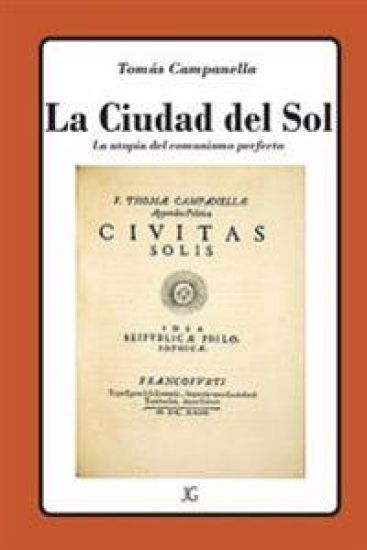
La Ciudad del Sol: La utopía del perfecto comunismo
Tommaso Campanella
Createspace Independent Publishing Platform
2017
nidottu
La Utop a del comunismo perfecto propuesta por Tom s Campanella es una lectura f cil y comprensible para todo lector, sea interesado en los argumentos filos ficos, como en los pol ticos. Pero, propio por ser de f cil lectura el texto no debe enga ar: la propuesta de Campanella es ut pica, por lo tanto irrealizable. Quien piensa que el comunismo perfecto anhele un retorno a la pureza comunitaria del origen de la humanidad, debe saber distinguir: una cosa es discutir hoy filos ficamente sobre el ideal comunitario, otra cosa es pretender convencer al pr ximo, pol ticamente, sobre la bondad de la propuesta. La utop a queda cual es: una propuesta para idealistas, objeto de discusi n filos fica, nada m s all . Sorprende, sin embargo, la negaci n de la familia, propuesta por Campanella por considerarla origen del ego smo humano y de sus conflictos. Aun en una sociedad perfecta- mente comunitaria, la familia, nuclear, extensa o tribal, constituye una base social imprescindible para el desarrollo y la sobrevivencia. Es a causa de esta inusual actitud que muchos estudiosos has expresado dudas sobre la buena fe de nuestro fil sofo.
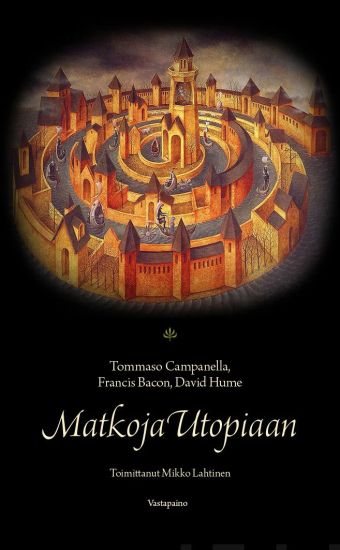
Matkoja utopiaan
Tommaso Campanella; Francis Bacon; David Hume
VASTAPAINO
2017
nidottu
Halvin toimitettuna 13,90 €
Utopia tarkoittaa onnellista paikkaa, joka ei sijaitse missään. Sanan sepitti alun perin englantilainen filosofi, valtiomies Thomas More 1500-luvulla. Tämän jälkeen on esitetty satoja onnellisten paikkojen kuvitelmia tai vastakuvitelmia. Onnellisten paikkojen ja kultaisten aikojen kuvauksia on paikallistettu ainakaukaista antiikkia myöten. Kirja sisältää kolme utopiakirjallisuuden klassikkoa. Tommaso Campanellan "Aurinkokaupunki" (1602) ja Francis Baconin "Uusi Atlantis" (1627) ovat huomattavimmat renessanssin ajan utopiat. Valistuksen aikakauteen sijoittuva David Humen "Täydellisen valtion idea" (1752) on puolestaan loistelias esimerkkiutopiaan kriittisesti mutta arvostavasti suhtautuvasta täydellisen valtion kuvauksesta. Teokseen sisältyy filosofi Mikko Lahtisen kirjoittama johdatus utopistisen ajattelun historiaan.
Ciudad del Sol (en lat n, Civitas Solis) fue una obra escrita por el monje dominico italiano Tom s Campanella en 1602 durante su estancia en la c rcel de N poles por haber promovido un intento de insurrecci n en Calabria en 1599 contra la Corona espa ola prometiendo a los que le siguieran una rep blica comunista fundada en la concordia y en el amor.
"La Citt del Sole" from Tommaso Campanella. Tommaso Campanella, filosofo, teologo, poeta e frate domenicano italiano (1568-1639).