Kirjojen hintavertailu – 12 859 818 kirjaa ja 27 kauppaa

Kirjailija

Tommaso Campanella

Kirjat ja teokset yhdessä paikassa: 61 kirjaa, julkaisuja vuosilta 1981–2026, suosituimpiin kuuluu Selected Philosophical Poems of Tommaso Campanella. Vertaile teosten hintoja ja tarkista saatavuus suomalaisista kirjakaupoista.

61 kirjaa

Kirjojen julkaisuvuodet: 1981–2026.

Poesies

Poesies

Tommaso Campanella

Les Belles Lettres
2014
nidottu
English summary: Tommaso Campanella was a prolific author of natural philosophy at the turn of the seventeenth century, whose work encompassed metaphysics, physics, politics, and theology. This collection of his poetry was intended as a dramatic synthesis of his philosophical thought, one that would outline the dynamic and complex relationships woven into the universe. This critical French translation includes copious notes and explanations of the political and other events that structures much of Campanellas thought and work. French description: Auteur d'une oeuvre immense qui ordonne et porte a son terme la grande tradition renaissante de la philosophie naturelle, pensee comme condition et moyen d'un renouvellement messianique du monde, et embrassant tous les domaines du savoir (metaphysique, physique, politique, theologique, etc.), Tommaso Campanella est aussi l'auteur d'une oeuvre poetique majeure. Ecrite entre 1595 et 1608, elle a ete, en 1612, reunie en volume par l'auteur sous le titre de Scelta di alcune poesie filosofiche et signee du pseudonyme de Settimontano Squilla. Ce livre a ete concu par Campanella comme la synthese dramatique, a travers les evenements qu'il a vecus alors, de toutes les dimensions de sa pensee philosophique. Il y met en oeuvre un langage qui consiste moins a exposer ses doctrines en vers, qu'a en inventer les rythmes capables de faire apparaitre les rapports, dynamiques et complexes, qui trament l'univers. C'est l'integralite de la Scelta .. qui est traduite ici pour la premiere fois en francais. Le traducteur a fait figurer a la suite des poemes un appareil de notes, a fait preceder sa traduction d'une introduction a la poesie de Campanella, ainsi que d'une note abordant les questions que pose la traduction d'une telle poesie, et d'une chronologie de la vie de Campanella, rendue indispensable par le lien tres etroit que cette poesie entretient avec les evenements dramatiques que vivait l'auteur dans le meme temps.
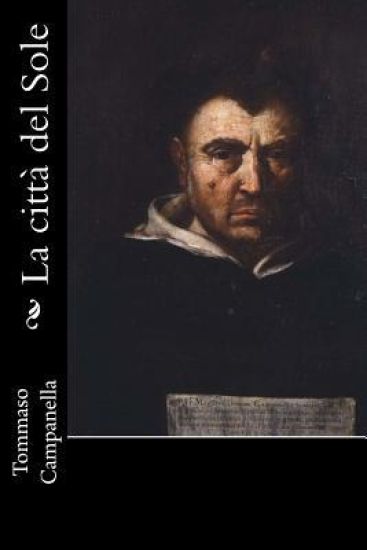
La città del Sole

La città del Sole

Tommaso Campanella

Createspace Independent Publishing Platform
2012
nidottu
La citt del Sole un'opera filosofica del frate domenicano italiano Tommaso Campanella, del 1602. La prima edizione fu redatta in volgare fiorentino, adottando lo stile dialogico proprio della tradizione esoterica platonica: il testo fu poi pi volte tradotto in lingua latina, fino ad arrivare alla celebre edizione del 1623 di Francoforte, intitolata Civitas Solis idea republicae philosophica.
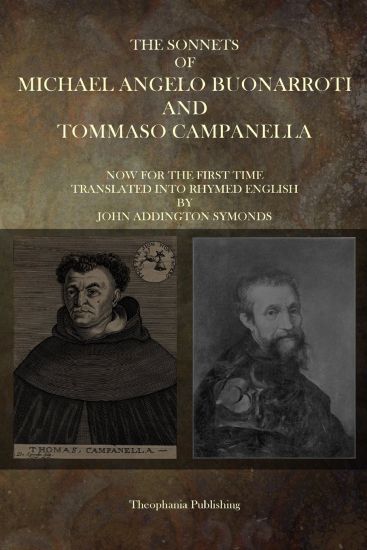
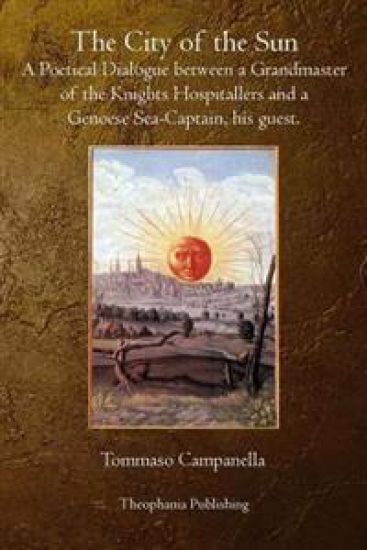
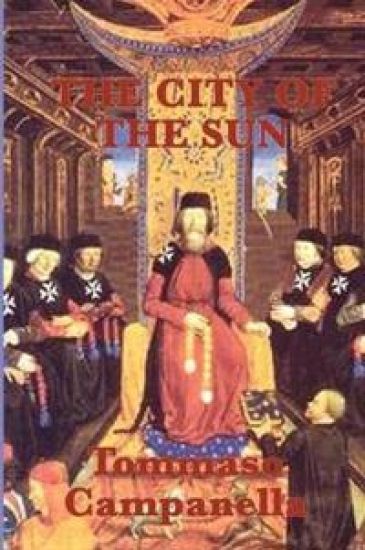
The City of The Sun

The City of The Sun

Tommaso Campanella

Theophania Publishing
2011
nidottu
Thank you for checking out this book by Theophania Publishing. We appreciate your business and look forward to serving you soon. We have thousands of titles available, and we invite you to search for us by name, contact us via our website, or download our most recent catalogues. Born in Stignano (in the county of Stilo) in the province of Reggio di Calabria in southern Italy, Campanella was a child prodigy. Son of a poor and illiterate cobbler, he entered the Dominican Order before the age of fifteen, taking the name of fra' Tommaso in honour of Thomas Aquinas. He studied theology and philosophy with several masters. Early on, he became disenchanted with the Aristotelian orthodoxy and attracted by the empiricism of Bernardino Telesio (1509-1588), who taught that knowledge is sensation and that all things in nature possess sensation. Campanella wrote his first work, Philosophia Sensibus Demonstrata ("Philosophy demonstrated by the senses"), published in 1592, in defence of Telesio. In Naples he was also initiated in astrology; astrological speculations would become a constant feature in his writings. Campanella's heterodox views, especially his opposition to the authority of Aristotle, brought him into conflict with the ecclesiastical authorities. Denounced to the Inquisition and cited before the Holy Office in Rome, he was confined in a convent until 1597. After his liberation, Campanella returned to Calabria, where he was accused of leading a conspiracy against the Spanish rule in his hometown of Stilo. Campanella's aim was to establish a society based on the community of goods and wives, for on the basis of the prophecies of Joachim of Fiore and his own astrological observations, he foresaw the advent of the Age of the Spirit in the year 1600. Betrayed by two of his fellow conspirators, he was captured and incarcerated in Naples, where he was tortured on the rack. He made a full confession and would have been put to death if he had not feigned madness and set his cell on fire. He was tortured further (a total of seven times) and then, crippled and ill, was sentenced to life imprisonment. Campanella spent twenty-seven years imprisoned in Naples, often in the worst conditions. During his detention, he wrote his most important works: The Monarchy of Spain, Political Aphorisms, Atheismus triumphatus, Quod reminiscetur, Metaphysica, Theologia, and his most famous work, The City of the Sun. He even intervened in the first trial against Galileo Galilei with his courageous The Defense of Galileo. Ironically, Galileo himself probably would not have wanted Campanella's assistance because of Campanella's sometimes outlandish ideas and prior conviction of heresy. Campanella was finally released from his prison in 1626, through Pope Urban VIII, who personally interceded on his behalf with Philip IV of Spain. Taken to Rome and held for a time by the Holy Office, Campanella was restored to full liberty in 1629. He lived for five years in Rome, where he was Urban's advisor in astrological matters. In 1634, however, a new conspiracy in Calabria, led by one of his followers, threatened fresh troubles. With the aid of Cardinal Barberini and the French Ambassador de Noailles, he fled to France, where he was received at the court of Louis XIII with marked favour. Protected by Cardinal Richelieu and granted a liberal pension by the king, he spent the rest of his days in the convent of Saint Honor in Paris. His last work was a poem, the Ecloga in portentosam Delphini nativitatem, celebrating the birth of the future Louis XIV.

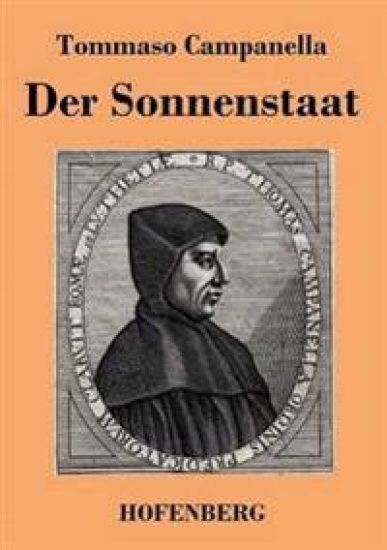
Die Sonnenstadt

Die Sonnenstadt

Tommaso Campanella

Reclam Philipp Jun.
2008
pokkari
Tommaso Campanellas "Sonnenstadt" zählt zusammen mit Thomas Morus' "Utopia" und Francis Bacons "Neu-Atlantis" zu den klassischen Utopien der Neuzeit. Sie wird hier erstmals nach der italienischen Urfassung "La Citt? del Sole" von 1602 übersetzt. Campanella hat sie unter dem Eindruck der gescheiterten Revolte gegen die spanische Herrschaft in Süditalien, die ihm eine fast 27-jährige Kerkerhaft einbrachte, verfasst. Die darin beschriebene Republik bildet den idealisierten Gegenentwurf zur realen Welt.