Kirjailija
Toni Morrison
Kirjat ja teokset yhdessä paikassa: 137 kirjaa, julkaisuja vuosilta 1981–2026, suosituimpiin kuuluu Beloved. Vertaile teosten hintoja ja tarkista saatavuus suomalaisista kirjakaupoista.
137 kirjaa
Kirjojen julkaisuvuodet: 1981–2026.
Gud hjälpe barnet är Toni Morrisons första samtidsroman. I denna sparsmakade och skoningslösa berättelse åskådliggör hon hur sår man tillfogas i barndomen kan få förödande konsekvenser och forma en människas hela liv. I centrum står Bride, en ung, rättfram, vacker kvinna. Hennes fantastiska, djupt mörka hudfärg är en del av hennes skönhet och samtidigt något som har fått hennes ljushyade mamma att ta avstånd från henne och förvägra henne både kärlek och ömhet. Bland karaktärerna finns också Booker, mannen som Bride älskar men förlorar på grund av händelser i det förflutna. Rain, den mystiska vita flickan som dyker upp i Brides liv. Och så Sweetness, Brides mamma, som slutligen tvingas komma till insikt om att det man utsätter barn för har stor betydelse. Och att risken finns att de aldrig glömmer …En vass och provocerande roman som tillför en helt ny dimension till Toni Morrisons unika författarskap.
Toni Morrisonâ??s fierce and provocative novel exposes the damage adults wreak on children, and how this echoes through the generations. Sweetness wants to love her child, Bride, but she struggles to love her as a mother should.
NATIONAL BESTSELLER - A New York Times Notable Book - This fiery and provocative novel from the acclaimed Nobel Prize winner weaves a tale about the way the sufferings of childhood can shape, and misshape, the life of the adult. At the center: a young woman who calls herself Bride, whose stunning blue-black skin is only one element of her beauty, her boldness and confidence, her success in life, but which caused her light-skinned mother to deny her even the simplest forms of love. There is Booker, the man Bride loves, and loses to anger. Rain, the mysterious white child with whom she crosses paths. And finally, Bride's mother herself, Sweetness, who takes a lifetime to come to understand that "what you do to children matters. And they might never forget." "Powerful.... A tale that is as forceful as it is affecting, as fierce as it is resonant." --Michiko Kakutani, The New York Times
Spare and unsparing, "God Help the Child" the first novel by Toni Morrison to be set in our current moment weaves a tale about the way the sufferings of childhood can shape, and misshape, the life of the adult. At the center: a young woman who calls herself Bride, whose stunning blue-black skin is only one element of her beauty, her boldness and confidence, her success in life, but which caused her light-skinned mother to deny her even the simplest forms of love. There is Booker, the man Bride loves, and loses to anger. Rain, the mysterious white child with whom she crosses paths. And finally, Bride s mother herself, Sweetness, who takes a lifetime to come to understand that what you do to children matters. And they might never forget. A fierce and provocative novel that adds a new dimension to the matchless oeuvre of Toni Morrison." The book is a rough cut edition.
Little Cloud likes her own place in the sky, away from the other clouds. There, the sky is all hers. She is free to make her own way and go where she wishes. Can Lady Wind show Little Cloud the power of being with others? Will Little Cloud agree there is strength in unity and change her ways? A fresh take on a classic story, Little Cloud and Lady Wind will teach kids how to work together to achieve their goals.
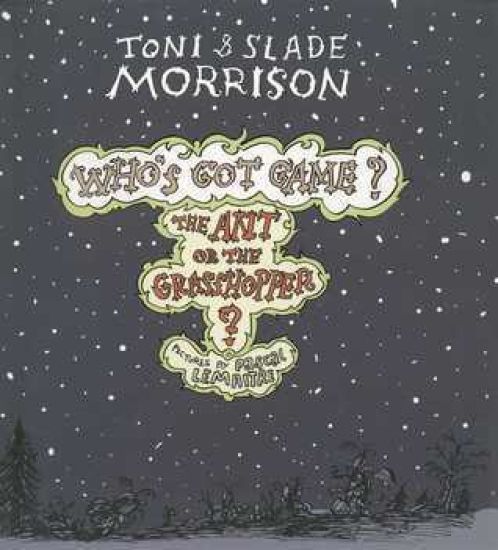
A hip, sly, exuberant retelling of Aesop's fable, for children of all ages--written by Nobel Prize-winning author Toni Morrison and her son Slade Morrison, and ingeniously illustrated by Pascal Lemaitre. "How can you say I never worked a day? ART is WORK. It just looks like play," so says Foxy G to his buddy Kid A, in Toni and Slade Morrison's sassy, sly tale of friendship, betrayal, and survival--or not. Generation after generation, classic fables, folklore, and myth remain popular because they quicken the imagination of readers and listeners of all ages. We, the creators of the Who's Got Game? series were inspired by the wonder of Aesop's Fables--their vitality, their endless demand for more interpretations. In our versions the original stories are opened up and their moralistic endings reimagined; the victim might not lose; the timid gets a chance to become strong; the fool can gain insight; the powerful may lose their grip. Anything can happen
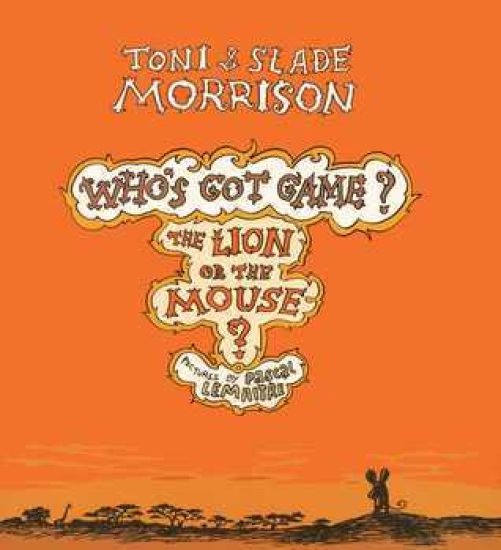
In this charmingly subversive reinterpretation of a classic tale, the Morrisons and Pascal Lemaitre take a hilarious look at bullying. The cocky lion, the self-proclaimed "baddest in the land," believes himself invincible until he gets a thorn stuck in his paw. Only a weak little mouse can help him, but then the lion must indulge the mouse's ridiculous pride and appetite for power. Generation after generation, classic fables, folklore, and myth remain popular because they quicken the imagination of readers and listeners of all ages. We, the creators of the Who's Got Game? series were inspired by the wonder of Aesop's Fables--their vitality, their endless demand for more interpretations. In our versions the original stories are opened up and their moralistic endings reimagined; the victim might not lose; the timid gets a chance to become strong; the fool can gain insight; the powerful may lose their grip. Anything can happen
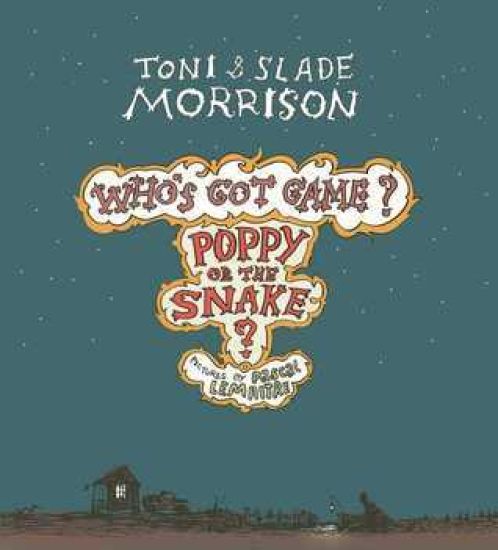
A hip, sly, exuberant retelling of Aesop's Man and the Serpent fable, for children of all ages--written by Nobel Prize-winning author Toni Morrison and her son Slade Morrison, and ingeniously illustrated by Pascal Lemaitre. In this clever riff on Aesop, Poppy feels guilty when he accidentally drives over Snake, and he decides to risk being bitten in order to free the sassy reptile. But snake wants more. This is a sly tale about who gets the last laugh. We, the creators of the Who's Got Game? series were inspired by the wonder of Aesop's Fables--their vitality, their endless demand for more interpretations. In our versions the original stories are opened up and their moralistic endings reimagined: the victim might not lose; the timid gets a chance to become strong; the fool can gain insight; the powerful may lose their grip. Anything can happen
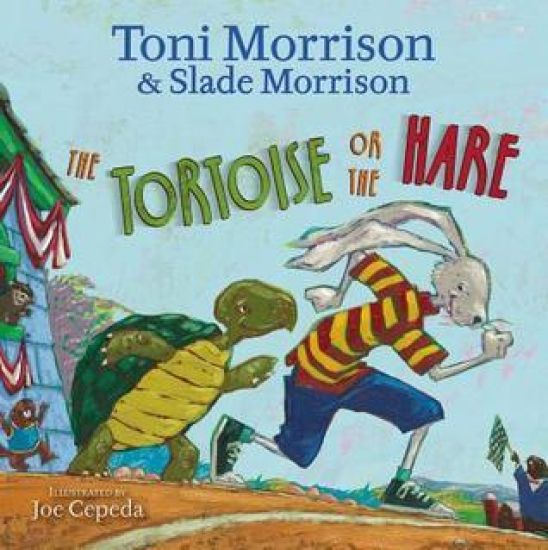
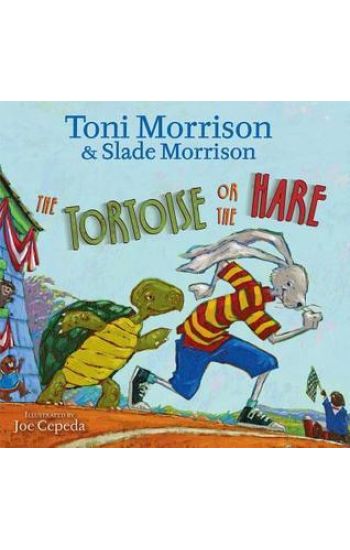
The Tortoise or the Hare
Toni Morrison; Slade Morrison
Paula Wiseman Book/Beach Lane Books
2014
nidottu
Nobel Prize recipient Toni Morrison and Slade Morrison breathe new life into a classic Aesop's fable. In the well-known tale of "The Tortoise and the Hare," everyone remembers that "slow and steady wins the race"--or does it? In this energetic retelling of a favorite fable, it's the speedy Hare who crosses the finish line first, but it's Tortoise who has the tale to tell when he discovers that the race, not the winning, is what matters most. While winning is important, isn't making a true friend the best prize of all?
The acclaimed Nobel Prize winner challenges our most fiercely held beliefs as she weaves folklore and history, memory and myth into an unforgettable meditation on race, religion, gender, and a far-off past that is ever present--in prose that soars with the rhythms, grandeur, and tragic arc of an epic poem. "They shoot the white girl first. With the rest they can take their time." So begins Toni Morrison's Paradise, which opens with a horrifying scene of mass violence and chronicles its genesis in an all-black small town in rural Oklahoma. Founded by the descendants of freed slaves and survivors in exodus from a hostile world, the patriarchal community of Ruby is built on righteousness, rigidly enforced moral law, and fear. But seventeen miles away, another group of exiles has gathered in a promised land of their own. And it is upon these women in flight from death and despair that nine male citizens of Ruby will lay their pain, their terror, and their murderous rage. "A fascinating story, wonderfully detailed. . . . The town is the stage for a profound and provocative debate." --Los Angeles Times
A stirring exploration of war, race and belonging from the Nobel-prize winning author of Beloved. An angry and self-loathing veteran of the Korean War, Frank Money finds himself back in racist America after enduring trauma on the front lines that left him with more than just physical scars.
NATIONAL BESTSELLER - A New York Times Notable Book - From the acclaimed Nobel Prize winner: an emotional powerhouse of a novel about a modern Odysseus returning to a 1950s America mined with lethal pitfalls for an unwary Black man When Frank Money joined the army to escape his too-small world, he left behind his cherished and fragile little sister, Cee. After the war, he journeys to his native Georgia with a renewed sense of purpose in search of his sister, but it becomes clear that their troubles began well before their wartime separation. Together, they return to their rural hometown of Lotus, where buried secrets are unearthed and where Frank learns at last what it means to be a man, what it takes to heal, and--above all--what it means to come home.
As Americans we often take our freedom of speech for granted. When we talk about censorship we talk about China, the former Soviet Union. But the recent presidential election has shined a spotlight on profound acts of censorship in our own backyard. Both provocative and timely, "Burn this Book" includes a sterling list of award-winning writers; it is sure to ignite spirited dialogue. In "Witness: The Inward Testimony", Nadine Gordimer discusses the role of the writer as observer, and as someone who sees what is really taking place. She looks to Proust, Oe, Flaubert, Graham Green to see how their philosophy squares with her own, ultimately concluding Literature has been and remains a means of people rediscovering themselves. In "Freedom to Write", Orham Pamuk elegantly describes escorting Arthur Miller and Harold Pinter around Turkey and how that experience changed his life. In "The Value of the Word" Salman Rushdie shares a story from Bugakov's novel "The Master and the Margarita", in which the Devil talks to a frustrated writer called The Master. The writer is so upset with his own work he decides to burn it: How could you do that? The devil asks. Manuscripts do not burn. Indeed, manuscripts do not burn, Rushdie argues, but writers do.
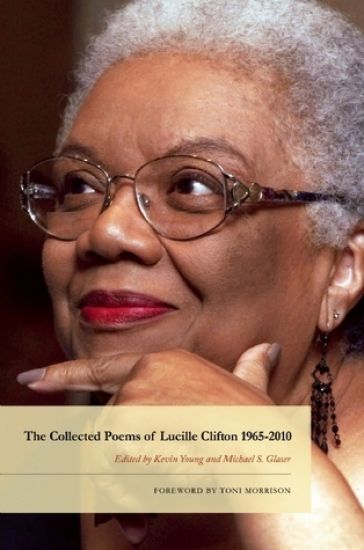
The Collected Poems of Lucille Clifton 1965-2010
Lucille Clifton; Toni Morrison
BOA Editions, Limited
2012
sidottu
Halvin toimitettuna 29,10 €
Winner of the 2013 Hurston/Wright Legacy Award for Poetry"The Collected Poems of Lucille Clifton 1965-2010 may be the most important book of poetry to appear in years."--Publishers Weekly"All poetry readers will want to own this book; almost everything is in it."--Publishers Weekly"If you only read one poetry book in 2012, The Collected Poems of Lucille Clifton ought to be it."  NPR"The 'Collected Clifton' is a gift, not just for her fans...but for all of us."--The Washington Post"The love readers feel for Lucille Clifton both the woman and her poetry is constant and deeply felt. The lines that surface most frequently in praise of her work and her person are moving declarations of racial pride, courage, steadfastness."  Toni Morrison, from the ForewordThe Collected Poems of Lucille Clifton 1965 2010 combines all eleven of Lucille Clifton's published collections with more than fifty previously unpublished poems. The unpublished poems feature early poems from 1965 1969, a collection-in-progress titled the book of days (2008), and a poignant selection of final poems. An insightful foreword by Nobel Prize winning author Toni Morrison and comprehensive afterword by noted poet Kevin Young frames Clifton's lifetime body of work, providing the definitive statement about this major America poet's career. On February 13, 2010, the poetry world lost one of its most distinguished members with the passing of Lucille Clifton. In the last year of her life, she was named the first African American woman to receive the $100,000 Ruth Lilly Poetry Prize honoring a US poet whose "lifetime accomplishments warrant extraordinary recognition," and was posthumously awarded the Robert Frost Medal for lifetime achievement from the Poetry Society of America."mother-tongue: to man-kind" (from the unpublished the book of days):all that I am asking isthat you see me as somethingmore than a common occurrence,more than a woman in her ordinary skin.
NATIONAL BESTSELLER - A New York Times Notable Book - From the acclaimed Nobel Prize winner: an emotional powerhouse of a novel about a modern Odysseus returning to a 1950s America mined with lethal pitfalls for an unwary Black man "Powerful. . . . Jaw-dropping in its beauty and audacity. . . . Brims with affection and optimism." --San Francisco Chronicle When Frank Money joined the army to escape his too-small world, he left behind his cherished and fragile little sister, Cee. After the war, he journeys to his native Georgia with a renewed sense of purpose in search of his sister, but it becomes clear that their troubles began well before their wartime separation. Together, they return to their rural hometown of Lotus, where buried secrets are unearthed and where Frank learns at last what it means to be a man, what it takes to heal, and--above all--what it means to come home.
INCLUDES A READING GUIDETerrible, unspeakable things happened to Sethe at Sweet Home, the farm where she lived as a slave for so many years until she escaped to Ohio.
Everyone knows that in the story of the Tortoise and the Hare the slow and steady tortoise wins always wins. Or does he? In this energetic retelling Hare wins but the Tortoise has the story to tell. So you decide, what makes a winner?
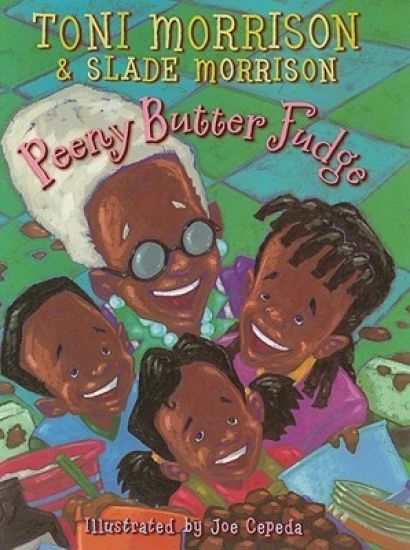
Snuggle, snuggle. Time to rest. Nana joins us in her nest. There is no one like Nana in the whole wide world. She is the best. Nana knows how to take an ordinary afternoon and make it extra special Nap time, story time, and playtime are transformed by fairies, dragons, dancing, and pretending -- and then mixing and fixing yummy, yummy fudge just like Nana and Mommy did not so many years ago.... Pulitzer Prize-winning author Toni Morrison and her son Slade tell a story of what really goes on when Nana is left in charge