Kirjojen hintavertailu – 12 859 829 kirjaa ja 27 kauppaa

Kirjailija

Tshilidzi Marwala

Kirjat ja teokset yhdessä paikassa: 44 kirjaa, julkaisuja vuosilta 2009–2026, suosituimpiin kuuluu Artificial Intelligence and the Law. Vertaile teosten hintoja ja tarkista saatavuus suomalaisista kirjakaupoista.

44 kirjaa

Kirjojen julkaisuvuodet: 2009–2026.

Artificial Intelligence in Economics and Finance Theories

Artificial Intelligence in Economics and Finance Theories

Tankiso Moloi; Tshilidzi Marwala

Springer Nature Switzerland AG
2020
sidottu
As Artificial Intelligence (AI) seizes all aspects of human life, there is a fundamental shift in the way in which humans are thinking of and doing things. Ordinarily, humans have relied on economics and finance theories to make sense of, and predict concepts such as comparative advantage, long run economic growth, lack or distortion of information and failures, role of labour as a factor of production and the decision making process for the purpose of allocating resources among other theories. Of interest though is that literature has not attempted to utilize these advances in technology in order to modernize economic and finance theories that are fundamental in the decision making process for the purpose of allocating scarce resources among other things. With the simulated intelligence in machines, which allows machines to act like humans and to some extent even anticipate events better than humans, thanks to their ability to handle massive data sets, this book will use artificialintelligence to explain what these economic and finance theories mean in the context of the agent wanting to make a decision. The main feature of finance and economic theories is that they try to eliminate the effects of uncertainties by attempting to bring the future to the present. The fundamentals of this statement is deeply rooted in risk and risk management. In behavioural sciences, economics as a discipline has always provided a well-established foundation for understanding uncertainties and what this means for decision making. Finance and economics have done this through different models which attempt to predict the future. On its part, risk management attempts to hedge or mitigate these uncertainties in order for “the planner” to reach the favourable outcome. This book focuses on how AI is to redefine certain important economic and financial theories that are specifically used for the purpose of eliminating uncertainties so as to allow agents to make informed decisions. In effect, certain aspects of finance and economic theories cannot be understood in their entirety without the incorporation of AI.
Handbook Of Machine Learning - Volume 2: Optimization And Decision Making

Handbook Of Machine Learning - Volume 2: Optimization And Decision Making

Tshilidzi Marwala; Collins Achepsah Leke

World Scientific Publishing Co Pte Ltd
2019
sidottu
Building on , this volume on Optimization and Decision Making covers a range of algorithms and their applications. Like the first volume, it provides a starting point for machine learning enthusiasts as a comprehensive guide on classical optimization methods. It also provides an in-depth overview on how artificial intelligence can be used to define, disprove or validate economic modeling and decision making concepts.
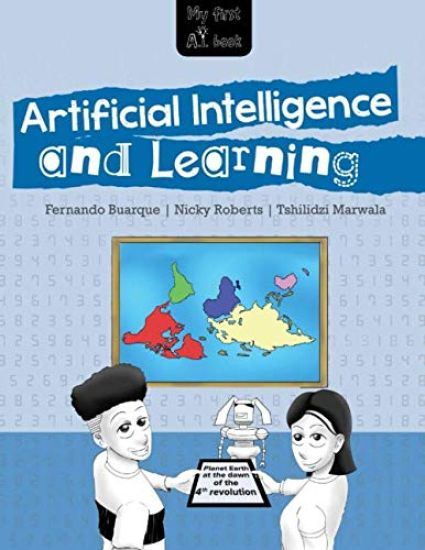
MY FIRST A.I. BOOK - Artificial Intelligence and Learning

MY FIRST A.I. BOOK - Artificial Intelligence and Learning

Nicky Roberts; Tshilidzi Marwala

Isbnagency.com
2019
nidottu
Artificial Intelligence and Learning is a teaser in a series of books and pioneering book for kids on Artificial Intelligence (A. I.) which focuses on its chief concept: LEARNING. The My First A. I. Books Series introduces kids of all ages to the foundational concepts for Artificial Intelligence and the 4th Industrial/Human Revolution, AKA I4.0 or 4IR or IOT. Written by three global experts and active scientific researchers, Professors Fernando Buarque (Ph. D. in A. I. Imperial College London), Tshilidzi Marwala (Ph. D. in A. I. at University of Cambridge), and Nicky Roberts (Ph. D. in Mathematics Education at the University of Witwatersrand). This book and series are suitable for all kids starting their Artificial Intelligence journey. As a matter of fact, the future of humankind depends centrally on how A. I. will be produced and used. As such, little readers are encouraged to think and talk in an informed manner about A. I. topics. The story of this first book, sets the plot by delving into the evolution of human tools (up to the fourth human revolution), types of learning, the ingredients for adaptive computer programs (i.e. programs that are able to learn), and even provides a working definition of A. I. All the books of the series are packed with concepts and encourage inquiry. They aim to widen the kids' perspectives on, and also nurture their participation with, these new concepts and tools. All that in this amazing unfolding revolution - the Revolution of the Intelligence. The authors took care to include not only technical concepts, but humanistic and character-building values too. Thus, readers would acquire a good foundation for their future, which may even not be a technical one (but certainly will include A. I.). Ideally, this book should be read by the kids with an adult. It is handsomely complemented by five more books, which portrait five missions, detailing other chief functional A. I. concepts. In each mission the explorers are challenged to delve (and learn) five different ways of using A. I. on real-world problems. The other books in the My First A. I. Books Series are: -My First A. I. Book - Mission of Team-B is Searching -My First A. I. Book - Mission of Team-R is Predicting-My First A. I. Book - Mission of Team-I is Classifying-My First A. I. Book - Mission of Team-C is Optimizing-My First A. I. Book - Mission of Team-S is Interfacing
Deep Learning and Missing Data in Engineering Systems

Deep Learning and Missing Data in Engineering Systems

Collins Achepsah Leke; Tshilidzi Marwala

Springer Nature Switzerland AG
2019
sidottu
Deep Learning and Missing Data in Engineering Systems uses deep learning and swarm intelligence methods to cover missing data estimation in engineering systems. The missing data estimation processes proposed in the book can be applied in image recognition and reconstruction. To facilitate the imputation of missing data, several artificial intelligence approaches are presented, including:deep autoencoder neural networks;deep denoising autoencoder networks;the bat algorithm;the cuckoo search algorithm; andthe firefly algorithm. The hybrid models proposed are used to estimate the missing data in high-dimensional data settings more accurately. Swarm intelligence algorithms are applied to address critical questions such as model selection and model parameter estimation. The authors address feature extraction for the purpose of reconstructing the input data from reduced dimensions by the use of deep autoencoder neural networks. They illustrate new models diagrammatically, report their findings in tables, so as to put their methods on a sound statistical basis. The methods proposed speed up the process of data estimation while preserving known features of the data matrix. This book is a valuable source of information for researchers and practitioners in data science. Advanced undergraduate and postgraduate students studying topics in computational intelligence and big data, can also use the book as a reference for identifying and introducing new research thrusts in missing data estimation.
Smart Computing Applications in Crowdfunding

Smart Computing Applications in Crowdfunding

Bo Xing; Tshilidzi Marwala

CRC Press
2018
sidottu
The book focuses on smart computing for crowdfunding usage, looking at the crowdfunding landscape, e.g., reward-, donation-, equity-, P2P-based and the crowdfunding ecosystem, e.g., regulator, asker, backer, investor, and operator. The increased complexity of fund raising scenario, driven by the broad economic environment as well as the need for using alternative funding sources, has sparked research in smart computing techniques. Covering a wide range of detailed topics, the authors of this book offer an outstanding overview of the current state of the art; providing deep insights into smart computing methods, tools, and their applications in crowdfunding; exploring the importance of smart analysis, prediction, and decision-making within the fintech industry. This book is intended to be an authoritative and valuable resource for professional practitioners and researchers alike, as well as finance engineering, and computer science students who are interested in crowdfunding and other emerging fintech topics.
Handbook Of Machine Learning - Volume 1: Foundation Of Artificial Intelligence

Handbook Of Machine Learning - Volume 1: Foundation Of Artificial Intelligence

Tshilidzi Marwala

World Scientific Publishing Co Pte Ltd
2018
sidottu
This is a comprehensive book on the theories of artificial intelligence with an emphasis on their applications. It combines fuzzy logic and neural networks, as well as hidden Markov models and genetic algorithm, describes advancements and applications of these machine learning techniques and describes the problem of causality. This book should serves as a useful reference for practitioners in artificial intelligence.
Smart Maintenance for Human–Robot Interaction

Smart Maintenance for Human–Robot Interaction

Bo Xing; Tshilidzi Marwala

Springer International Publishing AG
2018
nidottu
This self-contained book, written by active researchers, presents up-to-date information on smart maintenance strategies for human–robot interaction (HRI) and the associated applications of novel search algorithms in a single volume, eliminating the need to consult scattered resources. Unlike other books, it addresses maintaining a smart HRI from three dimensions, namely, hardware, cyberware, and hybrid-asset management, covering problems encountered in each through a wide variety of representative examples and elaborated illustrations. Further, the diverse mathematical models and intelligent systems constructions make the book highly practical. It enables readers interested in maintenance, robotics, and intelligent systems but perplexed by myriads of interrelated issues to grasp basic methodologies. At the same time, the referenced literature can be used as a roadmap for conducting deeper researches.
Artificial Intelligence and Economic Theory: Skynet in the Market

Artificial Intelligence and Economic Theory: Skynet in the Market

Tshilidzi Marwala; Evan Hurwitz

Springer International Publishing AG
2018
nidottu
This book theoretically and practically updates major economic ideas such as demand and supply, rational choice and expectations, bounded rationality, behavioral economics, information asymmetry, pricing, efficient market hypothesis, game theory, mechanism design, portfolio theory, causality and financial engineering in the age of significant advances in man-machine systems. The advent of artificial intelligence has changed many disciplines such as engineering, social science and economics. Artificial intelligence is a computational technique which is inspired by natural intelligence concepts such as the swarming of birds, the working of the brain and the pathfinding of the ants. Artificial Intelligence and Economic Theory: Skynet in the Market analyses the impact of artificial intelligence on economic theories, a subject that has not been studied. It also introduces new economic theories and these are rational counterfactuals and rational opportunity costs. These ideas are applied to diverse areas such as modelling of the stock market, credit scoring, HIV and interstate conflict. Artificial intelligence ideas used in this book include neural networks, particle swarm optimization, simulated annealing, fuzzy logic and genetic algorithms. It, furthermore, explores ideas in causality including Granger as well as the Pearl causality models.
Artificial Intelligence and Economic Theory: Skynet in the Market

Artificial Intelligence and Economic Theory: Skynet in the Market

Tshilidzi Marwala; Evan Hurwitz

Springer International Publishing AG
2017
sidottu
This book theoretically and practically updates major economic ideas such as demand and supply, rational choice and expectations, bounded rationality, behavioral economics, information asymmetry, pricing, efficient market hypothesis, game theory, mechanism design, portfolio theory, causality and financial engineering in the age of significant advances in man-machine systems. The advent of artificial intelligence has changed many disciplines such as engineering, social science and economics. Artificial intelligence is a computational technique which is inspired by natural intelligence concepts such as the swarming of birds, the working of the brain and the pathfinding of the ants. Artificial Intelligence and Economic Theory: Skynet in the Market analyses the impact of artificial intelligence on economic theories, a subject that has not been studied. It also introduces new economic theories and these are rational counterfactuals and rational opportunity costs. These ideas are applied to diverse areas such as modelling of the stock market, credit scoring, HIV and interstate conflict. Artificial intelligence ideas used in this book include neural networks, particle swarm optimization, simulated annealing, fuzzy logic and genetic algorithms. It, furthermore, explores ideas in causality including Granger as well as the Pearl causality models.
Smart Maintenance for Human–Robot Interaction

Smart Maintenance for Human–Robot Interaction

Bo Xing; Tshilidzi Marwala

Springer International Publishing AG
2017
sidottu
This self-contained book, written by active researchers, presents up-to-date information on smart maintenance strategies for human–robot interaction (HRI) and the associated applications of novel search algorithms in a single volume, eliminating the need to consult scattered resources. Unlike other books, it addresses maintaining a smart HRI from three dimensions, namely, hardware, cyberware, and hybrid-asset management, covering problems encountered in each through a wide variety of representative examples and elaborated illustrations. Further, the diverse mathematical models and intelligent systems constructions make the book highly practical. It enables readers interested in maintenance, robotics, and intelligent systems but perplexed by myriads of interrelated issues to grasp basic methodologies. At the same time, the referenced literature can be used as a roadmap for conducting deeper researches.
Probabilistic Finite Element Model Updating Using Bayesian Statistics

Probabilistic Finite Element Model Updating Using Bayesian Statistics

Tshilidzi Marwala; Ilyes Boulkaibet; Sondipon Adhikari

Wiley-Blackwell
2016
sidottu
Probabilistic Finite Element Model Updating Using Bayesian Statistics: Applications to Aeronautical and Mechanical Engineering Tshilidzi Marwala and Ilyes Boulkaibet, University of Johannesburg, South Africa Sondipon Adhikari, Swansea University, UK Covers the probabilistic finite element model based on Bayesian statistics with applications to aeronautical and mechanical engineering Finite element models are used widely to model the dynamic behaviour of many systems including in electrical, aerospace and mechanical engineering. The book covers probabilistic finite element model updating, achieved using Bayesian statistics. The Bayesian framework is employed to estimate the probabilistic finite element models which take into account of the uncertainties in the measurements and the modelling procedure. The Bayesian formulation achieves this by formulating the finite element model as the posterior distribution of the model given the measured data within the context of computational statistics and applies these in aeronautical and mechanical engineering. Probabilistic Finite Element Model Updating Using Bayesian Statistics contains simple explanations of computational statistical techniques such as Metropolis-Hastings Algorithm, Slice sampling, Markov Chain Monte Carlo method, hybrid Monte Carlo as well as Shadow Hybrid Monte Carlo and their relevance in engineering. Key features: Contains several contributions in the area of model updating using Bayesian techniques which are useful for graduate students. Explains in detail the use of Bayesian techniques to quantify uncertainties in mechanical structures as well as the use of Markov Chain Monte Carlo techniques to evaluate the Bayesian formulations. The book is essential reading for researchers, practitioners and students in mechanical and aerospace engineering.
Artificial Intelligence Techniques for Rational Decision Making

Artificial Intelligence Techniques for Rational Decision Making

Tshilidzi Marwala

Springer International Publishing AG
2016
nidottu
Develops insights into solving complex problems in engineering, biomedical sciences, social science and economics based on artificial intelligence. Some of the problems studied are in interstate conflict, credit scoring, breast cancer diagnosis, condition monitoring, wine testing, image processing and optical character recognition. The author discusses and applies the concept of flexibly-bounded rationality which prescribes that the bounds in Nobel Laureate Herbert Simon’s bounded rationality theory are flexible due to advanced signal processing techniques, Moore’s Law and artificial intelligence. Artificial Intelligence Techniques for Rational Decision Making examines and defines the concepts of causal and correlation machines and applies the transmission theory of causality as a defining factor that distinguishes causality from correlation. It develops the theory of rational counterfactuals which are defined as counterfactuals that are intended to maximize theattainment of a particular goal within the context of a bounded rational decision making process. Furthermore, it studies four methods for dealing with irrelevant information in decision making:Theory of the marginalization of irrelevant information Principal component analysis Independent component analysisAutomatic relevance determination methodIn addition it studies the concept of group decision making and various ways of effecting group decision making within the context of artificial intelligence. Rich in methods of artificial intelligence including rough sets, neural networks, support vector machines, genetic algorithms, particle swarm optimization, simulated annealing, incremental learning and fuzzy networks, this book will be welcomed by researchers and students working in these areas.
The role of Intellectuals in the state-society nexus

The role of Intellectuals in the state-society nexus

Nicholas Wolpe; Mcebisi Ndletyana; Ibbo Mandaza; Ayanda Ntsabula; Xolela Mangcu; Joel Netshitenzhe; Ben Turok; Ari Sitas; Tshilidzi Marwala; Nomboniso Gasa

Real African Publishers Pty Ltd
2016
nidottu
If we are to talk of a 'new' intellectual movement, the question is begged: what happened to the 'old' intellectual movement? What happened to the thinkers who inspired and led our struggle against colonialism, apartheid and exploitation? What has happened to the thinkers who gave substance and guidance and, in many cases, practical leadership to our attempts to undo the past and forge a new future? In pursuit of answers to these questions, the Mapungubwe Institute for Strategic Reflection (MISTRA), in partnership with the Liliesleaf Trust, hosted a roundtable in March 2015 on the theme 'The Role of Intellectuals in the State-Society Nexus'. The roundtable received inputs from a range of thinkers, including Ibbo Mandaza, Ben Turok, Ari Sitas, Ayanda Ntsaluba, Xolela Mangcu, Joel Netshitenzhe, Tshilidzi Marwala and Nomboniso Gasa, as well as provocative and piercing inputs from the attendees. This publication aims to put the contributions and debates at the roundtable further into the public domain and records the input of the main speakers, the respondents, as well as the discussion from the floor. The rigorous debate at the roundtable spilt out of the boundaries of the event itself and encouraged a number of thinkers to provide additional material for this publication: Z. Pallo Jordan, David Moore (with Tshilidzi Marwala) and Desiree Lewis.
Economic Modeling Using Artificial Intelligence Methods

Economic Modeling Using Artificial Intelligence Methods

Tshilidzi Marwala

Springer London Ltd
2015
nidottu
Economic Modeling Using Artificial Intelligence Methods examines the application of artificial intelligence methods to model economic data. Traditionally, economic modeling has been modeled in the linear domain where the principles of superposition are valid. The application of artificial intelligence for economic modeling allows for a flexible multi-order non-linear modeling. In addition, game theory has largely been applied in economic modeling. However, the inherent limitation of game theory when dealing with many player games encourages the use of multi-agent systems for modeling economic phenomena. The artificial intelligence techniques used to model economic data include:multi-layer perceptron neural networksradial basis functionssupport vector machinesrough setsgenetic algorithmparticle swarm optimizationsimulated annealingmulti-agent systemincremental learningfuzzy networksSignal processing techniques are explored to analyze economic data, and these techniques are the time domain methods, time-frequency domain methods and fractals dimension approaches. Interesting economic problems such as causality versus correlation, simulating the stock market, modeling and controling inflation, option pricing, modeling economic growth as well as portfolio optimization are examined. The relationship between economic dependency and interstate conflict is explored, and knowledge on how economics is useful to foster peace – and vice versa – is investigated. Economic Modeling Using Artificial Intelligence Methods deals with the issue of causality in the non-linear domain and applies the automatic relevance determination, the evidence framework, Bayesian approach and Granger causality to understand causality and correlation. Economic Modeling Using Artificial Intelligence Methods makes an important contribution to the area of econometrics,and is a valuable source of reference for graduate students, researchers and financial practitioners.
Causality, Correlation And Artificial Intelligence For Rational Decision Making
Causality has been a subject of study for a long time. Often causality is confused with correlation. Human intuition has evolved such that it has learned to identify causality through correlation. In this book, four main themes are considered and these are causality, correlation, artificial intelligence and decision making. A correlation machine is defined and built using multi-layer perceptron network, principal component analysis, Gaussian Mixture models, genetic algorithms, expectation maximization technique, simulated annealing and particle swarm optimization. Furthermore, a causal machine is defined and built using multi-layer perceptron, radial basis function, Bayesian statistics and Hybrid Monte Carlo methods. Both these machines are used to build a Granger non-linear causality model. In addition, the Neyman-Rubin, Pearl and Granger causal models are studied and are unified. The automatic relevance determination is also applied to extend Granger causality framework to the non-linear domain. The concept of rational decision making is studied, and the theory of flexibly-bounded rationality is used to extend the theory of bounded rationality within the principle of the indivisibility of rationality. The theory of the marginalization of irrationality for decision making is also introduced to deal with satisficing within irrational conditions. The methods proposed are applied in biomedical engineering, condition monitoring and for modelling interstate conflict.
Finite Element Model Updating Using Computational Intelligence Techniques
FEM updating allows FEMs to be tuned better to reflect measured data. It can be conducted using two different statistical frameworks: the maximum likelihood approach and Bayesian approaches. This book applies both strategies to the field of structural mechanics, using vibration data. Computational intelligence techniques including: multi-layer perceptron neural networks; particle swarm and GA-based optimization methods; simulated annealing; response surface methods; and expectation maximization algorithms, are proposed to facilitate the updating process. Based on these methods, the most appropriate updated FEM is selected, a problem that traditional FEM updating has not addressed. This is found to incorporate engineering judgment into finite elements through the formulations of prior distributions. Case studies, demonstrating the principles test the viability of the approaches, and. by critically analysing the state of the art in FEM updating, this book identifies new research directions.
Artificial Intelligence Techniques for Rational Decision Making

Artificial Intelligence Techniques for Rational Decision Making

Tshilidzi Marwala

Springer International Publishing AG
2014
sidottu
Develops insights into solving complex problems in engineering, biomedical sciences, social science and economics based on artificial intelligence. Some of the problems studied are in interstate conflict, credit scoring, breast cancer diagnosis, condition monitoring, wine testing, image processing and optical character recognition. The author discusses and applies the concept of flexibly-bounded rationality which prescribes that the bounds in Nobel Laureate Herbert Simon’s bounded rationality theory are flexible due to advanced signal processing techniques, Moore’s Law and artificial intelligence. Artificial Intelligence Techniques for Rational Decision Making examines and defines the concepts of causal and correlation machines and applies the transmission theory of causality as a defining factor that distinguishes causality from correlation. It develops the theory of rational counterfactuals which are defined as counterfactuals that are intended to maximize theattainment of a particular goal within the context of a bounded rational decision making process. Furthermore, it studies four methods for dealing with irrelevant information in decision making:Theory of the marginalization of irrelevant information Principal component analysis Independent component analysisAutomatic relevance determination methodIn addition it studies the concept of group decision making and various ways of effecting group decision making within the context of artificial intelligence. Rich in methods of artificial intelligence including rough sets, neural networks, support vector machines, genetic algorithms, particle swarm optimization, simulated annealing, incremental learning and fuzzy networks, this book will be welcomed by researchers and students working in these areas.
Condition Monitoring Using Computational Intelligence Methods
Condition Monitoring Using Computational Intelligence Methods promotes the various approaches gathered under the umbrella of computational intelligence to show how condition monitoring can be used to avoid equipment failures and lengthen its useful life, minimize downtime and reduce maintenance costs. The text introduces various signal-processing and pre-processing techniques, wavelets and principal component analysis, for example, together with their uses in condition monitoring and details the development of effective feature extraction techniques classified into frequency-, time-frequency- and time-domain analysis. Data generated by these techniques can then be used for condition classification employing tools such as:• fuzzy systems; rough and neuro-rough sets; neural and Bayesian networks;hidden Markov and Gaussian mixture models; and support vector machines.
Militarized Conflict Modeling Using Computational Intelligence

Militarized Conflict Modeling Using Computational Intelligence

Tshilidzi Marwala; Monica Lagazio

Springer London Ltd
2013
nidottu
Militarized Conflict Modeling Using Computational Intelligence examines the application of computational intelligence methods to model conflict. Traditionally, conflict has been modeled using game theory. The inherent limitation of game theory when dealing with more than three players in a game is the main motivation for the application of computational intelligence in modeling conflict. Militarized interstate disputes (MIDs) are defined as a set of interactions between, or among, states that can result in the display, threat or actual use of military force in an explicit way. These interactions can result in either peace or conflict. This book models the relationship between key variables and the risk of conflict between two countries. The variables include Allies which measures the presence or absence of military alliance, Contiguity which measures whether the countries share a common boundary or not and Major Power which measures whether either or both states are a major power. Militarized Conflict Modeling Using Computational Intelligence implements various multi-layer perception neural networks, Bayesian networks, support vector machines, neuro-fuzzy models, rough sets models, neuro-rough sets models and optimized rough sets models to create models that estimate the risk of conflict given the variables. Secondly, these models are used to study the sensitivity of each variable to conflict. Furthermore, a framework on how these models can be used to control the possibility of peace is proposed. Finally, new and emerging topics on modelling conflict are identified and further work is proposed.
Economic Modeling Using Artificial Intelligence Methods

Economic Modeling Using Artificial Intelligence Methods

Tshilidzi Marwala

Springer London Ltd
2013
sidottu
Economic Modeling Using Artificial Intelligence Methods examines the application of artificial intelligence methods to model economic data. Traditionally, economic modeling has been modeled in the linear domain where the principles of superposition are valid. The application of artificial intelligence for economic modeling allows for a flexible multi-order non-linear modeling. In addition, game theory has largely been applied in economic modeling. However, the inherent limitation of game theory when dealing with many player games encourages the use of multi-agent systems for modeling economic phenomena. The artificial intelligence techniques used to model economic data include:multi-layer perceptron neural networksradial basis functionssupport vector machinesrough setsgenetic algorithmparticle swarm optimizationsimulated annealingmulti-agent systemincremental learningfuzzy networksSignal processing techniques are explored to analyze economic data, and these techniques are the time domain methods, time-frequency domain methods and fractals dimension approaches. Interesting economic problems such as causality versus correlation, simulating the stock market, modeling and controling inflation, option pricing, modeling economic growth as well as portfolio optimization are examined. The relationship between economic dependency and interstate conflict is explored, and knowledge on how economics is useful to foster peace – and vice versa – is investigated. Economic Modeling Using Artificial Intelligence Methods deals with the issue of causality in the non-linear domain and applies the automatic relevance determination, the evidence framework, Bayesian approach and Granger causality to understand causality and correlation. Economic Modeling Using Artificial Intelligence Methods makes an important contribution to the area of econometrics,and is a valuable source of reference for graduate students, researchers and financial practitioners.