
Kirjailija
Tzvetan Todorov
Kirjat ja teokset yhdessä paikassa: 30 kirjaa, julkaisuja vuosilta 1975–2022, suosituimpiin kuuluu Espíritu de la Ilustración, El. Vertaile teosten hintoja ja tarkista saatavuus suomalaisista kirjakaupoista.
30 kirjaa
Kirjojen julkaisuvuodet: 1975–2022.
Hope and Memory: Lessons from the Twentieth Century
Tzvetan Todorov
PRINCETON UNIVERSITY PRESS
2016
nidottu
Both a political history and a moral critique of the twentieth century, this is a personal and impassioned book from one of Europe's most outstanding intellectuals. Identifying totalitarianism as the major innovation of the twentieth century, Tzvetan Todorov examines the struggle between this system and democracy and its effects on human life and consciousness. Totalitarianism managed to impose itself because, more than any other political system, it played on people's need for the absolute: it fed their hope to endow life with meaning by taking part in the construction of a paradise on earth. As a result, millions of people lost their lives in the name of a higher good. While democracy eventually won the struggle against totalitarianism in much of the world, democracy itself is not immune to the pitfall of do-goodery: moral correctness at home and atomic or humanitarian bombs abroad. Todorov explores the history of the past century not only by analyzing its spectacular political conflicts but also by offering moving profiles of several individuals who, at great personal cost, resisted the strictures of the communist and Nazi regimes. Some--Margarete Buber-Neumann, David Rousset, Primo Levi, and Germaine Tillion--were deported to concentration camps. Others--Vasily Grossman and Romain Gary--fought courageously in World War II. All became exemplary witnesses who described with great lucidity and humanity what they had endured. This book preserves the memory of the past as we move into the twenty-first century--arguing eloquently that we must place the past at the service of a just future.
Available in English for the first time, Imperfect Garden is both an approachable intellectual history and a bracing treatise on how we should understand and experience our lives. In it, one of France's most prominent intellectuals explores the foundations, limits, and possibilities of humanist thinking. Through his critical but sympathetic excavation of humanism, Tzvetan Todorov seeks an answer to modernity's fundamental challenge: how to maintain our hard-won liberty without paying too dearly in social ties, common values, and a coherent and responsible sense of self. Todorov reads afresh the works of major humanists--primarily Montaigne, Rousseau, and Constant, but also Descartes, Montesquieu, and Toqueville. Each chapter considers humanism's approach to one major theme of human existence: liberty, social life, love, self, morality, and expression. Discussing humanism in dialogue with other systems, Todorov finds a response to the predicament of modernity that is far more instructive than any offered by conservatism, scientific determinism, existential individualism, or humanism's other contemporary competitors. Humanism suggests that we are members of an intelligent and sociable species who can act according to our will while connecting the well-being of other members with our own. It is through this understanding of free will, Todorov argues, that we can use humanism to rescue universality and reconcile human liberty with solidarity and personal integrity. Placing the history of ideas at the service of a quest for moral and political wisdom, Todorov's compelling and no doubt controversial rethinking of humanist ideas testifies to the enduring capacity of those ideas to meditate on--and, if we are fortunate, cultivate--the imperfect garden in which we live.

Tzvetan Todorov is one of the leading intellectuals in France today. In this book he argues that the biggest threat to democracy today is not the supposed external enemies of Islamic fundamentalism and terrorism: rather, the biggest threat is internal to democracy itself: it's what the Greeks called 'hubris'.

The political history of the twentieth century can be viewed as the history of democracy’s struggle against its external enemies: fascism and communism. This struggle ended with the fall of the Berlin Wall and the collapse of the Soviet regime. Some people think that democracy now faces new enemies: Islamic fundamentalism, religious extremism and international terrorism and that this is the struggle that will define our times. Todorov disagrees: the biggest threat to democracy today is democracy itself. Its enemies are within: what the ancient Greeks called 'hubris'. Todorov argues that certain democratic values have been distorted and pushed to an extreme that serves the interests of dominant states and powerful individuals. In the name of ‘democracy’ and ‘human rights’, the United States and some European countries have embarked on a crusade to enlighten some foreign populations through the use of force. Yet this mission to ‘help’ others has led to Abu Ghraib and Guantanamo, to large-scale destruction and loss of life and to a moral crisis of growing proportions. The defence of freedom, if unlimited, can lead to the tyranny of individuals. Drawing on recent history as well as his own experience of growing up in a totalitarian regime, Todorov returns to examples borrowed from the Western canon: from a dispute between Augustine and Pelagius to the fierce debates among Enlightenment thinkers to explore the origin of these perversions of democracy. He argues compellingly that the real democratic ideal is to be found in the delicate, ever-changing balance between competing principles, popular sovereignty, freedom and progress. When one of these elements breaks free and turns into an over-riding principle, it becomes dangerous: populism, ultra-liberalism and messianism, the inner enemies of democracy.

The fall of the Berlin Wall marked the beginning of the collapse of the Soviet Union, as well as many other communist totalitarian regimes around the world. But it would be naive to assume that this historic, symbolic event and its aftermath have completely rid the world of totalitarianism. Instead, we should ask, what is the totalitarian experience and how does it survive today? This is the imposing question raised by acclaimed philosopher and writer Tzvetan Todorov in this compact, highly personal essay. Here, he recounts his own experiences with totalitarianism in his native Bulgaria and discusses the books he has written in the last twenty years that were devoted to examining regimes, such as "Voices from the Gulag", his influential analysis of Stalinist concentration camps. Through this retrospective investigation, Todorov offers a historical look at communism. He brings together and distills his extensive oeuvre to reveal the essence of totalitarian ideology, the characteristics of daily life under communism, and the irony of democratic messianism. Bringing his thoughts and insights up to the present, Todorov explores how economic ultraliberalism may be considered just another form of totalitarianism. And his conclusion leads us to ask ourselves another challenging question: Are liberal democratic societies actually totalitarian experiences in disguise?

Oversat af Lars Bonnevie. Denne lille perle af en bog fra den internationalt anerkendte filosof, lingvist og litteraturforsker Tzvetan Todorov fastsætter Oplysningstiden som den filosofiske hjørnesten i den moderne verden og hævder, at Oplysningens visdom er lige så relevant for os i dag, som den var i 17700-tallet. Selv om vores liberale demokratier er afkom af Oplysningstiden, illustrerer også de, hvordan dens ideer kan fordrejes og pervertereres. Mennesker, der lever i nutidens demokratier, er ofte usikre over en række rænomener, som de ikke ved, hvordan de skal vurdere: globalisering og mediernes almagt, økonomiens dominans og teknologiens triumf, statssponsoreret tortur, løgne, moralisme og retten til at intervenere. "DET ER VED AT KRITISERE OPLYSNINGSTIDEN, AT VI FORBLIVER TROFASTE OVER FOR DEN", SKRIVER TODOROV. Tzetan Todorov, f. 1939, er bulgarskfødt fransk litteraturforsker, kendt over hele verden som et afgørende bindeled mellem russiks foramlisme og fransk strukturalisme. Blandt de tidligste værker om fortællestrukturer og litterære genrer er hans mest kendte Introduction à la littérature fantastique, 1970 (Den fantastiske litteratur, 1989). Forfatterskabet omfatter også bredt anlagte udgivelser om kolonialisme, nationalisme og race samt et essay om, hvordan det liberale demokratis udenrigspolitik bør se ud i en moderne verden: New world disorder: reflections of a european, 2005. Nærværende oversættelse af L'Esprit des Lumieres (Til forsvar for oplysningen) er udkommet på mere end 10 forskellige sprog.

Boken handler om koloniseringen av Mellom-Amerika i århundret etter at Columbus hadde oppdaget landet. Synet spanierne hadde på indianerne er hovedtemaet i boken, og forfatteren har delt opp boken i hovedtemaene: oppdage, erobre, elske (ødelegge) og erkjenne landets kultur og mennesker.

Though the 2008 election of Barack Obama and his subsequent signing of the executive order to close the prison at Guantanamo Bay signaled a considerable shift away from the policies of the Bush era, the lessons to be learned from the war on terror will remain relevant and necessary for many years to come. In the aftermath of 9/11, the U. S. government approved interrogation tactics for enemy combatant detainees that could be defined as torture, which was outlawed in Europe in the eighteenth century as well as prohibited by the Geneva Conventions and the United Nations Convention Against Torture. In conjunction with these policies, the Bush administration vocally defended torture as a necessary tool in its war on terror. Here Tzvetan Todorov argues that the use of the terms 'war' and 'terror' dehumanize the enemy and permit treatment that would otherwise be impermissible. He examines the implications and corrupting impact of the attempt to impose 'good' through violence and the attempt to spread democratic values by unethical means. Todorov asks: Can violence overcome violence? Does the need to protect one's own country justify violating human rights? Invalidating one by one the political and ethical arguments in favor of torture, Todorov likens institutional torture to a cancer that is eroding our society and undermining the very fundamental democratic ideas of justice and right. "Torture and the War on Terror" is a significant work in ethics, human rights, and political and social history by one of the world's leading intellectuals, and its arguments will be influential in shaping our policies to come.


This illuminating analysis by one of the world's leading intellectuals addresses fundamental questions about the new world disorder exemplified by the war on terrorism, the Iraq conflict and its aftermath and the current state of transatlantic relations. In eight concise chapters, Todorov discusses the use of force versus diplomacy, the emergence of new powers and the reactions of different players such as the UK, France, Poland and the United Nations, to the imperialist turn in US foreign policy. He argues that a new Europe is capable of reducing its dependence on the United States and assuming more responsibilities in the area of foreign affairs, would be the most effective way of counter-balancing America's current dominance of global politics. Drawing on his vast knowledge of history and philosophy, Todorov has written an insightful and timely book that, without simplyfying the issues, is accessible to all.
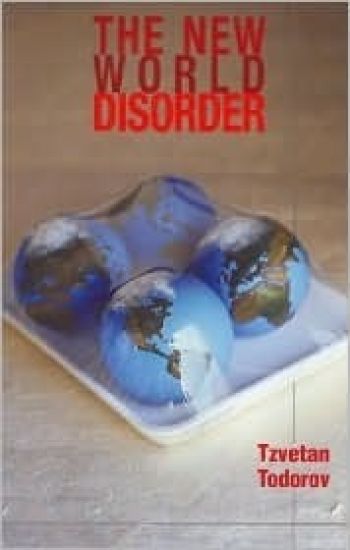
This illuminating analysis by one of the world's leading intellectuals addresses fundamental questions about the new world disorder exemplified by the war on terrorism, the Iraq conflict and its aftermath and the current state of transatlantic relations. In eight concise chapters, Todorov discusses the use of force versus diplomacy, the emergence of new powers and the reactions of different players such as the UK, France, Poland and the United Nations, to the imperialist turn in US foreign policy. He argues that a new Europe is capable of reducing its dependence on the United States and assuming more responsibilities in the area of foreign affairs, would be the most effective way of counter-balancing America's current dominance of global politics. Drawing on his vast knowledge of history and philosophy, Todorov has written an insightful and timely book that, without simplyfying the issues, is accessible to all.
"We are all confronted, at one time or another, with choices as to what sort of life we will lead." So Tzvetan Todorov begins Frail Happiness, an important interpretation of Rousseau, one suffused with Todorov’s own moral seriousness and intellectual depth. While ranging widely through Rousseau’s corpus with skill and scholarly authority Todorov returns, again and again, to the fragile yet persistent hope for human happiness.
Both a political history and a moral critique of the twentieth century, this is a personal and impassioned book from one of Europe's most outstanding intellectuals. Identifying totalitarianism as the major innovation of the twentieth century, Tzvetan Todorov examines the struggle between this system and democracy and its effects on human life and consciousness. Totalitarianism managed to impose itself because, more than any other political system, it played on people's need for the absolute: it fed their hope to endow life with meaning by taking part in the construction of a paradise on earth. As a result, millions of people lost their lives in the name of a higher good. While democracy eventually won the struggle against totalitarianism in much of the world, democracy itself is not immune to the pitfall of do-goodery: moral correctness at home and atomic or "humanitarian" bombs abroad. Todorov explores the history of the past century not only by analyzing its spectacular political conflicts but also by offering moving profiles of several individuals who, at great personal cost, resisted the strictures of the communist and Nazi regimes. Some--Margarete Buber-Neumann, David Rousset, Primo Levi, and Germaine Tillion--were deported to concentration camps. Others--Vasily Grossman and Romain Gary--fought courageously in World War II. All became exemplary witnesses who described with great lucidity and humanity what they had endured. This book preserves the memory of the past as we move into the twenty-first century--arguing eloquently that we must place the past at the service of a just future.
"We are all confronted, at one time or another, with choices as to what sort of life we will lead." So Tzvetan Todorov begins Frail Happiness, an important interpretation of Rousseau, one suffused with Todorov’s own moral seriousness and intellectual depth. While ranging widely through Rousseau’s corpus with skill and scholarly authority Todorov returns, again and again, to the fragile yet persistent hope for human happiness.
In Life in Common Tzvetan Todorov explores the construction of the self and offers new perspectives on current debates about otherness. Through the seventeenth century, solitude was considered the human condition in the Western philosophical tradition. The self was not dependent on others to perceive itself as complete. Todorov sees a reversal of this thinking beginning with the writings of Jean-Jacques Rousseau in the eighteenth century. For the first time the self was defined as incomplete without the other, and the gaze no longer served only to satisfy personal vanity but constituted the fundamental requisite for human identity. Todorov traces the far-reaching implications of Rousseau's new vision of the self and society through the political, philosophical, and psychoanalytical theories of Adam Smith, Georg Wilhelm Friedrich Hegel, Georges Bataille, Melanie Klein, and others, and the relevant literary works of Karl Philipp Moritz, the Marquis de Sade, and Marcel Proust. In an original study of the bond between parent and child, Todorov develops a compelling vision of the self as social.
In Life in Common Tzvetan Todorov explores the construction of the self and offers new perspectives on current debates about otherness. Through the seventeenth century, solitude was considered the human condition in the Western philosophical tradition. The self was not dependent on others to perceive itself as complete. Todorov sees a reversal of this thinking beginning with the writings of Jean-Jacques Rousseau in the eighteenth century. For the first time the self was defined as incomplete without the other, and the gaze no longer served only to satisfy personal vanity but constituted the fundamental requisite for human identity. Todorov traces the far-reaching implications of Rousseau's new vision of the self and society through the political, philosophical, and psychoanalytical theories of Adam Smith, Georg Wilhelm Friedrich Hegel, Georges Bataille, Melanie Klein, and others, and the relevant literary works of Karl Philipp Moritz, the Marquis de Sade, and Marcel Proust. In an original study of the bond between parent and child, Todorov develops a compelling vision of the self as social.
One of the most terrible legacies of our century is the concentration camp. Countless men and women have passed through camps in Nazi Germany, Communist China, and the Soviet bloc countries. In Voices from the Gulag, Tzvetan Todorov singles out the experience of one country where the concentration camps were particularly brutal and emblematic of the horrors of totalitarianism—communist Bulgaria. The voices we hear in this book are mostly from Lovech, a rock quarry in Bulgaria that became the final destination for several thousand men and women during its years of operation from 1959 to 1962. The inmates, though drawn from various social, professional, and economic backgrounds, shared a common fate: they were torn from their homes by secret police, brutally beaten, charged with fictitious crimes, and shipped to Lovech. Once there, they were forced to endure backbreaking labor, inadequate clothing, shelter, and food, systematic beatings, and institutionalized torture. We also hear from guards, commandants, and bureaucrats whose lives were bound together with the inmates in an absurd drama. Regardless of their grade and duties, all agree that those responsible for these "excesses" were above or below them, yet never they themselves. Accountability is thereby diffused through the many strata of the state apparatus, providing legal defenses and "clear" consciences. Yet, as the concluding section of interviews—with the children and wives of the victims—reminds us, accountability is a moral and historical imperative. The testimonies in Voices from the Gulag were written specifically for this volume or have been published in the Bulgarian press or on Bulgarian television. Todorov compiled them for this book and has written an introductory essay—a lucid and troubling analysis of totalitarianism and the role that terror and the concentration camp play in such a world. He reflects upon his own experience living in Bulgaria during the years when Lovech was in operation. It is through that experience that Todorov has sought to understand the totalitarian horrors of our century. Although Lovech and the other camps of Soviet Russia and Eastern Europe have been closed down, concentration camps still exist in the countries whose communist regimes remain in power—Vietnam, China, North Korea, and Cuba. The voices in this book remind us that we are never completely safe from the threat of totalitarianism, a threat that we all must face. As Todorov writes, "I cannot say that these stories do not concern me."

The Conquest of America
Tzvetan Todorov; Anthony Pagden
University of Oklahoma Press
1999
nidottu
Halvin toimitettuna 29,30 €
A classic in its field, The Conquest of America is a study of cultural confrontation in the New World, with implications far beyond sixteenth-century America. The book offers an original interpretation of both Columbus's discovery of America and the Spaniards' subsequent conquest, colonization, and destruction of pre-Columbian cultures in Mexico and the Caribbean. Using sixteenth-century sources, the distinguished French writer and critic Tzvetan Todorov examines the beliefs and behavior of the Spanish conquistadors and of the Aztecs, adversaries in a clash of cultures that resulted in the near extermination of Mesoamerica's Indian population. A new foreword by Anthony Pagden discusses the implications of Todorov's landmark study.