

Kirjailija
Tzvetan Todorov
Kirjat ja teokset yhdessä paikassa: 30 kirjaa, julkaisuja vuosilta 1975–2022, suosituimpiin kuuluu Espíritu de la Ilustración, El. Vertaile teosten hintoja ja tarkista saatavuus suomalaisista kirjakaupoista.
30 kirjaa
Kirjojen julkaisuvuodet: 1975–2022.

Tzvetan Todorov's approach to symbols is historical rather than theoretical, providing a survey of the interpretations of this concept to be found in the writings of authors as various as Aristotle, Cicero, Quintilian, St. Augustine, Lessing, Diderot, Goethe, Novalis, Moritz, the brothers Schlegel, Freud and Jakobson. With a wealth of penetrating individual analyses the author traces a line of development in the history of ideas that ranges from Classical Antiquity to the Age of Enlightenment and from Romanticism to the present.
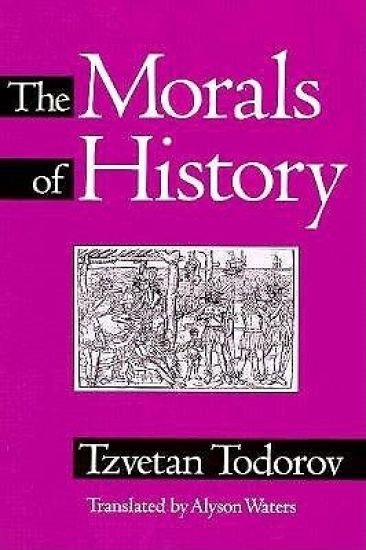
The celebrated scholar Tzvetan Todorov offers a study examining the complex relationship between "ethics" and "history". Exploring such questions as "How does one measure and experience freedom in the depths of society?" and "How does one practise and measure equality among different societies?", Todorov confronts topics ranging from the conquest of America and 19th-century colonialism, to democracy and conflicts of the "self" versus the "other". As he probes the effects of intercultural relationships and the difficulties inherent to the representation of the other, Todorov describes his own experience as a Bulgarian living in France. He also studies a variety of travel narratives from those of Columbus to Amerigo Vespucci to Lamartine, and he analyzes with great clarity the writings of the "ideologues" of both colonialism and anticolonialism. Offering an urgent call to contemporary intellectuals to re-examine their role in society and to integrate values into their work, "The Morals of History" explores the relationship between facts and values, truth and fiction, interpretation and articulation. Addressed to a broad audience, it should intrigue readers interested in contemporary discussions regarding the outcome of democracy and the future of late capitalism, the persistence of a logic of conquest and ethnocentrism, and the signs which point to emerging fascisms.
This is a collection in translation of recent essays by Tzvetan Todorov, one of the most eminent of today's literary critics. The essays concentrate on the idea of genre, literary or otherwise, and ask such questions as: What is literature? What is genre? Which are the major literary genres? In the first section, Todorov proposes definitions for the notions of literature, discourse, and genre. Following is a general discussion of the two principal literary genres, fiction and poetry. In the final section, Todorov examines individual authors as case studies: among them Poe, Dostoyevsky, Baudelaire, Conrad, and James.
Genres in Discourse
Tzvetan Todorov
Cambridge University Press
1990
pokkari
Halvin toimitettuna 55,60 €
This is a collection in translation of recent essays by Tzvetan Todorov, one of the most eminent of today’s literary critics. The essays concentrate on the idea of genre, literary or otherwise, and ask such questions as: What is literature? What is genre? Which are the major literary genres? In the first section, Todorov proposes definitions for the notions of literature, discourse, and genre. Following is a general discussion of the two principal literary genres, fiction and poetry. In the final section, Todorov examines individual authors as case studies: among them Poe, Dostoyevsky, Baudelaire, Conrad, and James.

In Symbolism and Interpretation, Tzvetan Todorov examines two aspects of discourse: its production, which has traditionally been the domain of rhetoric, and its reception, which has always been the object of hermeneutics. He analyzes the diverse theories of symbolism and interpretation that have been elaborated over the centuries and considers their contribution to a general theory of verbal symbolism, discussing a wide range of thinkers, from the Sanskrit philosophers and Aristotle to the German Romantics and contemporary semioticians. Todorov begins by examining general ideas of linguistic symbolism and the interpretive process. He then turns to a detailed consideration of two of the most influential and pervasive interpretative strategies in Western thought: the patristic exegesis of Augustine and Aquinas, and the philological exegesis foreshadowed in the work of Spinoza, developed by Wolf, Ast, Boeckh, and Lanson, and criticized by Schleiermacher. Todorov clarifies in masterly fashion the intricacies of the many schools of thought and refines the concepts crucial to critical theory today, including the distinctions between language and discourse, direct and indirect meaning, sign and symbol. Ably translated by Catherine Porter, Symbolism and Interpretation provides a coherent and innovative framework that is indispensable to the study of semiotics, its history, and its future.
Focusing on theories of verbal symbolism, Tzvetan Todorov here presents a history of semiotics. From an account of the semiotic doctrines embodied in the works of classical rhetoric to an exploration of representative modern concepts of the symbol found in ethnology, psychoanalysis, linguistics, and poetics, Todorov examines the rich tradition of sign theory. In the course of his discussion Todorov treats the works of such writers as Aristotle, Cicero, Quintilian, Augustine, Condillac, Lessing, Diderot, Goethe, Novalis, the Schlegel brothers, Levy-Bruhl, Freud, Saussure, and Jakobson.
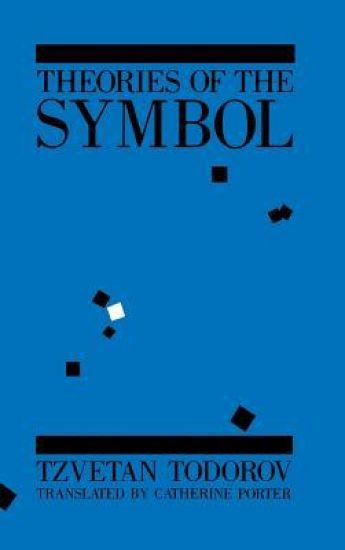
Theories of the Symbol: Understanding Politics in an Unfamiliar Culture
Tzvetan Todorov
CORNELL UNIVERSITY PRESS
1982
sidottu
Focusing on theories of verbal symbolism, Tzvetan Todorov here presents a history of semiotics. From an account of the semiotic doctrines embodied in the works of classical rhetoric to an exploration of representative modern concepts of the symbol found in ethnology, psychoanalysis, linguistics, and poetics, Todorov examines the rich tradition of sign theory. In the course of his discussion Todorov treats the works of such writers as Aristotle, Cicero, Quintilian, Augustine, Condillac, Lessing, Diderot, Goethe, Novalis, the Schlegel brothers, Levy-Bruhl, Freud, Saussure, and Jakobson.
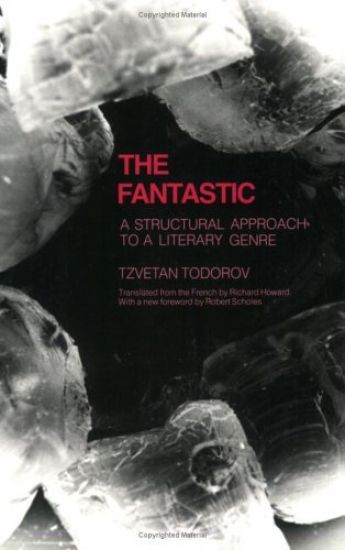
he Fantastic: A Structural Approach to a Literary Genre
Tzvetan Todorov
CORNELL UNIVERSITY PRESS
1975
pokkari
Halvin toimitettuna 29,80 €
This study of literature dealing with the fantastic or supernatural explores Northrop Frye's theory of genres and the work of such writers as Poe, Balzac, Nerval, Hoffman, and James