Kirjojen hintavertailu – 12 903 724 kirjaa ja 27 kauppaa

Kirjailija

U. S. Air Force

Kirjat ja teokset yhdessä paikassa: 263 kirjaa, julkaisuja vuosilta 1968–2019, suosituimpiin kuuluu Pearl to V-J Day: World War II in the Pacific. Vertaile teosten hintoja ja tarkista saatavuus suomalaisista kirjakaupoista.

Nimi esiintyy myös muodoissa: U S Air Force, U.S. Air Force

263 kirjaa

Kirjojen julkaisuvuodet: 1968–2019.

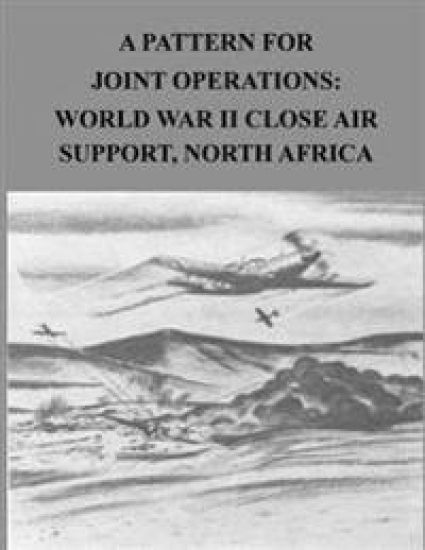
A Pattern for Joint Operations: World War II Close Air Support, North Africa.

A Pattern for Joint Operations: World War II Close Air Support, North Africa.

U. S. Air Force; Office of Air Force History

Createspace Independent Publishing Platform
2015
nidottu
This study in the Historical Analysis Series examines a subject of importance not only to the Army but also to the Air Force: the origin and development of American close air support doctrine and practice in World War II. The idea for the study resulted from a review of the Memorandum of Understanding between theArmy and Air Force chiefs of staff, concluded on 22 May 1984, and of the initiatives that emerged from that historic document, particularly Initiative 24, which reaffirmed the Air Force's mission to provide close air support to the Army. The project has been a cooperative effort between the U. S. Army Center of Military History and the U. S. A. F. Office of Air Force History; an Air Forcehistorian was assigned to write the study under the supervision of the Center of Military History. The resulting work, ultimately the best judgment of the author based on historical evidence, is titled A Pattern for Joint Operations: World War IIClose Air Support, North Africa. The concentration is on the North African campaign because that was the first major large-unit test of American ground armies in World War II, and in that campaign the basic system of close air supportfor American ground and air forces in World War II was first worked out. Close air support doctrine both then and now is critical to the services. As this study demonstrates, the doctrine that had been conceived and practiced prior to the first American battles of World War II fell apart in the mud and fog of Tunisia. Both air and ground commanders in 1941 recognized the necessity of closecooperation between the staffs and forces in joint and combined forces. What they had to learn in 1942 was the degree to which close air support doctrine tested that cooperation and required alteration. The struggle of ground and air leaders to define and construct a command and control system, and ultimately to allocate and commit precious air resources to requisite ground missions, has as many lessons today as it did more than forty years ago.
Planning and Organizing the Postwar Air Force 1943-1947

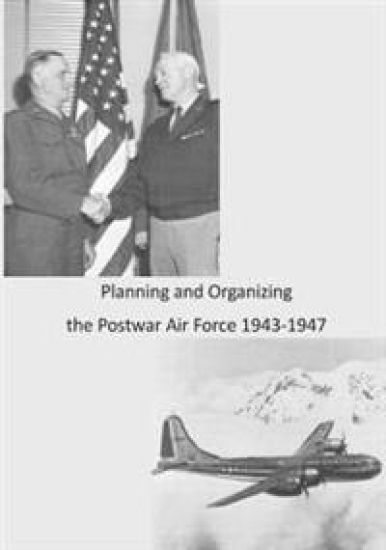
Planning and Organizing the Postwar Air Force 1943-1947

U. S. Air Force; Office of Air Force History

Createspace Independent Publishing Platform
2015
nidottu
One of the longest and most bitter disputes in twentieth century military affairs has been over the organization of the armed forces, particularly the question of independence for the air forces. From the early period of powered flight apostlesof air power, such as the Italian General GuilioDouhet, argued that the proper employment of aviation in war required the massing of air armadas independent of ground or naval forces. As it developed in the United States in the 1920s and 1930s, the dispute was not simply self-serving or bureaucratic-for power or prestige, rank or budget. The argument over an independent air force cut to the very heart ofnational defense, for who controlled air policy, air doctrine, buying of aircraft, military training, and the structure of the air forces determined the type of military forces the nation would possess and how aviation would be used in war. Ultimately, organization would determine whether the United States would succeed in the air battle and, in the minds of the protagonists, whether the United States would win in In this excellent work of narrative and analysis, Herman Wolk of the Office of Air Force History untangles the complex history that led to the birth of the United States Air Force after World War II. After surveying the struggle for independence to 1941, and planning during World War II for a postwar air force, Mr. Wolk details the events that resulted in the formation of a separate Air Force in September 1947. Significantly, the new Air Force at its birth already possessed a long history and a rich heritage: some forty years as part of the Army, service in two world wars, and a fully developed understanding of its usefulness in war. The new Air Force possessed leaders who knew that how the service was constructed and how it was led and administered would affect how air power could be used, and whether it could contribute fully to the nation's security. Furthermore, the author puts this important story into the broader context of late World War II thinking aboutpostwar defense, and the fierce struggles between 1945 and 1947 over service roles and missions, budgets, and the shape of military policies and forces. There is also another story in these pages, less dramatic but equally important: the birth of a military service. Few times are more crucial for an institution than the era of its birth, when the basic structure of the organization is established and procedures worked out for the conduct of routine organizational activity. The precedents established often survive far into the future. They provide benchmarks against which change is considered or implemented, and from the beginning that first structure and set of procedures shape the life of the institution, from the making of high policy down to the most mundane details of administrative routin
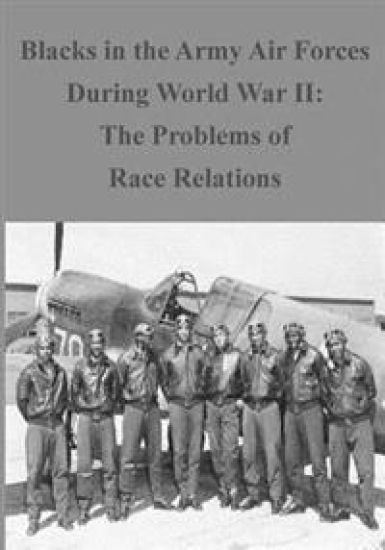
Blacks in the Army Air Forces During World War II: The Problems of Race Relation

Blacks in the Army Air Forces During World War II: The Problems of Race Relation

U. S. Air Force; Office of Air Force History

Createspace Independent Publishing Platform
2015
nidottu
This book is based upon a PH. D dissertation written by an Air Force officer who studied at the University of Denver. Currently an Associate Professor of History at the Air Force Academy, Major Osur's account relates how the leadership in the War Department and the U. S. Army Air Forces (USAAF) tried to deal with the problem of race andthe prejudices which were reflected in the bulk of American society. It tells a story of black racial protests and riots which such attitudes anddiscrimination provoked. The author describes many of the discriminatory actions taken against black airmen, whose goal was equality oftreatment and opportunities as American citizens. He also describes the role of black pilots as they fought in the Mediterranean theater of operations against the Axis powers. In his final chapters, he examines the continuing racial frictions within the Army Air Forces which led to black servicemen protests and riots in 1945 at several installations. Despite these problems, the author concludes that the Army Air Forces made substantial progress in race relations and in opening up additional career opportunities for black airmen in the post-1945 period.
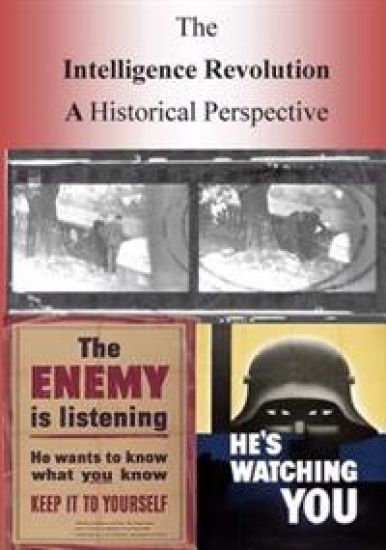
The Intelligence Revolution: A Historical Perspective

The Intelligence Revolution: A Historical Perspective

U. S. Air Force; Office of Air Force History

Createspace Independent Publishing Platform
2015
nidottu
It is commonplace within and outside the intelligence community to acknowledge the predominant role of technology in the collection, dissemination, and even analysis of information. With roots traceable to events in the late 1800s, this technological phenomenon loomed ever largerin the twentieth century. The increasing reliance on photographic, signals, and electronic intelligence has been viewed with varying degrees of celebration and concern by scholars and intelligence professionals. This volume contains the essays and commentaries originally presented at the Thirteenth Military Symposium held to address this topic at the United States Air Force Academy from October 12 to 14, 1988. The participantsin the conference attempted to provide a preliminary evaluation of the transformations that have occurred within the military intelligence community as a consequence of the Second World War. Not only did that conflict accelerate advances in technical means of collection, it also led to aninternational willingness to share intelligence on an unprecedented scale. The years 1939-1945 therefore witnessed a true "revolution" in intelligence collection and cooperation. That war also caused an interrelated growth in organizational size, efficiency, and sophistication that helped gain the craft of intelligence an acceptance in operational circles that it had not previously enjoyed. While this intelligence story is one of significant individual and corporate achievement, nearly all the participants in this conference reminded listeners of the inherent limitations of research into aspects of the subject that remain sensitive for today's national security. That is the salient lesson of these essays. Access to intelligence source material is limited and historians areoften frustrated with conditions that necessitate less than full disclosure on many subjects. Nevertheless, with the growing awareness by the public of both the high cost of technology and the central role of intelligence in the national decision-making process, the citizenry can legitimately argue its own "need-to-know." An assessment of the role and importance of intelligence-and the effectiveness of the attendant technologies--can clearly benefit from the objective perspective of the historian. The Symposium in Military History is a biennial event jointly sponsored by the Air Force Academy's Department of History and its Association of Graduates. It provides a public forum for academic scholars, militaryprofessionals, Academy cadets, and concerned citizens to exchange ideas on military affairs and military history.
Army Air Forces Medical Services in World War II

Army Air Forces Medical Services in World War II

U. S. Air Force; Office of Air Force History

Createspace Independent Publishing Platform
2015
nidottu
This history summarizes the Army Air Forces (AAF) medical achievements that led to the creation of the Air Force Medical Servicein July 1949. When the United States entered World War II, our nation's small aviation force belonged to the U. S. Army and relied on the Army medical system for support. The rapid expansion of the AAF and the medical challenges of improved aircraft performance soon placed great strain on the ground-oriented Army medical system. By the end of the war, the AAF had successfully acquired its own medical system oriented to the special needs of air warfare. This accomplishment reflected the determined leadership of AAF medical leaders and the dedication of thousands of medical practitioners who volunteered for aviation medical responsibilities that were often undefined or unfamiliar to them. In the face of new challenges, many American medics responded with hard work and intelligence that contributed greatly to Allied air superiority.
D-Day 1944: Air Power over the Normandy Beaches and Beyond

D-Day 1944: Air Power over the Normandy Beaches and Beyond

U. S. Air Force; Office of Air Force History

Createspace Independent Publishing Platform
2015
nidottu
Operation Overlord, the Normandy invasion-likeWilliam the Conqueror's before it or the Inchon landing afterwards-will long be studied as a classic in military planning, logistics, and operations. Overlord depended to a remarkable degree upon the use of air power in virtually all its forms. A half-century ago, aircraft were primitive vehicles of war compared to the modern attackers of the Gulf War era" with their precision weapons, advanced navigational, sensor systems, and communications. Yet, the airplane still had a profound impact upon the success of the invasion. Simply stated without air power, Normandy would have been impossible.
The Development of Air Doctrine in the Army Air Arm, 1917-1941

The Development of Air Doctrine in the Army Air Arm, 1917-1941

U. S. Air Force; Office of Air Force History

Createspace Independent Publishing Platform
2015
nidottu
This monograph recounts the development of air doctrine in the Army air arm from 1917 to 1941. It includes concepts, both strategic and tactical, that emerged during World War I and the period following, up to the entry of the United States intoWorld War II. The study is based primarily on official Air Force records and upon interviews with officers of the air arm who have been especially associated with air doctrine. It was prepared for the USAF Historical Division by Dr. Thomas H. Greer, formerly a member of the Division and presently associate professor of humanities, Michigan State College. A number of changes in, and additions to, the original draft have been madeby members of the Historical Division, notably Mr. Robert T. Finney and Dr. Albert F. Simpson. All such changes and additions have been based upon Historical Division studies and data not available to Dr. Greer when he prepared the basic draft. Both the original draft and the final version were edited by personnel of the Division. Like other Historical Division studies, this history is subject to revision, and additional information or suggested corrections will be welcomed.
The Development of Ballistic Missiles in the United States Air Force 1945-1960

The Development of Ballistic Missiles in the United States Air Force 1945-1960

U. S. Air Force; Office of Air Force History

Createspace Independent Publishing Platform
2015
nidottu
Following World War II, the onset of nuclear weapons, long-range jet bombers, and ballistic missiles radically changed American foreign policyand military strategy. The United States Air Force, led by men of far-sighted vision and uncommon dedication, accepted the challenge of organizing and leading a massive research and development effort to build ballistic missiles. In the quarter of a century since, these weapons have constituted one of the three legs of the strategic triad-the basis of America's strategy of deterring nuclear war-yet they have received less attention from the public and within the Air Force than the more glamorous manned bombers of the Strategic Air Command or the missile-launching submarines of the U. S. Navy. This volume attempts to correct the imbalance by telling the story of the development of Air Force ballistic missiles. It concentrates on the first generation of ballistic missiles: the intercontinental Atlas and Titan, and the intermediate range Thor. Although the effort to develop rockets has a longer history than commonly assumed, the modern history spans the relatively short era from 1945 to 1960. During this brief interval, missiles advanced from drawing board to alert status, where the next generation now remains poised to deter war. The author describes the difficulties involved in the technological competition with the Soviets to be first to develop and deploy a ballistic missile force. With innovative leadership, the Air Force succeeded also in overcoming conflict with the Army and Navy, budgetary constraints, administrative complications, and of course formidable engineering problems. Jacob (Jack) Neufeld has done a thoughtful, thorough job of research in an immense amount of documentation. He came to the task with broadexperience in the subject matter. He first joined the history program at Eighth Air Force, Westover Air Force Base, Massachusetts; his initialassignment was to cover the command's ICBMs, including the Titan II and Minuteman, in the annual history. When he came to Washington and joined the Office of Air Force History in 1970, he produced monographs on missiles and space. He also had other diverse assignments, usually in thearea of the history of research, development, and technology generally. Before long he earned a well-deserved reputation as an expert in these fields. In the course of his extensive research, Mr. Neufeld also met and interviewed many of the leading people involved in Air Force science and technology. Although the development of ballistic missiles is largely an administrative history, it is also the story of the herculean efforts of several key individuals. The effort could not have succeeded as it did without the fortuitous appearance on the scene of Trevor Gardner, Gen. Bernard A. Schriever, and Dr. John von Neumann. How these men conceptualized, promoted, and directed the program forms the basis of the story. Additionally, the development of ballistic missiles revolutionized the way the Air Force conducted research and development, having a profound and longlasting effect on how the service acquired weapons of all types. Mr. Neufeld's fascinating history details these important changes in the process of relating how the service conceived, developed, and brought into the arsenal one of the most revolutionary weapons in the long history of warfare.
Case Studies in the Development of Close Air Support

Case Studies in the Development of Close Air Support

U. S. Air Force; Office of Air Force History

Createspace Independent Publishing Platform
2015
nidottu
The introduction of airplanes to warfare led almost from the first to their application in close support of ground forces. The earliest attempts at influencing the outcome of a ground battle from the air were limited by the fragility of the craft engaged and the lack of coherent ideas on themost effective use of what was still a novelty. What began as an expedient, however, has become over nearly ten decades an essential rolefor air power. Taken virtually for granted by troops and aviators today, the employment of air power in this way has been controversial from thefirst instance in which bombs were dropped on ground combatants during the Italo-Turkish war of 1911-1912. Ground and air commanders havediffered over the proper use of aviation; preferences and assumptions on doctrine have evolved in both the ground and air communities; technology has changed air systems and defensive ground weaponry; and with time different systems or techniques have developed in various militaryestablishments for the command and control of ground and air forces operating in concert, for liaison and communications, and for deliveringaerial firepower in support of land forces locked in combat with an enemy. In December 1982, Maj. Gen. Perry McCoy Smith, then the Air Force Director of Plans, asked the Office of Air Force History to prepare a number of case-study volumes on various aspects of air warfare. Col. John A. Warden III, in the Office of the Deputy Chief of Staff for Plans and Operations, provided funds from the Air Force's Project Warrior Program. With further generous assistance of Dr. Andrew Marshall, then Directorof Net Assessment in the Office of the Secretary of Defense, the Air Force History Program approached some of the foremost historians in thefield of military aviation to record their assessments as a resource for planning within the Air Force and the Army for several years to come. Each author was asked to produce an original case study on a defined period or subject. The essays were to be based on all relevant publishedliterature and on the key archival documents containing the record of how various air forces actually developed and applied their systems of close air support to ground combat. Each author was also asked to cover certain basic topics: initial doctrine, organization of forces, background andcourses of the air-ground campaigns, communications systems, command and control arrangements, weaponry and technology, and the decisions and people that determined the course of action and shaped its outcome. A concluding retrospect draws generalizations from the experiences presented. The Office of Air Force History believes that this volume will be of substantial value not only to the U. S. Air Force and the U. S. Army, but should also appeal to a wider audience interested in all aspects of military history and contribute to informing the American public about thecharacteristics and the use of air power in all of its aspects.
Case Studies in the Achievement of Air Superiority

Case Studies in the Achievement of Air Superiority

U. S. Air Force; Office of Air Force History

Createspace Independent Publishing Platform
2015
nidottu
The historical roots of air superiority date to the First World War, which marked the emergence of the fighter airplane, offensive and defensivefighter doctrine, and the trained fighter pilot. By the end of the war, the Imperial German Air Service had been decisively outfought, and thoughoccasional bitter air combat still occurred, the Allied air arms were free to harass and attack German ground forces wherever and whenever they chose. After the war, there were defense commentators who injudiciously predicted-not for the last time-that the era of dogfighting was over;higher aircraft speeds would make maneuvering air combat a thing of the past. Instead, the lesson of the importance of air superiority was rediscovered in the skies over Spain, and confirmed again throughout the Second World War. Having tenaciously wrested air superiority from the Luftwaffe, the Allies in 1941 went on to achieve genuine air supremacy, a situationacknowledged by General Dwight Eisenhower, who, riding through Normandy after D-Day, remarked to his son: "If I didn't have air supremacy, I wouldn't be here." Sadly, many of these lessons were lost in the post-Second World War era, when technology advances-supersonic design theory, nuclear weapons, and "robot" aircraft-seemed to signal an end to the traditional air-to-air fighter-even though the experience of the Korean War demonstrated that transonic jet combat was not merely possible, but the new normative form of air warfare. Indeed, the fighter airplane underwent a dramatic transformation into a nuclear-armed strike aircraft, now that popular wisdom held that surface-to-air and air-to-air missiles foreshadowed the end of the era of "classic" air combat. That prediction collapsed in the face of the Vietnam war and the experiences of the Middle East. The 1970s witnessed both a revolution in fighter aircraft design (spawned by the technology advances of the 1960s and 1970s) and a return to basics in both design fundamentalsand the training of fighter pilots. Operations in the Falklands war, over the Bekaa Valley, and most recently, during DESERT STORM confirmed not only the benefits of this revolution and rediscovery, but also the enduring importance of air superiority. During DESERT STORM (which occurred while this book was in press) the airmen of the United States Air Force established air superiority overIraq and occupied Kuwait from the outset of the war, defeating the Iraqi air force both in the air and on the ground. By so doing, they created the conditions essential for decisive air war. Strike and support aircraft and helicopters could go about their duties without fear of molestation from enemy aircraft. Iraq's forces, pinned in place, were denied any respite from punishing air attack. Because of coalition air supremacy, coalition land operations could be undertaken with an assurance, speed, and rapidity of pace never before seen in warfare. Bluntly stated, the Gulf war demonstrated that with air superiority, General Norman Schwarzkopf could undertakehis famed "Hail Mary" play. Lacking air superiority, Iraq paid dearly. Its III Corps became vulnerable to air attack-stuck in a traffic jam out of Kuwait City on the "Highway of Death." Air superiority, like democracy itself, must be constantly secured and renewed. In recognition of this, the United States Air Force is developing the F-22 Advanced Tactical Fighter to ensure that America retains its technological edge well into the 21st century. The case studies in this volume, encompassing several major air-to-air battles, eloquently demonstrate why the quest for air superiority remains critically important for today's Air Force.
The Battle Against the U-Boat in the American Theater: December 7, 1941-September 2, 1945

The Battle Against the U-Boat in the American Theater: December 7, 1941-September 2, 1945

U. S. Air Force; Office of Air Force History

Createspace Independent Publishing Platform
2015
nidottu
In 1942 the Allied powers faced the most seriouschallenge to their control of the seas encountered in the Second World War: the menace of the U-boat. Fast, well-armed, and long-ranged, Hitler's submarines attacked shipping throughout the North Atlantic, often within sight of America's coastal towns and cities. Eventually, the combination of intelligence, land and seabasedair power, and surface vessel operations from bothNorth American and British bases ended this threat, making possible the Allied build-up for the invasion of Europe in 1944. This booklet, by A. Timothy Warnock of the Air Force Historical Research Agency, is one of a series tracing selected Army Air Forces activities in the Second World War. It describes the Army Air Forces' contribution to the Battle of the Atlantic from the American Theater. A subsequent bookletwill examine the campaign in the eastern Atlantic and the Mediterranean. Flying radar-equipped long-range patrol planes, AAF airmen demonstrated the value of land-based air power against naval threats. This success has been reaffirmed consistently since the Second World War, from Vietnam and crises such as the Mayaguez incident to operations in Desert Shield and Desert Storm. The Harpoon-armed B-52sof our present-day global Air Force are the heirs of a sea-control tradition dating to the AAF's A-29s and B-24s of the Second World War.
Building a Strategic Air Force

Building a Strategic Air Force

U. S. Air Force; Office of Air Force History

Createspace Independent Publishing Platform
2015
nidottu
From 1946 to 1991 the Strategic Air Command (SAC) operated the intercontinental and nuclear strike forces of the United States Air Force. During much of this period SAC was the premier operational command of the service. The rising tensions of the Cold War with Soviet-directed world communism gave the command a crucial role as the main force deterring potential aggression against the United States and itsallies. Even after the emergence of airborne strategic nuclear forces in the late 1950s, SAC's status as an Air Force major command and the Joint Chiefs of Staff specified command gave it the pivotal role in national strategy. This volume deals with the early years of the Air Force's effort to build and maintain a strategic striking force, from 1945 through 1953. Itdiscusses the period of reorganization in national defense in the years after the end of the Second World War, as the Army Air Forces dealt withquestions of structure, doctrine, strategy, atomic weapons, and technology. Crucial decisions were made at the end of 1947 and the beginning of 1948, but fiscal austerity limited the new United States Air Force in implementing those decisions. Despite this, General Curtis E. LeMay, the SACCommander, found means and developed methods to ensure a high state of combat readiness. The war in Korea triggered an expansion of the armed forces-including SAC-that culminated in the "New Look" of the Eisenhower administration. The New Look emphasized nuclear air power as the foundation of a national strategy of containment and deterrence. Walton S. Moody's analytical work discusses the challenges facing Air Force leaders in this time of stringent budgets, interservice disputes, andtechnological change. In particular, it examines the role of that leadership in fostering the development of an effective war-ready yet peace-keeping organization. The issues it raises are still relevant today, in a time when the distinction between strategic and tactical air power is less clear-cut, and when the armed services of the United States are redefining roles for themselves in the Post-Cold War era.
Defending the West: The United States Air Force and European Security 1946-1998

Defending the West: The United States Air Force and European Security 1946-1998

Office of Air Force History; U. S. Air Force; Eduard Mark

Createspace Independent Publishing Platform
2015
nidottu
The United States Army Air Forces became an independent service, the United States Air Force, in 1947-the second year, supposedly, of "peace." In reality there had just begun a long conflict between the United States and its allies and the Soviet Union and the satellite states subject to it. In 1949 the United States and most of the non-Communist countries of Europe signed theNorth Atlantic Treaty. The United States Air Force, which had been only a token presence on the continent since the end of World War II, once morecrossed the Atlantic in strength. The commitment of that service to peace and security in Europe, which continues still, has been the longest of its history. This pamphlet attempts to give the general reader some sense of the role theUSAF has played in Europe since the end of World War II. It contains three sections. The first reviews the reasons for the origins of the Cold War and describes the strategic concerns that drove the United States to commit itself tothe military defense of distant lands. The second section reviews the higher strategy of the North Atlantic Treaty Organization (NATO) with specialreference to the central role of air power. The final section reviews the history of the United States Air Forces in Europe (USAFE) in order to show the many ways in which the United States Air Force has served American national security policy on the continent. This section is closely based on a brief history of USAFE prepared by Dr. Daniel Harrington of USAFE' s history office. I amgrateful to Dr. Harrington for having made his study available to me.
BIOMETRICS Multi-Service Tactics, Techniques, and Procedures for Tactical Employment of Biometrics in Support of Operations

BIOMETRICS Multi-Service Tactics, Techniques, and Procedures for Tactical Employment of Biometrics in Support of Operations

U. S. Army; U. S. Navy; U. S. Air Force

Createspace Independent Publishing Platform
2015
nidottu
This publication provides a standardized multi-Service framework for planning, integrating, and employing biometrics data collection efforts by tactical units designed to improve data quality and maximize system capability in direct support of military operations. It provides small unit leaders and collectors a clear, fundamental understanding of the impact accurate and valid data has on the overall biometrics process. Also, it provides planning considerations for enrollment site selection and procedures designed to maximize data quality. This publication: - Supplements established doctrine and TTP.- Describes the impact of properly collecting biometrics on operations.- Provides a detailed explanation of procedures.- Provides information to effectively organize, plan, and execute biometrics data collection employment in a multi-Service environment.
Postwar Review

Postwar Review

U. S. Air Force; The Office of Air Force History

Createspace Independent Publishing Platform
2015
nidottu
Following the Armistice in 1918, Maj. Gen. Mason M. Patrick, Chief of Air Service, American Expeditionary Forces, directed that a record be made of lessons learned during the war. This information, he believed, was needed for planning the Air Service of the future. The reports prepared by commanders, pilots, observers, and other members of the various Air Service units in response to General Patrick's directive are of considerable historical interest for the information they contain about the Air Service and its employment at the front. A select group of the reports on lessons learned make up Part I of this volume of World War I documents on U. S. military aviation. Part II is devoted to a report on the effects of Allied bombing in World War I. This long-forgotten document, the result of a post-war investigation by the Air Intelligence Section of GeneralHeadquarters, American Expeditionary Forces, is the counterpart of the well-known United States Strategic Bombing Survey of World War II. This volume is the last in a series that the Office of Air Force History is publishing on the U. S. Air Service in World War I.
The Final Report and a Tactical History

The Final Report and a Tactical History

U. S. Air Force; Office of Air Force History

Createspace Independent Publishing Platform
2015
nidottu
In December 1918 Maj. Gen. Mason M. Patrick, Chief of Air Service, American Expeditionary Forces (AEF), directed his newly appointed Assistant Chief of Staff, Col. Edgar S. Gorrell, toprepare a history and final report on U. S. air activities in Europe during World War I. The narratives written and compiled by Gorrell and his staff were submitted by Patrick to Gen. John J. Pershing, Commander in Chief of the AEF. They summarized Air Service activities from the arrival of the first airmen in France in the spring of 1917 until the Armistice on November 11, 1918. The"Final Report" was published by the Air Service in an Information Circular in 1921, and by the Army in a multivolume collection of World War I documents in 1948. Although it has been used andcited by a number of historians over the years, it deserves to be better known. The Office of Air Force History, therefore, is republishing it so as to reach a wider circle of persons interested in the Great War and the early history of military aviation. Another important document produced under Gorrell's supervision as part of the history of the Air Service, AEF, is a "Tactical History" written by Lt. Col. William C. Sherman and a group ofofficers working with him in France at the end of the war. Although published in part in an Air Service Information Circular in 1920, Sherman's "Tactical History" has remained virtually unknown, or at least has not had extensive use. Since it providesexcellent information about the conduct of combat operations, it should be of value to persons interested in aerial warfare in the First World War. It has been included, therefore, in this volumewith the "Final Report." This is one of a series of volumes of World War I documentation that the Office of Air Force History is planning to publish.
Air Leadership

Air Leadership

U. S. Air Force; Office of Air Force History

Createspace Independent Publishing Platform
2015
nidottu
Air Leadership is part of a continuing series of historical volumes produced by the Office of Air Force History in direct support of Project Warrior. Since its beginnings in 1982, Project Warrior has captured the imagination of Air Force people around the world and reawakened a keener appreciation of our fundamental purpose as a Service: to deter war, but to be prepared to fight and win should deterrence fail. Military history helps provide a realistic perspective on warfare. Through the study of past events, we gain insight into the capabilities of armed forces and, most importantly, a sound knowledge of the policies, strategies, tactics, doctrine, leadership, and weapons that have produced success in battle. Each of us, in broadening our knowledge of air power's past, halps to maintain the most effective Air Force possible, now and in the future.
Air Force Bases: Active Air Force Bases Within the United States of America on 17 September 1982

Air Force Bases: Active Air Force Bases Within the United States of America on 17 September 1982

U. S. Air Force; Office of Air Force History

Createspace Independent Publishing Platform
2015
nidottu
In April 1917, as the United States entered World War I, the Aviation Section of the U. S. Army Signal Corps had only a handful of usable flyingfields. This number quickly grew, ultimately exceeding 40 by the end of the war. Several uncompleted fields at the time of the Armistice were abandoned, and in the period between the world wars, the number of fields decreased more until only a relatively few were in use in 1939, when the country again began to rebuild its land and air forces. By the end of 1943, these few fields had grown to an astounding peak of 783-345 main bases, 116 subbases, and 322 auxiliary fields - a number not including the manydepots and ranges. Of the 89 bases described in this volume, only Langley and Kelly, which were both under construction in April 1917, remain fromthe pre-World War I era. Eight others were completed during that war, 11 were established between the wars, and 11 more have been opened since the end of World War II. The remaining 57 bases were built as part of thetremendous growth during the latter war. This volume deals, in a statistical format, with the histories of these bases, a topic of particular interest both inside and outside the Air Force. The book provides a ready reference for basic information on active USAF bases within the United States as of 1982, the 75th anniversary of military aviation in the United States and the date established as the cutoff for research in assembling this volume. The history contained in these bases is as old and as new as the history of aviation: the area where the Wright brothers conducted their early experiments is now included within Wright Patterson AFB, while tests of the latest experimental aircraft and space vehicles take place at Edwards AFB. Each base has its own special history and its own place in history. Air Force Bases should serve as a convenient resource for those interested in dates of activation, occupancy, closure, and transferral; in lists of units stationed at each installation; in the chief support organizations; and in the names of commanders. While numerous unit or organizational histories are available, much less has been written about the bases from whichthese units actually operated and trained. This volume fills that void.
Air Base Defense in the Republic of Vietnam 1961 - 1973

Air Base Defense in the Republic of Vietnam 1961 - 1973

U. S. Air Force; Office of Air Force History

Createspace Independent Publishing Platform
2015
nidottu
This book explores the unique problem of defending air bases during the Vietnam War. It centers on the primary efforts of the United States Air Force and allied air units to defend 10 key air bases within the Republic of Vietnam. Bien Hoa, on 1 November 1964, was the first base to be attacked and until, the cease-lire in January 1973, these bases suffered a total of 475 attacks. 'Although there were initial deficiencies in staff support for base defense in such key areas as intelligence, motor vehicles, weapons procurement and maintenance, communications, and civil engineering, significant improvements hadbeen made by the end of the Air Force's part in the war. The author, Lt. Col. Roger P. Fox, USAF (Ret.), wrote this volume while assigned to the Office of Air Force History. He brings judgments to hisresearch based on his personal experience as a base security officer during the conflict. Thus, early on the morning of 4 December 1966, he rallied Air Force and South Vietnamese security forces to repel an enemy attempt to penetrateTan Son Nhut Air Base, the center of Air Force operations in South Vietnam. For his gallantry in action on this occasion, he was awarded the Silver Star. This personal experience formed a foundation upon which he developed a keen insight into exploring the entire spectrum of air base defense, and upon which he has built a strong case for testing future plans and operations. Colonel Fox's volume is one of a continuing series of books dealing with the war in Southeast Asia which are being written in the Office of Air ForceHistory.
Aerial Interdiction: Air Power and the Land Battle in Three American Wars

Aerial Interdiction: Air Power and the Land Battle in Three American Wars

U. S. Air Force; Office of Air Force History

Createspace Independent Publishing Platform
2015
nidottu
This analytical work by Dr. Eduard Mark of the Center for Air Force History examines the practice of air interdiction in three wars: World War II, the Korean war, and the war in Southeast Asia. It considers eleven important interdiction campaigns, all of them American or Anglo-American, for only the United States and Great Britain had the resources to conduct interdiction campaigns on a large scale in World War II. Dr. Mark proposes what he considers to be a realistic objective for interdiction: preventing men, equipment, and supplies from reaching the combat area when the enemy needs them and in the quantity he requires. As Mark notes, there has been little intensive scholarship on the subject of interdiction especially when contrasted with the work done on strategic bombardment. In the wake of the Persian Gulf war, the reader will no doubt be impressed by the comparatively low performance of weapons in these pre-Gulf war campaigns. DESERT STORM showed that recent advances in technology had enabled interdiction to reach new levels of effectiveness, especially in night operations. Yet, as the reader soon discovers, interdiction in the pre-Gulf campaigns sometimes profoundly influenced militaryoperations. As is often the case in military history, the effects were often serendipitous-not as planned or anticipated, but present nevertheless. By the middle of the Second World War, aircraft were already demonstrating that they could have a devastating impact upon a military force'sability to wage war. Field Marshal Erwin Rommel, for example, complained bitterly during the North African and Normandy campaigns about air power that, in his memorable words, "pinned my army to the ground" and otherwise denied his forces both supplies and the ability to freely maneuver.