Kirjojen hintavertailu – 12 859 819 kirjaa ja 27 kauppaa

Kirjailija

U.S. Army War College

Kirjat ja teokset yhdessä paikassa: 398 kirjaa, julkaisuja vuosilta 2002–2019, suosituimpiin kuuluu The Challenge of Drug Trafficking to Democratic Governance and Human Security in West Africa (Enlarged Edition). Vertaile teosten hintoja ja tarkista saatavuus suomalaisista kirjakaupoista.

Nimi esiintyy myös muodoissa: U. S. Army War College, U S Army War College

398 kirjaa

Kirjojen julkaisuvuodet: 2002–2019.

The Real Rebalancing: American Diplomacy and the Tragedy of President Obama's Foreign Policy

The Real Rebalancing: American Diplomacy and the Tragedy of President Obama's Foreign Policy

John R. Deni; Strategic Studies Institute; U.S. Army War College

Lulu.com
2015
nidottu
As this monograph goes to press, the nuclear agreement negotiated between Iran and the so-called P5+1-the five permanent members of the United Nations Security Council consisting of the United States, France, the United Kingdom, Russia, China, plus Germany-is the subject of heated debate within Washington. The negotiations that produced the agreement perhaps best exemplify the efforts by the Barack Obama administration to use diplomacy to address the most vexing security challenges of the day. The United States and Iran have struggled to overcome mutual hostility and distrust stemming from the 1953 coup against the Mohammad Mossadegh government and the 1979-80 hostage crisis, not to mention Teheran's use of Hezbollah as a proxy against American ally Israel. Yet despite this, the administration persisted over several years to first intensify and broaden economic sanctions against Iran, and then to engage in painstaking negotiations with an authoritarian country that routinely and methodically employs...
The Hour of Truth: the Conflict in Ukraine-Implications for Europe's Energy Security and the Lessons for the U.S. Army

The Hour of Truth: the Conflict in Ukraine-Implications for Europe's Energy Security and the Lessons for the U.S. Army

Ariel Cohen; Ivan Benovic; Strategic Studies Institute; U.S. Army War College

Lulu.com
2015
nidottu
A large part of Europe, especially Eastern, Northern, Central, and South-Central Europe including the Balkans, has been dependent on Russian natural gas since the Soviet times. Little changed with the breakup of the Soviet Union as Russia was no longer perceived as a strategic adversary. Moreover, Russia's dependence on gas sales in Europe as a source of important revenue for the state-owned Gazprom was considered a guarantee against the use of gas supply as a strategic tool by Moscow. However, a dependence on the Russian energy supply resulting from a system of pipelines built back during the Cold War has increasingly proved to be a disrupting, negative factor in European energy security. This dependence already has negatively manifested itself several times throughout the region and has a potential to massively disrupt European military, economic, and humanitarian situations if a substantial and/or prolonged interruption of the gas supply occurs.
Key Strategic Issues List: Academic Year 2015-2016

Key Strategic Issues List: Academic Year 2015-2016

Strategic Studies Institute; U.S. Army War College

Lulu.com
2015
nidottu
For over a decade, SSI has published the annual Key Strategic Issues List (KSIL) to inform students, faculty, and external research associates of strategic topics requiring research and analysis. Part I of the Academic Year (AY) 2015-2016 KSIL, referred to as the Chief of Staff of the Army Special Interest Topics, consists of five critical topics that will be addressed by the USAWC as Integrated Research Projects. Part II: Priority Research Areas, has been developed by the U. S. Army War College in coordination with Headquarters Department of the Army (HQDA) and Major Commands throughout the Army. Part III: Army Warfighting Challenges, developed by ARCIC, represents those critical issues associated with the Army Operating Concept, "Win in a Complex World." The KSIL will help prioritize strategic research and analysis conducted by USAWC students and faculty, USAWC Fellows, and external researchers, to link their research efforts and results more effectively to the Army's highest priority topics.
Unlocking India's Strategic Potential in Central Asia

Unlocking India's Strategic Potential in Central Asia

Roman Muzalevsky; Strategic Studies Institute; U.S. Army War College

Lulu.com
2015
nidottu
As a region with abundant resources and rapidly growing transit potential surrounded by nuclear-armed powers, Central Asia is increasingly drawing the attention of global players. Russia is actively seeking to rebuild its economic influence via the newly created Eurasian Economic Union. China is expanding its reach through a recently launched Silk Road Economic Belt. Other actors are jockeying for their share of the region's pie, as well. But the United States and India are enjoying only very limited presence in what is increasingly becoming a critical part of the world. In this comprehensive and insightful account, Mr. Roman Muzalevsky, an author of a book and several monographs on global trends, great power politics, grand strategy, and connectivity issues, explains why India lags behind other actors in the region and what needs to be done to unlock its potential as a rising great power and shore up its strategic presence in Central Asia.
Training Humans for the Human Domain

Training Humans for the Human Domain

Steve Tatham; Mr. Keir Giles; Strategic Studies Institute; U.S. Army War College

Lulu.com
2015
nidottu
In this timely monograph, British authors Mr. Keir Giles and Dr. Steve Tatham fuse key lessons from two disparate theaters to argue persuasively for greater education of Army personnel in human terrain disciplines. Dr. Tatham, an expert in strategic communications and influence operations with extensive experience in Iraq and Afghanistan, and Mr. Giles, a long-term scholar of Russian military and political decisionmaking processes, both contribute a wealth of accessible examples and anecdotes to argue their case for greater investment in human domain skills, both as an insurance against future conflict and in order to prevail in that conflict should it be joined. Drawing on a range of sources across social science and linguistics, they make the crucial point that both commanders and junior personnel must be not only prepared but also educated to set aside their cultural, social, and even linguistic preconceptions in order to accurately assess the options open to an adversary.
Developing Emerging Leaders: the Bush School and the Legacy of the 41st President

Developing Emerging Leaders: the Bush School and the Legacy of the 41st President

Joseph R. Cerami; Strategic Studies Institute; U.S. Army War College

Lulu.com
2015
nidottu
Leadership remains at the core of the military profession. Gaining a reputation as an effective and ethical leader is the foundation for a successful career as a commissioned and noncommissioned officer. Naturally, a great deal of attention in pre-commissioning and professional military schools, as well as experiential learning in a variety of demanding positions, is necessary for advancement. Understanding the ideas and best practices of expert leaders as individuals and as a member of groups, teams, organizations, and institutions remain an important area of research and study for individual and organizational learning. Learning leaders and learning organizations are the focus of this monograph. Specific attention is placed on identifying the key ideas and actions, or best practices, in comparing the leadership studies and research literature that bridge the guiding civilian and military approaches, and compares ideas and practices across the public, private, and nonprofit sectors.
The Ethics of Drone Strikes: Does Reducing the Cost of Conflict Encourage War?

The Ethics of Drone Strikes: Does Reducing the Cost of Conflict Encourage War?

James Igoe Walsh; Strategic Studies Institute; U.S. Army War College

Lulu.com
2015
nidottu
Armed unmanned aerial vehicles-combat drones-have fundamentally altered the ways the United States conducts military operations aimed at countering insurgent and terrorist organizations. Drone technology is on track to becoming an increasingly important part of the country's arsenal, as numerous unmanned systems are in development and will likely enter service in the future. The increasingly frequent use of drones raises profound questions about the nature and morality of warfare involving asymmetrical risks between opposing belligerents. Concerned citizens, academics, journalists, nongovernmental organizations, and policymakers have raised questions about the ethical consequences of drones and issued calls for their military use to be strictly regulated. This level of concern is evidence that the future of drone warfare not only hinges on technical innovations, but also on careful analysis of the moral and political dimensions of war. Regardless of whether drones are effective weapons...
Terrorist and Insurgent Unmanned Aerial Vehicles: Use, Potentials, and Military Implications

Terrorist and Insurgent Unmanned Aerial Vehicles: Use, Potentials, and Military Implications

Robert J. Bunker; Strategic Studies Institute; U.S. Army War College

Lulu.com
2015
nidottu
This manuscript focuses on the present threat posed by terrorist and insurgent use of unmanned aerial vehicles (UAVs) as well as the associated future threat potentials identified. The work presents a counterintuitive analysis in the sense that armed drones are typically viewed as a component of America's conventional warfighting prowess-not a technology that would be used against U. S. troops deployed overseas or against civilians back home. Utilizing a red teaming approach, the author, Dr. Robert J. Bunker, a past Minerva Chair at our institution, investigates the emerging threat of such UAV use. His unique analysis and creative approach, especially when related to the threat scenario variants generated, make for very informative reading. The work is divided into an introduction to the topical area, a UAV historical overview and discussion of present use by the U. S. military, a chronological narrative of terrorist and insurgent UAV use...
The Limits of Military Officers' Duty to Obey Civilian Orders: A Neo-Classical Perspective

The Limits of Military Officers' Duty to Obey Civilian Orders: A Neo-Classical Perspective

Jr. Atkinson; Strategic Studies Institute; U.S. Army War College

Lulu.com
2015
nidottu
This monograph offers a neo-classically republican perspective on a perennial problem of civilian/military relations: limitations on military officers' obligation to obey civilian authorities. All commentators agree that military officers are generally obliged-morally, professionally, and legally-to obey civilian orders, even as they agree that this rule of obedience has exceptions. Commentators tend to differ, however, on the basis and breadth of these exceptions. Following Samuel Huntington's classic analysis in The Soldier and the State, Mr. Robert Atkinson shows that disagreement about the breadth of the exceptions tends to assume that their bases-moral, professional, and legal-are incommensurable. This monograph suggests, to the contrary, that all defensible exceptions to the rule of military obedience, like that rule itself, derive from a single neo-classical, Huntingtonian standard binding on civilian authorities and military officers alike: the common good.
Reassessing the Barriers to Islamic Radicalization in Kazakhstan

Reassessing the Barriers to Islamic Radicalization in Kazakhstan

Zhulduz Baizakova; Roger N. McDermott; Strategic Studies Institute; U.S. Army War College

Lulu.com
2015
nidottu
The authors reassess the barriers to Islamic radicalization in the Republic of Kazakhstan. They provide crucial analysis and findings for policymakers seeking to engage with the country, while also presenting important insights into the historical and cultural impediments in the path of radicalizing its youth. Despite the proximity of the Central Asian Republics to Afghanistan and the Global War on Terrorism, unlike its neighbors, Kazakhstan has remained relatively stable and low risk in the face of international terrorism and extremism. This monograph examines some of the reasons as to why this is the case, proving that early judgements offered by commentators concerning Kazakhstan's experience of domestic politically inspired violence in 2011-12, exaggerated the potential threat of growing Islamic radicalization. For 70 years, Kazakhstan underwent a forceful and externally imposed secularization and was maintained rigidly under Soviet rule, with no official state support for organized religion.
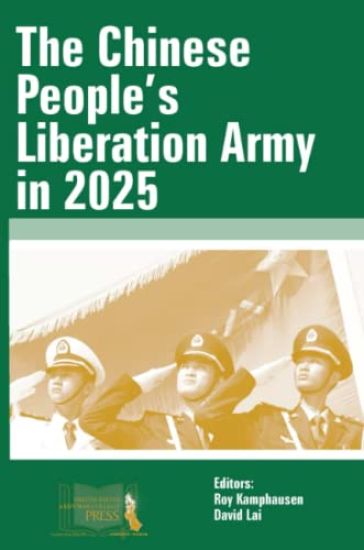
The Chinese People's Liberation Army in 2025

The Chinese People's Liberation Army in 2025

Roy Kamphausen; David Lai; U.S. Army War College; Strategic Studies Institute

Lulu.com
2015
nidottu
I'm pleased to introduce The Chinese People's Liberation Army of 2025 which is the 2014 edition of an ongoing series on the People's Liberation Army (PLA) co-published by the Strategic Studies Institute (SSI), the National Bureau of Asian Research (NBR), and the United States Pacific Command (USPACOM). This volume builds on previous volumes and identifies potential trajectories for PLA force modernization and mission focus, and how these potential changes could impact external actors. This volume is of special relevance today in light of the profound changes occurring within the PLA. I have spent a considerable amount of my professional career in the Western Pacific and, during that time, I've seen first-hand the rapid expansion of the size and capability of the PLA as it pursues a long-term, comprehensive military modernization program in support of China's more assertive regional strategy. China's desire to develop a military commensurate with its diverse interests and economic power is both...
Arab Threat Perceptions and the Future of the U.S. Military Presence in the Middle East

Arab Threat Perceptions and the Future of the U.S. Military Presence in the Middle East

W. Andrew Terrill; Strategic Studies Institute; U.S. Army War College

Lulu.com
2015
nidottu
The Middle East is currently in one of its most dramatic periods of turbulence since the post-World War I emergence of the modern state system in that region. Recently, the United States and its Arab allies have been concerned by a number of distressing regional trends including the uncertain future of Iranian influence throughout the region, the rise and persistence of the Islamic State (IS) organization, the ouster of Yemen's Abd Rabbuh Mansur Hadi government from the capital of Sana'a and that country's subsequent civil war, and the rise of insurgencies in Libya, Egypt, and especially the Sinai. The intense unrest in the Middle East has created new conflicts, but it has also brought some of the regional status quo powers into a greater level of cooperation to help address these problems. Saudi Arabia has emerged as a significant regional leader, almost by default, as other important Arab states such as Iraq, Syria, Egypt, and Libya have been struggling with domestic crises.
Breaking the Bathsheba Syndrome: Building A Performance Evaluation System That Promotes Mission Command

Breaking the Bathsheba Syndrome: Building A Performance Evaluation System That Promotes Mission Command

Curtis D. Taylor; Strategic Studies Institute; U.S. Army War College

Lulu.com
2015
nidottu
Survey after survey across the U. S. Army continue to reveal broad concern about the Army's top-down performance evaluation system. Many claim that it drives behavior in organizations that not only inhibits the exercise of mission command, but also rewards image management over organizational leadership. Colonel Curtis Taylor takes a hard look at this system, its benefits and its cultural incentives. More importantly, he asks if the current system promotes or impedes the exercise of mission command. After examining the history of the Army's performance evaluation system and alternative models outside the military, Colonel Taylor concludes that a more holistic system that combines top-down evaluations, peer and subordinate evaluation, and objective testing might be a better approach.
Breaking the Nordic Defense Deadlock

Breaking the Nordic Defense Deadlock

Stefan Forss; Pekka Holopainen; Strategic Studies Institute; U.S. Army War College

Lulu.com
2015
nidottu
The Nordic states, just as other regions of Europe which neighbor Russia, are engaged in an urgent reexamination of their security and defense posture. Events in Ukraine in early-2014 threw into sharp focus a local lack of capability following decades of drawdowns and focus on crisis management operations instead of territorial defense. After an unpleasant awakening, countries in the region have turned their attention to the heightened security risks they face and their lack of preparedness for them. In an era of continuing austerity, the challenge for these states is how to design a working security and defense solution in the short and medium term which is both robust enough to survive in isolation, but also capable of being merged into a bigger framework such as the North Atlantic Treaty Organization (NATO) when the time is ripe.
Maturing Defense Support of Civil Authorities and the Dual Status Commander Arrangement Through the Lens of Process Improvement
During large-scale emergencies or disasters, National Guard forces regularly operate alongside Active Component forces in response to requests from civil authorities. In an attempt to promote unity of effort between state-controlled National Guard and Active Component forces, states and the Department of Defense agreed to use dual status commanders-military commanders authorized by law to serve in both state and federal statuses simultaneously-as the primary command and control mechanism during unplanned incident response operations. This unique command arrangement was used for the first time in response to an unplanned incident during Hurricane Sandy in October 2012. Though the arrangement worked well in many ways, there are definitely opportunities for improvement.
Parsing Chinese-Russian Military Exercises

Parsing Chinese-Russian Military Exercises

Richard Weitz; Strategic Studies Institute; U.S. Army War College

Lulu.com
2015
nidottu
China and Russia have two of the world's most powerful militaries, and their growing defense cooperation has long been a subject of interest to the United States. Studying their military exercises provides insights for several questions of critical importance for the U. S. Army: What are the evolving power-projection capabilities of the Chinese and Russian armed forces? How have their tactics, techniques, and procedures evolved over time? How do the Chinese and Russian militaries conduct joint operations, from planning to execution? What is their level of operational interoperability-physical and otherwise? How might they conduct a future counterterrorist or counterinsurgency campaign in Central Asia, or maintain regional security in the region following the withdrawal of most North Atlantic Treaty Organization combat forces from Afghanistan? This monograph helps us to answer these questions, as well as consider the broader nature of the trilateral relationship between China, Russia, and the United States.
Iraq's Shia Warlords and Their Militias: Political and Security Challenges and Options

Iraq's Shia Warlords and Their Militias: Political and Security Challenges and Options

Norman Cigar; Strategic Studies Institute; U.S. Army War College

Lulu.com
2015
nidottu
The phenomenon of Iraq's Shia warlords and the militias they lead has significant implications for the conduct of the war against Islamic State in Iraq and Syria (ISIS), including for U. S. policy interests and for U. S. Landpower forces deployed in-country. In this monograph, Dr. Norman Cigar analyzes the rapid resurgence of the Shia militias and the warlords thanks to a mass popular mobilization in response to the severe ISIS threat to the country in 2014. The militias have played a key role in helping to stabilize the situation on the ground, while the Iraqi Army has been rebuilding with the help of the international Coalition. At the same time, the warlords have become significant political players who have an impact on issues of interest to the United States, such as sectarian reconciliation and the formation of a National Guard in Sunni areas, which have implications for the future of Iraq's security and stability.
A Hard Look at Hard Power: Assessing the Defense Capabilities of Key U.S. Allies and Security Partners

A Hard Look at Hard Power: Assessing the Defense Capabilities of Key U.S. Allies and Security Partners

Gary J. Schmitt; Strategic Studies Institute; U.S. Army War College

Lulu.com
2015
nidottu
Since the end of World War II, the United States has made maintaining a favorable balance of power in Eurasia a core element of its national security strategy. It did so in good measure by maintaining a large conventional military force that was based not only at home, but also in bases spread across Europe and Asia. That strategy was buttressed by developing security ties and alliances with key powers and front-line states. The implicit bargain was that the United States would help keep the peace on their door front if they would provide access from which American forces could operate and, in turn, maintain credible forces themselves to reinforce and support U. S. efforts at keeping the great power peace. The question raised by this collection of essays is: Is that bargain unraveling? As the following chapters note, since the end of the great power threat posed by the Soviet Union...
Toward A Unified Military Response: Hurricane Sandy and the Dual Status Commander

Toward A Unified Military Response: Hurricane Sandy and the Dual Status Commander

Sue McNeil; Ryan Burke; Strategic Studies Institute; U.S. Army War College

Lulu.com
2015
nidottu
The military response to Hurricane Sandy was historically significant. For the first time, dual status commanders-military commanders authorized by law to serve in both state and federal status simultaneously- were activated in an effort to unify state and federal efforts under a single command structure during an unplanned response. The events that occurred over the 2-week response period provide a basis for lessons learned as we look to improve upon this first attempt to use this unique command construct in response to an unplanned incident. In this monograph, Mr. Ryan Burke and Dr. Sue McNeil discuss the results of their year-long case study examining the military response to Hurricane Sandy under the dual status commander arrangement. In one of the most thorough and comprehensive analyses of the subject to date, Burke and McNeil first address the chronology of the storm and the ensuing military actions.
Evolving Army Needs for Space-Based Support

Evolving Army Needs for Space-Based Support

Jeffrey L. Caton; Strategic Studies Institute; U.S. Army War College

Lulu.com
2015
nidottu
To support warfighters in the 21st century, Army and joint space operations must adapt to a congested, contested, and competitive international space environment. This monograph examines how the Army is postured to meet current and future space-based support needs to conduct unified land operations. It also provides recommendations regarding how to facilitate the best evolutionary path for future Army space activities to meet the changing environment for unified land operations as well as the diverse challenges of ongoing global operations, technological advances by potential adversaries, increased international competition, and domestic resource constraints. The monograph posits that the Army should retain its current focus on space operations as cross-domain support for terrestrial warfighter operations. It also suggests that the development of such support should include stakeholder and proponency issues with regard to cyberspace operations.