Kirjojen hintavertailu – 12 859 824 kirjaa ja 27 kauppaa

Kirjailija

U.S. Army War College

Kirjat ja teokset yhdessä paikassa: 398 kirjaa, julkaisuja vuosilta 2002–2019, suosituimpiin kuuluu The Challenge of Drug Trafficking to Democratic Governance and Human Security in West Africa (Enlarged Edition). Vertaile teosten hintoja ja tarkista saatavuus suomalaisista kirjakaupoista.

Nimi esiintyy myös muodoissa: U. S. Army War College, U S Army War College

398 kirjaa

Kirjojen julkaisuvuodet: 2002–2019.

"All Necessary Means": Employing CIA Operatives in a Warfighting Role Alongside Special Operations Forces
In response to the terrorist attacks on the United States on 11 September 2001, the President --as both Commander-in-Chief and as authorized by Congress in Joint Resolution 23 -- ordered our armed forces into combat in order to disrupt and defeat the global terror network. The President concomitantly signed a Presidential Finding directing the Central Intelligence Agency (CIA) to use all necessary means to destroy Osama bin Laden and Al Qaeda. As a consequence of these orders, CIA paramilitary operatives have been performing a warfighting role alongside Special Operations Forces (SOF) in the war against terrorism. This strategy research paper explores the respective roles and missions of the CIA and SOF, their legal authority to execute their assigned missions, the policy advantages and disadvantages of integrating their warfighting operations in combat, and the legal and operational ramifications of such integrated combat operations. The paper concludes that integrated combat operations between the CIA and SOF are an appropriate template for warfare in certain situations, provided we develop and adhere to clear, well-understood criteria to manage this CIA-SOF warfighting relationship. The war against terrorism is a fight for the preservation of our national interests and values, our way of life, and the very future of our country. We must employ every element of national power -- all necessary means -- in its prosecution. While managing the CIA-SOF warfighting relationship will present significant challenges, those challenges can be minimized in a manner that both preserves the combatant commander's flexibility and capitalizes on each agency's strengths and capabilities.
Preparing to Prevent: Conflict-Related Sexual Violence Mitigation Scenario-Based Training

Preparing to Prevent: Conflict-Related Sexual Violence Mitigation Scenario-Based Training

Peacekeeping and Stability Operations in; U. S. Army War College

Createspace Independent Publishing Platform
2014
nidottu
Conflict-related sexual violence (CRSV) refers to violent acts of a sexual nature, including rape, sexual slavery, enforced prostitution, forced pregnancy, enforced sterilization, mutilation, indecent assault, trafficking, inappropriate medical examinations, and strip searches. CRSV frequently occurs when undisciplined militaries, police forces, or other armed groups believe they can act with impunity against vulnerable individuals. Peacekeepers, in conjunction with other actors, must ensure that sexual violence is addressed as a major area of focus and is routinely incorporated into their Protection of Civilians (PoC) efforts. CRSV frequently occurs during and after armed conflict, and is common within fragile states. It is impossible to obtain a safe and secure environment with adequate protection of civilians if CRSV is a widespread problem. Sexual violence is often a component of genocide, mass atrocities, and crimes against humanity and may occur as part of a deliberate and systematic campaign to target a victim group (for example, to destroy families and communities or to support ethnic cleansing from an area). It may also occur in a more decentralized fashion due to a general lack of security and stability. Sexual violence is a crime and should not be dismissed simply as a social problem. However, CRSV is a problem that persons in authority too easily overlook. While CRSV is often assumed to be directed against women and girls, CRSV also includes assaults against men and boys. The threat of CRSV also has an adverse effect, as potential victims may avoid necessary activities such as travelling, working, farming, obtaining water, or collecting firewood if they are vulnerable when doing so.
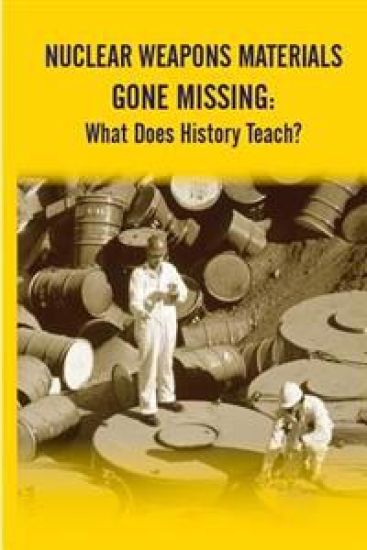
Nuclear Weapons Materials Gone Missing: What Does History Teach?

Nuclear Weapons Materials Gone Missing: What Does History Teach?

U. S. Army War College; Strategic Studies Institute

Createspace Independent Publishing Platform
2014
nidottu
In 2009, the President of the United States spotlighted nuclear terrorism as one of the top threats to international security and launched an international effort to identify, secure, and dispose of global stocks of weapons-usable nuclear materials-namely highly enriched uranium and weapons-grade plutonium. Since that time, three nuclear security summits have been held, along with scores of studies and workshops (official and unofficial), drawing sustained high-level attention to the threat posed by these materials. However, little attention has been given to incidences where sensitive nuclear materials actually went missing. This volume seeks to correct this deficiency, examining incidences of material unaccounted for (MUF) arising from U. S. and South African nuclear weapons programs, plutonium gone missing from Japanese and British civilian production facilities, and a theft of highly enriched uranium from a U. S. military contractor in the 1960s that was used to help fuel Israel's nuclear weapons program. This volume also questions the likelihood that the International Atomic Energy Agency would be able to detect diversions of fissile materials, whether large or small, and the likelihood that a state could or would do anything were diversion detected.
Fiscal Reality After the 2008 Financial Crisis

Fiscal Reality After the 2008 Financial Crisis

U. S. Army War College

Createspace Independent Publishing Platform
2014
nidottu
This book will examine the effects of the federal government response to the 2008 financial crisis and will explore the likely strategic impacts to the US Army, its operations, and its finances. The crisis originated in America and quickly spread to all corners of the globe. An inflated real estate market fueled by years of easy credit came crashing down in 2008. The financial sector in the US developed numerous exotic instruments that were supposed to be able to spread the risk of credit default across the entire market. It is now obvious that these financial devices were nothing other than a vast speculative tool that enabled the financial sector to achieve unprecedented levels of leverage. In good times, this financial leverage fueled fantastic profits that were used to generate even greater leverage. The bad times, however, are now here and the results from all that financial leverage are losses in the trillions of dollars. The strategic issue now is to determine if the unprecedented federal government reaction to the financial crisis will have an impact on future Army budgets and if so, what can the Army do to position itself to succeed in the new fiscal reality that results.
Government Contracting Should be a Core Competence for U.S. Military Personnel

Government Contracting Should be a Core Competence for U.S. Military Personnel

U. S. Army War College; Usar Ltc Katherine E. White; Strategic Studies Institute

Createspace Independent Publishing Platform
2014
nidottu
The Wars in Iraq and Afghanistan mark an era of unprecedented outsourcing in contingency operations. Although significant outsourcing occurred in prior wars, never has the scale been so large for so long. Counterintuitively, as outsourcing increased, the number of government acquisition personnel decreased. This led to waste, fraud, and abuse. The Commission on Wartime Contracting made several findings and recommendations to prevent future contract administration problems in contingency operations. A principal concern is that the U. S. military needs to increase the number of acquisition experts, change its culture, and treat government contracting as a core competency. In response to outsourcing concerns, the Office of Federal Procurement Policy issued Policy Letter 11-01 on the Performance of Inherently Governmental and Critical Functions. The Letter provides strategic-level guidance to federal agencies to assess risk and accountability when outsourcing. Although the Letter provides helpful guidance, it is only a first step. More is needed to prevent the contract administration failures of the wars in Iraq and Afghanistan from recurring. This Paper examines further-needed steps and ways in which the U. S. military can change its culture and make government contracting a core competency
Gettysburg: A Study in Command

Gettysburg: A Study in Command

U. S. Army War College

Createspace Independent Publishing Platform
2014
nidottu
Secretary of War Elihu Root, during his speech at the dedication of the first Army War College, charged the institution with its enduring mission. War College graduates, he said, should be educated in the skills that would enable them -to preserve peace by intelligent and adequate preparation and, if called upon, be fully capable of applying their education -to repel aggression. Attainment of these ends would be achieved -through studying and conferring on the great problems of national defense, military science and responsible command. Thoughtful study on war, the ultimate application of military force to achieve political ends, is normally undertaken in an academic setting, such as in the seminar room. One may also consider war in all its complexity on the great battlefields of history, where in a few hours or days and in the confines of several square miles, issues of policy and strategy, operations and tactics were contested by armies, ably or poorly led. Thoughtful and informed discussions about the battle of Gettysburg, a discrete tactical event embedded within a campaign, can lead to insights on the complexities associated with the employment of military power to achieve strategic ends. General Robert E. Lee, in this instance, sought to secure independence for the Confederacy by winning a military victory in Pennsylvania, which would in turn, lead to a favorable political settlement of the war. His opponent, General George G. Meade, sought to prevent this, and in so doing to preserve the Union. As tactical and operational decisions were made throughout the battle and campaign, the political ends for which the Civil War was being fought shaped and determined decisions at all levels of war. We can benefit from studying the Gettysburg Campaign by carefully and thoughtfully examining decisions made by the respective political leaders directing the war, and those of field commanders directing actions on the battlefield. Armed with even a limited knowledge of the personalities involved and the conditions extant on the field, we can arrive at informed judgments on the thinking that was done and the decisions that were made affecting the outcome of the battle. Critical thinking, in other words, is the order of the day. Carl von Clausewitz, the 19th century Prussian military theorist, reminds us that when engaged in critical thinking one must not only find fault with what was done, but one must also propose alternatives not taken, and these too must be rigorously examined. What better course of action could have been taken? If the best course of action was the one executed, why did it succeed, or fail?
Chinese Lessons from Other Peoples' Wars

Chinese Lessons from Other Peoples' Wars

U. S. Army War College

Createspace Independent Publishing Platform
2014
nidottu
The annual Conference on the Chinese People's Liberation Army (PLA) took place at the U. S. Army War College (USAWC), in Carlisle, Pennsylvania, on October 22-24, 2010. The topic for this year's conference was the "PLA's lessons from Other People's Wars." Participants at the conference sought to discern what lessons the PLA has been learning from the strategic and operational experiences of the armed forces of other countries during the past 3 decades. Why did observers of the PLA want to study what Chinese military analysts might learned about non-Chinese wars? The answer is twofold. First, the PLA has not fought an actual war since 1979. Yet, during the last 3 decades, fundamental changes have taken place on the battlefield and in the conduct of war. Since the PLA has not fought since 1979, it had no experience in the changing face of war, and thus could not follow Mao Zedong's admonition to "learn by doing"; instead, it must look abroad for ways to discern the new pattern of warfare in the evolving information age. Studying Chinese military analysts' observations of non-Chinese wars therefore provides us a glimpse of what the PLA takes from others' experience to improve its capability and to prepare itself for dealing with China's national security issues, such as Taiwan, the South and East China Sea disputes, and internal unrest in Tibet and Xinjiang, to name the most obvious ones. Second, Chinese military analysts have noticeably more freedom in assessing and commenting on the strength and weakness as well as the success and failures of other countries' wars. Indeed, for political reasons, Chinese military analysts have to emphasize the heroics and triumphs of the PLA's war experience and downplay setbacks and failures. While there is certainly recognition of the daunting challenges-in Korea, for example, accounts readily acknowledge that the Chinese People's Volunteers (CPV) were totally unprepared logistically and devastated by airpower-there are limits to the levels of candor. To date, there is no critical analysis of the PLA's claimed success or dismissed failure in the Sino-Vietnamese Border War of 1979 by Chinese military analysts (however, there are a few studies done by scholars outside of China). Studying Chinese military analysts' observation of other people's wars, therefore, provide us key hints as to what Chinese military analysts consider important aspects of current and future military operational success and failure.
Reviving America's National Will For The Global War on Terror

Reviving America's National Will For The Global War on Terror

U. S. Army War College

Createspace Independent Publishing Platform
2014
nidottu
It is the intent of this book to explore the importance of national will regarding America as a nation at war. The importance of national will is tied to keeping America informed about the war. This book will consider the role of Strategic Communication in WWII to develop national will and contrast it with today's efforts. One National Defense Strategy (NDS) objective is to "Win the Long War." Winning "the long war" will take more than military might, it will take national will. The enemy believes this war can be won in the media. But for America winning is more about national resolve which has waned over time. What has happened in America since September 11, 2001 is that "America went to the mall" while the military went to war. This paper will review the premise that in order to win the long war it is essential to regain national will. Americans today do not adequately understand or support the long war because it is not adequately presented with clarity or consistency. Strategic Communication (SC) is critical to regaining American resolve and it is the responsibility of national and military leaders to present this case to the American people.
U.S. Army War College Guide to National Security Issues

U.S. Army War College Guide to National Security Issues

U. S. Army War College

Createspace Independent Publishing Platform
2014
nidottu
This edition of the U. S. Army War College Guide to National Security Policy and Strategy continues to reflect the structure and approach of the core national security strategy and policy curriculum at the War College. The fifth edition is published in two volumes that correspond roughly to the Department of National Security and Strategy's core courses: "Theory of War and Strategy" and "National Security Policy and Strategy." Like previous editions, this one is based on its predecessor but contains both updates and new scholarship. Over a third of the chapters are new or have undergone significant rewrites. Many chapters, some of which appeared for years in this work, have been removed. Nevertheless, the book remains unchanged in intent and purpose. Although this is not primarily a textbook, it does reflect both the method and manner we use to teach strategy formulation to America's future senior leaders. The book is not a comprehensive or exhaustive treatment of either strategic theory or the policy making process. Both volumes are organized to proceed from the general to the specific. Thus, the first volume opens with general thoughts on the nature and theory of war and strategy, proceeds to look at the complex aspect of power, and concludes with specific theoretical issues. Similarly, the second volume begins by examining the policy/strategy process, moves to a look at the strategic environment, and concludes with some specific issues. This edition continues the effort begun in the fourth edition to include several short case studies to illustrate the primary material in the volume.