Kirjojen hintavertailu – 12 903 724 kirjaa ja 27 kauppaa
Kirjailija
U. S. Department of Commerce
Kirjat ja teokset yhdessä paikassa: 607 kirjaa, julkaisuja vuosilta 1999–2020, suosituimpiin kuuluu A Scientific Forum on the Gulf of Mexico: The Islands in the Stream Concept. Vertaile teosten hintoja ja tarkista saatavuus suomalaisista kirjakaupoista.
Nimi esiintyy myös muodoissa: U.S. Department of Commerce, U S Department of Commerce, U. S. Department of Commerce-
With a vast landmass, extensive natural resources, more than 140 million consumers, a growing middle class, and almost unlimited infrastructure needs, Russia remains one of the most promising and exciting markets for U. S. exporters. Russia is the world's 11th largest economy by nominal gross domestic product (GDP) and 7th largest by purchasing power parity (PPP). It has the highest per capita GDP ($13,400) of the BRICS countries (Brazil, Russia, India, China, and South Africa). Russia is an upper middle income country, with a highly educated and trained workforce and sophisticated, discerning consumers. Russia's economy is still recovering from the economic crisis that began in 2008, with GDP growth estimated at 2.8% for 2013. In terms of trade in goods, Russia was the United States' 27th largest export market and the 16th largest exporter to the United States in 2012. Russia was America's 21st largest trading partner overall. U. S. exports to Russia in 2012 were $10.7 billion, a new record and an increase of almost 30% from2011. This is six times more than the growth rate for overall U. S. exports worldwide, which rose by 5%. Russian exports to the United States in 2012 were $29 billion, a decrease of 15% from 2011. Russia's leading trade partners were recently Netherlands, China, Germany, Italy, Ukraine, and Turkey. U. S. accumulated investment in Russia is approximately $10 billion. According to Russian data, the United States is Russia's 10th largest foreign investor. Russia joined the World Trade Organization (WTO) in August 2012. This brought the world's largest economy outside the WTO into the organization and bound it to a set of rules governing trade. Congress also enacted legislation to extend permanent normal trade relations to Russia in the same year. Russia's membership in the WTO will liberalize trade with the rest of the world and create opportunities for U. S. exports and investments. For industrial and consumer goods, Russia's average bound tariff rate declined from almost 10% to under 8%.
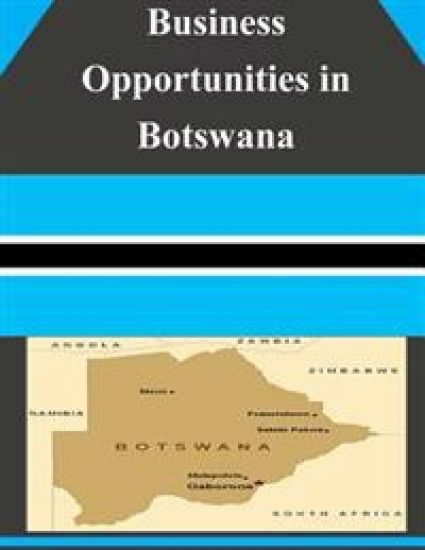
Ranked number one in Africa on Transparency International's anti-corruption index, Botswana is a stable democratic country which has historically enjoyed among the highest economic growth rates in the world. Botswana's ranking on the 2013 World Bank/IFC Doing Business report was 59 out of 183 countries globally. Its score compared favorably to all other African countries except Rwanda (52) South Africa (ranked 39) and Mauritius (ranked 19). Botswana has a stable, A2 credit rating, the highest in Africa. Botswana's mining industry dominates the economy: Preliminary estimates indicate that mining contributed 21% of overall GDP in 2012 and contributed about a third of the government's total revenue. Despite mining's great contribution to the country's wealth, the sector only accounts for about 5% of employment. Botswana's economy is among the most skewed in the world between rich and poor, and an estimated one fifth of Botswana's population survives on less than $1.25/day. Largely due to diamond revenue, Botswana enjoyed the highest GDP growth rate in the world from 1970 to 1999 (8.3%). Its economy contracted in the wake of the global financial crisis and has not fully recovered. Real GDP grew by 3.7% in 2012 and is expected to grow between 4 to 6% in 2013. The non-mineral GDP growth rate for 2012 is estimated to be 11.6%. Botswana's mining revenue has provided the government with resources to construct and maintain a historically solid infrastructure, including roads, telecommunication systems, hospitals, hotels, and schools. While the presence of a well-maintained infrastructure, complimented by political stability, has tended to encourage foreign investment, poor planning and workmanship has caused several infrastructure problems, particularly in the power and water sectors, that are likely to act as a brake on growth during the next 12-24 months.
The Iraqi economy grew by an estimated 10% in 2012 and is expected to grow at a similar rate in 2013, driven primarily by rising oil production and higher oil prices over the forecast period. Economic growth will be buttressed by robust increases in government expenditures. Iraq's 2012 capital budget was up nearly 35% over the previous year, and with mounting pressure to provide basic services the government is expected to expend a larger proportion than this allocation. Iraq's transition from a centrally-run economy to a more market-oriented one has been slow and uneven. The World Bank's 2013 Ease of Doing Business survey ranks Iraq 165th of 185 economies evaluated, although companies appear to find that doing business in the Iraqi Kurdistan Region, a federated region within Iraq, is significantly easier than in the rest of Iraq. Under the 2013-2017 National Development Plan adopted by the Council of Ministers in May 2013, Iraq hopes to mobilize approximately $400 billion in investment over the next five years. Priority sectors include oil, electricity, agriculture, transportation, telecom, education, health care, construction, and the industrial sector. Non-oil sector growth will be dependent on the reconstruction and development of decrepit infrastructure throughout the country. Improving electricity generation capacity, which currently stands at around two-thirds of estimated demand, is critical to non-oil sector growth. Iraq was the United States' 68th largest export market in 2012 (down from 58th in 2011). In 2012 total two-way U. S.-Iraqi trade reached $21.3 billion, an increase from $19.4 billion in the previous year. Total U. S. exports to Iraq in 2012 decreased by approximately $370 million, to $2.0 billion, from $2.4 billion in the previous year, while total Iraqi exports to U. S. reached $19.3 billion, up from $17.0 billion in 2011, due to increased U. S. purchases of Iraqi oil. The Kurdistan Regional Government (KRG)'s investment and trade regime is considered significantly more favorable to the conduct of business than that managed under the laws of the Government of Iraq.
The German economy is the world's fourth largest and, after the enlargement of the EU, accounts for more than one-fifth of European Union GDP. Germany is the United States' largest European trading partner and the sixth largest market for U. S. exports. Germany's "social market" economy largely follows free-market principles, but with a considerable degree of government regulation and generous social welfare programs. Germany is the largest consumer market in the European Union with a population of 80.8 million. However, the significance of the German marketplace goes well beyond its borders. An enormous volume of trade is conducted in Germany at some of the world's largest trade events, such as MEDICA, Hannover Fair, Automechanika, and the ITB Tourism Show. The volume of trade, number of consumers, and Germany's geographic location at the center of a 28-member European Union make it a cornerstone around which many U. S. firms seek to build their European and worldwide expansion strategies. The German economy has improved markedly in recent years. The economy took a serious hit during the economic crisis. Because of the country's strong export dependency, GDP declined by more than 5 percent in 2009. However, the V-shaped recovery was equally strong, as pre-crisis real GDP was reached again in the second quarter of 2011. The German government expects real GDP to grow by 1.8% in 2014 and by 2.0% in 2015. The labor market remained resilient during the economic and financial crisis and continued to be strong in 2013. A comprehensive set of labor and social reforms, termed "Agenda 2010," which former Chancellor Gerhard Schr der and his Social Democrat/Greens coalition government introduced between 2003-2005 helped overcome the structural weaknesses of the German welfare state and labor market, resulting in today's strong employment growth and low unemployment. Many experts also credit the government-funded short-time work scheme for limiting unemployment during the economic crisis which allowed companies under considerable economic stress to avoid layoffs by reducing their worker's working time and pay for a limited amount of time. Other factors, such as moderate wage increases, flexibility in bargaining agreements, numerous company-level alliances to retain jobs, and employers' willingness to accept higher unit labor costs, also contributed to the stability of the German labor market.
Guatemala is the northernmost country in Central America with Mexico to the north and west, Belize and the Atlantic Ocean to the east, Honduras and El Salvador to the southeast and the Pacific Ocean to the south. Famed for its volcanoes, textiles, Mayan ruins, and temperate climate in the highlands, Guatemala is at the center of a large regional market for U. S. goods and services. The United States is Guatemala's main trading partner. Guatemalan GDP reached an estimated USD 46.8 billion in 2011 and exports from the United States to Guatemala were estimated at USD 6.2 billion, up about 39 percent from 2010. Export growth is expected to continue in 2012 and beyond. U. S. products and services enjoy strongname recognition in Guatemala, and U. S. firms have a good reputation in the Guatemalan marketplace. It is estimated that approximately 150 U. S. firms have a presence in the market. As a result, more than one third of all Guatemalan imports come from the United States. Guatemala can also be an attractive place for foreign investment, despite some persistent challenges. With a population of around 14 million, it is the largest country in Central America and accounts for more than one-third of the region's GDP. The capital, Guatemala City, has a population of almost 3 million and features first-class hotels and restaurants. La Aurora International Airport, which serves Guatemala City, is located just minutes from the major business and financial areas.
Import Taxes and Duties: Duties on cars, electronics, appliances, foodstuffs, and textiles range from 5 percent to 200 percent, a result of measures taken by the Government to protect domestic industry. Currency Issues: All legal entities, including those with foreign investments, must have the Central Bank's permission to deal in foreign currency, and currency conversion has been problematic, particularly for importers of consumer goods and production inputs, with delays regularly stretching out more than a year. Overregulated Banking Sector: In late 2012, several private banks lost their license to conduct transactions in foreign currency. In 2013, one private bank lost its license. Also, credit unions were abolished in late 2012, but the leasing industry has grown in the past year, as has the number of private insurance companies. Judicial System and Trade Legislation: In general, the judicial system upholds the sanctity of contracts, but if a government-affiliated entity is involved, judgments tend to favor the local partner. U. S. firms should consult with a local attorney and develop relationships with Uzbek partners before entering the market.
Australia is the world's 12th largest economy, with a GDP of US$1.5 trillion. It is the fourth largest economy in the Asia-Pacific region and is forecast to grow at around 3% in both 2011-12 and 2012-13. Australia's per-capita GDP of over US$68,000 is among the highest in the world. The economy has recorded 21 years of uninterrupted annual growth to 2013 and now enjoys the highest terms of trade in 140 years. Growth in commodity exports to Asia buoyed Australia through the GFC but adversely affected the manufacturing and services sectors because of the strong Australian dollar. The economic outlook for Australia is favorable, led by private investment in mining and commodity exports to emerging Asia, including China. Australia's economic stability has been supported by prudent fiscal policy and structural reforms, with unemployment currently at 5.6% and government net debt only around 10% of GDP. Recent policy initiatives include a carbon tax and a mineral resources rent tax. In 2011-12, Australia exported over US$265 billion worth of merchandise goods and imported over US$244 billion worth of merchandise products and ranks as the U. S.'s 12th largest trade partner. The United States is a major economic partner, standing as its third largest trading partner and largest source of foreign investment, as well as the primary destination for Australian investment. In 2011-12, Australia recorded a goods trade surplus of A $24 billion in 2011-12 and a surplus of A$32 billion in 2010-11, a significant turnaround after a series of deficits in previous years.
Zambia is a politically stable, multi-party democracy, rich in natural resources. Ithas a population of 13 million people with 39% urban population. Per capita GDP is about $1600. Zambia has experienced positive economic growth for 14years and has a growing middle class population. The World Bank has ranked Zambia amongst the best African countries to do business and amongst the fastest growing economies in the world. Zambia's main export markets are Switzerland, China, DR Congo, South Africa, and United Arab Emirates while imports come primarily from South Africa, DR Congo, Kenya, China and India. The main exports are copper, cobalt, cotton, tobacco, sugar, manufactured goods and wood products. In 2013, 1.3% of Zambia's total imports were from the United States. These consisted primarily of machinery, rubber, vehicles and aircraft. In 2013, less than one percent of Zambian exports went to the United States, consisting almost entirely of copper, cobalt, precious stones (primarily emeralds), cotton, yarn and fabric.
Mainland Portugal, along with the semi-autonomous island regions of the Azores and Madeira, offers American exporters a market of approximately 10.6 million people in a country roughly the size of the State of Indiana. As a member of the European Union (EU), it is fully integrated with the EU, uses the euro currency, and follows directives from the European Commission in Brussels. As with all EU countries, Portugal's borders and ports are completely open to the free flow of trade with other EU member countries. It has a politically stable environment with a democratically elected parliamentary government and is welcoming of foreign business and investment. Portugal's GDP per capita is $23,000 (2010), and its language is the 7th most widely spoken in the world. The country retains close political and economic relations with its former colonies, which are spread throughout Africa, Asia, and South America. Against a backdrop of slow recovery from the global recession, Portugal's economy grew 1.4% in 2010 after contracting 2.5% in 2009. The Bank of Portugal forecasts a contraction of 1.3 percent in 2011. Portugal's budget deficit, which had been in excess of the EU's limit of 3% of GDP for much of the early part of this decade, was brought down to 2.6% in 2007, but a weak economy and concurrent steep decline in revenues caused it to balloon to 12.1% in 2008. The government has been implementing austerity measures to reduce the budget deficit with the aim of lowering it to 4.6% of GDP this year. As the government continues to focus on deficit control, public infrastructure projects will be impacted. At the same time, a push to stimulate economic growth and job creation should help maintain momentum on some of the country's proposed large-scale projects over the coming years - most notably a high-speed rail line to Spain and a new international airport in Lisbon, both of which are anticipated to create diverse opportunities for technology imports and international service contracts over the medium term. The government remains committed to attracting FDI, expanding trade with Spain, the U. S., and Africa, and focusing on niche sectors of the economy such as tourism, renewable energy, high quality industrial components, and technology services. U. S. Census data indicates that Portuguese consumers bought approximately $1 billion dollars worth of U. S. goods and services in 2010. During that same period, U. S. imports of Portuguese goods and services totaled over $2.1 billion. The U. S. states exporting the most to Portugal were Texas, New Hampshire, California, Ohio, New Jersey, Wisconsin, Indiana, and New York. Top U. S. exports included computer and electronic products, industrial machinery, agricultural products, chemicals, and electrical equipment.