Kirjojen hintavertailu – 12 903 724 kirjaa ja 27 kauppaa
Kirjailija
U. S. Department of Commerce
Kirjat ja teokset yhdessä paikassa: 607 kirjaa, julkaisuja vuosilta 1999–2020, suosituimpiin kuuluu A Scientific Forum on the Gulf of Mexico: The Islands in the Stream Concept. Vertaile teosten hintoja ja tarkista saatavuus suomalaisista kirjakaupoista.
Nimi esiintyy myös muodoissa: U.S. Department of Commerce, U S Department of Commerce, U. S. Department of Commerce-
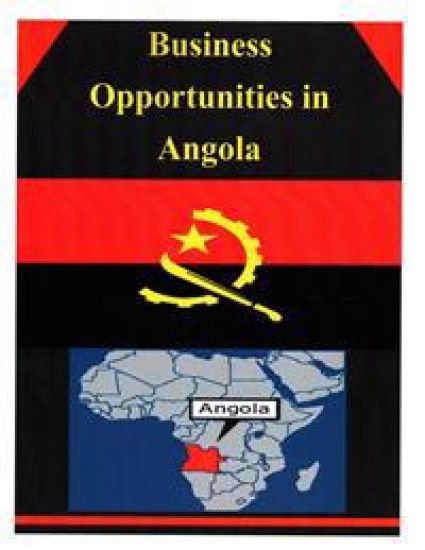
Angola is expected to enjoy strong economic growth due to stable oil prices. Oil proceeds sustain a thriving post-civil war reconstruction boom that presents lucrative opportunities in many business sectors. The Angolan market presents a high return, but high risk, opportunity to investors and exporters. Angola peacefully held its first-ever Presidential elections in August 2012. MPLA leader Jos Eduardo dos Santos, who has been President of Angola since 1979, won a convincing 72% of the vote and will continue to serve as President until at least 2017. Major export destinations for Angolan goods (mostly oil) are China, the United States, India, Taiwan, and Portugal. Angola imports mostly food, reinforcing bar, and vehicles from top trading partners: Portugal, China, the United States, Brazil, and South Africa (Angola Customs Agency).
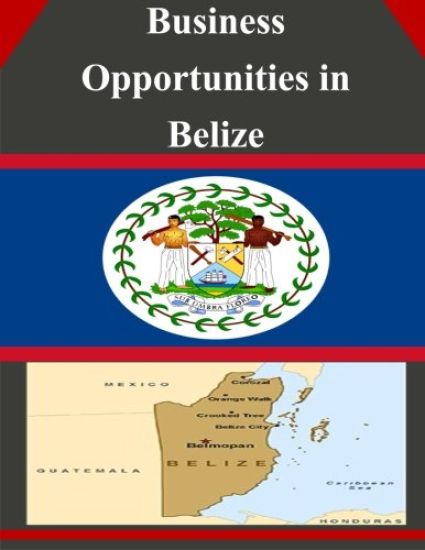
Belize has a total area of 8,867 square miles and an estimated population of 313,000 inhabitants (according to the 2010 Belize Census). Belize has an open, private sector led economy based primarily on agriculture, tourism, and services. Tourism remains the nation's largest foreign exchange earner. Bona fide tourist arrivals for 2012 amounted to 917,869, up from 888,191 in 2011. 277,135 were overnight tourists arriving at the international airport, and 640,734 were from cruise ship arrivals. Annual tourist expenditures average approximately 22% of GDP, ranging between $220 million to $260 million per annum. In addition to tourism revenue, Belize's gross exports for 2012 amounted to $340.4 million comprised of Crude Petroleum (27.4%), Citrus (24%), Sugar (15.8%), Banana (13.9%), Marine products (8.4%), Papaya (2.3%), Sawn Wood (1.4%), among others. Belize is a consumer nation and relies heavily on imports. Belize's Gross Imports for 2012 totaled $881.9, up from $832.6 million in 2011. Considering Belize's total gross exports of $340.4, this means that for 2012 Belize traded at a deficit of $541.5 million (up from $487 million deficit in 2011).
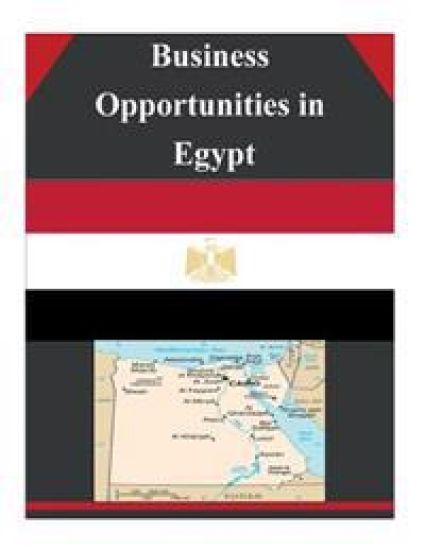
Egypt has traditionally been an attractive market for U. S. firms thanks to its unique mix of demographics and commercial links to the broader world, strategic location and a demonstrated ability to innovate and compete in global markets. It is however, suffering from a post-Revolution economic slowdown, energy shortages and political instability. Most U. S companies already in the market are taking a wait and see attitude; companies interested in expanding into Egypt will find opportunities, though limited in the short term. This should not dissuade companies from looking at the potential that exists in this, the largest Arab country, in the medium and long term. The January 25, 2011 Revolution and the subsequent political transition to democracy have affected the political, economic, commercial and security environment in Egypt. Although GDP grew to two percent from 2011 to 2012, it is still down from five percent in 2010. Foreign reserves fell from $36 billion in January 2011 to $14.4 billion in April 2013. Egypt is sourcing loans to bolster this weak position from Qatar, Libya, and Turkey, but is currently unable to finalize an IMF package which some say will begin the stabilization process. Credit rating agencies have consistently downgraded Egypt's rating since October 2011; as of April 2013, it stood at CCC. Political instability has had an effect on foreign direct investment, which came to a virtual standstill in the aftermath of the Revolution. According to Central Bank of Egypt data, FDI flows into Egypt fell from $6.8 billion in fiscal year (July 1-June 30) 2010, to $2.2 billion in 2011, to $1.6 billion in 2012. Despite the drop in foreign capital inflows, the U. S. nonetheless remains a significant source of investment into Egypt, accounting for $1.8 billion in 2011 and $0.4 billion in 2012. The stock of U. S. direct investment in Egypt was $16.7 billion at the end of 2012. It is unlikely that there will be significant investment inflows until security and stability return to Egypt. Although many multinational firms have investment plans for Egypt, all but a few firms have placed their plans on hold.
As the United States - Chile Free Trade Agreement (FTA) concludes its eighth year, trade in products and services continueto be a resounding success. As of January 1, 2004, duties were reduced to zero on 90% of U. S. exports to Chile with all remaining tariffs to be phased out by 2015. In 2011, bilateral trade between the United States and Chile reached US$ 24.8 billion, an over 300% increase over bilateral trade levels before the U. S.-Chile FTA was implemented. U. S. exports to Chile in 2011 reached a record US$ 15.8 billion while imports from Chile reached US$ 9 billion. In 2010, the United States and Chile concluded the negotiations of a bilateral tax treaty that has not yet been ratified in either Congress. The United States remains the single largest cumulative direct investor in Chile, representing 24% of all net foreign direct investment from 1974 to 2011. Spain follows closely with 20.8%, and Canada is third at 18.5%. However, Canada has led all nations in investment from 2009 to 2011. Macroeconomic stability and growing integration with international capital markets has earned Chile an A+ credit rating, the highest in Latin America. Chile remains one of the most stable and prosperous developing nations and consistently ranks high on international indices relating to economic freedom, transparency, and competitiveness. It also fares very well in terms of democratic development, gross domestic product per capita, freedom of the press, and was the highest ranked country in Latin America in terms of competitiveness, according to the World Economic Forum's Global Competitiveness Report 2009-2010. Chile continues to pursue market-oriented strategies, expand global commercial ties, and actively participate in international issues and hemispheric free trade. Chile is a member of the Rio Group, an associate member of Mercosur, a full member of APEC, and a founding member of UNASUR. In 2010, Chile became the 31st member of the OECD, only the second Latin American country to join after Mexico. With Free Trade Agreements with Europe, China, India, and North America, Chile has given its nearly 17 million citizens unprecedented access to the world's products and services. This offers a unique opportunity for U. S. exporters interested in expanding their businesses in arguably the most open and stable market in Latin America.
Nepal is a low-income developing nation: GDP (FY 2011/12): $19.15 billion; GDP growth rate (FY 2011/12): 3.96 percent; Population: 26.49 million (male 12.85 million, and female 13.64 million); per capita annual income: $735. More than 75 percent of the population is under the age of 40. Political deadlock, a landlocked location, challenging topography, poor infrastructure, a weak human capital base and a long history of public intervention in the economy are some of the impediments to economic growth. Agriculture accounts for 35 percent of GDP and 73.9 percent of employment. However, there has been significant migration from rural to urban areas and overseas. An estimated 22 percent of male and 1 percent of the female population is working abroad, primarily in the Gulf countries, and Asia. (Note: Official statistics do not count Nepalis working in India). Nepal received at least $4.42 billion in remittances in 2012, equivalent to nearly a quarter of GDP. India accounts for 65.1 percent of Nepal's total trade. In FY 2011/12, Nepal exported $919.98 million worth of goods, mainly woolen carpet, pulses, readymade garments, polyester yarn, textile, cashmere, metal and wooden handicraft items, zinc sheets, and agricultural products. Nepal's annual imports are about $5.68 billion, mainly from India, China, and the UAE. The main imports are petroleum products, gold, vehicles & spare parts, machinery & parts, medicine, crude soybean oil, telecommunication equipment & parts, and electrical goods. U. S.-Nepal bilateral trade is estimated at $118.10million in 2012, according to USITC figures. U. S. exports to Nepal were about $34.8 million. Total U. S. investment in Nepal is $86.53 million according to Government of Nepal fiscal year 2011-12 statistics. In FY 2011/12, the U. S. was the second-largest Nepali export market, accounting for 7.5 percent of total exports. US exports, on the other hand, made up only 1 percent of Nepal's total imports. Nepal traditionally runs large trade and current account deficits, which are offset by equally large service, transfer, and capital account surpluses. As of mid-April 2013, the gross convertible foreign exchange reserve of the banking sector stood at $5.46 billion, enough to finance merchandise imports for 10.6 months.