Kirjojen hintavertailu – 12 859 828 kirjaa ja 27 kauppaa

Kirjailija

U. S. Department of Justice

Kirjat ja teokset yhdessä paikassa: 416 kirjaa, julkaisuja vuosilta 2001–2025, suosituimpiin kuuluu Drug Endangered Children: Guide for Law Enforcement. Vertaile teosten hintoja ja tarkista saatavuus suomalaisista kirjakaupoista.

Nimi esiintyy myös muodoissa: U.S. Department of Justice, U S Department of Justice

416 kirjaa

Kirjojen julkaisuvuodet: 2001–2025.

Youth Gangs: An Overview

Youth Gangs: An Overview

U. S. Department of Justice

Createspace Independent Publishing Platform
2015
nidottu
The United States has seen rapid proliferation of youth gangs since 1980. During this period, the number of cities with gang problems increased from an estimated 286 jurisdictions with more than 2,000 gangs and nearly 100,000 gang members in 1980 (Miller, 1992) to about 4,800 jurisdictions with more than 31,000 gangs and approximately 846,000 gang members in 1996(Moore and Terrett, in press). An 11-city survey of eighth graders found that 9 percent were currently gang members, and 17 percent said they had belonged to a gang at some point in their lives (Esbensen and Osgood, 1997). Other studies reported comparable percentages and also showed that gang members were responsible for a large proportion of violent offenses. In the Rochester site of the OJJDP-funded Program of Research on the Causes and Correlates of Delinquency, gang members (30 percent of the sample) self-reported committing 68 percent of all violent offenses (Thornberry, 1998). In the Denver site, adolescent gang members (14 percent of the sample) self-reported committing 89 percent of all serious violent offenses (Huizinga, 1997). In another study, supported by OJJDP and several other agenciesand organizations, adolescent gang members in Seattle (15 percent of the sample) self-reported involvement in 85 percent of robberies committed by the entire sample (Battin et al., 1998). This Bulletin reviews data and research to consolidate available knowledge on youth gangs that are involved in criminal activity. Following a historical perspective, demographic information ispresented. The scope of the problem is assessed, including gang problems in juvenile detention and correctional facilities. Several issues are then addressed by reviewing gang studies to provide aclearer understanding of youth gang problems. An extensive list of references is provided for further review.
Forming a Multidisciplinary Team To Investigate Child Abuse

Forming a Multidisciplinary Team To Investigate Child Abuse

U. S. Department of Justice

Createspace Independent Publishing Platform
2015
nidottu
When a child is the victim of abuse or neglect, it is the responsibility of each member of the child protective service and criminal justice communities to provide a timely and appropriate response. To promote the coordination and teamwork needed to ensure such a response-and to minimize additional trauma to children-a growing number of jurisdictions have establishedmultidisciplinary teams (MDT's) comprising professionals from law enforcement, child protective services, prosecution, medicine, counseling, and related fields. Forming a Multidisciplinary Team To Investigate Child Abusedelineates the benefits that an MDT offers and provides advice on forming and operating an effective team. Diverse MDT models are described and keys to making the team a success-confidentiality policies, conflict resolution practices, and periodic review-are discussed. It is my hope that this guide will be a valuable resource to current and potential MDT members and that it will enhance coordination among these professionals and improve the timeliness and effectiveness of their investigations. Only through such improvements can we fulfill our duty to protect children and bring those who abuse and neglect them to justice.
Law Enforcement Response to Child Abuse

Law Enforcement Response to Child Abuse

U. S. Department of Justice

Createspace Independent Publishing Platform
2015
nidottu
Law Enforcement Response to Child Abuse-like all the Portable Guides in this series-is designed to assist those working to help protect children from being victimized and to improve the investigation of child abuse cases. This guide arms law enforcement professionals with the information needed to ensure consistency in their investigation of child abuse. Pertinent considerations and helpful investigatory protocols are provided. Other useful materials include suggestions on working with physicians, responding to domestic disturbance calls, and placing children in protective custody. Supplemental readings and additional resources are cited. In protecting our children from criminal predators, law enforcement professionals are serving their communities and their Nation. We hope that this guide will aid in that worthy endeavor.
Battered Child Syndrome: Investigating Physical Abuse and Homicide

Battered Child Syndrome: Investigating Physical Abuse and Homicide

U. S. Department of Justice

Createspace Independent Publishing Platform
2015
nidottu
Battered child syndrome is a tragic and disturbing phenomenon. Unfortunately, it is a crime that is often successfully hidden by its perpetrators. Law enforcement has an important role to play in uncovering cases of battered child syndrome andgathering evidence for their successful prosecution. This guide contains practical information on the circumstances that point to the willful rather than the accidental injury or death of an infant or child and the specific evidence required to prove it. It places special emphasis on obtaining an expert medical examination, immediately documenting the injuries through photographs, and collecting and preserving physical evidence. The guide also shows investigators how their interviews with caretakers, family members, neighbors, school personnel, and others can shed light on the treatment the child has receivedover time and produce witnesses who can corroborate or refute suspected abuse. Many jurisdictions are beginning to develop training programs to help police investigate this crime more effectively. This guide is an important contribution to this end and will aid child protection personnel and others in a position to identify, investigate, and prosecute cases of battered child syndrome.
Burn Injuries in Child Abuse

Burn Injuries in Child Abuse

U. S. Department of Justice

Createspace Independent Publishing Platform
2015
nidottu
Our most defenseless children are the most likely to be burned intentionally. Child abuse burn victims are almost always under the age of 10 with the majority under the age of 2. Immediateidentification of intentional burn victims by those individuals first responding to the call for assistance is crucial because most of the victims are unable to speak for themselves. It is alsoimportant that responsible caretakers not be unjustly accused. In this guide you will find information that will assist you to distinguish intentional burns from accidental contact with hot objects. Burn Injuries in Child Abuse provides both guidance ondetermining the veracity of a caretaker's report by re-creating the incident and a burn evidence worksheet for use at the scene of an investigation. Information regarding the distinctions between immersion and contact burns is also included. It is our hope that information in this guide will be of use to law enforcement as we all work to protect our children.
Proceedings of the Large Jail Network Meeting: September 2014

Proceedings of the Large Jail Network Meeting: September 2014

U. S. Department of Justice; National Institute of Corrections

Createspace Independent Publishing Platform
2015
nidottu
The September 2014 Large Jail Network meeting took place at the National Institute of Corrections, National Corrections Academy in Aurora, Colorado. There were 63 detention agency staff in attendance. The meeting began with an informal dinner on Sunday, September 28, with an opening session and participant and guest introductions. Two days of presentations and discussion followed. Guests and speakers at the meeting included: - Carrie Hill, Esq., Maple Grove, Minnesota;- Jeff Woodworth, U. S. Bureau of Prisons;- Steve Cope, U. S. Bureau of Prisons, Counterterrorism Unit;- Bob Kasabian, Executive Director, American Jail Association, Hagerstown, Maryland; and- Ben Shelor, Assistant Director, Standards, Accreditation, and Professional Development, American Correctional Association, Alexandria, Virginia;- Connie Clem, meeting recorder, Clem Information Strategies, Longmont, Colorado. The agenda for the meeting is provided in Appendix A. A list of LJN members in attendance and meeting guests appears in Appendix B. An index of past topics covered at LJN meetings is provided in Appendix C
Proceedings of the Large Jail Network Meeting: September 2014

Proceedings of the Large Jail Network Meeting: September 2014

National Institute of Corrections; U. S. Department of Justice

Createspace Independent Publishing Platform
2015
nidottu
The September 2014 Large Jail Network meeting took place at the National Institute of Corrections, National Corrections Academy in Aurora, Colorado. There were 63 detention agency staff in attendance. The meeting began with an informal dinner on Sunday, September 28, with an opening session and participant and guest introductions. Two days of presentations and discussion followed. Guests and speakers at the meeting included: - Carrie Hill, Esq., Maple Grove, Minnesota;- Jeff Woodworth, U. S. Bureau of Prisons;- Steve Cope, U. S. Bureau of Prisons, Counterterrorism Unit;- Bob Kasabian, Executive Director, American Jail Association, Hagerstown, Maryland; and- Ben Shelor, Assistant Director, Standards, Accreditation, and Professional Development, American Correctional Association, Alexandria, Virginia;- Connie Clem, meeting recorder, Clem Information Strategies, Longmont, Colorado. The agenda for the meeting is provided in Appendix A. A list of LJN members in attendance and meeting guests appears in Appendix B. An index of past topics covered at LJN meetings is provided in Appendix C
Sexually Transmitted Diseases and Child Sexual Abuse

Sexually Transmitted Diseases and Child Sexual Abuse

Office of Juvenile Justice and Delinquen; U. S. Department of Justice

Createspace Independent Publishing Platform
2015
nidottu
Investigating allegations of sexual abuse of children is very difficult for law enforcement. Successful resolution of these cases is often hampered by victim reluctance or inability tocommunicate as well as the scarcity of corroborating evidence. While the consequences of all abuse of children are of great concern to us, sexual abuse can be particularly devastating, especially when a sexually transmitted disease is part of the tragic legacy of violation. This guide is designed to present additional investigative techniques, utilizing the presence of a sexually transmitted disease, which will assist in identifying or eliminating suspects in sexual abuse cases. Successful investigations are crucialbecause they can be the gateway to treatment for victims and can help protect them from further victimization. The guide also seeks to sensitize investigators to the need for personalprecautions when investigating these cases and helps them to recognize children in need of immediate medical attention. OJJDP is proud of this offering and urges you to make use of it as we work to protect our children
Investigating Child Fatalities

Investigating Child Fatalities

U. S. Department of Justice

Createspace Independent Publishing Platform
2015
nidottu
The death of any child is tragic, but when a child dies suddenly and unexpectedly, it becomes the responsibility of law enforcement investigators to determine whether any criminal activity may have been involved. Thorough, professional investigations of child fatalities in which abuse or neglect is in question ensure that the innocent are not falsely accused and that the guilty are held accountable for their crimes. Conducting these crucial investigations involves unique issues for law enforcement. This guide provides concise, practical information to assist law enforcement officers in investigating child fatalities more effectively. We hope that investigators charged with this significant responsibility will find the guide helpful in their work.
Alternatives to the Secure Detention and Confinement of Juvenile Offenders

Alternatives to the Secure Detention and Confinement of Juvenile Offenders

U. S. Department of Justice

Createspace Independent Publishing Platform
2015
nidottu
Court officials must balance the interests of public safety with the needs of youth when making decisions about which program to place a juvenile offender and which level of restriction is required. Juvenile offenders who commit serious and/or violent crime may require confinement to protect public safety and intensive supervision and intervention to become rehabilitated. On the other hand, many offenders can be effectively rehabilitated through community-based supervision and intervention. Secure detention differs from secure confinement both in terms of the reasons a youth is being held and in the range and intensity of programs available to an offender in each setting. Secure detention refers to the holding of youth, upon arrest, in a juvenile detention facility (e.g., juvenile hall) for two main purposes: to ensure the youth appears for all court hearings and to protect the community from future offending. In contrast, secure confinement refers to youth who have been adjudicated delinquent and are committed to the custody of correctional facilities for periods generally ranging from a few months to several years. These confinement facilities have a much broader array of programs than detention facilities.
Access to Counsel

Access to Counsel

U. S. Department of Justice

Createspace Independent Publishing Platform
2015
nidottu
OJJDP supports the development and adoption of policies and programs that: - Provide access to quality (not cursory) legal counsel for all youth in the juvenile justice system.- Ensure that juveniles consult with counsel at the outset of the juvenile justice process (before waiving their right to counsel) and at every subsequent step, through postdisposition. The right to counsel for juveniles was established in 1967 with the landmark case In re Gault, 387U. S. 1, 87 S. Ct. 1428 (1967). In Gault, Supreme Court Justice Abe Fortas wrote, "under our Constitution the condition of being a boy does not justify a kangaroo court," and the Court ruled against the argument that a probation officer or judge could adequately represent a minor, given the "awesome prospect" of incarceration until the age of majority. The Supreme Court held in Gault that children have the right to remain silent and that no child can be convicted unless compelling evidence is presented in court, under the due process clause of the 14th amendment. Gault was a major change in juvenile law in that it upheld the constitutional rights of children. As Justice Fortas wrote: "Neither the 14th amendment nor the Bill of Rights is for adults only." The 6th amendment also protects children's rights to assistance of defense counsel (Gideon v. Wainwright, 372 U. S. 335 (1963)) and, moreover, to effective assistance of counsel (Stickland v. Washington, 466 U. S. 668 (1984)). The 6th and 14th amendments, along with the privileges enumerated in the Bill of Rights, form the constitutional lexicon of juvenile justice
Juveniles in Corrections

Juveniles in Corrections

U. S. Department of Justice

Createspace Independent Publishing Platform
2015
nidottu
The biennial Census of Juveniles in Residential Placement provides the nation with a detailedpicture of juveniles in custody-age, race, gender, offenses, adjudication status, and more. Conducted by the U. S. Bureau of the Census for the Office of Juvenile Justice and DelinquencyPrevention, the census surveys both public and private juvenile residential placement facilitiesin every state. This Bulletin presents the latest available national and state-level data from the census, portrayingthe 134,011 youth held in 2,939 facilities on October 27, 1999. Because the censusdoes not survey adult facilities, the Bulletin draws on other sources for statistics on offendersyounger than 18 who were held in jails and adult prisons. It also examines imposition of the death penalty for crimes committed by offenders when they were younger than 18. Clear, comprehensive, reliable statistical information on juveniles in custody, such as thatpresented in this Bulletin, is an invaluable resource for policymakers and juvenile justice professionals. This information is essential not only for planning and operating juvenile residential facilities but also for understanding and preventing delinquency.
Protective Intelligence and Threat Assessment Investigations: A Guide for State and Local Law Enforcement Officials

Protective Intelligence and Threat Assessment Investigations: A Guide for State and Local Law Enforcement Officials

U. S. Secret Service; U. S. Department of Justice

Createspace Independent Publishing Platform
2015
nidottu
Threat assessment or protective intelligence is the process of gathering and assessing information about persons who may have the interest, motive, intention, and capability of mounting attacks against public officials and figures. Gauging the potential threat to and vulnerability of a targeted individual is key to preventing violence. Among criminal justice functions, threat assessmentholds great promise for determining vulnerability and guiding interventions in potentially lethal situations. The primary goal of every protective intelligence investigation is to prevent an attack on a potential target. By using a combination of investigative skill, corroboration, and common sense, a protective intelligence investigator can gather the information and evidence to make a thoughtful assessment of the threat an individual may pose to a target. Once an assessment is made, a plancan be developed and implemented to monitor the individual and to intervene, as appropriate, to prevent an attack. Attention to the individual's motives and attack-related behaviors and to thesystems (family, work, community, criminal justice, mental health, and social services) that the individual is involved with are key to assessing and managing a potential threat.
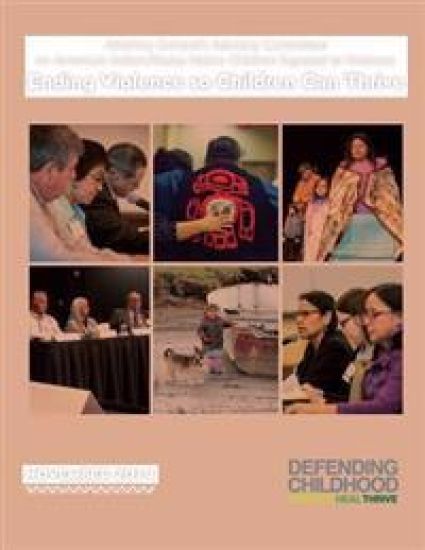
Ending Violence So Children Can Thrive

Ending Violence So Children Can Thrive

U. S. Department of Justice; Attorney General's Advisory Committee

Createspace Independent Publishing Platform
2015
nidottu
Many of the recommendations in this report are addressed to Congress and executive branch agencies outside the Department of Justice because solutions to the dire situation faced by AI/AN children must be comprehensive and will require efforts beyond the Department of Justice. Therefore, the Committee recommends that the Attorney General work with the Legislative and executive branches of government to implement the recommendations. The recommendations are intended to serve as a blueprint for preventing Al/AN children's exposure to violence and for mitigating the negative effects experienced by Al/AN children exposed to violence across the United States and throughout Indian country. During 2013-14, the Advisory Committee convened four public hearings and multiple Listening Sessions across the nation to examine the scope and impact of violence facing AI/AN children exposed to violence in their homes, schools, and communities. The Advisory Committee heard from more than 150 witnesses. The hearings, attended by more than 580 people, were open to the public. The primary focus of this report is the findings and recommendations that emerged from those hearings. In addition, this report incorporates and builds on two highly relevant reports that preceded it. The 2012 Report of the Attorney General's National Task Force on Children Exposed to Violence and the 2013 Indian Law and Order Commission (ILOC) report, A Roadmap for Making Native America Safer.
Youth Gangs: An Overview

Youth Gangs: An Overview

U. S. Department of Justice

Createspace Independent Publishing Platform
2015
nidottu
The United States has seen rapid proliferation of youth gangs since 1980. During this period, the number of cities with gang problems increased from an estimated 286 jurisdictions with more than 2,000 gangs and nearly 100,000 gang members in 1980 (Miller, 1992) to about 4,800 jurisdictions with more than 31,000 gangs and approximately 846,000 gang members in 1996(Moore and Terrett, in press). An 11-city survey of eighth graders found that 9 percent were currently gang members, and 17 percent said they had belonged to a gang at some point in their lives (Esbensen and Osgood, 1997). Other studies reported comparable percentages and also showed that gang members were responsible for a large proportion of violent offenses. In the Rochester site of the OJJDP-funded Program of Research on the Causes and Correlates of Delinquency, gang members (30 percent of the sample) self-reported committing 68 percent of all violent offenses (Thornberry, 1998). In the Denver site, adolescent gang members (14 percent of the sample) self-reported committing 89 percent of all serious violent offenses (Huizinga, 1997). In another study, supported by OJJDP and several other agenciesand organizations, adolescent gang members in Seattle (15 percent of the sample) self-reported involvement in 85 percent of robberies committed by the entire sample (Battin et al., 1998). This Bulletin reviews data and research to consolidate available knowledge on youth gangs that are involved in criminal activity. Following a historical perspective, demographic information ispresented. The scope of the problem is assessed, including gang problems in juvenile detention and correctional facilities. Several issues are then addressed by reviewing gang studies to provide aclearer understanding of youth gang problems. An extensive list of references is provided for further review.