

Kirjailija
Ulysses S. Grant
Kirjat ja teokset yhdessä paikassa: 142 kirjaa, julkaisuja vuosilta 1969–2026, suosituimpiin kuuluu Personal Memoirs of U. S. Grant. Vertaile teosten hintoja ja tarkista saatavuus suomalaisista kirjakaupoista.
Nimi esiintyy myös muodoissa: Ulysses S Grant
142 kirjaa
Kirjojen julkaisuvuodet: 1969–2026.
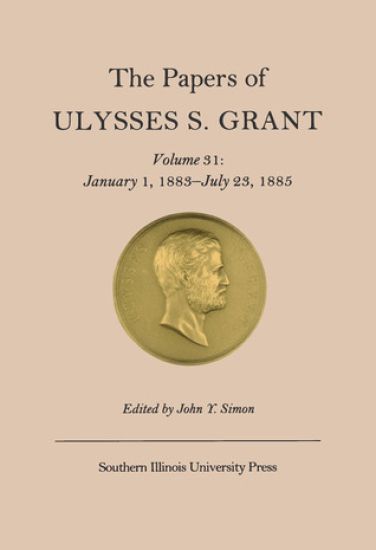
The Papers of Ulysses S. Grant v. 31; January 1, 1883-July 23, 1885
Ulysses S. Grant
Southern Illinois University Press
2009
sidottu
In this book, Ulysses S. Grant's life story reaches its end. Mexico had interested Ulysses S. Grant since the young lieutenant fought there. Now, as president of the Mexican Southern Railroad, he emerged as a strong advocate of increased trade and investment. Appointed by President Chester A. Arthur to negotiate a commercial treaty, Grant spent most of January 1883, working on the project. For months, Grant promoted the resulting treaty, granting interviews, giving speeches, and toasting visiting Mexican statesman Porfirio Diaz. The Senate ultimately rejected the treaty amid charges that Grant had crafted provisions to benefit his moribund railroad. As Grant lost influence in the White House and in Congress, he turned his attention and energy elsewhere. In September 1883, Grant joined a tour to celebrate the completion of the Northern Pacific Railroad, begun during his first presidential term. From Minnesota to Oregon, Grant saw firsthand the rapid growth of the northwest. 'I was not prepared to see so rich a country or one so rapidly developing'. Grant wrote a series of articles about his Civil War campaigns, and then began his ""Memoirs"". In February 1885, he was diagnosed with cancer. Newspapers published daily updates as Grant's health steadily declined. Fading health spurred Grant to finish his ""Memoirs"". He completed the first of two volumes by March. The second was nearly done in June, when the Grants left sweltering New York City for upstate Mount McGregor. Here Grant finished his work and faced his end, unable to speak, communicating by notes to his doctors and friends. 'There never was one more willing to go than I am'. Grant died on July 23, his family at his side.
Stories, Sketches And Speeches Of General Grant
Ulysses S. Grant
KESSINGER PUBLISHING, LLC
2008
sidottu
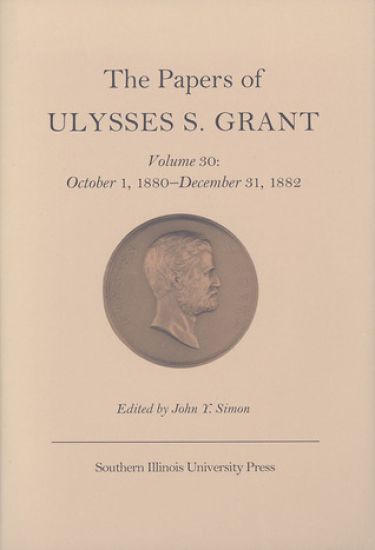
The Papers of Ulysses S. Grant v. 30; October 1, 1880-December 31, 1882
Ulysses S. Grant
Southern Illinois University Press
2008
sidottu
In the final weeks of the 1880 campaign, Ulysses S. Grant left Galena and headed east to stump for the Republican ticket. At rallies in New England, upstate New York, Connecticut, New Jersey, and New York City, sometimes several times a day, the reticent Grant warmed to his role. Sounding a familiar postwar theme, he repeatedly condemned voter harassment in the South, asserting the right of ""our fellow-citizens of African descent, to go to the polls, even though they are in the minority, and put in their ballot without being burned out of their homes, and without being threatened or intimidated."" James A. Garfield won a narrow victory over Major General Winfield S. Hancock and welcomed Grant's advice on matters ranging from cabinet choices to foreign policy. Rootless since their White House days and unsatisfied with backwater Galena, the Grants now decided to settle in New York City and took rooms at the Fifth Avenue Hotel. In January, 1881, Grant accepted the presidency of the 1883 World's Fair Commission, charged with bringing an exposition to New York City. Initial enthusiasm soon gave way to rancor, as factions split over where to place the fair. Grant favored Central Park, but public sentiment intervened, and funding evaporated. By March, Grant resigned. Grant's business interests reflected the international stage he now occupied. Competing plans for an isthmian canal through Panama, Mexico, and Nicaragua jockeyed for support, with Grant strongly favoring Nicaragua. He published an article championing Nicaragua even as momentum swung behind Panama. But Grant's attention was drawn more to railroads and to Mexico. When his friend Matias Romero promoted a new line through Oaxaca, Grant jumped on board. A speech to American capitalists in November, 1880, led a few months later to the incorporation of the Mexican Southern Railroad, with Grant as president. By April, 1881, he was in Mexico City, where he told lawmakers, ""I predict, with the building of these roads, a development of the country will take place such as has never been witnessed in any country before... There is nothing, in my opinion, to stand in the way of Mexican progress and grandeur, and wealth, but the people themselves.""In June, Grant returned from Mexico with a new charter in hand. But his mind was on Garfield and Secretary of State James G. Blaine, two men who had thwarted him at the Republican convention one year earlier. Grant supported his Stalwart ally, Roscoe Conkling, in a power struggle with Garfield and Blaine. From New Orleans to New York City, Grant spoke candidly, complaining of Conkling's mistreatment by Garfield and others. The feud ended after Garfield was shot on July 2. When he died in September, Grant wept with the nation. Fitz John Porter had sought restoration to the army since his dismissal after the Second Battle of Bull Run. Grant had previously rebuffed Porter but now reversed course. Taking up a case that divided former commanders now in Congress, Grant forcefully argued for Porter's vindication. Grant and wife Julia bought a home just off Fifth Avenue in New York City. In the summer, he commuted from his seaside cottage at Long Branch, New Jersey, to his office on Wall Street, where he greeted a steady stream of admirers and influence-seekers. A silent partner in the brokerage firm his son Ulysses, Jr., formed with Ferdinand Ward, Grant left finances in Ward's hands. Surveys for the Mexican Southern proceeded. Banquets and parties filled many evenings. The Grants settled into Manhattan society.
Illustrated Life, Campaigns And Public Services Of Lieut. General Grant: The Hero Of Fort Donelson! Vicksburg! Chattanooga! Petersburg! And Richmond!
Ulysses S. Grant
KESSINGER PUBLISHING, LLC
2008
sidottu
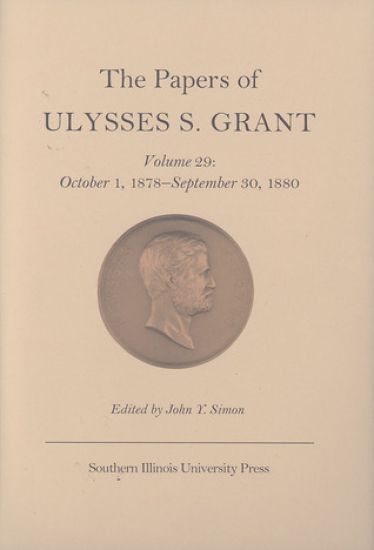
The Papers of Ulysses S. Grant v. 29; October 1, 1878-September 30, 1880
Ulysses S. Grant
Southern Illinois University Press
2008
sidottu
By late 1878, after a year and a half abroad, Ulysses S. Grant had visited every country in Europe, and he was homesick. ""I have seen nothing to make me regret that I am an American. Our country: its resources; energy, ingenuity and intelligence of the people, &c. is more appreciated abroad than at home."" Grant decided to return through Asia. After ""a delightful run"" to Dublin and northern Ireland, he left Paris with his wife Julia, son Frederick, and a few friends in January, 1879. Heading east, Grant kept a travel diary. On the voyage to Bombay, travelers socialized on deck. ""Four of the lady passengers and one of the gentlemen Amateur Artists, amused themselves by sketching me."" Crossing India overland, the Grant party rode elephants, visited the Taj Mahal, and witnessed Hindu ceremonies. From Calcutta, Grant sailed for Burma, Singapore, and Siam. After stops at Hong Kong and Canton, Grant wrote, ""I am satisfied that the Chinese are badly treated at home by Europeans as well as when they emigrate."" At Tientsin, Grant befriended Viceroy Li Hung-chang, ""probably the most intelligent and most advanced ruler - if not man - in China,"" and at Peking he agreed to mediate a dispute with Japan over the Ryukyu Islands. During a ""very delightful"" ten weeks in Japan, Grant met the Emperor, visited shrines and hot springs, attended a play and a lantern parade in his honor, and held talks on the Ryukyu dispute. Throngs welcomed Grant to San Francisco on September 20, 1879. Grant assured all that the United States stood second to none in the world in its people, institutions, and ideals. He told Confederate veterans, ""I have an abiding faith that we will remain together in future harmony."" Grant toured Yosemite and visited scenes from his army days in Oregon and Washington Territory, then headed east again, his train cheered at every stop. At Galena and Chicago he basked in the warmth of ovations and old friends. Another series of crowds and banquets culminated in December at Philadelphia, where Grant completed his circuit of the globe. As 1880 began, Grant headed south. He marveled at Florida's potential and groused at Cuba's heat, then reached Mexico, a country he had long ago admired as part of an occupying army. Grant met influential leaders, toured silver mines and old battlefields, and encouraged development. Grant returned to New Orleans and more banquets and speeches, touting reconciliation and praising black advancement. His progress north took on the air of a campaign as the Republican convention loomed. Newspapers debated a third term while Grant kept silent. In June, at Chicago, delegates split between Grant and James G. Blaine, and settled on dark horse James A. Garfield. Grant expressed relief at avoiding a ""most violent campaign.""Grant spent the summer in the Rocky Mountains inspecting mines, sometimes by pack mule, for possible investments. In September, back in Galena, he rejoined the political fray, attacking Garfield's opponent, Major General Winfield S. Hancock, in an interview. ""He is the most selfish man I know... He can not bear to hear anyone else praised, but can take any amount of flattery."" With the election weeks away, and the outcome in doubt, Grant took to the stump. ""I am a Republican,"" he told an Ohio crowd, ""because the Republican Party is a national party seeking the greatest good for the greatest number of citizens.
Stories, Sketches And Speeches Of General Grant
Ulysses S. Grant; James Baird (EDT) Mcclure
Kessinger Pub
2008
pokkari
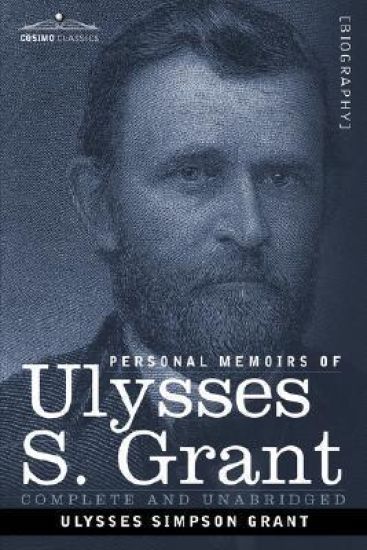
The Life And Campaigns Of Lieutenant-General U. S. Grant, From His Boyhood To The Surrender Of Lee
Ulysses S. Grant
Kessinger Pub
2007
pokkari
Illustrated Life, Campaigns And Public Services Of Lieut. General Grant
Ulysses S. Grant
Kessinger Pub
2007
pokkari
General Grant's Letters to a Friend, 1861-1880
Ulysses S. Grant; James Grant (INT) Wilson
Kessinger Pub
2007
pokkari
The Papers of Ulysses S. Grant v. 28; November 1, 1876-September 30, 1878
Ulysses S. Grant
Southern Illinois University Press
2005
sidottu
In his eighth and final annual message to Congress, Ulysses S. Grant reminded the nation that it was his fortune or misfortune, to be called to the office of Chief Executive without any previous political training? The electoral crisis that dominated Grant's last months in office left little room for political error. On November 7, 1876, Democrat Samuel J. Tilden won the popular vote, but Republican Rutherford B. Hayes would claim the presidency by a single electoral vote if he captured all disputed electors from Florida, Louisiana South Carolina, and Oregon. Uncertainty gave way to deadlock as the crisis deepened. Grant's mail included a steady trickle of anonymous threats. In late January 1877, Grant signed a bill creating an electoral commission to end the dispute. Hayes won all disputed electors and succeeded Grant without incident. Out of the White House, without a settled home, the Grants spent two months visiting family and friends before embarking on their long-planned European tour. On May 17, Grant left Philadelphia aboard the steamer Indiana. When he arrived at Liverpool, crowds thronged the docks and streets to give him a hero's welcome, and Londoners welcomed Grant with similar enthusiasm. In July, the Grants crossed to Belgium, traveled through Germany, and summered in the Swiss Alps and the lakes of northern Italy. Back in Great Britain, they toured Scotland and northern England, then visited daughter Ellen Grant Sartoris at Warsash, the Sartoris country home near Southampton. Grant spent November in Paris, later writing ""no American would stay in Paris if he found himself the only one of his countrymen there."" The Grants wintered in the Mediterranean, sailing down the Italian coast to Sicily, where they spent Christmas, then to Alexandria, and a long trip up the Nile. The party toured the Holy Land, visited Constantinople and Athens, and spent a month in Italy. After another month in Paris, the Grants were off to Holland, Germany, Scandinavia, Russia, Austria, and Switzerland, exploring the Alps again before returning to Paris in September, 1878, to ponder their next move. Abroad and out of office, Grant freely talked about the war and his presidency. Several interviews stirred controversy in America and stoked talk of a third term in 1880, despite Grant's own protestation: ""I never wanted to get out of a place as much as I did to get out of the Presidency."" The Grants had seen Europe. Now they faced a choice between home and a journey to distant Asia.
The Papers of Ulysses S. Grant v. 27; January 1-October 31, 1876
Ulysses S. Grant
Southern Illinois University Press
2005
sidottu
On May 10, 1876, Ulysses S. Grant pulled a lever to start the mighty 1,400-horsepower Corliss Steam Engine, powering acres of machinery for the nation's Centennial Exhibition in Philadelphia. Grant summed up a century of American progress by saying, ""Whilst proud of what we have done, we regret that we have not done more. Our achievements have been great enough however to make it easy for our people to acknowledge superior merit wheresoever found."" That summer, Fourth of July celebrations coincided with early reports that Lieutenant Colonel George A. Custer and his Seventh Cavalry had been wiped out by Sioux. Grant resisted the subsequent clamor for volunteers to crush the Sioux, but his peace policy lay in shambles, and he later criticized Custer's unnecessary ""sacrifice of troops."" Soldiers sent to subdue Indians meant fewer available to help ensure a fair election in November. Grant's correspondents described a pattern of physical and economic intimidation throughout the South, as Democrats sought to keep blacks from the polls. After whites massacred black militia in South Carolina, Grant warned that unchecked persecution would lead to ""bloody revolution."" As violence spread, Grant struggled to position limited forces where they could do the most good. Scandals diverted Grant's attention from larger policy questions. A series of Whiskey Ring prosecutions culminated in the February trial of Orville E. Babcock, Grant's private secretary. A new scandal erupted in March when Secretary of War William W. Belknap resigned, hoping in vain to avoid impeachment for selling post traderships. Grant drew fire for having accepted the resignation, a move that ultimately led to Belknap's acquittal by the Senate. An investigation also linked Grant's brother Orvil to the scandal. Grant battled a Democratic House of Representatives until late that summer over issues as vital as the budget and as symbolic as the president's absences from the capital. He welcomed Rutherford B. Hayes as the Republican choice for his successor, despite private irritation at Hayes's pointed pledge to serve only one term. As his presidency waned, Grant planned a trip to Europe when he left office. Investments would finance his travels, and he staked his fortunes on western mining stocks. In June, a granddaughter born at the White House brought the family joy in an otherwise trying year.
Personal Memoirs of Ulysses S. Grant Part Two
Ulysses S. Grant
KESSINGER PUBLISHING, LLC
2005
sidottu
Personal Memoirs of Ulysses S. Grant Part One
Ulysses S. Grant
KESSINGER PUBLISHING, LLC
2005
sidottu
Letters of Ulysses S. Grant to His Father and His Youngest Sister 1857 to 1878
Ulysses S. Grant; Jesse Grant (EDT) Cramer
Kessinger Pub
2005
sidottu