Kirjojen hintavertailu – 12 903 725 kirjaa ja 27 kauppaa
Kirjailija
Ulysses S. Grant
Kirjat ja teokset yhdessä paikassa: 142 kirjaa, julkaisuja vuosilta 1969–2026, suosituimpiin kuuluu Personal Memoirs of U. S. Grant. Vertaile teosten hintoja ja tarkista saatavuus suomalaisista kirjakaupoista.
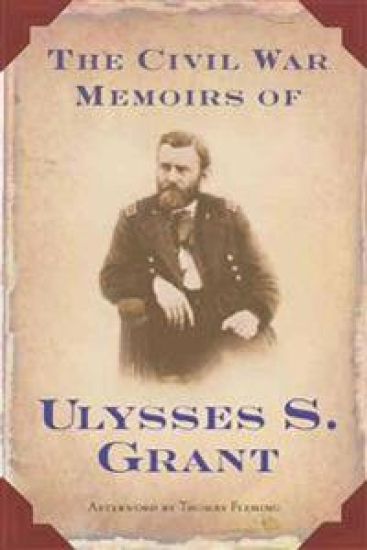
From the Western frontier to the battlefields of Vicksburg, Chattanooga, Franklin, Petersburg, and Richmond, Grant saw the war from the front lines and made the decisions that affected lives on a day-to-day basis. His writings provide a revealing look into the life of the commander in chief of the Union army as well as the seminal eyewitness account of the War between the States. The Civil War Memoirs of Ulysses S. Grant is a popular abridgment of his two-volume Personal Memoirs, which he arranged to have published to provide for his family after his death. (It was a huge bestseller and broke all records in American publishing at the time.) He died less than one week after completing its writing. This abridgment covers Grant's experiences in the Civil War, from the first shot at Sumter to Appomattox, giving the reader a front-line seat next to the greatest Union general of the war. Highlights Include: - General William Tecumseh Sherman on his infamous march through Georgia- General George B. McClellan on the battle of Antietam and the legendary lost order that should have tipped him off to Lee's plans- General George Armstrong Custer's experience of going straight from studying at West Point to the battlefield- General (CSA) James Longstreet on serving under Robert E. Lee- General (CSA) G. Moxley Sorrel on serving under James Longstreet- Major (CSA) J. S. Mosby on the South's Guerilla campaign- General (CSA) Jubal Earley's memoir of the last year of the war.
Ulysses S. Grant faced numerous political challenges during 1874. In the south, the Republican party steadily receded from power. As the year opened, Grant conceded Texas to the Democrats, counseling the recently defeated Republican governor to ""yield to the verdict of the people as expressed by their ballots."" Throughout the spring, Grant monitored an explosive situation in Arkansas, where rival governors set up contending governments. And in Louisiana, the emergence of the White League led to a pitched battle on the streets of New Orleans. All over the south, what Grant called ""atrocities"" led blacks to petition him, as did a group in Louisiana: ""Give us peace or give a Territory to ourselves Mr. President."" The nation also reeled from the aftermath of a financial panic. A bill generally considered inflationary passed Congress in April. Indecisive, Grant prepared two messages on the bill. In the first, never sent, he gave grudging approval. His ringing veto sent Congress back to work: ""I am not a believer in any artificial method of making paper money equal to coin when the coin is not owned or held ready to redeem the promises to pay."" In June, Grant signed a compromise bill that eased inflation fears. Appointments continued to cause turmoil. He selected the largely unknown Ohio lawyer Morrison R. Waite for chief justice after a revelation from Caleb Cushing's past undermined his first nomination. Unable to persuade Elihu B. Washburne to replace an overwhelmed William A. Richardson as secretary of the treasury, Grant nominated another second choice, Benjamin H. Bristow. A frequently slighted Secretary of State Hamilton Fish stayed in the cabinet only after Grant's special pleading. Despite these difficulties, many discussed a third term for Grant, who remained discreetly silent on the issue. In October, Grant made his first visit to Indian Territory, where he saw ""on every side evidence of prosperity."" As he toured, troops completed a four-month campaign against Comanche, Kiowa, and Cheyenne raiders on the southern plains. Further north, Lieutenant Colonel George A. Custer led a party to survey the Black Hills, sacred to the Sioux. Ostensibly scouting sites for military posts, the expedition discovered gold, and the arrival of prospectors by year's end threatened peace in that region. Family and friends had always eased Grant's burdens, but in 1874 the White House seemed a gloomier place after daughter Ellen (Nellie) married in May and left for a new life with her husband in England. Less distressing was the October wedding of eldest son Frederick, who married into an American family. The year closed with Grant quite conscious of public and private uncertainties looming in his future.
Pressured in 1875 to declare himself for or against a third term as president, Ulysses S. Grant found it equally difficult to decide what he wanted and to explain himself to the nation. In May, he pronounced the idea of a third term both constitutional and potentially expedient, and defended the right of the people to choose their own leaders. Grant disavowed any desire to continue as president but expressed gratitude at being chosen twice already. As he pondered a third term, Grant's second term came under increased scrutiny. The first signs of the Whiskey Ring scandal emerged early in 1875. Investigations uncovered several well-established ""rings"" of distillers and officials conspiring to skim tax revenues. Indictments were handed down in May, notably in Milwaukee, Chicago, and St. Louis. Those indicted in St. Louis included some of Grant's own friends. Evidence soon connected the scandal to the capital, and ultimately to Grant's longtime aide and secretary, Orville E. Babcock. Warned in July, Grant brusquely ordered prosecutors to ""Let no guilty man escape,"" even those ""who insinuate that they have high influence to protect, or to protect them."" But in December, when Babcock made a questionable demand for a military court of inquiry to clear his name, Grant backed him up. The idea soon fizzled, and by year's end Babcock faced trial in St. Louis. Grant faced further tribulation in the south. In Louisiana, supporters of rival legislatures clashed on the streets of New Orleans. Lieutenant General Philip H. Sheridan, accused of interfering on behalf of the Republican legislature, described armed Democrats as ""banditti,"" a remark that became a rallying cry for southerners and those northerners opposed to federal intervention. Grant did recognize the limits of northern patience. In September, after violence flared again in Mississippi, he hesitated to intervene, noting that ""the great majority are ready now to condemn any interference on the part of the government."" Rumors of gold in the Black Hills signaled a new threat to Grant's Indian policy. Prospectors flocked to Dakota Territory, and many slipped past military patrols ordered to stop them. Grant sent an emissary to the Sioux with a proposal to buy the Black Hills. In May, Sioux leaders traveled to the capital, where Grant renewed efforts to persuade them to relocate to Indian Territory. The Sioux refused, returned home, and rebuffed a commission sent out to resume negotiations. In November, Grant tacitly dropped the military patrols. Grant left in September for an extensive western trip. In St. Louis, he arranged to sell assets at his farm, which he had resolved to lease after persistent losses. Traveling as far west as Salt Lake City, where he met Mormon leader Brigham Young, Grant could not have relished the prospect of returning to Washington, D. C. The Democrats who controlled the House of Representatives prepared to challenge his administration at every turn.
After three deadly years of fighting, President Abraham Lincoln had seen a little progress in the West against the Confederacy, but in the main theater of operations, Virginia, the lines were almost exactly where they had been when the American Civil War started. The war was at a stalemate with northern public support rapidly fading. Then, Lincoln summoned General Ulysses S. Grant, victor of the Vicksburg campaign, to come East. In little over a year, America's most catastrophic armed conflict ended, the Union was preserved, and slavery was abolished. This book details how these triumphs were achieved and in the telling earned international acclaim as a superb example of an English-language personal chronicle.
"One of the most unflinching studies of war in our literature." --William McFeeley Among the autobiographies of great military figures, Ulysses S. Grant's is certainly one of the finest, and it is arguably the most notable literary achievement of any American president: a lucid, compelling, and brutally honest chronicle of triumph and failure. From his frontier boyhood to his heroics in battle to the grinding poverty from which the Civil War ironically "rescued" him, these memoirs are a mesmerizing, deeply moving account of a brilliant man, told with great courage as he reflects on the fortunes that shaped his life and his character. Written under excruciating circumstances (as Grant was dying of throat cancer), encouraged and edited from its very inception by Mark Twain, it is a triumph of the art of autobiography. The books in the Modern Library War series have been chosen by series editor Caleb Carr according to the significance of their subject matter, their contribution to the field of military history, and their literary merit.
Although Ulysses S. Grant is best remembered as Civil War commander and as president, documents included here demonstrate his importance in the intervening years. Grant interpreted Reconstruction as the means to preserve battlefield victories. He avoided taking a public stand in the bitter dispute between President Andrew Johnson and Congress because he believed that military men served the country, not partisan interests. Nevertheless, he recognized that presidential Reconstruction had failed and privately supported passage of the First Reconstruction Act. Grant's public silence on political issues led to lively newspaper speculation, and individuals from unreconstructed rebels to ardent Unionists wrote to him offering support and advice. Circumstances were forcing him inexorably onto the political battlefield.
This volume provides material that will allow a fresh evaluation of Grant's activities following Appomattox. In April Grant commanded an army of more than 1,000,000 men maintained at enormous cost. Disbanding this army took priority. By mid-July, more than two-thirds of the volunteers had been mustered out. Grant as peacemaker exerted his power to protect his former adversaries. He opposed prosecuting Southern military leaders, including Robert E. Lee and others who had been indicted for treason. The South had to accept defeat, but Grant was no believer in a Carthaginian peace. Two military tasks remained. Grant sent his two most trusted subordinates to solve these problems: Major General Philip H. Sheridan to pressure the French in Mexico and Major General William T. Sherman to keep settlers and Indians apart. During the summer, Grant drafted his report on the last year of the war. The style as well as the substance of the report attracted widespread attention. It also made clear Grant's mastery of events during that terrible year.
On March29, Grant opened the Ap pomattox campaign, informing Sheridan that " I now feel like ending the matter." Despite pleas to cancel the offensive because of adverse weather, Grant pressed ahead. Sheridan won the battle of Five Forks on April 1, and the next day Grant overran Lee's lines at Petersburg, forcing the evacuation of Richmond. Grant's mastery was never more appar ent than during his last battle. " I shall press the pursuit to the end," he wrote to Sherman, and by April 19 Lee had to choose between capitulation or annihila tion. With the surrender at Appomattox, Grant demonstrated his capacity for making peace as well as for waging war. In the frantic aftermath of Lincoln's death, Grant maintained his customary levelheadedness despite clamor for ven geance. He hoped that in President Andrew Johnson " we will find a man dis posed and capable of conducting the gov ernment in its old channel."
Grant's trials and tribulations as a general after his victory at Fort Donelson is the scope of this 88-day period. The end of the Confederate power in western Kentucky and Ten nessee began with the Union's capture of Fort Henry on February 6. After the victory at Fort Donelson on February 16, Union occupation of the region was only a matter of time. Tried and tested in the victory at Fort Henry, Grant seemed to be on his own as a general. Yet, his direct links with Halleck broken, and with unsatisfactory communications with Gen eral George W. Cullum, Halleck's Chief of Staff at Cairo, and in spite of his great victory at Donelson, Grant was removed from command by Halleck, and was forced to remain behind at Fort Henry while his troops moved up the Tennessee River under General Charles F. Smith. The failure of communications, when Grant could not report, both bothered and embarrassed Halleck. Unsure of his future in the army and of his relations to his superior, Grant's thoughts turned inward, toward leaving the army, and he repeatedly asked to be relieved, until on March 14he was asked to resume command.