Kirjojen hintavertailu – 12 859 818 kirjaa ja 27 kauppaa

Kirjailija

Umberto Eco

Kirjat ja teokset yhdessä paikassa: 163 kirjaa, julkaisuja vuosilta 1975–2026, suosituimpiin kuuluu Sylvie. Vertaile teosten hintoja ja tarkista saatavuus suomalaisista kirjakaupoista.

163 kirjaa

Kirjojen julkaisuvuodet: 1975–2026.

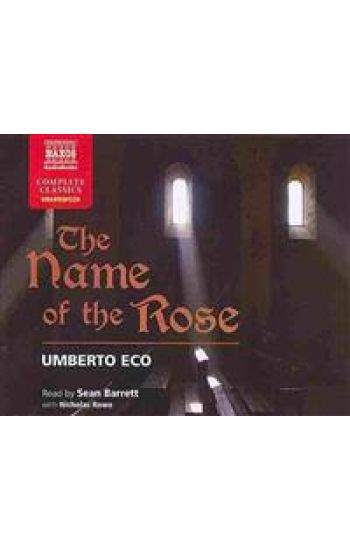
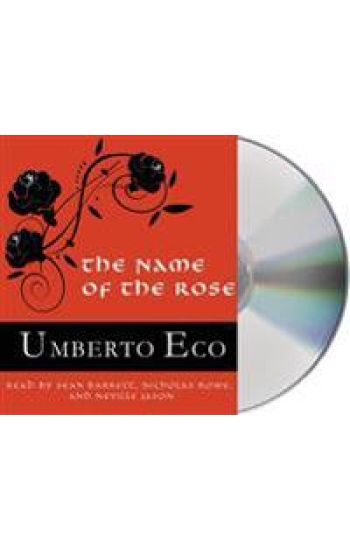
The Name of the Rose

The Name of the Rose

Umberto Eco

MACMILLAN AUDIO
2014
cd
The international bestseller A masterful gothic thriller set against the turbulence of medieval Italy. The Name of the Rose The year is 1327. Franciscans in a wealthy Italian abbey are suspected of heresy, and Brother William of Baskerville arrives to investigate. But his delicate mission is suddenly overshadowed by seven bizarre deaths that take place in seven days and nights of apocalyptic terror. Brother William turns detective, and a uniquely deft one at that. His tools are the logic of Aristotle, the theology of Aquinas, the empirical insights of Roger Bacon--all sharpened to a glistening edge by his wry humor and ferocious curiosity. He collects evidence, deciphers secret symbols and coded manuscripts, and digs into the eerie labyrinth of the abbey where "the most interesting things happen at night." As Brother William goes about unraveling the mystery of what happens at the abbey by day and by night, listeners step into a brilliant re-creation of the fourteenth century, with its dark superstitions and wild prejudices, its hidden passions and sordid intrigues. Virtuoso storyteller Umberto Eco conjures up a gloriously rich portrait of this world with such grace, ease, wit and love that you will become utterly intoxicated with the place and time, in The Name of the Rose.
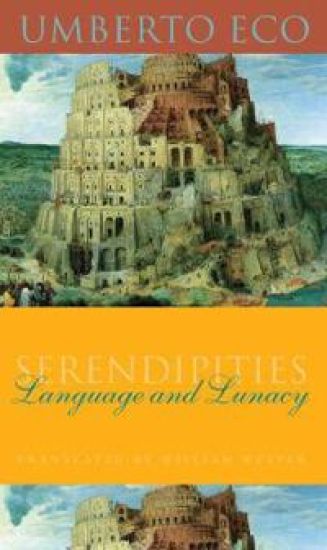
Serendipities

Serendipities

Umberto Eco

Columbia University Press
2014
pokkari
Best-selling author Umberto Eco's latest work unlocks the riddles of history in an exploration of the "linguistics of the lunatic," stories told by scholars, scientists, poets, fanatics, and ordinary people in order to make sense of the world. Exploring the "Force of the False," Eco uncovers layers of mistakes that have shaped human history, such as Columbus's assumption that the world was much smaller than it is, leading him to seek out a quick route to the East via the West and thus fortuitously "discovering" America. The fictions that grew up around the cults of the Rosicrucians and Knights Templar were the result of a letter from a mysterious "Prester John"-undoubtedly a hoax-that provided fertile ground for a series of delusions and conspiracy theories based on religious, ethnic, and racial prejudices. While some false tales produce new knowledge (like Columbus's discovery of America) and others create nothing but horror and shame (the Rosicrucian story wound up fueling European anti-Semitism) they are all powerfully persuasive. In a careful unraveling of the fabulous and the false, Eco shows us how serendipities-unanticipated truths-often spring from mistaken ideas. From Leibniz's belief that the I Ching illustrated the principles of calculus to Marco Polo's mistaking a rhinoceros for a unicorn, Eco tours the labyrinth of intellectual history, illuminating the ways in which we project the familiar onto the strange. Eco uncovers a rich history of linguistic endeavor-much of it ill-conceived-that sought to "heal the wound of Babel." Through the Middle Ages and the Renaissance, Greek, Hebrew, Chinese, and Egyptian were alternately proclaimed as the first language that God gave to Adam, while-in keeping with the colonial climate of the time-the complex language of the Amerindians in Mexico was viewed as crude and diabolical. In closing, Eco considers the erroneous notion of linguistic perfection and shrewdly observes that the dangers we face lie not in the rules we use to interpret other cultures but in our insistence on making these rules absolute. With the startling combination of erudition and wit, bewildering anecdotes and scholarly rigor that are Eco's hallmarks, Serendipities is sure to entertain and enlighten any reader with a passion for the curious history of languages and ideas.
From the Tree to the Labyrinth

From the Tree to the Labyrinth

Umberto Eco

Harvard University Press
2014
sidottu
The way we create and organize knowledge is the theme of From the Tree to the Labyrinth, a major achievement by one of the world’s foremost thinkers on language and interpretation. Umberto Eco begins by arguing that our familiar system of classification by genus and species derives from the Neo-Platonist idea of a “tree of knowledge.” He then moves to the idea of the dictionary, which—like a tree whose trunk anchors a great hierarchy of branching categories—orders knowledge into a matrix of definitions. In Eco’s view, though, the dictionary is too rigid: it turns knowledge into a closed system. A more flexible organizational scheme is the encyclopedia, which—instead of resembling a tree with finite branches—offers a labyrinth of never-ending pathways. Presenting knowledge as a network of interlinked relationships, the encyclopedia sacrifices humankind’s dream of possessing absolute knowledge, but in compensation we gain the freedom to pursue an infinity of new connections and meanings. Moving effortlessly from analyses of Aristotle and James Joyce to the philosophical difficulties of telling dogs from cats, Eco demonstrates time and again his inimitable ability to bridge ancient, medieval, and modern modes of thought. From the Tree to the Labyrinth is a brilliant illustration of Eco’s longstanding argument that problems of interpretation can be solved only in historical context.
Rosens navn

Rosens navn

Umberto Eco

Nyt Teknisk Forlag
2013
nidottu
Dette er en flergangsbog, der kan anvendes som et supplement til danskundervisningen på FVU. TilgangLette klassikere er en serie læsepædagogisk bearbejdede udgaver af kendte og populære bøger. Serien henvender sig til læsesvage unge og voksne, der finder originaludgaverne uoverkommelige eller svære at læse, men som gerne vil have en god læseoplevelse. IndholdMunken William er tegntyder og sporhund. Han tager sin elev, novicen Adso, med til et kloster i Norditalien i det Herrens år 1327. En ung munk er død under mystiske omstændigheder, og de to vil forsøge at løse mysteriet. Mens de efterforsker dødsfaldet, dør flere munke i klosteret dag for dag. Munkene er opskræmte med god grund. Efterforskningen fører William og Adso igennem en labyrint af sælsomme spor, som leder dem til klosterets inderste hemmeligheder. Hvad er det, biblioteket gemmer, siden det bliver så godt bevogtet? Hvilken viden havde de døde munke, og hvilken rolle har den gamle, blinde mand? Jo dybere William og Adso graver, jo farligere bliver det for dem. En historie om synd, straf og tilgivelse, om farlig litteratur og den forbudte latter. Bearbejdet af Leena Bækdal. DownloadsLæs uddrag
El cementerio de Praga / The Prague Cemetery
Una extraordinaria novela que abarca desde los inicios del siglo XIX hasta los primeros a os del siglo XX. Marzo, 1897. Par s. Un hombre de sesenta y siete a os escribe sentado a una mesa, en una habitaci n abarrotada de muebles: he aqu al capit n Simonini, un piamont s afincado en la capital francesa, que desde muy joven se dedic al noble arte de crear documentos falsos. Hombre de pocas palabras, mis gino y glot n impenitente, el capit n se inspira en los folletines de Dumas y Sue para dar fe de complots inexistentes, fomentar intrigas o difamar a las grandes figuras de la pol tica europea. Sin escr pulos, Simonini trabaja al servicio del mejor postor: si antes fue el gobierno italiano quien pag por sus imposturas, luego llegaron los encargos de Francia y Prusia, e incluso Hitler acabar a aprovech ndose de sus malvados oficios. A trav s de las experiencias nicas de Simonini, la intriga de la Europa del siglo XIX desfila por las p ginas de esta cautivadora novela de Umberto Eco, quien, treinta a os tras la publicaci n de El nombre de la rosa, regresa a la ficci n y nos muestra que en la literatura como en la vida, nada es lo que parece y nadie es quien dice ser.
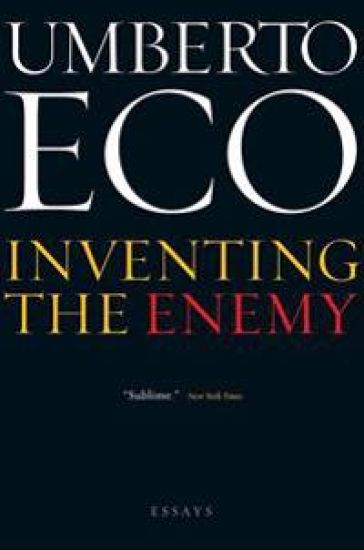
Inventing the Enemy

Inventing the Enemy

Umberto Eco

Vintage
2013
pokkari
Covers a range of topics on which the author has written and lectured over the years. This book explores lost islands, mythical realms, and the medieval world in the process - to a disquisition on the theme that runs through his novel, "The Prague Cemetery".
Inventing the Enemy: And Other Occasional Writings
The final collection from the bestselling author of The Name of the Rose and one of the most influential, and entertaining, intellectuals of the last century--essays full of passion, curiosity, and obsession." Underscores the writer's profound erudition, lively wit, and passion for ideas of all shapes and sizes . . . Eco's pleasure in such explorations is obvious and contagious." --BooklistThe essays in Inventing the Enemy cover a wide range of topics on which Eco wrote and lectured, including a disquisition on the theme that runs through his novel The Prague Cemetery--every country needs an enemy, and if it doesn't have one, must invent it; a discussion of ideas that inspired his earlier novels (and in the process he takes us on an exploration of lost islands, mythical realms, and the medieval world); an examination of Saint Thomas Aquinas's notions about the soul of an unborn child; and censorship, violence, and WikiLeaks." True wit and wisdom coexist with fierce scholarship inside Umberto Eco, a writer who actually knows a thing or two about being truly human." --Buffalo News"Thought provoking . . . nuanced . . . the collection amply shows off Eco's sophisticated, agile mind." --Publishers Weekly
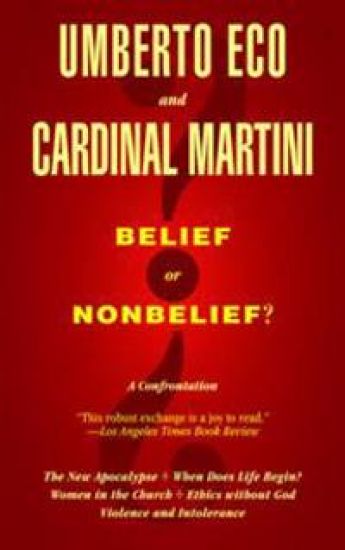
Belief or Nonbelief?

Belief or Nonbelief?

Umberto Eco

Arcade Publishing
2012
nidottu
One is the beloved author of "The Name of the Rose", a celebrated scholar, philosopher, and self-declared secularist; the other is a preeminent clergyman and a respected expert on the New Testament. In this intellectually stimulating dialogue, often adversarial but these two great men, who stand on opposite sides of the church door, discuss some of the most controversial issues of our day, including the apocalypse, abortion, women in the clergy, and ethics. For believers and nonbelievers alike, the result is both edifying and illuminating.
Prague Cemetery

Prague Cemetery

Umberto Eco

Harpervia
2012
nidottu

Halvin toimitettuna 19,90 €

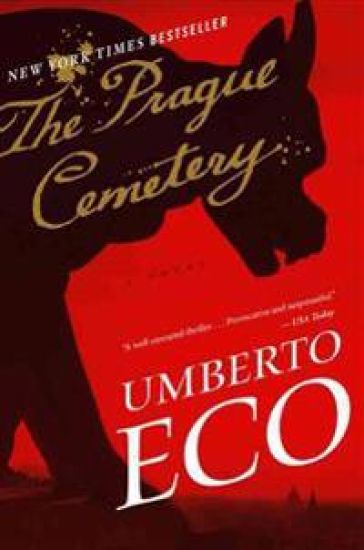
The Prague Cemetery is the #1 international bestselling historical novel from the award-winning and New York Times bestselling author of The Name of the Rose, Umberto Eco. Nineteenth-century Europe--from Turin to Prague to Paris--abounds with the ghastly and the mysterious. Jesuits plot against Freemasons. Italian republicans strangle priests with their own intestines. French criminals plan bombings by day and celebrate Black Masses at night. Every nation has its own secret service, perpetrating forgeries, plots, and massacres. Conspiracies rule history. From the unification of Italy to the Paris Commune to the Dreyfus Affair to The Protocols of the Elders of Zion, Europe is in tumult and everyone needs a scapegoat. But what if behind all of these conspiracies, both real and imagined, lay one lone man?" Choreographed by a truth that is itself so strange a novelist need hardly expand on it to produce a wondrous tale. . . . Eco is to be applauded for bringing this stranger-than-fiction truth vividly to life." --The New York Times
Prague Cemetery

Prague Cemetery

Umberto Eco

Vintage
2012
pokkari

Halvin toimitettuna 18,70 €

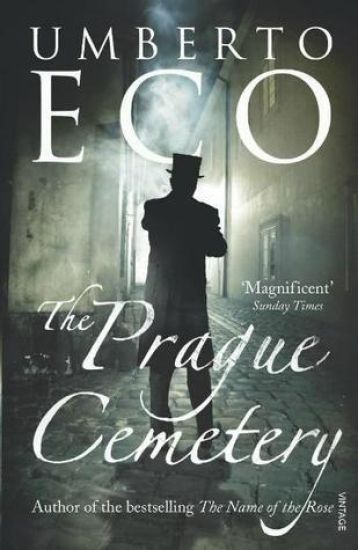
Nineteenth-century Europe abounds with conspiracy both ghastly and mysterious. Jesuits plot against Freemasons. French criminals plan bombings by day and celebrate black masses by night. Every nation has its own secret service, perpetrating forgeries, plots, and massacres.
Prague Cemetery

Prague Cemetery

Umberto Eco

Random House UK
2012
nidottu
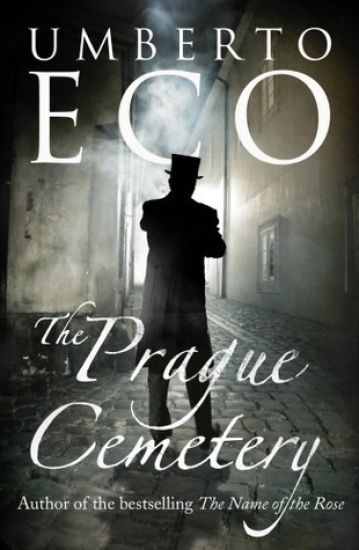
Nineteenth-century Europe abounds with conspiracy both ghastly and mysterious. Jesuits plot against Freemasons. French criminals plan bombings by day and celebrate black masses by night. Every nation has its own secret service, perpetrating forgeries, plots, and massacres. But what if, behind all of these conspiracies, lay just one man?
This is Not the End of the Book

This is Not the End of the Book

Jean-Claude Carriere; Umberto Eco

Vintage
2012
pokkari

Halvin toimitettuna 25,60 €

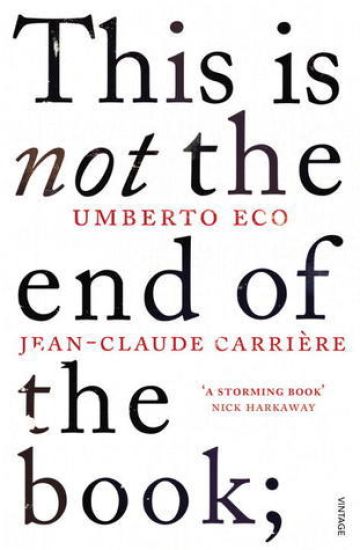
'The book is like the spoon: once invented, it cannot be bettered' - Umberto Eco. These days it is impossible to get away from discussions of whether the book will survive the digital revolution.
Confessions of a Young Novelist

Confessions of a Young Novelist

Umberto Eco

Harvard University Press
2011
sidottu
Umberto Eco published his first novel, The Name of the Rose, in 1980, when he was nearly fifty. In these “confessions,” the author, now in his late seventies, looks back on his long career as a theorist and his more recent work as a novelist, and explores their fruitful conjunction. He begins by exploring the boundary between fiction and nonfiction—playfully, seriously, brilliantly roaming across this frontier. Good nonfiction, he believes, is crafted like a whodunnit, and a skilled novelist builds precisely detailed worlds through observation and research. Taking us on a tour of his own creative method, Eco recalls how he designed his fictional realms. He began with specific images, made choices of period, location, and voice, composed stories that would appeal to both sophisticated and popular readers. The blending of the real and the fictive extends to the inhabitants of such invented worlds. Why are we moved to tears by a character’s plight? In what sense do Anna Karenina, Gregor Samsa, and Leopold Bloom “exist”? At once a medievalist, philosopher, and scholar of modern literature, Eco astonishes above all when he considers the pleasures of enumeration. He shows that the humble list, the potentially endless series, enables us to glimpse the infinite and approach the ineffable. This “young novelist” is a master who has wise things to impart about the art of fiction and the power of words.
Naming the Rose

Naming the Rose

Umberto Eco

University Press of Mississippi
2010
nidottu
The original essays gathered in this book make a beginning at exploring the cultural significance of The Name of the Rose in terms of its backgrounds and literary contexts. Eco's novel is examined in the light of several of the traditions from which it draws: theories of detective fiction, comedy, postmodernism, the apocalypse, semiotics, and literary criticism. The authors from a variety of language disciplines frequently draw on Eco's own scholarly commentaries to elucidate the novel. The Name of the Rose was published in English in the United States in 1983 and remained on the best-seller list for forty weeks. Paperback publication rights brought the highest price ever paid for a translation, and in 1986 it became a major motion picture. Written by a distinguished professor of semiotics at the University of Bologna, the novel was an immediate bestseller in Italy in 1980 and was subsequently translated into twenty languages to universal acclaim. The question all this raises is, how can such a novel be so popular--a detective set in a medieval monastery, which entertains at the same time as it deals with theology, history, politics, humanism, comedy, literary criticism, and just about everything else that makes up culture and society? Is it possible that a popular piece of fiction, accessible to general readers, can also address complex and profound ideas? This volume of essays on the celebrated novel is the first of several books to be written in appreciation of Eco's remarkable accomplishment. It has the distinction also of including a foreword written by Eco himself in response to the essays, certainly one of the few times when the author has agreed to critique his critics. In addition, this collection contains a bibliography of Eco criticism. Just as The Name of the Rose has something for everyone, so too does this book of critical essays. Scholar, teacher, student, and general reader alike will benefit from the light it casts on a contemporary literary phenomenon.
1...34567...9