Kirjailija
Umberto Eco
Kirjat ja teokset yhdessä paikassa: 163 kirjaa, julkaisuja vuosilta 1975–2026, suosituimpiin kuuluu Sylvie. Vertaile teosten hintoja ja tarkista saatavuus suomalaisista kirjakaupoista.
163 kirjaa
Kirjojen julkaisuvuodet: 1975–2026.
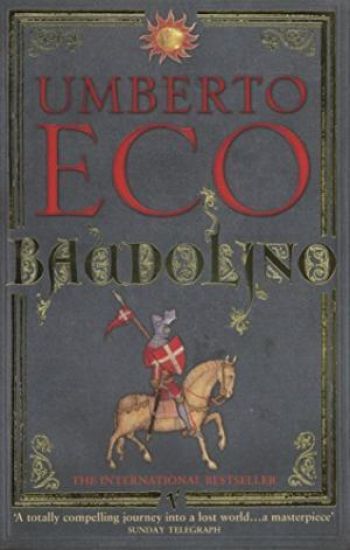
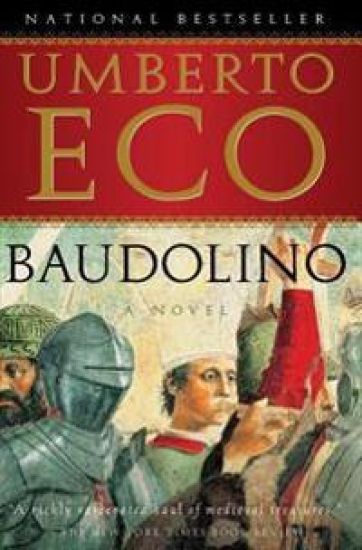
It is 1204, and Constantinople is being sacked and burned by the knights of the fourth Crusade. Amid the carnage and confusion, Baudolino saves a Byzantine historian and high court official from certain death at the hands of the crusading warriors, and proceeds to tell his own fatastical story.
Born a simple peasant in northern Italy, Baudolino, a young man with a gift for languages and a talent for lying, narrates the story of his life, from his meeting with and adoption by Emperor Frederick Barbarossa, his education in Paris, his and his companions' search for the legendary priest-king Prester John, and his arrival in Constantinople during the turmoil of the Fourth Crusade. Reprint. 125,000 first printing.
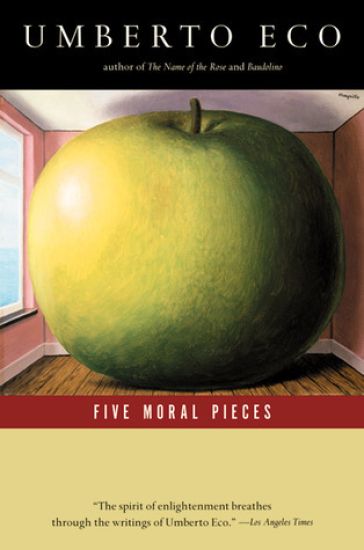
Embracing the web of multi-culturalism that has become a fact of contemporary life from New York to New Delhi, Eco argues that we are more connected to people of other traditions and customs than ever before, making tolerance the ultimate value in today's world.
A collection of thought-provoking essays from one of the world's leading writers and intellectuals ponders current issues, including spirituality, war, disenchantment, traditions, facism, and customs, and draws from past experiences that have had a profound impact on the world today. Reprint. 25,000 first printing.
Art and Beauty in the Middle Ages
Umberto Eco
Yale University Press
2002
pokkari
Halvin toimitettuna 21,50 €
In this authoritative, lively book, the celebrated Italian novelist and philosopher Umberto Eco presents a learned summary of medieval aesthetic ideas. Juxtaposing theology and science, poetry and mysticism, Eco explores the relationship that existed between the aesthetic theories and the artistic experience and practice of medieval culture. “[A] delightful study. . . . [Eco’s] remarkably lucid and readable essay is full of contemporary relevance and informed by the energies of a man in love with his subject.” —Robert Taylor, Boston Globe “The book lays out so many exciting ideas and interesting facts that readers will find it gripping.” —Washington Post Book World “A lively introduction to the subject.” —Michael Camille, The Burlington Magazine “If you want to become acquainted with medieval aesthetics, you will not find a more scrupulously researched, better written (or better translated), intelligent and illuminating introduction than Eco’s short volume.” —D. C. Barrett, Art Monthly
Die Semiotik, d. h. die Erforschung der Kultur als Kommunikation, bedeutet Grundlagenwissen für den gesamten Bereich der Philosophischen Fakultät. Umberto Eco, der zu den Pionieren auf diesem Gebiet zählt, ist wie kein anderer berufen, in die allgemeine Lehre von den Zeichen in gründlicher Gesamtschau einzuführen. Für die Literatur- und Sprachwissenschaften, für Soziologie, Philosophie, Rhetorik, Kunst, einschließlich solcher Probleme wie Filmästhetik, Reklame, politische Propaganda, Trivialliteratur und Subkultur, werden in gut faßlicher und fesselnder Weise neue Wege des Verständnisses aufgewiesen. Die vorliegende Fassung ist eine autorisiertevöllige Neubearbeitung für den deutschen Leser.
Wir befinden uns im 12. Jahrhundert, zur Zeit der Kreuzzüge. Baudolino, ein gewitzter Bauernsohn aus dem Piemont, wird Adoptivsohn des Kaisers Friedrich I. Barbarossa. Den Kopf voller Flausen, Phantasien und Lügen, lenken seine irrwitzigen Ideen von nun an den Lauf der Weltgeschichte. Von den Liebesbriefen an die Kaiserin, den undurchsichtigen Machenschaften bei der Belagerung Alessandrias und dem rätselhaften Tod Barbarossas gar nicht zu reden ... "Eco verknüpft historische Fakten des 12. Jahrhunderts, Fabelwesen, saftige Liebesromanzen, aktuelle Politik und Glaubensfragen zu einem sprühenden Feuerwerk." Welt am Sonntag
They start feeding random bits of information into a powerful computer capable of inventing connections between the entries, thinking they are creating nothing more than an amusing game, but then their game starts to take over, the deaths start mounting, and they are forced into a frantic search for the truth
Tackling topics as diverse as the coffee pot from hell, eating on an aeroplane, how not to use a cellular phone and recognising porn movies, Umberto Eco guides us with all his customary wit and brilliance through the complexities of the modern world.
How do we know a cat is a cat? And why do we call it a cat? How much of our perception of things is based on cognitive ability, and how much on linguistic resources? Here, in six remarkable essays, Umberto Eco explores in depth questions of reality, perception, and experience. Basing his ideas on common sense, Eco shares a vast wealth of literary and historical knowledge, touching on issues that affect us every day. At once philosophical and amusing, Kant and the Platypus is a tour of the world of our senses, told by a master of knowing what is real and what is not.
An erudite and witty collection of Umberto Eco's essays on mass culture from the 1960s through the 1980s, including major pieces which have not been translated into English before. The discussion is framed by opposing characterizations of current intellectuals as apocalyptic and opposed to all mass culture, or as integrated intellectuals, so much a part of mass culture as to be unaware of serving it. Organized in four main parts, "Mass Culture: Apocalypse Postponed," "Mass Media and the Limits of Communication," "The Rise and Fall of Counter-Cultures," and "In Search of Italian Genius," Eco looks at a variety of topics and cultural productions, including the world of Charlie Brown, distinctions between highbrow and lowbrow, the future of literacy, Chinese comic strips, whether countercultures exist, Fellini's Ginger and Fred, and the Italian genius industry.
Umberto Eco undertakes a series of idiosyncratic and typically brilliant explorations, starting from the perceived data of common sense, from which flow an abundance of 'stories' or fables, often with animals as protagonists, to expound a clear critique of Kant, Heidegger and Peirce.
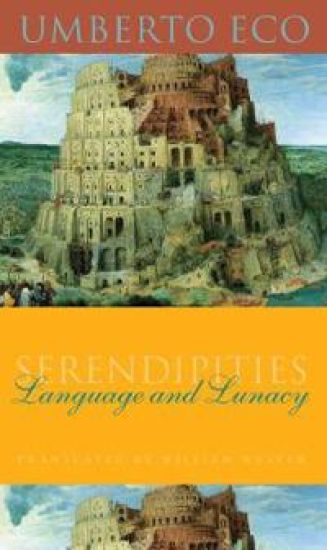
Best-selling author Umberto Eco's latest work unlocks the riddles of history in an exploration of the "linguistics of the lunatic," stories told by scholars, scientists, poets, fanatics, and ordinary people in order to make sense of the world. Exploring the "Force of the False," Eco uncovers layers of mistakes that have shaped human history, such as Columbus's assumption that the world was much smaller than it is, leading him to seek out a quick route to the East via the West and thus fortuitously "discovering" America. The fictions that grew up around the cults of the Rosicrucians and Knights Templar were the result of a letter from a mysterious "Prester John"-undoubtedly a hoax-that provided fertile ground for a series of delusions and conspiracy theories based on religious, ethnic, and racial prejudices. While some false tales produce new knowledge (like Columbus's discovery of America) and others create nothing but horror and shame (the Rosicrucian story wound up fueling European anti-Semitism) they are all powerfully persuasive. In a careful unraveling of the fabulous and the false, Eco shows us how serendipities-unanticipated truths-often spring from mistaken ideas. From Leibniz's belief that the I Ching illustrated the principles of calculus to Marco Polo's mistaking a rhinoceros for a unicorn, Eco tours the labyrinth of intellectual history, illuminating the ways in which we project the familiar onto the strange. Eco uncovers a rich history of linguistic endeavor-much of it ill-conceived-that sought to "heal the wound of Babel." Through the Middle Ages and the Renaissance, Greek, Hebrew, Chinese, and Egyptian were alternately proclaimed as the first language that God gave to Adam, while-in keeping with the colonial climate of the time-the complex language of the Amerindians in Mexico was viewed as crude and diabolical. In closing, Eco considers the erroneous notion of linguistic perfection and shrewdly observes that the dangers we face lie not in the rules we use to interpret other cultures but in our insistence on making these rules absolute. With the startling combination of erudition and wit, bewildering anecdotes and scholarly rigor that are Eco's hallmarks, Serendipities is sure to entertain and enlighten any reader with a passion for the curious history of languages and ideas.
In Six Walks in the Fictional Woods Umberto Eco shares with us his Secret Life as a reader—his love for MAD magazine, for Scarlett O'Hara, for the nineteenth-century French novelist Nerval's Sylvie, for Little Red Riding Hood, Agatha Christie, Agent 007 and all his ladies. We see, hear, and feel Umberto Eco, the passionate reader who has gotten lost over and over again in the woods, loved it, and come back to tell the tale, The Tale of Tales. Eco tells us how fiction works, and he also tells us why we love fiction so much. This is no deconstructionist ripping the veil off the Wizard of Oz to reveal his paltry tricks, but the Wizard of Art himself inviting us to join him up at his level, the Sorcerer inviting us to become his apprentice.
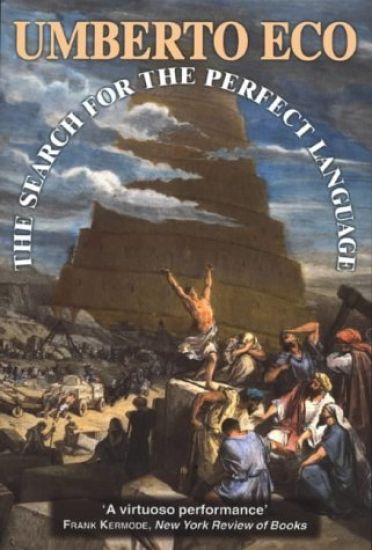
The idea that there once existed a language which perfectly and unambiguously expressed the essence of all possible things and concepts has occupied the minds of philosophers, theologians, mystics and others for at least two millennia. This is an investigation into the history of that idea and of its profound influence on European thought, culture and history. From the early Dark Ages to the Renaissance it was widely believed that the language spoken in the Garden of Eden was just such a language, and that all current languages were its decadent descendants from the catastrophe of the Fall and at Babel. The recovery of that language would, for theologians, express the nature of divinity, for cabbalists allow access to hidden knowledge and power, and for philosophers reveal the nature of truth. Versions of these ideas remained current in the Enlightenment, and have recently received fresh impetus in attempts to create a natural language for artificial intelligence. The story that Umberto Eco tells ranges widely from the writings of Augustine, Dante, Descartes and Rousseau, arcane treatises on cabbalism and magic, to the history of the study of language and its origins. He demonstrates the initimate relation between language and identity and describes, for example, how and why the Irish, English, Germans and Swedes - one of whom presented God talking in Swedish to Adam, who replied in Danish, while the serpent tempted Eve in French - have variously claimed their language as closest to the original. He also shows how the late eighteenth-century discovery of a proto-language (Indo-European) for the Aryan peoples was perverted to support notions of racial superiority. To this subtle exposition of a history of extraordinary complexity, Umberto Eco links the associated history of the manner in which the sounds of language and concepts have been written and symbolized. Lucidly and wittily written, the book is, in sum, a tour de force of scholarly detection and cultural interpretation, providing a series of original perspectives on two thousand years of European History. The paperback edition of this book is not available through Blackwell outside of North America.

The Search for the Perfect Language
Umberto Eco
Fontana Press
1997
nidottu
Halvin toimitettuna 25,00 €
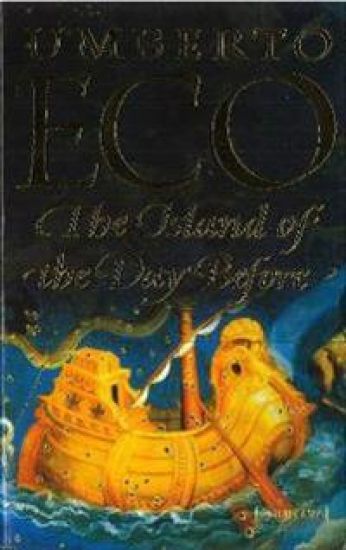
Roberto, a young nobleman, survives war, the Bastille, exile and shipwreck as he voyages to a Pacific island straddling the date meridian. There he waits now, alone on the mysteriously deserted Daphne, separated by treacherous reefs from the island beyond: the island of the day before.