Kirjojen hintavertailu – 12 873 673 kirjaa ja 26 kauppaa

Kirjailija

Vicente Huidobro

Kirjat ja teokset yhdessä paikassa: 27 kirjaa, julkaisuja vuosilta 1982–2025, suosituimpiin kuuluu Adam. Vertaile teosten hintoja ja tarkista saatavuus suomalaisista kirjakaupoista.

27 kirjaa

Kirjojen julkaisuvuodet: 1982–2025.

Adam

Adam

Vicente Huidobro

Shearsman Books
2021
nidottu
Adam, published in 1916, is Huidobro's earliest mature work and his first attempt at free verse. While still full of rhetorical gestures from his previous symbolist (or modernista) style, heavily influenced by Ruben Dario, the book shows the author moving into very new territory, if at this stage not fully able to cast off his previous allegiances. It is fair to say that the book would today be forgotten, were it not for the author's spectacular later career, but it retains some interest as a transitional volume, albeit not as much as that demonstrated by El espejo de agua (The Water Mirror), also first published in 1916, but written after Adam. Adam is a young man's book, embarrassingly so at times, as the author proudly sets out his stall, but it represents a major leap forward. With his claim to Emersonian influence, his dismissal of traditional Hispanophone poetry in the Preface, and that typically outrageous tone-one we will meet many times in his later works, where he shouts from the rooftops, "Look at me!", and lays into his perceived enemies-it's hard to ignore the fact that Huidobro was all of 21 when he began this poem. The sins of youth, indeed.
The Selected Poetry of Vicente Huidobro

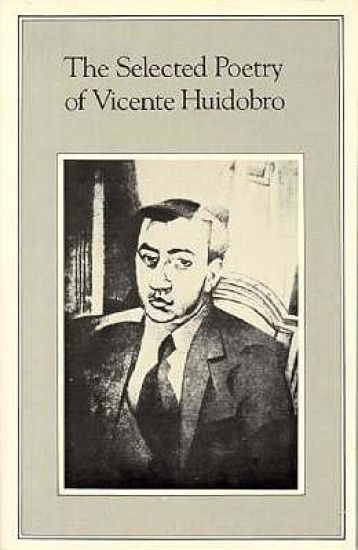
The Selected Poetry of Vicente Huidobro

Vicente Huidobro

New Directions Publishing Corporation
1982
nidottu
This book is the only major collection of the great Chilean writer Vicente Huidobro’s poetry to appear in English. Drawn from his works published from 1917 to 1948 and presented bilingually, the translations are principally by David Guss supplemented with renderings by Stephen Fredman, Carlos Hagen, W. S. Merwi,. Geoffrey O’Brien, David Ossman, Michael Palmer, Jerome Rothenberg, Eliot Weinberger, and Geoffrey Young. Huidobro’s masterpiece Alrazor appears almost entire. Huidobro (1893-1948) left Santiago for Paris in 1916. There he co-founded the influential Cubist magazine Nord-Su with Guillaume Apollinaire and Pierre Reverdy. He then launched his own poetic movement, Creationism, and wrote as well for a score of avant-garde journals. Author of over forty books—plays. political tracts, novels, manifestos, poetry—he worked with Edgard Varése, Hans Arp, Robert Delauney, Jorge Luis Borges, and other important writers. Besides his translations, editor Guss has provided a biographical essay, “Poetry ls a Heavenly Crime," a lucid and helpful introductory overview of Huidobro and his work.
Selected Poems

Selected Poems

Vicente Huidobro

Shearsman Books
2025
nidottu
This selected edition presents an overview of all of Huidobro's work, from 1914 until 1948, when his final, posthumous volume was published, moving from the early symbolist work, through the high avant-garde phase towards the end of the First World War, then through Altazor and Temblor de cielo, the highpoint of his career (both published in 1931), and on into the quieter late poetry which synthesises the previous work and settles down into a post-vanguard style. Also included are two manifestos and two interviews with the author. All texts are given in bilingual form. This revised second edition updates number of the translations and replaces a few texts which are now available in other editions in the Shearsman Huidobro series.
Uncollected Poems

Uncollected Poems

Vicente Huidobro

Shearsman Books
2025
nidottu
This assemblage of uncollected Huidobro texts includes stray manuscripts - few of these actually survive and have not been collected somewhere in the previous books in this series - and his occasional poems: works in honour of the Soviet Union, of Republican Spain, of fallen France, of his paramour (and later common-law wife) Ximena, plus a vitriolic attack on some Italian (i.e. fascist) aviators working with the Chilean Air Force. Two early works are added, from the period that might be regarded as juvenilia, as they show an early interest in shaped poems - not quite calligrammes, but with some affinity. We have also located one long-lost poem which has never been published in book form before, either in Spanish or in English, and offer two versions of it here in the author's own translation and in his own typescripts, together with the original text - long thought lost - as it originally appeared in a Havana newspaper.
Arctic Poems

Arctic Poems

Vicente Huidobro

Shearsman Books
2025
nidottu
Huidobro published Poemas articos in Madrid in 1918, this being the last of a rapid series of publications which established him as a major new talent both in French and in Spanish. Poemas articos is particularly interesting in that it shows the author taking on board lessons learned from Guillaume Apollinaire-an early friend in Paris-and probably also Pierre Reverdy, although this is something of an assumption, given that Reverdy repudiated his early work from this period and the poems that might have been an influence are no longer extant; the two poets also fell out, for reasons that are unclear. In any event, this is his longest Spanish-language volume up to this point, and marks a significant breakthrough. This second edition has been revised and the layouts have been also adjusted to match the 1918 first edition, rather than subsequent reprints of the texts.
Skyquake

Skyquake

Vicente Huidobro

Shearsman Books
2025
nidottu
Temblor de cielo was written in 1928. A more unified work than its contemporary, Altazor - although published in 1931, that work was longer in gestation - this might owe more to its style of delivery: an ecstatic outpouring of words that largely revolve around the themes of love, sex and death. The Isolde to whom much of the poem is addressed is an idealised feminine figure-part goddess, part idealised beloved, part Isolde from Wagner's opera and part Ximena Amunategui, the young woman who had become the poet's common-law wife. The poem is also a sustained lyric effusion of a kind that Huidobro had never produced before, and it marks the point at which his work moves on from the barnstorming avant-garderie of his younger years to a more mature style, albeit one influenced by surrealism, a movement which Huidobro had previously attacked. This second edition contains some textual revisions, but also adds the author's French version of the work, also with facing English text. The two versions differ here and there, but rarely significantly, and it is not at all certain which version was composed first. The French text was first published in 1932, a year after the Spanish version.
Last Poems

Last Poems

Vicente Huidobro

Shearsman Books
2024
nidottu
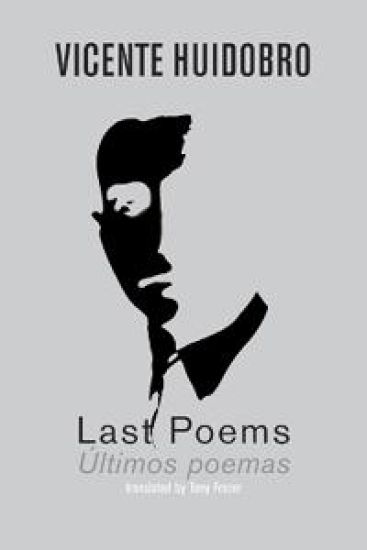
The Chilean poet Vicente Huidobro (1893-1948) is one of the most important figures in 20th-century Hispanic poetry and, with Cesar Vallejo, one of the pioneering avant-gardists in Spanish. Originally from an upper-class Santiago family, Huidobro was fortunate to have the means to support himself and his family while he found his artistic way. After an early phase writing in a quasi-symbolist style in his native city, he moved to Paris and threw himself into the local artistic milieu with a passion, quickly becoming a notable figure, publishing a large number of books in the period 1917-1925. Influenced initially by Apollinaire, Huidobro quickly befriended both forward-looking French writers such as Reverdy, Cocteau and Radiguet, and the Spanish expatriate artists, including Picasso and Juan Gris. He reached his poetic maturity in 1931 with the publication of two master-pieces: the long poem, Altazor, and the book-length prose-poem Temblor de cielo (Skyquake). Two further collections would follow during his lifetime, both published in Santiago in 1941. While he also published successful novels and plays, it is for his poetry that he is best remembered today. Last Poems is a posthumous volume assembled by the poet's daughter and issued some 6 months after his death. While it contains some scraps from the master's desk, as might be expected, it also contains some magnificent late poems that can stand securely alongside the best of his earlier work. It is a necessary volume and this is the first time it has been translated in its entirety.
Equatorial & Other Poems

Equatorial & Other Poems

Vicente Huidobro

Shearsman Books
2024
nidottu
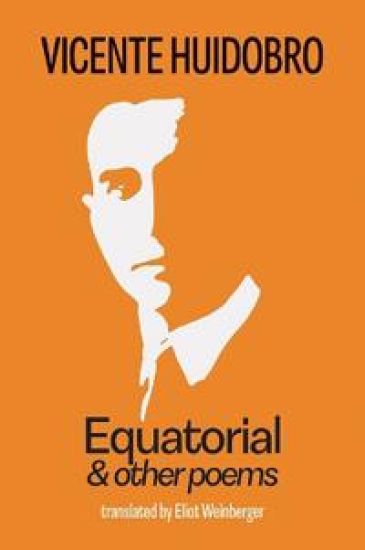
This volume includes the 4 chapbooks published in 1917-18 and presents, at first glance, an odd mixture. Chronologically, we have The Mirror of Water, written in 1914-16, ostensibly first published in 1916, but not available until 1918. Square Horizon follows and then come Equatorial (written in Spanish), Arctic Poems, Hallali and Tour Eiffel, the last two being composed in French. These final two publications from this period - both marked by textual experimentation - were very important for the rising wave of the Spanish avant-garde. In this second edition, we have added an appendix containing the French version of the title poem, which is at least partly translated by the author, an early version of Tour Eiffel as published in the magazine Nord-Sud, together with a Spanish version of the finished poem. All notes and introductory material have also been updated.
Altazor

Altazor

Vicente Huidobro

Ediciones Ucsh
2023
nidottu
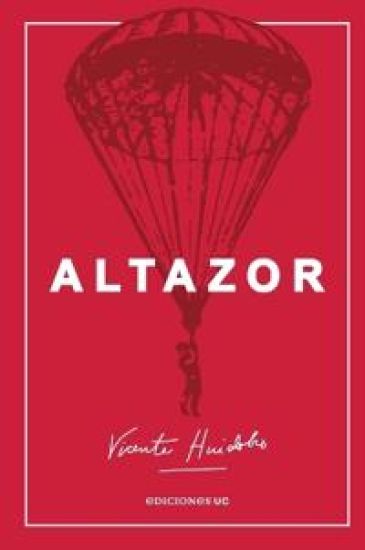
Altazor es una de las obras fundamentales de la vanguardia hispanoamericana y la expresi n m s radical del creacionismo de Vicente Huidobro. Iniciado en 1918 tras la publicaci n de Ecuatorial, el poema fue desarrollado y corregido durante los a os siguientes, culminando en 1931. La obra se construye como un viaje en ca da -"el viaje en paraca das"- donde el lenguaje se desarma y se reinventa, llevando la poes a a sus l mites formales y sonoros. Este libro, pieza central de la literatura chilena del siglo XX, es un hito en la b squeda de una poes a que no imite la realidad, sino que la cree.
Seeing and Touching

Seeing and Touching

Vicente Huidobro

Shearsman Books
2023
nidottu
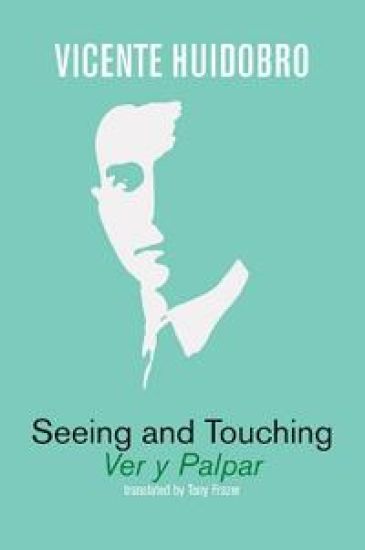
The Chilean poet Vicente Huidobro (1893-1948) is one of the most important figures in 20th-century Hispanic poetry and, with Cesar Vallejo, one of the pioneering avant-gardists in Spanish. Originally from an upper-class Santiago family, Huidobro was fortunate to have the means to support himself and his family while he found his artistic way. After an early phase writing in a quasi-symbolist style in his native city, he moved to Paris and threw himself into the local artistic milieu with a passion, quickly becoming a notable figure, publishing a large number of books in the period 1917-1925, and espousing the theory of Creationism, a kind of literary Cubism. Influenced initially by Apollinaire, Huidobro quickly befriended both forward-looking French writers such as Reverdy, Cocteau and Radiguet, and the expatriate Spanish artists, including Picasso and Juan Gris. He reached his poetic maturity in 1931 with the publication of two master-pieces: the long poem, 'Altazor', and the book-length prose-poem 'Temblor de cielo' (Skyquake). Two further collections would follow during his lifetime, both published in Santiago in 1941. While he also published successful novels and plays, it is for his poetry that he is best remembered today. 'Ver y palpar' is one of those two books from 1941, which between them include some of Huidobro's finest work, something that most commentators have tended to ignore, preferring usually to engage with 'Altazor' or with the earlier books such as 'Arctic Poems', and their attendant Creationist theory. On the other hand, the rupture between the poetic text and empirical reality, exemplified by Creationist theory (but not always adhered to by the author) may well be embedded in the subtext of these later poems, with their disrupted syntax. Clearly under the influence of surrealism, in many of the poems Huidobro moves towards something far looser than his original theoretical position. There is a deliberate instability in many of the poems, arising from unusual, even awkward phrasing, and the suppression of linkages, something that was also evident in later cantos of 'Altazor'.
Satyr

Satyr

Vicente Huidobro

Shearsman Books
2023
nidottu
'Satyr' is Huidobro's last novel, published in Santiago in 1939, at a time when little of his work was in print in his native land. While that situation would be rectified two years later, with the release of two major poetry collections, this volume is his final work in prose, and one that has mostly escaped attention since. Closer examination of the text reveals however that it contains a number of the author's literary, social, political and philosophical preoccupations, with many themes from his poems, essays, and manifestos re-occurring in the book, the protagonist of which, Bernardo Saguen, may be regarded on one level as a failed artist. This would-be writer is one that goes to the bad, and whose mental collapse - he seems to be suffering from paranoid schizophrenia - and moral disintegration seem to parallel the kind of disintegration seen in some of the author's later poems. Written at a time when Huidobro was unsure of his literary position in Chile, the book is much concerned with the idea of poetic creation, while also worrying at the concept of reality, whether artistic creations are part of reality itself, and whether the artist himself is part of reality. As the novel proceeds, Saguen finds himself increasingly untethered from that reality as he has a nervous breakdown, only for his return to a measure of sanity and composure to coincide with horror, and then total mental collapse. The reader's sympathies lie with him at the outset, but we have only his word for the events that transpire; his unreliability as a narrator becomes ever more obvious, and clues begin to mount. Have we, as readers been deceived by a monstrous and amoral egoist, or have we really observed a total mental breakdown, as it was happening? Nothing is clear at the end, apart from the horror.
Adverse Winds

Adverse Winds

Vicente Huidobro

Shearsman Books
2023
nidottu
Adverse Winds (Vientos contrarios) is a collection of essays, aphorisms, and observations, published by Huidobro in Santiago in 1926, after many years in Europe. At this remove it is perhaps difficult to grasp that in 1926, Vicente Huidobro (1893-1948), who had cut something of a swathe through literary Paris - albeit not quite as thorough a swathe as he would sometimes have us believe - was almost unknown back home in Santiago. He had published nothing there apart from self-financed volumes of juvenilia before his departure for Paris in 1916, and his new avant-garde work from the Paris period was mostly unknown and mostly not very welcome in backward Santiago. Needing to attract some attention upon his return, Huidobro assembled this collection of statements, aphorisms and cod-memoirs as an introduction to the serious new self that he wished to present to those who might have heard a few rumours of his successes abroad, but would be puzzled by having seen nothing of his writing. The soon-to-be broken marriage and the surrounding scandal were to ruin his attempts in this direction, and caused his flight back to Europe, this time alone and pursued by death-threats from irate relatives of his new paramour. Looked at objectively, the book is a grab-bag, including some fascinating and notorious statements (the poet is a little god; I will be the premier poet of my time, etc.), alongside a number of interesting sideswipes at writers he wished to denigrate. His excursions - daring for their time - into matters of love, sex and infidelity in the book must have struck many after his hurried departure as being, at the very least, misguided. The heartfelt tribute to Teresa Wilms, a great beauty, and a talented prose-writer, dead by her own hand at 28, is undermined somewhat by that fact Vicente had had an affair with her in 1916 and that just about everyone in the tight-knit aristocratic circles in which he moved would have known this. One imagines that his now-estranged wife would have been doubly unamused. The book should be seen as an adjunct to the previous year's collection of Manifestos (also available in this series), and as another staging post on the poet's path towards a position of mastery.
Citizen of Oblivion

Citizen of Oblivion

Vicente Huidobro

Shearsman Books
2021
nidottu
The Chilean poet Vicente Huidobro (1893-1948) is one of the most important figures in 20th-century Hispanic poetry and, with Cesar Vallejo, one of the pioneering avant-gardists in Spanish. Originally from an upper-class Santiago family, Huidobro was fortunate to have the means to support himself and his family while he found his artistic way. After an early phase writing in a quasi-symbolist style in his native city, he moved to Paris and threw himself into the local artistic milieu with a passion, quickly becoming a notable figure, publishing a large number of books in the period 1917-1925. Influenced initially by Apollinaire, Huidobro quickly befriended both forward-looking French writers such as Reverdy, Cocteau and Radiguet, and the Spanish expatriate artists, including Picasso and Juan Gris. He reached his poetic maturity in 1931 with the publication of two masterpieces: the long poem, Altazor, and the book-length prose-poem Temblor de cielo (Skyquake). Two further collections would follow during his lifetime, both published in Santiago in 1941. While he also published successful novels and plays, it is for his poetry that he is best remembered today. El ciudadano del olvido was published in Santiago in 1941, as one of a pair of volumes that summed up Huidobro's shorter poems from the mid-1920s to the late 1930s. The two books show the author as a quieter figure, more mature, but somewhat ground down by misfortune - he had been forced by economic circumstances to return to Chile in the early 1930s, and was subsequently distressed by his lack of recognition in his homeland, by the rise of Fascism in the 1930s, by the fall of France in 1940, and by the collapse of his second marriage. The book contains some of his finest individual poems, less creationist than his previous efforts, and somewhat more surrealist than he would no doubt have cared to admit. The book and its companion, Ver y palpar (forthcoming in this series) are vital to an understanding of the range and complexity of Huidobro's poetic achievement.
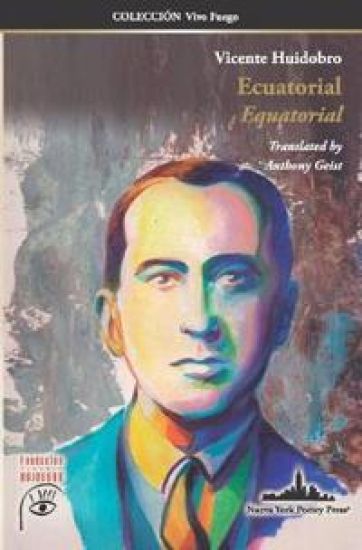
Ecuatorial

Ecuatorial

Vicente Huidobro

Nueva York Poetry Press LLC
2020
pokkari
Ecuatorial se dispersa por el mundo para interpretar la marca temeraria del tiempo. A trav s de versos largos, may sculas caprichosas, y un terco espaciamiento, da cuenta de que lo que sobrevive ante la muerte es el poema. El cielo es una met fora de fuego, y las calles por donde caminan los viandantes, una c rcel permanente. El poeta mira el cielo en llamas, y transita por la tierra hirviendo como un volc n. El poema viaja cruzando mares y ciudades llenas de humo negro. El poema salta el muro de la indiferencia, lucha contra la derrota y se asombra con la vida. EL mundo partido por la mitad, sobrevive. MIGUEL NGEL ZAPATA
Three Huge Novels

Three Huge Novels

Vicente Huidobro; Hans Arp

Shearsman Books
2020
nidottu
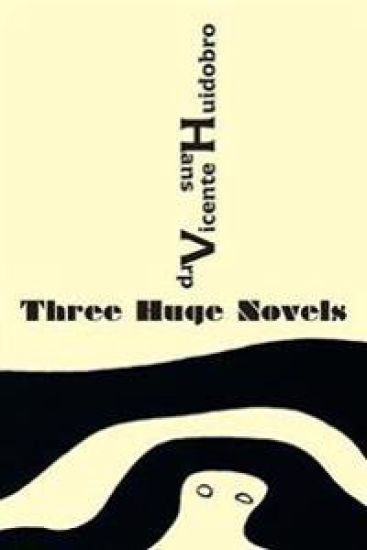
In 1931, while on holiday in Arcachon, Huidobro and the Franco-German artist and writer, Hans (Jean) Arp together wrote Tres novelas exemplares (Three Exemplary Novels - no doubt a reference to the Exemplary Novels by Cervantes, to which of course they bear no resemblance at all), a set of wild quasi-surrealist "stories". In 1935, Huidobro - once again living in Chile - offered the set to a publisher in Santiago, but was told that the book was too short. Accordingly he wrote two further stories on his own, and the whole volume was titled Tres inmensas novelas. Which are therefore, not three, not huge and not novels. This volume offers all five stories in a bilingual format, and the cover is almost a copy of the one used in the first edition.
Paris 1925

Paris 1925

Vicente Huidobro

Shearsman Books
2020
nidottu
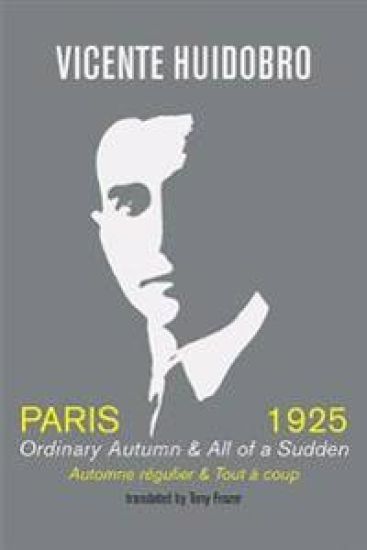
Before attaining his poetic maturity - and this would be through poems written mostly in Spanish - Huidobro wrote these two collections in French and published them in Paris in 1925, the same year that a volume of his manifestos appeared (see below). The two books have never been republished in France and have likewise not been published in Spanish translation other than in collected editions of the author's works. While they are in some respects a developmental dead-end for Huidobro, they do demonstrate his attempts to engage, in one volume, with the influence of Dada, and, in the other, with the influence of Surrealism. His later work transcends these overt influences and moves onto new pastures, but these experiments were necessary in order to get him there. The complete texts of both first editions are included here along with all the (later) Spanish versions of the poems, made by the author himself, that have so far come to light.
Manifestos

Manifestos

Vicente Huidobro

Shearsman Books
2020
nidottu
In 1925, Huidobro published this collection of manifestos to consolidate his position in the avant-garde in the face of the burgeoning new Surrealist movement and also as a reaction to attacks from one Spanish critic in particular, a member of the Ultraist movement, who seemed to want to establish the Spanish avant-garde as an independent force, free of the influence of this loud, self-confident Chilean. The book appeared in the same year that he published his last two collections of French poetry, one of which demonstrated Dadaist influences, and the other Surrealist influences. 1925 is therefore a watershed year for Huidobro, one where he experimented with new approaches and also tried to shore up his prominent position as the artistic tides began to turn. Six years later, after some time back in Chile, and periods in Madrid, Paris and New York (where he had tried to get into the film world, and failed to do so because of the eruption of the talkies at a time when he was engaged in producing scripts for silent movies), Huidobro produced his two masterpieces, Altazor, written - the author claimed - between 1919 and 1930, and Temblor de cielo (Skyquake), written in 1928. The other work written at this time, i.e. between the mid-1920s and the mid-1930s, was only to be collected in two volumes published in 1941, but it reinforces the impression given by the 1931 publications, that Huidobro had reached his maturity after the Parisian apprenticeship. The manifestos should be read with some seriousness, but perhaps also with a tongue in the cheek.
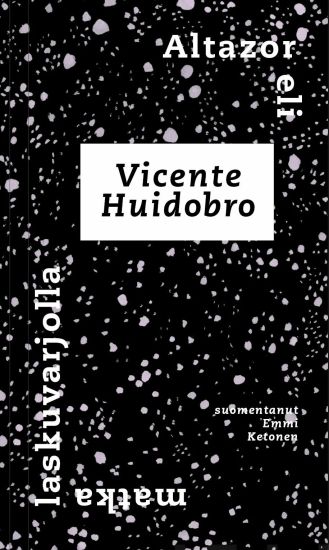
Altazor

Altazor

Vicente Huidobro

Kustannusliike Parkko
2020
sidottu

Halvin toimitettuna 34,90 €

Altazor on chileläisen runoilijan Vicente Huidobron (1893-1948) kielellisesti ilakoiva pääteos, kuin päättymätön pudotus läpi avaruuden tai huima matka halki valtamerten. Runoelmassaan Huidobro kirjoittaa maailman luomisesta ja syntiin lankeamisesta oman modernin versionsa. Altazor on myös matka kielen ytimeen, yritys hajottaa tavanomainen kieli ja luoda sen tilalle uusi ainutlaatuinen kieli. Huidobron Altazor on latinalaisamerikkalaisen runouden kiistämätön klassikko mutta Suomessa vähän tunnettu. Chileläinen runous on aiemmin tullut tutuksi Pablo Nerudan suomennoksien kautta. Huidobro oli keskeisesti mukana 1910-20-lukujen avantgardekirjallisuuden kehittämisessä. Hänen kirjallinen kreationisminsa on saanut seuraajia niin Chilessä kuin muuallakin.