Kirjailija
Virginia Woolf
Kirjat ja teokset yhdessä paikassa: 1 163 kirjaa, julkaisuja vuosilta 1915–2027, suosituimpiin kuuluu Majakka. Vertaile teosten hintoja ja tarkista saatavuus suomalaisista kirjakaupoista.
1 163 kirjaa
Kirjojen julkaisuvuodet: 1915–2027.
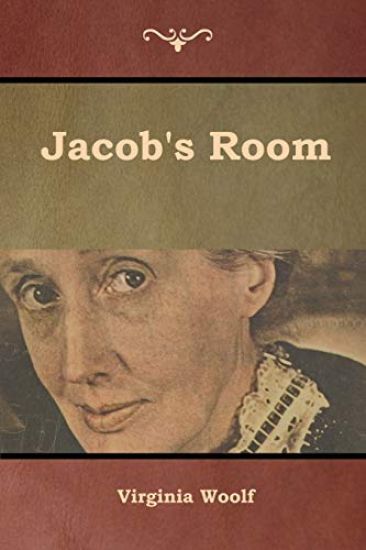
First published in 1922, "Jacob's Room" is Virginia Woolf's third novel and a surprising and innovative departure from her other work. It is the life story of the character Jacob Flanders, from his childhood in pre-war England, through his time at Cambridge, and following him into his adulthood and travels abroad. The novel is told entirely from other character's viewpoints, most often from the women in Jacob's life, and focuses on their memories and feelings. Considered to be a highly experimental novel, "Jacob's Room" is a study in character development, as well as perception and emotion. Jacob primarily exists as a character or object in the lives of others and the reader experiences him through the eyes of the women rather than as an individual in his own right. Woolf, through the use of symbology, stream of consciousness, monologue, and brief dialogues, brilliantly focuses her novel on the psychology of her characters instead of any specific plot or action of the story. "Jacob's Room" is a critically acclaimed impressionistic work that focuses on the very meaning of existence and identity. This edition is printed on premium acid-free paper.
On its surface, Night and Day reads like a Shakespearean comedy: we follow the romantic endeavours of two friends, Katharine Hilbery and Mary Datchet, as love is confessed and rebuffed, weddings planned and cancelled, until we finally arrive at two engagements. But these dramas play out against the women's movement for voting rights and equal wages, and just as Woolf makes use of the tropes of romantic comedy, she pushes back against them with an undercurrent of doubt about the institution of marriage and the civic imbalance between the sexes.
This book is a result of an effort made by us towards making a contribution to the preservation and repair of original classic literature. In an attempt to preserve, improve and recreate the original content, we have worked towards: 1. Type-setting & Reformatting: The complete work has been re-designed via professional layout, formatting and type-setting tools to re-create the same edition with rich typography, graphics, high quality images, and table elements, giving our readers the feel of holding a 'fresh and newly' reprinted and/or revised edition, as opposed to other scanned & printed (Optical Character Recognition - OCR) reproductions. 2. Correction of imperfections: As the work was re-created from the scratch, therefore, it was vetted to rectify certain conventional norms with regard to typographical mistakes, hyphenations, punctuations, blurred images, missing content/pages, and/or other related subject matters, upon our consideration. Every attempt was made to rectify the imperfections related to omitted constructs in the original edition via other references. However, a few of such imperfections which could not be rectified due to intentional\unintentional omission of content in the original edition, were inherited and preserved from the original work to maintain the authenticity and construct, relevant to the work. We believe that this work holds historical, cultural and/or intellectual importance in the literary works community, therefore despite the oddities, we accounted the work for print as a part of our continuing effort towards preservation of literary work and our contribution towards the development of the society as a whole, driven by our beliefs. We are grateful to our readers for putting their faith in us and accepting our imperfections with regard to preservation of the historical content. HAPPY READING
Set in pre-war England, the novel begins in Jacob's childhood and follows him through college at Cambridge, and then into adulthood. The story is told mainly through the perspectives of the women in Jacob's life, including the repressed upper-middle-class Clara Durrant and the uninhibited young art student Florinda, with whom he has an affair. His time in London forms a large part of the story, though towards the end of the novel he travels to Italy, then Greece. Jacob eventually dies in the war and in lieu of a description of the death scene, Woolf describes the empty room that he leaves behind. The novel is a departure from Woolf's earlier two novels, The Voyage Out (1915) and Night and Day (1919), which are more conventional in form. The work is seen as an important modernist text; its experimental form is viewed as a progression of the innovative writing style Woolf presented in her earlier collection of short fiction titled Monday or Tuesday (1919).
Vågorna [The Waves, 1931] är en av Virginia Woolfs mest nyskapande romaner och av många betraktad som hennes mest komplexa. Sex vänner följer varandra från morgon till kväll, från barndom till medelålder, med havet som bakgrund. Sex dramatiska röster och en frånvarande sjunde vägda mot varandra med en förunderlig lyrisk precision och hela tiden i förhållande till tidvattnets, vågornas rörelser. En av modernismens stora klassiker, i svensk översättning av Jane Lundblad och med ett nyskrivet förord av Lisbeth Larsson, professor i litteraturvetenskap. VIRGINIA WOOLF [1882-1941], född i London, hör till modernismens allra mest centrala gestalter. Med romaner som Mrs Dalloway [1925], Mot fyren [1927], Orlando [1928] och Vågorna [1931] hör Woolf till de författare som förändrade romankonsten genom ett nytt sätt att berätta, med inre monolog. Som essäist påverkade hon kvinnorörelsen i stora delar av världen med boken Ett eget rum [1928].» Virginia Woolfs mest ambitiösa och konstnärligt djärva roman.« Kristoffer Leandoer
'Woolf is modern ... With Joyce and Eliot she has shaped a literary century' Jeanette WintersonVirginia Woolf tested the boundaries of fiction in these short stories, developing a new language of sensation, feeling and thought, and recreating in words the 'swarm and confusion of life'. Defying categorization, the stories range from the more traditional narrative style of 'Solid Objects' through the fragile impressionism of 'Kew Gardens' to the abstract exploration of consciousness in 'The Mark on the Wall'. Edited with an Introduction and Notes by Sandra Kemp
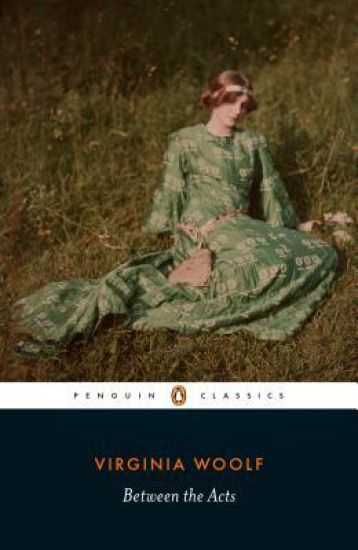
'One of the great writers of the twentieth century' GuardianIt is June in 1939, and the inhabitants of a country house prepare to host the annual village pageant in its grounds. It will tell the stories of English history, as it does every year. Yet the coming of war broods over the whole community, changing the meaning of past and present, and heralding a new act. Through her characters' passionate musings and private dramas, and through the enigmatic figure of the pageant's author, Miss La Trobe, Virginia Woolf's playful final novel both celebrates and mocks Englishness, and re-creates the elusive role of the artist. Edited by Stella McNichol with an Introduction and Notes by Gillian Beer
The collected BBC radio adaptations of Virginia Woolf’s pioneering modernist novelsThe Voyage OutA sea voyage to South America turns into a journey of self-discovery for naïve Rachel Vinrace. Night and DayIn pre-First World War London, aristocrat Katharine Hilbery and suffragette Mary Datchet have their assumptions about love challenged. Mrs DallowayVirginia Woolf’s masterpiece charts one day in the life of Clarissa Dalloway, as she prepares to host an important party. To the LighthouseCentring around a summer home on Skye, Virginia Woolf’s landmark tale follows the Ramsay family and their guests before and after World War I. OrlandoThe adventures of time-travelling, gender-swapping poet Orlando, who is born male in Elizabethan England and dies female over 300 years later. The WavesIn this radical ‘play-poem’, six characters look back on their childhood and first forays into adulthood, and reflect on the loss of their friend Percival. Between the ActsAn eccentric artist devises a pageant celebrating English history – but it is 1939, and the shadow of war hangs over England’s present. Among the stars of these seven poignant, penetrating dramatisations are Bertie Carvel, Kristin Scott-Thomas, Dervla Kirwan, John Lynch, Geraldine James, Anna Massey and Don Warrington.
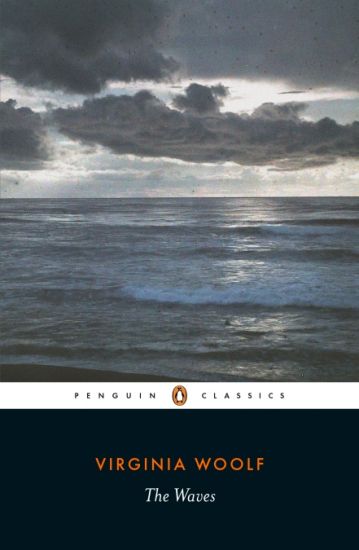
'Clear, bright, burnished ... the moods that it expresses are a true kind of poetry' The New York TimesTracing the lives of a group of friends, The Waves follows their development from childhood to middle age. While social events, individual achievements and disappointments form its narrative, the novel is most remarkable for the rich poetic language that expresses the inner life of its characters: their aspirations, their triumphs and regrets, their awareness of unity and isolation, and their questioning of the meaning of life itself. Perhaps more than any of Woolf's novels, The Waves conveys the endless complexities of human experience. Edited with an Introduction and Notes by Kate Flint
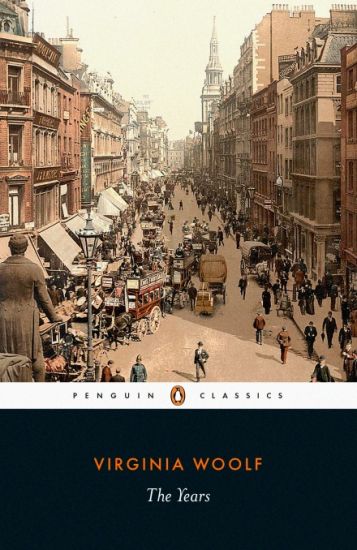
'A brilliant fantasia of all Time's problems, age and youth, change and permanence, truth and illusion' The Times Literary SupplementThe Years is the story of the Pargiter family - their intimacies and estrangements, anxieties and triumphs - mapped out against the bustling rhythms of London's streets during the first decades of the twentieth century, as their Victorian upbringing gives way to a new world, where the rules of etiquette have shifted from the drawing room to the air-raid shelter. Virginia Woolf's penultimate novel is a celebration of the resilience of the individual amid time, change, life, death and renewal. Edited with an Introduction and Notes by Jeri Johnson
'One of the most moving, revolutionary artworks of the twentieth century' Michael CunninghamClarissa Dalloway, elegant and vivacious, is preparing for a party and remembering those she once loved. In another part of London, Septimus Warren Smith is suffering from shell-shock and on the brink of madness. Smith's day interweaves with that of Clarissa and her friends, their lives converging as the party reaches its glittering climax. Virginia Woolf's masterly novel, in which she perfected the interior monologue, brings past, present and future together on one momentous day in June 1923. Edited by Stella McNichol with an Introduction and Notes by Elaine Showalter.